We've ranked the best raspberry pi books using expert recommendations, sales data, and millions of reader ratings. At Shortform, we know books. Our book guides are the best in the world. Learn why.
Cover unavailable
1
Exploring Raspberry Pi: Interfacing to the Real World with Embedded Linux
Derek Molloy
5.0
Expand Raspberry Pi capabilities with fundamental engineering principlesExploring Raspberry Pi is the innovators guide to bringing Raspberry Pi to life. This book favors engineering principles over a 'recipe' approach to give you the skills you need to design and build your own projects. You'll understand the fundamental principles in a way that transfers to any type of electronics, electronic modules, or external peripherals, using a "learning by doing" approach that caters to both beginners and experts. The book begins with basic Linux and programming skills, and helps you stock your inventory with common parts and supplies. Next, you'll learn how to make parts work together to achieve the goals of your project, no matter what type of components you use. The companion website provides a full repository that structures all of the code and scripts, along with links to video tutorials and supplementary content that takes you deeper into your project.
The Raspberry Pi's most famous feature is its adaptability. It can be used for thousands of electronic applications, and using the Linux OS expands the functionality even more. This book helps you get the most from your Raspberry Pi, but it also gives you the fundamental engineering skills you need to incorporate any electronics into any project.
Develop the Linux and programming skills you need to build basic applications Build your inventory of parts so you can always "make it work" Understand interfacing, controlling, and communicating with almost any component Explore advanced applications with video, audio, real-world interactions, and more Be free to adapt and create with Exploring Raspberry Pi.
…
Cover unavailable
2
Raspberry Pi Cookbook
Simon Monk
4.9
The world of Raspberry Pi is evolving quickly, with many new interface boards and software libraries becoming available all the time. In this cookbook, prolific hacker and author Simon Monk provides more than 200 practical recipes for running this tiny low-cost computer with Linux, programming it with Python, and hooking up sensors, motors, and other hardware—including Arduino.
You’ll also learn basic principles to help you use new technologies with Raspberry Pi as its ecosystem develops. Python and other code examples from the book are available on GitHub. This cookbook is ideal for programmers and hobbyists familiar with the Pi through resources such as Getting Started with Raspberry Pi (O’Reilly).
Set up and manage your Raspberry Pi Connect the Pi to a network Work with its Linux-based operating system Use the Pi’s ready-made software Program Raspberry Pi with Python Control hardware through the GPIO connector Use Raspberry Pi to run different types of motors Work with switches, keypads, and other digital inputs Hook up sensors for taking various measurements Attach different displays, such as an LED matrix Create dynamic projects with Raspberry Pi and Arduino
Make sure to check out 10 of the over 60 video recipes for this book at: http://razzpisampler.oreilly.com/ You can purchase all recipes at:
…
Cover unavailable
3
Programming the Raspberry Pi: Getting Started with Python
Simon Monk
4.8
An updated guide to programming your own Raspberry Pi projectsLearn to create inventive programs and fun games on your powerful Raspberry Pi--with no programming experience required. This practical book has been revised to fully cover the new Raspberry Pi 2, including upgrades to the Raspbian operating system. Discover how to configure hardware and software, write Python scripts, create user-friendly GUIs, and control external electronics. DIY projects include a hangman game, RGB LED controller, digital clock, and RasPiRobot complete with an ultrasonic rangefinder.
Updated for Raspberry Pi 2 Set up your Raspberry Pi and explore its features Navigate files, folders, and menus Write Python programs using the IDLE editor Use strings, lists, functions, and dictionaries Work with modules, classes, and methods Create user-friendly games using Pygame Build intuitive user interfaces with Tkinter Attach external electronics through the GPIO port Add powerful Web features to your projects
…
Cover unavailable
4
Raspberry Pi For Dummies, 3rd Edition
Sean McManus
4.8
Get your slice of Raspberry Pi With the invention of the unique credit card-sized single-board computer comes a new wave of hardware geeks, hackers, and hobbyists who are excited about the possibilities with the Raspberry Pi--and this is the perfect guide to get you started. With this down-to-earth book, you'll quickly discover why the Raspberry Pi is in high demand!
There's a reason the Raspberry Pi sold a million units in its first year, and you're about to find out why! In Raspberry Pi For Dummies, 3rd Edition veteran tech authors Sean McManus and Mike Cook make it easier than ever to get you up and running on your Raspberry Pi, from setting it up, downloading the operating system, and using the desktop environment to editing photos, playing music and videos, and programming with Scratch--and everything in between.
Covers connecting the Pi to other devices such as a keyboard, mouse, monitor, and more Teaches you basic Linux System Admin Explores creating simple hardware projects Shows you how to create web pages Raspberry Pi For Dummies, 3rd Edition makes computing as easy as pie!
…
Cover unavailable
5
Raspberry Pi User Guide
Eben Upton
4.7
Learn the Raspberry Pi 3 from the experts! Raspberry Pi User Guide, 4th Edition is the "unofficial official" guide to everything Raspberry Pi 3. Written by the Pi's creator and a leading Pi guru, this book goes straight to the source to bring you the ultimate Raspberry Pi 3 manual. This new fourth edition has been updated to cover the Raspberry Pi 3 board and software, with detailed discussion on its wide array of configurations, languages, and applications. You'll learn how to take full advantage of the mighty Pi's full capabilities, and then expand those capabilities even more with add-on technologies. You'll write productivity and multimedia programs, and learn flexible programming languages that allow you to shape your Raspberry Pi into whatever you want it to be. If you're ready to jump right in, this book gets you started with clear, step-by-step instruction from software installation to system customization.
The Raspberry Pi's tremendous popularity has spawned an entire industry of add-ons, parts, hacks, ideas, and inventions. The movement is growing, and pushing the boundaries of possibility along with it--are you ready to be a part of it? This book is your ideal companion for claiming your piece of the Pi.
Get all set up with software, and connect to other devices Understand Linux System Admin nomenclature and conventions Write your own programs using Python and Scratch Extend the Pi's capabilities with add-ons like Wi-Fi dongles, a touch screen, and more The credit-card sized Raspberry Pi has become a global phenomenon. Created by the Raspberry Pi Foundation to get kids interested in programming, this tiny computer kick-started a movement of tinkerers, thinkers, experimenters, and inventors. Where will your Raspberry Pi 3 take you? The Raspberry Pi User Guide, 3rd Edition is your ultimate roadmap to discovery.
…
Cover unavailable
6
Security Testing with Raspberry Pi
Daniel W. Dieterle
4.6
Security Testing with Raspberry PiWant to know how to run Kali Linux on a Raspberry Pi? Trying to learn Ethical Hacking on a budget? Want to learn how to make cheap drop boxes? Or how to use a Raspberry Pi as a HiD attack device or for Physical Security? Look no further, this book is for you!
Topics Include: - Using Kali Linux and Kali-Pi on an RPi - Using Ethical Hacking tools in Raspbian - Using Raspberry Pi as a target in a Pentest lab - Using RPi as a USB HiD attack device - Using cameras on a RPi to create physical security devices And much, much more!
…
Cover unavailable
7
Learn Robotics Programming: Build and control autonomous robots using Raspberry Pi 3 and Python
Danny Staple
4.6
Cover unavailable
8
Learn Robotics with Raspberry Pi: Build and Code Your Own Moving, Sensing, Thinking Robots
Matt Timmons-Brown
4.6
In Learn Robotics with Raspberry Pi, you'll learn how to build and code your own robot projects with just the Raspberry Pi microcomputer and a few easy-to-get components - no prior experience necessary!
Learn Robotics with Raspberry Pi will take you from inexperienced maker to robot builder. You'll start off building a two-wheeled robot powered by a Raspberry Pi minicomputer and then program it using Python, the world's most popular programming language. Gradually, you'll improve your robot by adding increasingly advanced functionality until it can follow lines, avoid obstacles, and even recognize objects of a certain size and color using computer vision.
Learn how to: - Control your robot remotely using only a Wii remote - Teach your robot to use sensors to avoid obstacles - Program your robot to follow a line autonomously - Customize your robot with LEDs and speakers to make it light up and play sounds - See what your robot sees with a Pi Camera
As you work through the book, you'll learn fundamental electronics skills like how to wire up parts, use resistors and regulators, and determine how much power your robot needs. By the end, you'll have learned the basics of coding in Python and know enough about working with hardware like LEDs, motors, and sensors to expand your creations beyond simple robots.
…
Cover unavailable
9
Programming Arduino: Getting Started with Sketches, Third Edition
MONK
4.6
An up-to-date Arduino programming guide―no prior programming experience required!This fully updated guide shows, step by step, how to quickly and easily program all Arduino models using its modified C language and the Arduino IDE. Electronics guru Simon Monk gets you up to speed quickly, teaching all concepts through simple language and clear instruction. Programming Arduino®: Getting Started with Sketches, Third Edition features dozens of easy-to-follow examples and high-quality illustrations. All of the sample sketches featured in the book can be used as is or modified to suit your needs. You will also get all new coverage of using Arduino as a framework for programming other popular boards.Configure your Arduino and start writing sketchesUnderstand the basics of C language and the Arduino IDEAdd functions, arrays, and strings to your sketchesSet up Arduino’s digital and analog I/OUse Arduino-compatible boards including ESP32, Pico, and micro:bitWork with built-in and custom Arduino librariesWrite sketches that store data in EPROM or flash memoryInterface with a wide range of displays, including LCDsConnect to the Internet and configure Arduino as a web serverDevelop interesting and useful programs for the Internet of Things
…
Cover unavailable
10
Hacking Electronics: Learning Electronics with Arduino and Raspberry Pi, Second Edition
Simon Monk
4.5
Publisher's Note: Products purchased from Third Party sellers are not guaranteed by the publisher for quality, authenticity, or access to any online entitlements included with the product.
Up-to-date hacks that will breathe life into your Arduino and Raspberry Pi creations!
This intuitive DIY guide shows how to wire, disassemble, tweak, and re-purpose household devices and integrate them with your Raspberry Pi and Arduino inventions. Packed with full-color illustrations, photos, and diagrams, Hacking Electronics: Learning Electronics with Arduino and Raspberry Pi, Second Edition, features fun, easy-to-follow projects. You'll discover how to build an Internet-controlled hacked electric toy, ultrasonic rangefinder, remote-controlled robotic rover, audio amp, slot car brakes and headlights--even a smart card reader!
- Get up and running on both Arduino and Raspberry Pi - Safely solder, join wires, and connect switches - Identify components and read schematic diagrams - Work with LEDs, including high-power Lumileds and addressable LED strips - Use LiPo batteries, solar panels, and buck-boost power supplies - Use sensors to measure light, temperature, acceleration, sound level, and color - Build and modify audio amps, microphones, and transmitters - Repair gadgets and scavenge useful parts from dead equipment - Get the most out of cheap or free bench and software tools
…
Cover unavailable
11
Makers: The New Industrial Revolution
Chris Anderson
4.5
Wired magazine editor and bestselling author Chris Anderson takes you to the front lines of a new industrial revolution as today’s entrepreneurs, using open source design and 3-D printing, bring manufacturing to the desktop. In an age of custom-fabricated, do-it-yourself product design and creation, the collective potential of a million garage tinkerers and enthusiasts is about to be unleashed, driving a resurgence of American manufacturing. A generation of “Makers” using the Web’s innovation model will help drive the next big wave in the global economy, as the new technologies of digital design and rapid prototyping gives everyone the power to invent -- creating “the long tail of things”.
Ruimin names Anderson's books in response to a question about the management theories which have most influenced Haier's current direction. [source]
Cover unavailable
12
Raspberry Pi Project Handbook
Rui Santos and Sara Santos
4.5
Twenty projects using the Raspberry Pi, a tiny and affordable computer, for beginners looking to make cool things right away. Projects are explained with full-color visuals and simple step-by-step instructions.
Raspberry Pi Project Handbook is a beginner-friendly collection of electronics projects, perfectly suited for kids, parents, educators, and hobbyists looking to level up their hardware skills.
After a crash course to get you set up with your Raspberry Pi, you'll learn how to build interactive projects like a digital drum set; a WiFi controlled robot; a Pong game; an intruder alarm that sends email notifications; a gas leak detector; a weather forecaster; and IoT gadgets that control electronics around the house. Along the way, you'll work with core components like LCD screens, cameras, sensors, and even learn how to set up your own server.
Each project provides step-by-step instructions, full-color photos and circuit diagrams, and the complete code to bring your build to life. If you're ready to hit the ground running and make something interesting, let Raspberry Pi Project Handbook be your guide.
…
Cover unavailable
13
Programming Arduino: Getting Started with Sketches
Simon Monk
4.5
Publisher's Note: Products purchased from Third Party sellers are not guaranteed by the publisher for quality, authenticity, or access to any online entitlements included with the product.
Program Arduino with ease!
This thoroughly updated guide shows, step-by-step, how to quickly program all Arduino models. Programming Arduino: Getting Started with Sketches, Second Edition, features easy-to-follow explanations, fun examples, and downloadable sample programs. Discover how to write basic sketches, use Arduino's modified C language, store data, and interface with the Web. You will also get hands-on coverage of C++, library writing, and programming Arduino for the Internet of Things. No prior programming experience is required!
- Understand Arduino hardware fundamentals - Set up the software, power up your Arduino, and start uploading sketches - Learn C language basics - Add functions, arrays, and strings to your sketches - Program Arduino's digital and analog inputs and outputs - Use functions from the standard Arduino library - Write sketches that can store data - Interface with displays, including OLEDs and LCDs - Connect to the Internet and configure Arduino as a Web server - Develop interesting programs for the Internet of Things - Write your own Arduino libraries and use object-oriented programming methods
…
Cover unavailable
14
Exploring Arduino: Tools and Techniques for Engineering Wizardry
Jeremy Blum
4.5
The bestselling beginner Arduino guide, updated with new projects!Exploring Arduino makes electrical engineering and embedded software accessible. Learn step by step everything you need to know about electrical engineering, programming, and human-computer interaction through a series of increasingly complex projects. Arduino guru Jeremy Blum walks you through each build, providing code snippets and schematics that will remain useful for future projects. Projects are accompanied by downloadable source code, tips and tricks, and video tutorials to help you master Arduino. You'll gain the skills you need to develop your own microcontroller projects!
This new 2nd edition has been updated to cover the rapidly-expanding Arduino ecosystem, and includes new full-color graphics for easier reference. Servo motors and stepper motors are covered in richer detail, and you'll find more excerpts about technical details behind the topics covered in the book. Wireless connectivity and the Internet-of-Things are now more prominently featured in the advanced projects to reflect Arduino's growing capabilities. You'll learn how Arduino compares to its competition, and how to determine which board is right for your project. If you're ready to start creating, this book is your ultimate guide!
Get up to date on the evolving Arduino hardware, software, and capabilities Build projects that interface with other devices--wirelessly! Learn the basics of electrical engineering and programming Access downloadable materials and source code for every project Whether you're a first-timer just starting out in electronics, or a pro looking to mock-up more complex builds, Arduino is a fantastic tool for building a variety of devices. This book offers a comprehensive tour of the hardware itself, plus in-depth introduction to the various peripherals, tools, and techniques used to turn your little Arduino device into something useful, artistic, and educational. Exploring Arduino is your roadmap to adventure--start your journey today!
…
Cover unavailable
15
Help Your Kids with Computer Science
DK
4.5
A clear, visual guide to the technical, societal, and cultural aspects of computers and social media, using step-by-step diagrams and graphics to explore how kids can get the most from computers while staying safe.
Covering everything from data to digital life, from computer coding to cyber attacks, this unique guide gives parents and kids the most up-to-date and comprehensive facts and information in a visually appealing way. It examines the technical aspects of computers, such as how they function, the latest digital devices and software, and how the Internet works. It also builds the confidence of parents and kids when facing challenges such as staying safe online, digital etiquette, and how to navigate the potential pitfalls of social media. Jargon-free language helps to explain difficult and potentially dread-inducing concepts such as hacking, Bitcoin, and malware, while colorful graphics help make learning about the world of computer science exciting. For those who want to make the most out of the digital world, Help Your Kids with Computer Science is the perfect platform to discover more.
…
Cover unavailable
16
The AVR Microcontroller and Embedded Systems Using Assembly and C: Using Arduino Uno and Atmel Studio
Sepehr Naimi, Sarmad Naimi, et al.
4.5
The AVR microcontroller from Atmel (now Microchip) is one of the most widely used 8-bit microcontrollers. Arduino Uno is based on AVR microcontroller. It is inexpensive and widely available around the world. This book combines the two. In this book, the authors use a step-by-step and systematic approach to show the programming of the AVR chip. Examples in both Assembly language and C show how to program many of the AVR features, such as timers, serial communication, ADC, SPI, I2C, and PWM. The text is organized into two parts: 1) The first 6 chapters use Assembly language programming to examine the internal architecture of the AVR. 2) Chapters 7-18 uses both Assembly and C to show the AVR peripherals and I/O interfacing to real-world devices such as LCD, motor, and sensor. The first edition of this book published by Pearson used ATmega32. It is still available for purchase from Amazon. This new edition is based on Atmega328 and the Arduino Uno board. The appendices, source codes, tutorials and support materials for both books are available on the following websites: http: //www.NicerLand.com/ and http: //www.MicroDigitalEd.com/AVR/AVR_books.htm
…
Cover unavailable
17
Adventures in Raspberry Pi
Carrie Anne Philbin
4.4
Build cool Raspberry Pi projects with no experience required!Adventures in Raspberry Pi, 3rd Edition is the fun guide to learning programming. Starting from the very basics and building skill upon skill, you'll learn developing fundamentals--even if you've never programmed before. Learning is exciting when you're working your way through cool projects, but the concepts you learn and the skills you master will take you further than you ever thought possible. You'll learn how your Raspberry Pi 3 works and what it can do as you create stories and games, program shapes, code music, and even build Minecraft worlds with projects designed specifically for kids 11 to 15. Author Carrie Anne Philbin is a former high school teacher, and she showcases her skills with clear, easy to follow instructions and explanations every step of the way. If you're interested in programming but find other books hard to understand, this book is your ideal starting point for mastering the Raspberry Pi.
Inexpensive, non-intimidating, yet surprisingly versatile, the Raspberry Pi 3 is an ideal way to learn programming. Updated to align with the newest board, this book will teach you fundamental programming skills while having a ton of fun!
Get acquainted with your Raspberry Pi's bits and pieces Take control of your Pi's "insides" with simple commands Program games, code music, and build a jukebox Discover where your new skills can take you next The tiny, credit-card sized Raspberry Pi has become a huge hit among kids--and adults--interested in programming. It does everything your desktop can do, but with a few basic programming skills, you can make it do so much more. With simple instructions, fun projects, and solid skills, Adventures in Raspberry Pi is the ultimate kids' programming guide!
…
Cover unavailable
18
Arduino Reference: A Print Reference for Arduino Programmers
Michael J Cheich
4.4
Arduino Reference: A Print Reference for Arduino Programmers brings the official Arduino Language Reference into a clean, accessible print format. Compiled from the official Arduino documentation, this book gathers essential functions, syntax, and usage details in one convenient place for quick consultation while you work. Carefully curated and organized by Programming Electronics Academy, it is designed to support both beginners and experienced programmers who prefer a physical reference at their side. Whether you're building, debugging, or learning, this guide keeps core Arduino knowledge within reach—no tabs, no distractions, just the information you need.
…
Cover unavailable
19
Raspberry Pi: Full Stack: A whirlwind tour of full-stack web application development on the Raspberry Pi
Peter Dalmari
4.4
Cover unavailable
20
The Official Raspberry Pi Beginner's Guide: How to use your new computer
Gareth Halfacree
4.4
Learn how to set up your Raspberry Pi, write code, and build projects with electronic components.Raspberry Pi is a small, clever, British-built computer that's packed with potential. Made using a desktop-class, energy-efficient processor, Raspberry Pi is designed to help you learn coding, discover how computers work, and build your own amazing things. This book was written to show you just how easy it is to get started. Learn how to:Set up your Raspberry Pi, install its operating system, and start using this fully functional computer.Start coding projects, with step-by-step guides using the Scratch 3, Python, and MicroPython programming languages. Experiment with connecting electronic components, and have fun creating amazing projects.Take photos with the Raspberry Pi Camera Module.This revised edition is updated for the latest Raspberry Pi computers and software, including the Raspberry Pi 500+ and Raspberry Pi OS Trixie.Whichever model you have, a standard Raspberry Pi board; a compact Raspberry Pi Zero; or a Raspberry Pi with integrated keyboard, this affordable computer can be used to learn coding, build robots, and create all kinds of weird and wonderful projects. If you want to make games, build robots, or hack a variety of amazing projects, then this book is here to help you get started.Also available in French, German, Italian, Portuguese, and Spanish editions.
…
Cover unavailable
21
Getting Started with FPGAs: Digital Circuit Design, Verilog, and VHDL for Beginners
Russell Merrick
4.4
Skip the complexity and learn to program FPGAs the easy way through this hands-on, beginner-friendly introduction to digital circuit design with Verilog and VHDL.Whether you have been toying with field programmable gate arrays (FPGAs) for years or are completely new to these reprogrammable devices, this book will teach you to think like an FPGA engineer and develop reliable designs with confidence.Through detailed code examples, patient explanations, and hands-on projects, Getting Started with FPGAs will actually get you started. Russell Merrick, creator of the popular blog Nandland.com, will guide you through the basics of digital logic, look-up tables, and flip-flops, as well as high-level concepts like state machines. You’ll explore the fundamentals of the FPGA build process including simulation, synthesis, and place and route.You’ll learn about key FPGA primitives, such as DSP blocks and PLLs, and examine how FPGAs handle math operations and I/O.Code examples are provided in both Verilog and VHDL, making the book a valuable resource no matter your language of choice. You’ll discover how to:Implement common design building blocks like multiplexers, LFSRs, and FIFOsCross between clock domains without triggering metastable conditions or timing errorsAvoid common pitfalls when performing mathTransmit and receive data at lightning speeds using SerDesWrite testbench code to verify your designs are workingWith this accessible, hands-on guide, you’ll be creating your own functional FPGA projects in no time. Getting started with FPGAs has never been easier.
…
Cover unavailable
22
Learning Computer Architecture with Raspberry Pi
Eben Upton
4.4
Use your Raspberry Pi to get smart about computing fundamentals
In the 1980s, the tech revolution was kickstarted by a flood of relatively inexpensive, highly programmable computers like the Commodore. Now, a second revolution in computing is beginning with the Raspberry Pi. Learning Computer Architecture with the Raspberry Pi is the premier guide to understanding the components of the most exciting tech product available. Thanks to this book, every Raspberry Pi owner can understand how the computer works and how to access all of its hardware and software capabilities.
Now, students, hackers, and casual users alike can discover how computers work with Learning Computer Architecture with the Raspberry Pi. This book explains what each and every hardware component does, how they relate to one another, and how they correspond to the components of other computing systems. You'll also learn how programming works and how the operating system relates to the Raspberry Pi's physical components.
Co-authored by Eben Upton, one of the creators of the Raspberry Pi, this is a companion volume to the Raspberry Pi User Guide An affordable solution for learning about computer system design considerations and experimenting with low-level programming Understandable descriptions of the functions of memory storage, Ethernet, cameras, processors, and more Gain knowledge of computer design and operation in general by exploring the basic structure of the Raspberry Pi The Raspberry Pi was created to bring forth a new generation of computer scientists, developers, and architects who understand the inner workings of the computers that have become essential to our daily lives. Learning Computer Architecture with the Raspberry Pi is your gateway to the world of computer system design.
…
Cover unavailable
23
Raspberry Pi Assembly Language Raspbian Beginners: Hands on Guide
Bruce Smith
4.4
Raspberry Pi Assembly Language RASPBIAN Beginners THIRD EDITION is your hands-on guide to learning to program ARM machine code on your Raspberry Pi 3, 2, 1 or Zero. With nothing other than the Raspbian Operating System installed on your Raspberry Pi, this book shows you how to access all the tools that you'll need to create your own machine code programs using assembly language.
Ideal for the novice, this book starts from first principles and leads you comfortably on your way to become an accomplished programmer. Providing lucid descriptions, award winning author Bruce Smith keeps things simple and includes plenty of program examples you can try for yourself. Ideas and concepts are introduced in the order required so you should never be left wondering.
Just some of the many features include:
Practical approach with example programs GCC assembler and linker ARM registers and arrangements Addressing modes Use of operating system Syscalls Debugging with GDB Using libc function calls Programming the GPIO Examples are provided that are written using the GCC Compiler running under the Raspbian Operating System on the Raspberry Pi, all of which can be downloaded from the book support website at www.brucesmith.info.
Amazon 5-Star Reviews for Bruce Smith:
'This book is an excellent introduction to coding in ARM assembler on the Raspberry Pi.''This book is well-written, easy to follow and organized. ''Great introduction to ARM assembler.'
…
Cover unavailable
24
Arduino for Beginners: The Ultimate Step by Step Guide to Choose, Purchase, and Program an Arduino Board and Create Amazing Projects
Mark Hopper
4.4
Cover unavailable
25
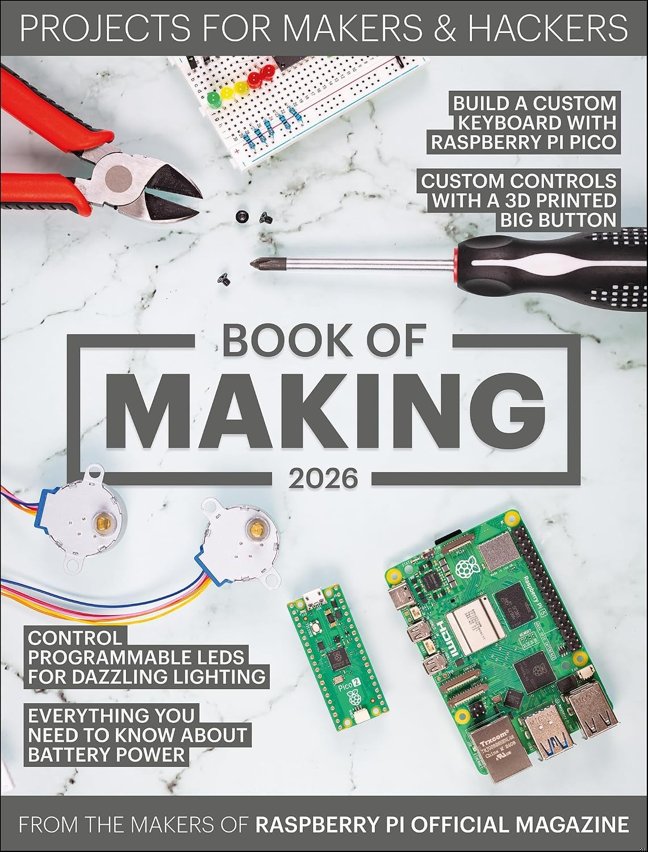
Book of Making 2026: Projects for Makers and Hackers
The Makers of Raspberry Pi Official magazine
4.4
Dive into today’s most inspiring and innovative tech projects with this full-color guidebook.Whether you're new to programming with electronics or an experienced maker, there's a project here for you. With a bit of know-how you can 3D print jigs for more accurate woodworking, build your own custom games controller, add artificial intelligence to an old phone, and advance your hacking knowledge. Discover your new favorite hobby and learn the skills that make the world go round!Featuring the best makes previously published in HackSpace magazine, this engaging guide takes you through projects you can do in an hour, afternoon or weekend.Technology isn't just something you buy — you can build it yourself! Discover it now with Book of Making 2026.The future is here, and it's digital.
…
Cover unavailable
26
Operating Systems Foundations with Linux on the Raspberry Pi: Textbook
Wim Vanderbauwhede and Jeremy Singer
4.4
Cover unavailable
27
Awesome Robotics Projects for Kids: 20 Original STEAM Robots and Circuits to Design and Build
Bob Katovich
4.4
Cover unavailable
28
Python Programming for Raspberry Pi, Sams Teach Yourself in 24 Hours
Richard Blum
4.4
Python Programming for Raspberry Pi(R) In just 24 sessions of one hour or less, Sams Teach Yourself Python Programming for Raspberry Pi in 24 Hours teaches you Python programming on Raspberry Pi, so you can start creating awesome projects for home automation, home theater, gaming, and more. Using this book's straight-forward, step-by-step approach, you'll move from the absolute basics all the way through network and web connections, multimedia, and even connecting with electronic circuits for sensing and robotics. Every lesson and case study application builds on what you've already learned, giving you a rock-solid foundation for real-world success! Step-by-step instructions carefully walk you through the most common Raspberry Pi Python programming tasks. Quizzes at the end of each chapter help you test your knowledge. By the Way notes present interesting information related to the discussion. Did You Know? tips offer advice or show you easier ways to perform tasks. Watch Out! cautions alert you to possible problems and give you advice on how to avoid them. Richard Blum has administered systems and networks for more than 25 years. He has published numerous Linux and open source books, and is an online instructor for web programming and Linux courses used by colleges across the United States. His books include Ubuntu Linux Secrets; Linux for Dummies, Ninth Edition; PostgreSQL 8 for Windows; and Professional Linux Programming. Christine Bresnahan began working as a systems administrator more than 25 years ago. Now an Adjunct Professor at Ivy Tech Community College, she teaches Python programming, Linux administration and computer security. She is coauthor of The Linux Bible, Eighth Edition. With Blum, she also coauthored Linux Command Line & Shell Scripting Bible, Second Edition. Get your Raspberry Pi and choose the right low-cost peripherals Set up Raspian Linux and the Python programming environment Learn Python basics, including arithmetic and structured commands Master Python 3 lists, tuples, diction-aries, sets, strings, files, and modules Reuse the same Python code in multiple locations with functions Manipulate string data efficiently with regular expressions Practice simple object-oriented programming techniques Use exception handling to make your code more reliable Program modern graphical user interfaces with Raspberry Pi and OpenGL Create Raspberry Pi games with the PyGame library Learn network, web, and database techniques you can also use in business software Write Python scripts that send email Interact with other devices through Raspberry Pi's GPIO interface Walk through example Raspberry Pi projects that inspire you to do even more On the Web: Register your book at informit.com/title/9780672337642 for access to all code examples from the book, as well as update and corrections as they become available.
…
Cover unavailable
29
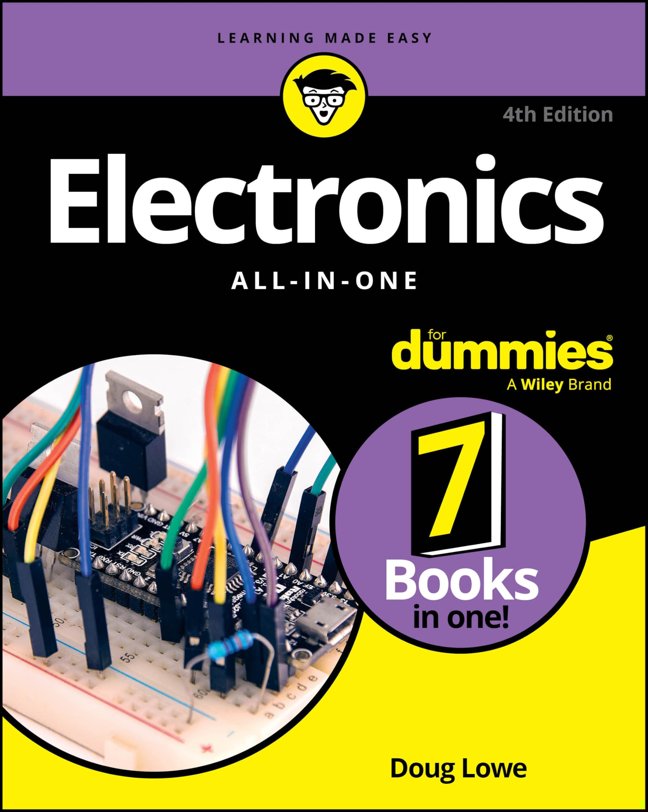
Electronics All-In-One for Dummies
Doug Lowe
4.3
A comprehensive collection of 8 books in 1 offering electronics guidance that can't be found anywhere else! If you know a breadboard from a breadbox but want to take your hobby electronics skills to the next level, this is the only reference you need. Electronics All-in-One For Dummies has done the legwork for you -- offering everything you need to enhance your experience as an electronics enthusiast in one convenient place.
Written by electronics guru and veteran For Dummies author Doug Lowe, this down-to-earth guide makes it easy to grasp such important topics as circuits, schematics, voltage, and safety concerns. Plus, it helps you have tons of fun getting your hands dirty working with the Raspberry Pi, creating special effects, making your own entertainment electronics, repairing existing electronics, learning to solder safely, and so much more.
Create your own schematics and breadboards Become a circuit-building expert Tackle analog, digital, and car electronics Debunk and grasp confusing electronics concepts If you're obsessed with all things electronics, look no further! This comprehensive guide is packed with all the electronics goodies you need to add that extra spark to your game!
…
Cover unavailable
30
Getting Started with Raspberry Pi
Shawn Wallace
4.3
What can you do with the Raspberry Pi, a $35 computer the size of a credit card? All sorts of things! If you’re learning how to program, or looking to build new electronic projects, this hands-on guide will show you just how valuable this flexible little platform can be.
This book takes you step-by-step through many fun and educational possibilities. Take advantage of several preloaded programming languages. Use the Raspberry Pi with Arduino. Create Internet-connected projects. Play with multimedia. With Raspberry Pi, you can do all of this and more.
Get acquainted with hardware features on the Pi’s board Learn enough Linux to move around the operating system Pick up the basics of Python and Scratch—and start programming Draw graphics, play sounds, and handle mouse events with the Pygame framework Use the Pi’s input and output pins to do some hardware hacking Discover how Arduino and the Raspberry Pi complement each other Integrate USB webcams and other peripherals into your projects Create your own Pi-based web server with Python
…
Cover unavailable
31
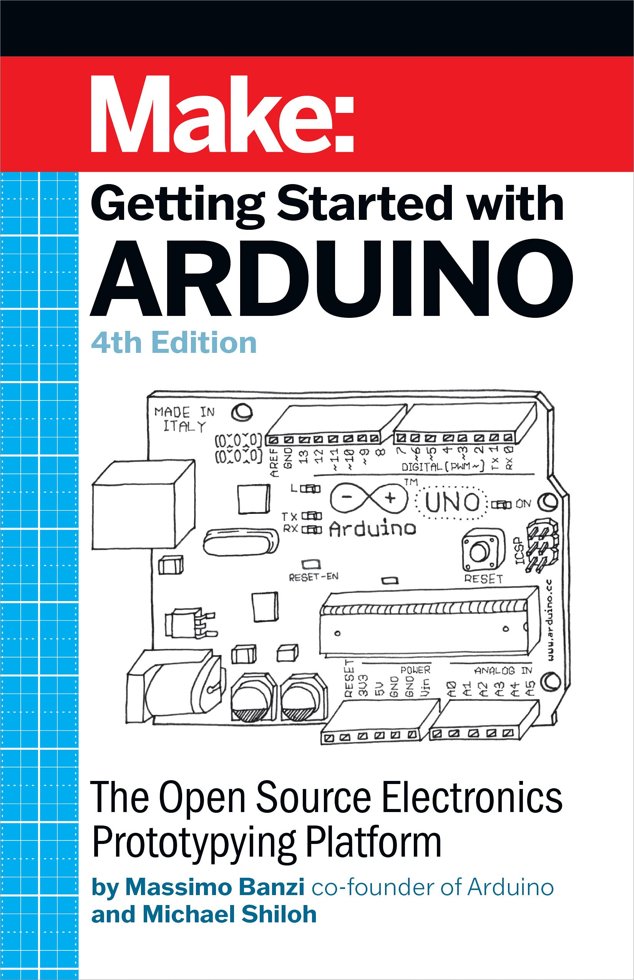
Getting Started With Arduino: The Open Source Electronics Prototyping Platform (Make)
Massimo Banzi, Michael Shiloh
4.3
Arduino is the open source electronics prototyping platform that is the heart of the Maker world. This thorough introduction, updated for the latest Arduino IDE release and the new ARM-based boards, helps you start prototyping right away. From obtaining the required components to putting the final touches on your project, all the information you need is here! Getting started with the Arduino is a snap! To use the introductory examples in this guide, all you need is an Arduino Uno or Nano, along with a USB cable and an LED. The easy-to-use, free Arduino development environment runs on Mac, Windows, and Linux. Join hundreds of thousands of hobbyists who have discovered this incredible (and educational) platform. In Getting Started with Arduino, you will learn about: Interaction design and physical computingThe Arduino board and its software environmentBasics of electricity and electronicsPrototyping on a solderless breadboardDrawing a schematic diagramUsing the Cloud IDE and the new Arduino IoT CloudBuilding a custom plant-watering systemMaking a WiFi-enabled internet fistbump Written by Massimo Banzi, the co-founder of Arduino and Michael Shiloh, Arduino educational lead.
…
Cover unavailable
32
Learn to Program with Minecraft: Transform Your World with the Power of Python
Craig Richardso
4.3
You've bested creepers, traveled deep into caves, and maybe even gone to The End and back-but have you ever transformed a sword into a magic wand? Built a palace in the blink of an eye? Designed your own color-changing disco dance floor?
In "Learn to Program with Minecraft," you'll do all this and more with the power of Python, a free language used by millions of professional and first-time programmers!
Begin with some short, simple Python lessons and then use your new skills to modify Minecraft to produce instant and totally awesome results. Learn how to customize Minecraft to make mini-games, duplicate entire buildings, and turn boring blocks into gold.
You'll also write programs that: Take you on an automated teleportation tour around your Minecraft worldBuild massive monuments, pyramids, forests, and more in a snap!Make secret passageways that open when you activate a hidden switchCreate a spooky ghost town that vanishes and reappears elsewhereShow exactly where to dig for rare blocksCast a spell so that a cascade of flowers (or dynamite if you're daring!) follows your every moveMake mischief with dastardly lava traps and watery curses that cause huge floods
Whether you're a Minecraft megafan or a newbie, you'll see Minecraft in a whole new light while learning the basics of programming. Sure, you could spend all day mining for precious resources or building your mansion by hand, but with the power of Python, those days are over!
Requires: Windows 7 or later; OS X 10.10 or later; or a Raspberry Pi.
Uses Python 3
…
Cover unavailable
33
Advanced Robotic Vehicles Programming: An Ardupilot and Pixhawk Approach
Julio Alberto Mendoza-Mendoza, Victor Javier Gonzalez-Villela, et al.
4.3
Learn how to program robotic vehicles with ardupilot libraries and pixhawk autopilot, both of which are open source technologies with a global scope. This book is focused on quadcopters but the knowledge is easily extendable to three-dimensional vehicles such as drones, submarines, and rovers.Pixhawk and the ardupilot libraries have grown dramatically in popularity due to the fact that the hardware and software offer a real-time task scheduler, huge data processing capabilities, interconnectivity, low power consumption, and a global developer support.
This book shows you how take your robotic programming skills to the next level. From hardware to software, Advanced Robotic Vehicles Programming links theory with practice in the development of unmanned vehicles. By the end of this book, you'll learn the pixhawk software and ardupilot libraries to develop your own autonomous vehicles.
What You'll Learn
Model and implement elementary controls in any unmanned vehicle Select hardware and software components during the design process of an unmanned vehicle Use other compatible hardware and software development packages Understand popular scientific and technical nomenclature in the field Identify relevant complexities and processes for the operation of an unmanned vehicle Who This Book Is For
Undergraduate and graduate students, researchers, makers, hobbyists, and those who want to go beyond basic programming of an Arduino for any kind of robotic vehicle.
…
Cover unavailable
34
Arduino Cookbook: Recipes to Begin, Expand, and Enhance Your Projects
Michael Margolis
4.3
Want to create devices that interact with the physical world? This cookbook is perfect for anyone who wants to experiment with the popular Arduino microcontroller and programming environment. You'll find more than 200 tips and techniques for building a variety of objects and prototypes such as IoT solutions, environmental monitors, location and position-aware systems, and products that can respond to touch, sound, heat, and light.
Updated for the Arduino 1.8 release, the recipes in this third edition include practical examples and guidance to help you begin, expand, and enhance your projects right away--whether you're an engineer, designer, artist, student, or hobbyist.
Get up to speed on the Arduino board and essential software concepts quickly Learn basic techniques for reading digital and analog signals Use Arduino with a variety of popular input devices and sensors Drive visual displays, generate sound, and control several types of motors Connect Arduino to wired and wireless networks Learn techniques for handling time delays and time measurement Apply advanced coding and memory-handling techniques
…
Cover unavailable
35
Exploring Beaglebone: Tools and Techniques for Building with Embedded Linux
Derek Molloy
4.3
In-depth instruction and practical techniques for building with the BeagleBone embedded Linux platform
Exploring BeagleBone?is a hands-on guide to bringing gadgets, gizmos, and robots to life using the popular BeagleBone embedded Linux platform. Comprehensive content and deep detail provide more than just a BeagleBone instruction manual-you'll also learn the underlying engineering techniques that will allow you to create your own projects. The book begins with a foundational primer on essential skills, and then gradually moves into communication, control, and advanced applications using C/C++, allowing you to learn at your own pace. In addition, the book's companion website features instructional videos, source code, discussion forums, and more, to ensure that you have everything you need.
The BeagleBone's small size, high performance, low cost, and extreme adaptability have made it a favorite development platform, and the Linux software base allows for complex yet flexible functionality. The BeagleBone has applications in smart buildings, robot control, environmental sensing, to name a few; and, expansion boards and peripherals dramatically increase the possibilities.?Exploring BeagleBone?provides a reader-friendly ?guide to the device, including a crash course in computer engineering. While following step by step, you can:
Get up to speed on embedded Linux, electronics, and programming Master interfacing electronic circuits, buses and modules, with practical examples Explore the Internet-connected BeagleBone and the BeagleBone with a display Apply the BeagleBone to sensing applications, including video and sound Explore the BeagleBone's Programmable Real-Time Controllers Updated to cover the latest Beagle boards, Linux kernel versions, and Linux software releases. Includes new content on Linux kernel development, the Linux Remote Processor Framework, CAN bus, IoT frameworks, and much more! Hands-on learning helps ensure that your new skills stay with you, allowing you to design with electronics, modules, or peripherals even beyond the BeagleBone. Insightful guidance and online peer support help you transition from beginner to expert as you master the techniques presented in?Exploring BeagleBone, the practical handbook for the popular computing platform.
…
Cover unavailable
36
Raspberry Pi Cookbook for Python Programmers
Tim Cox
4.3
""Raspberry Pi Cookbook for Python Programmers"" is written in a Cookbook format, presenting examples in the style of recipes.This allows you to go directly to your topic of interest, or follow topics throughout a chapter to gain a thorough in-depth knowledge. The aim of this book is to bring you a broad range of Python 3 examples and practical ideas which you can develop to suit your own requirements. By modifying and combining the examples to create your own projects you learn far more effectively with a much greater understanding. Each chapter is designed to become a foundation for further experimentation and discovery of the topic, providing you with the tools and information to jump right in. Readers are expected to be familiar with programming concepts and Python (where possible Python 3 is used), although beginners should manage with the help of a good Python reference book and background reading. No prior knowledge of the Raspberry Pi or electronics is required; however for the hardware sections you will need some basic electronic components/household tools to build some of the projects.
…
Cover unavailable
37
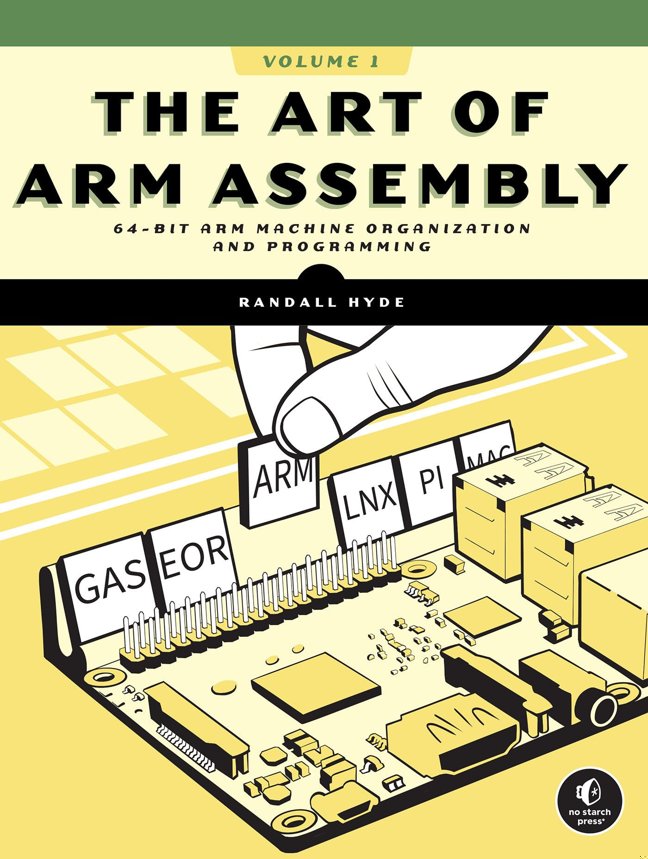
The Art of ARM Assembly, Volume 1: 64-Bit ARM Machine Organization and Programming
Randall Hyde
4.3
Modern Instructions for 64-Bit ARM CPUsBuilding on Randall Hyde’s iconic series, The Art of ARM Assembly delves into programming 64-bit ARM CPUs—the powerhouses behind iPhones, Macs, Chromebooks, servers, and embedded systems.Following a fast-paced introduction to the art of programming in assembly and the GNU Assembler (Gas) specifically, you’ll explore memory organization, data representation, and the basic logical operations you can perform on simple data types. You’ll learn how to define constants, write functions, manage local variables, and pass parameters efficiently. You’ll explore both basic and advanced arithmetic operations, control structures, numeric conversions, lookup tables, and string manipulation—in short, you’ll cover it all. You’ll also dive into ARM SIMD (Neon) instructions, bit manipulation, and macro programming with the Gas assembler, as well as how to:Declare pointers and use composite data structures like strings, arrays, and unionsConvert simple and complex arithmetic expressions into machine instruction sequencesUse ARM addressing modes and expressions to access memory variablesCreate and use string library functions and build libraries of assembly code using makefilesThis hands-on guide will help you master ARM assembly while revealing the intricacies of modern machine architecture. You’ll learn to write more efficient high-level code and gain a deeper understanding of software-hardware interactions—essential skills for any programmer working with ARM-based systems.
…
Cover unavailable
38
Learn Electronics with Arduino: An Illustrated Beginner's Guide to Physical Computing
Jody Culkin and Eric Hagan
4.3
Cover unavailable
39
Tinyml: Machine Learning with Tensorflow Lite on Arduino and Ultra-Low-Power Microcontrollers
Pete Warden
4.3
Neural networks are getting smaller. Much smaller. The OK Google team, for example, has run machine learning models that are just 14 kilobytes in size--small enough to work on the digital signal processor in an Android phone. With this practical book, you'll learn about TensorFlow Lite for Microcontrollers, a miniscule machine learning library that allows you to run machine learning algorithms on tiny hardware.
Authors Pete Warden and Daniel Situnayake explain how you can train models that are small enough to fit into any environment, including small embedded devices that can run for a year or more on a single coin cell battery. Ideal for software and hardware developers who want to build embedded devices using machine learning, this guide shows you how to create a TinyML project step-by-step. No machine learning or microcontroller experience is necessary.
Learn practical machine learning applications on embedded devices, including simple uses such as speech recognition and gesture detection Train models such as speech, accelerometer, and image recognition, you can deploy on Arduino and other embedded platforms Understand how to work with Arduino and ultralow-power microcontrollers Use techniques for optimizing latency, energy usage, and model and binary size
…
Cover unavailable
40
Programming the Raspberry Pi, Third Edition: Getting Started with Python
Simon Monk
4.3
Cover unavailable
41
Programming Arduino Next Steps: Going Further with Sketches
Simon Monk
4.3
Take your Arduino skills to the next level! In this practical guide, electronics guru Simon Monk takes you under the hood of Arduino and reveals professional programming secrets. Featuring coverage of the Arduino Uno, Leonardo, and Due boards, Programming Arduino Next Steps: Going Further with Sketches shows you how to use interrupts, manage memory, program for the Internet, maximize serial communications, perform digital signal processing, and much more. All of the 75+ example sketches featured in the book are available for download.
Learn advanced Arduino programming techniques, including how to:
Use hardware and timer interrupts Boost performance and speed by writing time-efficient sketches Minimize power consumption and memory usage Interface with different types of serial busses, including I2C, 1-Wire, SPI, and TTL Serial Use Arduino with USB, including the keyboard and mouse emulation features of the Leonardo and Due boards Program Arduino for the Internet Perform digital signal processing Accomplish more than one task at a time--without multi-threading Create and release your own code library
…
Cover unavailable
42
Raspberry Pi: Hardware Projects
Dogan Ibrahim
4.3
Cover unavailable
43
Arduino Without Prior Knowledge: Create your own first project within 7 days (Become an Engineer Without Prior Knowledge)
Benjamin Spahic
4.3
Arduino Without Prior Knowledge - Create your own first project within seven daysTwo in One: You will receive the eBook in PDF format free of charge when you buy the paperback or Kindle version!Would you like to understand electrical circuits and be able to program your own microcontroller?No problem – with the help of this beginner's guide, you will be able to understand the basic of the Arduino platform in no time at all.This guide covers the basics of hard and software! Real practical examples and small exercises alongside the text help you understand.With the help of this beginner's guide, many satisfied readers have already been able to get into the subject and expand their own skills – see for yourself!Advantages of this book:Simply explained – written in a way understandable for everyoneTo the point – 105 pages in a practical pocketbook formatRelevant to everyday life – real practical examplesClear and structured – important remarks and formulas are highlightedBonus chapter included What the book contains:Review of the most important electrical and programming basicsThe Arduino platform explained – different models and use casesThe Arduino IDE explained – get startedYour First Projects – Three real practical examples Bonus: The most common beginners’ mistakes Do not hesitate any longer – order the guide now, and soon you will understand the basics of the Arduino platform!
…
Cover unavailable
44
Arduino Workshop: A Hands-On Introduction with 65 Projects
John Boxall
4.3
Learn the Basics, Build the Projects, Create Your Own
The Arduino is a cheap, flexible, open source microcontroller platform designed to make it easy for hobbyists to use electronics in homemade projects. With an almost unlimited range of input and output add-ons, sensors, indicators, displays, motors, and more, the Arduino offers you countless ways to create devices that interact with the world around you.
In Arduino Workshop, you'll learn how these add-ons work and how to integrate them into your own projects. You'll start off with an overview of the Arduino system but quickly move on to coverage of various electronic components and concepts. Hands-on projects throughout the book reinforce what you've learned and show you how to apply that knowledge. As your understanding grows, the projects increase in complexity and sophistication.
Among the book's 65 projects are useful devices like:
A digital thermometer that charts temperature changes on an LCD A GPS logger that records data from your travels, which can be displayed on Google Maps A handy tester that lets you check the voltage of any single-cell battery A keypad-controlled lock that requires a secret code to open You'll also learn to build Arduino toys and games like:
An electronic version of the classic six-sided die A binary quiz game that challenges your number conversion skills A motorized remote control tank with collision detection to keep it from crashing Arduino Workshop will teach you the tricks and design principles of a master craftsman. Whatever your skill level, you'll have fun as you learn to harness the power of the Arduino for your own DIY projects.
…
Cover unavailable
45
Computer Programming: This Book Includes: SQL, Linux, Java, Python, C#, Arduino, C# For Intermediates, Arduino For Intermediates Learn Any Computer Language In One Day Step by Step (#2020 Version)
Steve Tudor
4.3
Cover unavailable
46
Penetration Testing with Raspberry Pi
Michael McPhee and Jason Beltrame
4.3
Cover unavailable
47
Learning Python with Raspberry Pi
Alex Bradbury
4.3
The must-have companion guide to the Raspberry Pi User Guide!
Raspberry Pi chose Python as its teaching language of choice to encourage a new generation of programmers to learn how to program. This approachable book serves as an ideal resource for anyone wanting to use Raspberry Pi to learn to program and helps you get started with the Python programming language. Aimed at first-time developers with no prior programming language assumed, this beginner book gets you up and running.
Covers variables, loops, and functions Addresses 3D graphics programming Walks you through programming Minecraft Zeroes in on Python for scripting Learning Python with Raspberry Pi proves itself to be a fantastic introduction to coding.
…
Cover unavailable
48
Motors for Makers: A Guide to Steppers, Servos, and Other Electrical Machines
Matthew Scarpino Scarpino
4.3
The First Maker-Friendly Guide to Electric Motors!
Makers can do amazing things with motors. Yes, they're more complicated than some other circuit elements, but with this book, you can completely master them. Once you do, incredible new projects become possible.
Unlike other books, Motors for Makers is 100% focused on what you can do. Not theory. Making.
First, Matthew Scarpino explains how electric motors work and what you need to know about each major type: stepper, servo, induction, and linear motors. Next, he presents detailed instructions and working code for interfacing with and controlling servomotors with Arduino Mega, Raspberry Pi, and BeagleBone Black. All source code and design files are available for you to download from motorsformakers.com.
From start to finish, you'll learn through practical examples, crystal-clear explanations, and photos. If you've ever dreamed of what you could do with electric motors, stop dreaming...and start making! Understand why electric motors are so versatile and how they work Choose the right motor for any project Build the circuits needed to control each type of motor Program motor control with Arduino Mega, Raspberry Pi, or BeagleBone Black Use gearmotors to get the right amount of torque Use linear motors to improve speed and precision Design a fully functional electronic speed control (ESC) circuit Design your own quadcopter Discover how electric motors work in modern electric vehicles--with a fascinating inside look at Tesla's patents for motor design and control!
…
Cover unavailable
49
Raspberry Pi: A Comprehensive Beginner's Guide to Setup, Programming(Concepts and techniques) and Developing Cool Raspberry Pi Projects
Joe Grant
4.3
Cover unavailable
50
Raspberry Pi Projects
Andrew Robinson, Mike Cook
4.3
Learn to build software and hardware projects featuring the Raspberry Pi!
Raspberry Pi represents a new generation of computers that encourages the user to play and to learn and this unique book is aimed at the beginner Raspberry Pi user who is eager to get started creating real-world projects. Taking you on a journey of creating 16 practical projects, this fun and informative resource introduces you to the skills you need to have in order to make the most of the Pi. The book begins with a quick look at how to get the Pi up and running and then encourages you to dive into the array of exciting software and hardware projects.Features projects that use Python, which is Raspberry Pi's programming language of choice Includes projects for creating an information center for e-mail, twitter, Facebook, weather, train times, and moreShows you how to recreate Pong, Pacman, and Block Breaker or write tic tac toeTeaches you how to use Raspberry Pi's general purpose input/output port in order to speak to external hardware devicesWalks you through creating an online burglar alarm with door sensors and pressure pads, computer-controlled slot car racing, swipe card door lock, and more
"Raspberry Pi Projects" is an excellent way to dig deeper into the capabilities of the Pi and to have great fun while doing it.
…
Cover unavailable
51
Getting Started with Arduino: The Open Source Electronics Prototyping Platform
Massimo Banzi
4.3
Arduino is the open source electronics prototyping platform that has taken the Maker Movement by storm. This thorough introduction, updated for the latest Arduino release, helps you start prototyping right away. From obtaining the required components to putting the final touches on your project, all the information you need is here!
Getting started with Arduino is a snap. To use the introductory examples in this guide, all you need is an Arduino Uno or Leonardo, along with a USB cable and an LED. The easy-to-use, free Arduino development environment runs on Mac, Windows, and Linux.
In Getting Started with Arduino, you'll learn about:
Interaction design and physical computing The Arduino board and its software environment Basics of electricity and electronics Prototyping on a solderless breadboard Drawing a schematic diagram Talking to a computer--and the cloud--from Arduino Building a custom plant-watering system
…
Cover unavailable
52
Raspberry Pi Projects for the Evil Genius
Donald Norris
4.3
Publisher's Note: Products purchased from Third Party sellers are not guaranteed by the publisher for quality, authenticity, or access to any online entitlements included with the product.
A dozen fiendishly fun projects for the Raspberry Pi! This wickedly inventive guide shows you how to create all kinds of entertaining and practical projects with Raspberry Pi operating system and programming environment. In Raspberry Pi Projects for the Evil Genius, you'll learn how to build a Bluetooth-controlled robot, a weather station, home automation and security controllers, a universal remote, and even a minimalist website. You'll also find out how to establish communication between Android devices and the RasPi.
Each fun, inexpensive Evil Genius project includes a detailed list of materials, sources for parts, schematics, and lots of clear, well-illustrated instructions for easy assembly. The larger workbook-style layout makes following the step-by-step instructions a breeze.
Build these and other devious devices:
LED blinker MP3 player Camera controller Bluetooth robot Earthquake detector Home automation controller Weather station Home security controller RFID door latch Remote power controller Radon detector
Make Great Stuff! TAB, an imprint of McGraw-Hill Professional, is a leading publisher of DIY technology books for makers, hackers, and electronics hobbyists.
…
Cover unavailable
53
The Maker's Guide to the Zombie Apocalypse: Defend Your Base with Simple Circuits, Arduino, and Raspberry Pi
Simon Monk
4.3
Where will you be when the zombie apocalypse hits? Trapping yourself in the basement? Roasting the family pet? Beheading reanimated neighbors?
No way. You'll be building fortresses, setting traps, and hoarding supplies, because you, savvy survivor, have snatched up your copy of The Maker's Guide to the Zombie Apocalypse before it's too late. This indispensable guide to survival after Z-day, written by hardware hacker and zombie anthropologist Simon Monk, will teach you how to generate your own electricity, salvage parts, craft essential electronics, and out-survive the undead.
Take charge of your environment:
Monitor zombie movement with trip wires and motion sensors Keep vigilant watch over your compound with Arduino and Raspberry Pi surveillance systems Power zombie defense devices with car batteries, bicycle generators, and solar power Escape imminent danger: Repurpose old disposable cameras for zombie-distracting flashbangs Open doors remotely for a successful sprint home Forestall subplot disasters with fire and smoke detectorsown electricity, salvage parts, craft essential electronics, and out-survive the undead.
Communicate with other survivors: Hail nearby humans using Morse code Pass silent messages with two-way vibration walkie-talkies Fervently scan the airwaves with a frequency hopper For anyone from the budding maker to the keen hobbyist, The Maker's Guide to the Zombie Apocalypse is an essential survival tool.
…
Cover unavailable
54
Python Playground: Geeky Projects for the Curious Programmer
Mahesh Venkitachalam
4.2
Python is a powerful programming language that's easy to learn and fun to play with. But once you've gotten a handle on the basics, what do you do next?
Python Playground is a collection of imaginative programming projects that will inspire you to use Python to make art and music, build simulations of real-world phenomena, and interact with hardware like the Arduino and Raspberry Pi. You'll learn to use common Python tools and libraries like numpy, matplotlib, and pygame to do things like: -Generate Spirograph-like patterns using parametric equations and the turtle module -Create music on your computer by simulating frequency overtones -Translate graphical images into ASCII art -Write an autostereogram program that produces 3D images hidden beneath random patterns -Make realistic animations with OpenGL shaders by exploring particle systems, transparency, and billboarding techniques -Construct 3D visualizations using data from CT and MRI scans -Build a laser show that responds to music by hooking up your computer to an Arduino
Programming shouldn't be a chore. Have some solid, geeky fun with Python Playground.
The projects in this book are compatible with both Python 2 and 3.
…
Cover unavailable
55
Electronics Cookbook: Practical Electronic Recipes with Arduino and Raspberry Pi
Simon Monk
4.2
If you're among the many hobbyists and designers who came to electronics through Arduino and Raspberry Pi, this cookbook will help you learn and apply the basics of electrical engineering without the need for an EE degree. Through a series of practical recipes, you'll learn how to solve specific problems while diving into as much or as little theory as you're comfortable with.
Author Simon Monk (Raspberry Pi Cookbook) breaks down this complex subject into several topics, from using the right transistor to building and testing projects and prototypes. With this book, you can quickly search electronics topics and go straight to the recipe you need. It also serves as an ideal reference for experienced electronics makers.
This cookbook includes:
Theoretical concepts such as Ohm's law and the relationship between power, voltage, and current The fundamental use of resistors, capacitors and inductors, diodes, transistors and integrated circuits, and switches and relays Recipes on power, sensors and motors, integrated circuits, and radio frequency for designing electronic circuits and devices Advice on using Arduino and Raspberry Pi in electronics projects How to build and use tools, including multimeters, oscilloscopes, simulations software, and unsoldered prototypes
…
Cover unavailable
56
Getting Started with Processing: A Hands-On Introduction to Making Interactive Graphics
Casey Reas
4.2
Processing opened up the world of programming to artists, designers, educators, and beginners. This short book gently introduces the core concepts of computer programming and working with Processing. Written by the co-founders of the Processing project, Reas and Fry, Getting Started with Processing shows you how easy it is to make software and systems with interactive graphics. If you're an artist looking to develop interactive graphics programs or a programmer on your way to becoming an artist, this book will take you where you want to go. Updated with new material on graphics manipulation, data, and for the latest version of Processing.
…
Cover unavailable
57
Raspberry Pi 4 Beginner’s Guide: The Beginner’s Guide to Master Raspberry Pi 4 as your new PC and Build Amazing Projects
Graham O. Wilson
4.2
Cover unavailable
58
Arduino and Raspberry Pi Sensor Projects for the Evil Genius
Robert Chin
4.2
Publisher's Note: Products purchased from Third Party sellers are not guaranteed by the publisher for quality, authenticity, or access to any online entitlements included with the product.
Fiendishly Clever Sensor Projects for Your Arduino and Raspberry Pi
Learn to quickly build your own electronic gadgets that monitor, measure, and react to the real world--with no prior experience required! This easy-to-follow guide covers the programming and electronics essentials needed to build fun and educational sensor-based projects with both Arduino and Raspberry Pi. Arduino and Raspberry Pi Sensor Projects for the Evil Genius features step-by-step DIY projects that use inexpensive, readily available parts. You will discover how to use touch, temperature, moisture, light, sound, and motion sensors--even sensors that detect the presence of a human!
Start-to-finish Arduino and Raspberry Pi projects include:
- "Simon Says" game - Rotary encoder that controls an RGB LED - Reed switch door buzzer alarm - Fire alarm - Sound detector - Light clapper - Glass break alarm - Infrared motion detector - Distance sensor intruder alarm - Collision alarm - TFT color display screen - Door entry alarm with SD card logging - And many more
…
Cover unavailable
59
Beginning C for Arduino, Second Edition: Learn C Programming for the Arduino
Jack Purdum
4.2
Beginning C for Arduino, Second Edition is written for those who have no prior experience with microcontrollers or programming but would like to experiment and learn both. Updated with new projects and new boards, this book introduces you to the C programming language, reinforcing each programming structure with a simple demonstration of how you can use C to control the Arduino family of microcontrollers. Author Jack Purdum uses an engaging style to teach good programming techniques using examples that have been honed during his 25 years of university teaching. Beginning C for Arduino, Second Edition will teach you: The C programming language How to use C to control a microcontroller and related hardware How to extend C by creating your own libraries, including an introduction to object-oriented programming
During the course of the book, you will learn the basics of programming, such as working with data types, making decisions, and writing control loops. You'll then progress onto some of the trickier aspects of C programming, such as using pointers effectively, working with the C preprocessor, and tackling file I/O. Each chapter ends with a series of exercises and review questions to test your knowledge and reinforce what you have learned.
…
Cover unavailable
60
Learn Raspberry Pi with Linux
Peter Membrey, David Hows
4.2
Learn Raspberry Pi with Linux will tell you everything you need to know about the Raspberry Pi's GUI and command line so you can get started doing amazing things. You'll learn how to set up your new Raspberry Pi with a monitor, keyboard and mouse, and you'll discover that what may look unfamiliar in Linux is really very familiar. You'll find out how to connect to the internet, change your desktop settings, and you'll get a tour of installed applications. Next, you'll take your first steps toward being a Raspberry Pi expert by learning how to get around at the Linux command line. You'll learn about different shells, including the bash shell, and commands that will make you a true power user.
Finally, you'll learn how to create your first Raspberry Pi projects:
Making a Pi web server: run LAMP on your own network Making your Pi wireless: remove all the cables and retain all the functionality Making a Raspberry Pi-based security cam and messenger service: find out who's dropping by Making a Pi media center: stream videos and music from your Pi Raspberry Pi is awesome, and it's Linux. And it's awesome because it's Linux. But if you've never used Linux or worked at the Linux command line before, it can be a bit daunting. Raspberry Pi is an amazing little computer with tons of potential. And Learn Raspberry Pi with Linux can be your first step in unlocking that potential.
…
Cover unavailable
61
JavaScript Robotics: Building Nodebots with Johnny-Five, Raspberry Pi, Arduino, and Beaglebone
Backstop Media, Rick Waldron, Pawel Szymczykowski, David Resseguie, Donovan Buck, Jonathan Beri, Kassandra Perch, Lyza Danger Gardner, Raquel Velez, Julian David Duque, Emily Rose, Bryan Hughes, Sara Gorecki, Susan Hinton, Anna Gerber, Andrew Fisher
4.2
JavaScript Robotics is on the rise. Rick Waldron, the lead author of this book and creator of the Johnny-Five platform, is at the forefront of this movement. Johnny-Five is an open source JavaScript Arduino programming framework for robotics. This book brings together fifteen innovative programmers, each creating a unique Johnny-Five robot step-by-step, and offering tips and tricks along the way. Experience with JavaScript is a prerequisite.
…
Cover unavailable
62
Arduino Programming in 24 Hours, Sams Teach Yourself
Richard Blum
4.2
In just 24 sessions of one hour or less, Sams Teach Yourself Arduino Programming in 24 Hours teaches you C programmingon Arduino, so you can start creating inspired "DIY" hardwareprojects of your own! Using this book's straightforward, step-by-stepapproach, you'll walk through everything from setting up yourprogramming environment to mastering C syntax and features, interfacing your Arduino to performing full-fledged prototyping.Every hands-on lesson and example builds on what you've alreadylearned, giving you a rock-solid foundation for real-world success! Step-by-step instructions carefully walk you through the most common Arduino programming tasks. Quizzes at the end of each chapter help you test your knowledge. By the Way notes present interesting information related to the discussion. Did You Know? tips offer advice or show you easier ways to perform tasks. Watch Out! cautions alert you to possible problems and give you advice on how to avoid them. Learn how to... Get the right Arduino hardware and accessories for your needs Download the Arduino IDE, install it, and link it to your Arduino Quickly create, compile, upload, and run your first Arduino program Master C syntax, decision control, strings, data structures, and functions Use pointers to work with memory--and avoid common mistakes Store data on your Arduino's EEPROM or an external SD card Use existing hardware libraries, or create your own Send output and read input from analog devices or digital interfaces Create and handle interrupts in software and hardware Communicate with devices via the SPI interface and I2C protocol Work with analog and digital sensors Write Arduino C programs that control motors Connect an LCD to your Arduino, and code the output Install an Ethernet shield, configure an Ethernet connection, and write networking programs Create prototyping environments, use prototyping shields, and interface electronics to your Arduino
…
Cover unavailable
63
Get started with MicroPython on Raspberry Pi Pico: The Official Raspberry Pi Pico Guide
Gareth Halfacree and Ben Everard
4.2
Cover unavailable
64
ESP32 Development using the Arduino IDE
iain hendry
4.2
Cover unavailable
65
Hello Raspberry Pi!: Python programming for kids and other beginners
Ryan Heitz
4.2
Summary
A fun and imaginative way for kids and other beginners to take their first steps programming on a Raspberry Pi.
Purchase of the print book includes a free eBook in PDF, Kindle, and ePub formats from Manning Publications.
About the Technology
The Raspberry Pi is a small, low-cost computer invented to encourage experimentation. The Pi is a snap to set up, and using the free Python programming language, you can learn to create video games, control robots, and maybe even write programs to do your math homework!
About the Book
Hello Raspberry Pi! is a fun way for kids to take their first steps programming on a Raspberry Pi. First, you discover how to set up and navigate the Pi. Next, begin Python programming by learning basic concepts with engaging challenges and games. This book gives you an introduction to computer programming as you gain the confidence to explore, learn, and create on your own. The last part of the book introduces you to the world of computer control of physical objects, where you create interactive projects with lights, buttons, and sounds.
What's Inside Learn Python with fun examplesWrite games and control electronicsUse Pygame for video game sounds and graphicsLoaded with programming exercises About the Reader
To use this book, you'll need a Raspberry Pi starter kit, keyboard, mouse, and monitor. No programming experience needed.
Table of Contents
PART 1 GETTING STARTED 1 Meet Raspberry Pi Exploring Python PART 2 PLAYING WITH PYTHON Silly Sentence Generator 3000: creating interactive programs Norwegian Blue parrot game: adding logic to programs Raspi's Cave Adventure PART 3 PI AND PYTHON PROJECTS Blinky Pi Light Up Guessing Game DJ Raspi APPENDIXES
Raspberry Pi troubleshooting Raspberry Pi ports and legacy boards Solutions to chapter challenges Raspberry Pi projects
…
Cover unavailable
66
Schnelleinstieg Raspberry Pi (Professional Series)
Christian Immler
4.2
Cover unavailable
67
The Programmers Code: A Deep Dive Into Mastering Computer Programming Including Python, C, C++, C#, Html Coding, Raspberry Pi3, And Black Hat Hacking
C.P.A. Inc
4.2
Cover unavailable
68
Make: Sensors: A Hands-On Primer for Monitoring the Real World with Arduino and Raspberry Pi
Tero Karvinen
4.2
Make: Sensors is the definitive introduction and guide to the sometimes-tricky world of using sensors to monitor the physical world.
Features about this book:
Includes full color photographs that are informative, useful, and engaging Branded with the MAKE Magazine look and feel, this book targets the MAKE core audience A hands-on book that provides the reader with engaging experiences Heavily illustrated with electronic circuit diagrams that can be read by non-technical readers Takes the same approach to the topic as the successful Make: Electronics book
…
Cover unavailable
69
Raspberry Pi for Kids for Dummies
Richard Wentk
4.2
Getting acquainted with your Raspberry Pi has never been sweeterRaspberry Pi For Kids For Dummies makes it easy for kids to set-up, operate, and troubleshoot like a Pi pro! Introducing you to Pi through a series of entertaining and inspiring projects, this handy, step-by-step guide shows you how to write computer games, build websites, make art and music, create electronic projects, and much more! From downloading the operating system and setting up your Raspberry Pi to creating art in Tux Paint and designing games with Scratch, everything you need to have fun with Pi is inside!
Raspberry Pi For Kids For Dummies leaves the confusing tech talk behind and explains in plain English how to unleash all the cool possibilities of Pi, like playing Minecraft in Python, using HTML to make a website, managing and customizing your Raspberry Pi, playing music with Sonic Pi, and understanding and playing with the GPIO.
Teaches the basics of Raspberry Pi in a simple and thorough approach Shows you how to zoom around Pi, all while learning valuable programming skills Offers tons of exciting projects to keep you engaged as you learn Includes instruction on everything you need to troubleshoot Raspberry Pi If you're aspiring computer programmer age 8-18 and want to start having fun with Pi, look no further than Raspberry Pi For Kids For Dummies.
…
Cover unavailable
70
Raspberry Pi Hardware Reference
Warren Gay
4.2
Cover unavailable
71
Adventures in Arduino
Becky Stewart
4.1
Arduino programming for the absolute beginner, with project-based learningAdventures in Arduino is the beginner's guide to Arduino programming, designed specifically for 11-to 15-year olds who want to learn about Arduino, but don't know where to begin. Starting with the most basic concepts, this book coaches you through nine great projects that gradually build your skills as you experiment with electronics. The easy-to-follow design and clear, plain-English instructions make this book the ideal guide for the absolute beginner, geared toward those with no computing experience. Each chapter includes a video illuminating the material, giving you plenty of support on your journey to electronics programming.
Arduino is a cheap, readily available hardware development platform based around an open source, programmable circuit board. Combining these chips with sensors and servos allows you to gain experience with prototyping as you build interactive electronic crafts to bring together data and even eTextiles. Adventures in Arduino gets you started on the path of scientists, programmers, and engineers, showing you the fun way to learn electronic programming and interaction design.
Discover how and where to begin Arduino programming Develop the skills and confidence to tackle other projects Make the most of Arduino with basic programming concepts Work with hardware and software to create interactive electronic devices There's nothing like watching your design come to life and interact with the real world, and Arduino gives you the capability to do that time and again. The right knowledge combined with the right tools can create an unstoppable force of innovation, and your curiosity is the spark that ignites the flame. Adventures in Arduino gets you started on the right foot, but the path is totally up to you.
…
Cover unavailable
72
Raspberry Pi: A practical guide to the revolutionary small computer
Gary Girling
4.1
The Haynes Raspberry Pi Manual is the perfect introduction to the affordable small computer. Printed in full color throughout, this manual is aimed at those switching on their Pi for the first time, guiding them through the full process of setup and configuration. The book then introduces various aspects of computing and programming – subjects that have been sadly absent from the school curriculum for many years – and provides a variety of recipes to demonstrate the acclaimed versatility of the Raspberry Pi's hardware and software. With authorship from an expert close to the project and the trademark Haynes ‘how to’ approach, this is the manual everyone needs to get started with their Raspberry Pi, whether at home or in the classroom.
…
Cover unavailable
73
Raspberry Pi Electronics Projects for the Evil Genius
Donald Norris
4.1
Publisher's Note: Products purchased from Third Party sellers are not guaranteed by the publisher for quality, authenticity, or access to any online entitlements included with the product. Ten brand new, hands-on DIY projects for the Raspberry Pi!This fully illustrated guide shows how to create all kinds of entertaining and practical gadgets with the Raspberry Pi.Raspberry Pi Electronics Projects for the Evil Genius features ten fun DIY projects that showcase the RasPi's applications in computing, communications, robotics, photography, and video.Each Evil Genius project includes a detailed list of materials, sources for parts, schematics, and clear, step-by-step assembly and programming instructions. Readers will get up and running right away by learning how to program a touchscreen, interface with an Arduino processor, build a fully working cell phone--even build a super computer using a cluster of RasPis! Advanced projects include a Software Defined Radio, BrickPi robot controller, robotic arm, point-and-shoot camera, and a complete infrared surveillance system. Covers all RasPi models, including the latest A+, B+ and B model 2 units Features C, Java, and Python programming techniques Software downloads available through mhprofessional.com
…
Cover unavailable
74
30 Arduino Projects for the Evil Genius
Simon Monk
4.1
'30 Arduino Projects for the Evil Genius' shows you how to use Arduino, the open-source physical computing platform. You'll master Arduino through a series of projects while learning the required simplified C programming.
Cover unavailable
75
Build a Smart Raspberry Pi VPN Server: Auto Configuring, Plug-n-Play, Use from Anywhere (3rd Edition, Rev 2.0)
Ira Finch
4.1
Cover unavailable
76
The Arduino Project Handbook: 45 Illustrated Projects for the Complete Beginner
Mark Geddes
4.1
"The Arduino Project Handbook" is a beginner friendly collection of 45 fun and interactive projects to build with the low cost Arduino microcontroller. Each project includes concise instructions with full-color illustrations, an easy-to-follow circuit diagram, and complete code.
As much a hands-on introduction to Arduino and electronics as it is an inspirational reference, in "The Arduino Project Handbook" you'll learn how to set up the Arduino hardware and software to interact with LEDs, sensors, motors, LCD screens, lock systems, and fuses. Even if you've never programmed or played with electronics before you'll quickly learn to build projects like a lie detector, ultrasonic robot, weather station, an electromagnetic ghost detector, a programmable rocket launcher, even a joystick controlled laser.
Clear visuals and plain-English instructions throughout make "The Arduino Project Handbook" perfect for beginners, hobbyists, parents, and educators.
…
Cover unavailable
77
DK Workbooks: Raspberry Pi Projects: An Introduction to the Raspberry Pi Computer
DK
4.1
Get kids building exciting computer projects, including games, music, and designs. Perfect for children ages 7-11 who are new to programming, this highly visual workbook is a fun introduction to Raspberry Pi, an affordable credit-card-size computer that is revolutionizing the world of computing and can help boost kids' computer skills in a new and innovative way.
With easy-to-follow directions and fun pixel art, DK Workbooks: Raspberry Pi Projects helps kids understand the basics of computers, programming, and how to create cool projects in Scratch, Python, and Sonic Pi through fun, hands-on learning experiences. All they need is a Raspberry Pi computer, an SD card, an HDMI cable, a USB power supply, and a standard monitor, mouse, and keyboard.
After they learn how to program their Raspberry Pi, kids can make their own music using Sonic Pi, craft amazing designs using Python, and build and play their own computer games and projects with Scratch. They can even test their coding knowledge with written vocabulary and programming quizzes at the end of each project.
Supporting STEM education initiatives, computer coding teaches kids how to think creatively, work collaboratively, and reason systematically, and is quickly becoming a necessary and sought-after skill. DK's computer coding books are full of fun exercises with step-by-step guidance, making them the perfect introductory tools for building vital skills in computer programming.
…
Cover unavailable
78
Adventures in Minecraft Second Edition
David Whale and Martin O'Hanlon
4.1
Adventures in Minecraft Second Edition is the perfect book for young people who want to learn how to program Minecraft but need a little heads-up on where to begin. The Adventures series has been specifically designed to appeal to young people as they begin their adventures with technology, with a layout that will appeal to school age students and carefully tailored projects which allow them to learn while having fun.
Based on 9 fun projects that start at the most rudimentary level of how to set up Minecraft, the book assumes no previous computing knowledge and explains concepts other books presume that the reader will already know. Through the projects, the young reader will pick up the skills to make the most of Minecraft, and more importantly, to understand the basic programming and concepts that they can then apply on other projects and devices. Each chapter will be accompanied by a video that will back up the lessons from the project and ensure the reader has all the support they need.
Authored by Minecraft experts David Whale and Martin O'Hanlon, Adventures in Minecraft is written specifically for the self-teaching 11- to 15-year old who wants to learn how to set up and play with the Minecraft.
…
Cover unavailable
79
Raspberry Pi 2: Beginner's Users Manual (Tech Geek)
Alex Benjamin and Mary Mos
4.1
Cover unavailable
80
Getting Started with Sensors: Measure the World with Electronics, Arduino, and Raspberry Pi
Kimmo Karvinen, Tero Karvinen
4.1
To build electronic projects that can sense the physical world, you need to build circuits based around sensors: electronic components that react to physical phenomena by sending an electrical signal. Even with only basic electronic components, you can build useful and educational sensor projects.
But if you incorporate Arduino or Raspberry Pi into your project, you can build much more sophisticated projects that can react in interesting ways and even connect to the Internet. This book starts by teaching you the basic electronic circuits to read and react to a sensor. It then goes on to show how to use Arduino to develop sensor systems, and wraps up by teaching you how to build sensor projects with the Linux-powered Raspberry Pi.
…
Cover unavailable
81
Arduino for Dummies
John Nussey
4.1
Bring your ideas to life with the latest Arduino hardware and software
Arduino is an affordable and readily available hardware development platform based around an open source, programmable circuit board. You can combine this programmable chip with a variety of sensors and actuators to sense your environment around you and control lights, motors, and sound. This flexible and easy-to-use combination of hardware and software can be used to create interactive robots, product prototypes and electronic artwork, whether you're an artist, designer or tinkerer.
Arduino For Dummies is a great place to start if you want to find out about Arduino and make the most of its incredible capabilities. It helps you become familiar with Arduino and what it involves, and offers inspiration for completing new and exciting projects.
- Covers the latest software and hardware currently on the market
- Includes updated examples and circuit board diagrams in addition to new resource chapters
- Offers simple examples to teach fundamentals needed to move onto more advanced topics
- Helps you grasp what's possible with this fantastic little board
Whether you're a teacher, student, programmer, hobbyist, hacker, engineer, designer, or scientist, get ready to learn the latest this new technology has to offer!
…
Cover unavailable
82
RASPBERRY PI 4 COMPLETE MANUAL: A Step-by-Step Guide to the New Raspberry Pi 4 and Set Up Innovative Projects
Raphael Stone
4.1
Cover unavailable
83
20 Makey Makey Projects for the Evil Genius
Aaron Graves
4.1
Publisher's Note: Products purchased from Third Party sellers are not guaranteed by the publisher for quality, authenticity, or access to any online entitlements included with the product.
20 fun and inventive Makey Makey projects for Makers from beginner to expert
This hands-on guide is filled with DIY projects that show readers, step-by-step, how to start creating and making cool inventions with the Makey Makey invention kit. Each project features easy-to-follow, fully-illustrated instructions and detailed photographs of the finished gadget. Readers will see how to apply these skills and start building their own Makey Makey projects.
20 Makey Makey Projects for the Evil Genius starts off with very approachable introductory projects, making it a great starting point for beginners. It then builds to more challenging projects, allowing more experienced users to go further by incorporating technologies like Raspberry Pi, Processing and Scratch programming, 3D Printing, and creating wearable electronics with Makey Makey. Projects are divided into four categories: "Fun and Games," Interactive," Hacks and Pranks," and "Makey Makey Go."
- No prior programming or technical experience is required - Basic enough for beginners, but challenging enough for advanced makers - Written by two educators who believe in fostering creative innovation for all
…
Cover unavailable
84
Electronic Gadgets for the Evil Genius: 21 New Do-It-Yourself Projects
Robert Iannini
4.1
BUILD ALL-NEW FIENDISHLY FUN ELECTRONICS PROJECTS! Spark your creativity with this wickedly inventive guide. Electronic Gadgets for the Evil Genius, Second Edition, is filled with completely new, amped-up projects that will shock and amaze, such as super-big Tesla coils, lasers, plasma devices, and electrokinetics contraptions.
Using affordable, easy-to-find components and equipment, each do-it-yourself project begins with information on safety, the difficulty level, practical uses for the gadget, and the tools needed to complete the project. You'll gain valuable skills while enjoying hours of rewarding--and slightly twisted--fun!
Electronic Gadgets for the Evil Genius, Second Edition:
Features step-by-step instructions and helpful illustrations Provides full schematic and construction details for every project Covers the scientific principles behind the projects Removes the frustration factor--all required parts are listed along with sources Build these and other devious devices:
Automatic programmable charger Full-feature plasma driver Capacitor-discharge drilling machine and dielectric tester Capacitor exploder Field detector High-power therapeutic magnetic pulser Singing arc Solid-state Tesla coil Six-foot Jacob's ladder Free high-voltage experimental energy device HHO reactor cell Hydrogen howitzer Faraday cage
…
Cover unavailable
85
Make a Raspberry Pi-Controlled Robot: Building a Rover with Python, Linux, Motors, and Sensors
Wolfram Donat
4.1
Make a Raspberry-Pi Controlled Robot teaches you how to build a capable and upgradeable personal robot for around $100. You'll learn how to control servos, respond to sensor input, and know where your bot is using GPS. You'll also learn many ways to connect to your robot and send it instructions, from an SSH connection to sending text messages from your phone.
Cover unavailable
86
The Official Raspberry Pi Handbook 2026: Astounding projects with Raspberry Pi computers
The Makers of Raspberry Pi Official magazine
4.1
Dive into the world of Raspberry Pi with this huge book of tutorials, projects, guides, product reviews, and more from the pages of Raspberry Pi Official Magazine.With 200 pages full of high-tech DIY projects – from building robots to retro gaming handhelds – there's something for every maker in this full-color guidebook. No matter which Raspberry Pi model you have, you’ll find inspiration and enhance your tech knowledge.Including updated info and materials like:A get started guide covering every Raspberry PiEverything you need to know about the new Raspberry Pi 500+Raspberry Pi Pico 2, Zero 2, 5, and 4/400 contentInspiring projects to give you your next ideaHow to build a Raspberry Pi 5-powered media playerExplore the world around you with roving robotsPlay retro horror games on Raspberry Pi 5This bumper book is your definitive guide to everything Raspberry Pi. It’s essential for any maker with big dreams and a thirst for knowledge.
…
Cover unavailable
87
AI Projects with Raspberry Pi: High-performance artificial intelligence for robotics, security, home automation, and vision (Essentials)
Lucy Hattersley, Brian Jepson
4.1
With this essential guide, you'll learn how to create all kinds of AI-powered projects on Raspberry Pi!Combining Raspberry Pi hardware with artificial intelligence gives you new ways to interact with the world: turn your surroundings into a playing field with computer vision models, predict and adjust to changes in environmental conditions, and engage with people in natural ways.You’ll learn how to enhance projects you build with Raspberry Pi computers and microcontrollers, with or without AI accelerator hardware. AI Projects with Raspberry Pi shows you how to run models directly on the CPU and on the Raspberry Pi AI HAT+ and AI HAT+ 2 neural network accelerators. Whether you're using a Raspberry Pi Zero 2 W, Raspberry Pi 4, Raspberry Pi 5, or the ultra-low-cost Raspberry Pi Pico, you'll find something in this guide from Raspberry Pi Press.You'll learn how to:Identify and categorise objects in pictures or videoRecognise and generate speechTranslate from one language to anotherUse generative AI models to create images or textTrain models to make predictions from sensor readings, such as temperature and accelerationThis book starts with a quick overview of the basics of artificial intelligence and machine learning, and then moves on to a variety of hands-on projects you can build yourself. It also includes full-colour illustrations as well as source code you can use in your own Raspberry Pi artificial intelligence adventures!The Raspberry Pi Essentials series offers concise, hands-on learning to the most popular activities for Raspberry Pi's computers and add-on boards. Also available in the series:Conquer the command lineSimple electronics with GPIO ZeroMake games with PythonExperiment with the Sense HAT
…
Cover unavailable
88
Arduino Playground: Geeky Projects for the Experienced Maker
Warren Andrews
4.0
You've mastered the basics, conquered the soldering iron, and programmed a robot or two; now you've got a set of skills and tools to take your Arduino exploits further. But what do you do once you've exhausted your to-build list?
Arduino Playground will show you how to keep your hardware hands busy with a variety of intermediate builds, both practical and just-for-fun. Advance your engineering and electronics know-how as you work your way through these 10 complex projects: -A reaction-time game that leverages the Arduino's real-time capabilities -A tool for etching your own printed circuit boards -A regulated, variable-voltage power supply -A kinetic wristwatch winder decked out with LEDs -A garage parking assistant that blinks when your vehicle is perfectly parked -A practical and colorful pH meter -A ballistic chronograph that can measure the muzzle velocity of BB, Airsoft, and pellet guns -A battery saver that prevents accidental discharge -A square-wave generator -A thermometer that tells the temperature using a sequence of colored LEDs
Each project begins with a list of required tools and components, followed by the instructions, full sketch, and circuit board templates for the build, as well as directions for building a permanent enclosure. You'll even find the author's design notes, which are sure to provide inspiration for your own inventions.
Gather your parts, break out the soldering iron, and get ready to take your Arduino skills to the next level with Arduino Playground.
Uses the Arduino Nano and Pro Mini boards.
…
Cover unavailable
89
Making Things Talk: Using Sensors, Networks, and Arduino to see, hear, and feel your world
Tom Igoe
4.0
Make microcontrollers, PCs, servers, and smartphones talk to each other.
Building electronic projects that interact with the physical world is good fun. But when the devices you've built start to talk to each other, things really get interesting. With 33 easy-to-build projects, Making Things Talk shows you how to get your gadgets to communicate with you and your environment. It’s perfect for people with little technical training but a lot of interest.
Maybe you're a science teacher who wants to show students how to monitor the weather in several locations at once. Or a sculptor looking to stage a room of choreographed mechanical sculptures. In this expanded edition, you’ll learn how to form networks of smart devices that share data and respond to commands.
Call your home thermostat with a smartphone and change the temperature. Create your own game controllers that communicate over a network. Use ZigBee, Bluetooth, Infrared, and plain old radio to transmit sensor data wirelessly. Work with Arduino 1.0, Processing, and PHP—three easy-to-use, open source environments. Write programs to send data across the Internet, based on physical activity in your home, office, or backyard. Whether you want to connect simple home sensors to the Internet, or create a device that can interact wirelessly with other gadgets, this book explains exactly what you need.
…
Cover unavailable
90
Programming with MicroPython: Embedded Programming with Microcontrollers and Python
Nicholas H. Tollervey
4.0
Learn how to use MicroPython to make cool stuff with the BBC micro: bit, a simple, fun, and powerful gateway into both hardware and software development. This practical book assumes no previous knowledge of programming and takes you on a journey from first steps to advanced projects. Written by the programmer who proposed, coordinated, and contributed to getting MicroPython on the BBC micro: bit, there's no better person to teach you this topic.
…
Cover unavailable
91
Hausautomation mit Raspberry Pi
E. F. Engelhardt
4.0
Cover unavailable
92
Raspberry Pi For Dummies (For Dummies (Computer/Tech))
Sean McManus and Mike Cook
4.0
Cover unavailable
93
Ultimate Guide to Raspberry Pi
Dennis Publishing Ltd
4.0
Cover unavailable
94
Beginning Robotics with Raspberry Pi and Arduino: Using Python and Opencv
Jeff Cicolani
4.0
Learn how to use a Raspberry Pi in conjunction with an Arduino to build a basic robot with advanced capabilities. Getting started in robotics does not have to be difficult. This book is an insightful and rewarding introduction to robotics and a catalyst for further directed study.
You'll be led step by step through the process of building a robot that uses the power of a Linux based computer paired with the simplicity of Arduino. You'll learn why the Raspberry Pi is a great choice for a robotics platform; its strengths as well as its shortcomings; how to overcome these limitations by implementing an Arduino; and the basics of the Python programming language as well as some of the more powerful features.
With the Raspberry Pi you can give your project the power of a Linux computer, while Arduino makes interacting with sensors and motors very easy. These two boards are complimentary in their functions; where one falters the other performs admirably.
The book also includes references to other great works to help further your growth in the exciting, and now accessible, field of smart robotics. As a bonus, the final chapter of the book demonstrates the real power of the Raspberry Pi by implementing a basic vision system. Using OpenCV and a standard USB web cam, you will build a robot that can chase a ball.
What You'll Learn
Install Raspbian, the operating system that drives the Raspberry Pi
Drive motors through an I2C motor controller
Read data through sensors attached to an Arduino
Who This Book Is For Hobbyists and students looking for a rapid start in robotics. It assumes no technical background. Readers are guided to pursue the areas that interest them in more detail as they learn.
…
Cover unavailable
95
Beginning Sensor Networks with Arduino and Raspberry Pi
Charles Bel
4.0
Beginning Sensor Networks with Arduino and Raspberry Pi teaches you how to build sensor networks with Arduino, Raspberry Pi, and XBee radio modules, and even shows you how to turn your Raspberry Pi into a MySQL database server to store your sensor data!First you'll learn about the different types of sensors and sensor networks, including how to build a simple XBee network. Then you'll walk through building an Arduino-based temperature sensor and data collector, followed by building a Raspberry Pi-based sensor node.Next you'll learn different ways to store sensor data, including writing to an SD card, sending data to the cloud, and setting up a Raspberry Pi MySQL server to host your data. You even learn how to connect to and interact with a MySQL database server directly from an Arduino! Finally you'll learn how to put it all together by connecting your Arduino sensor node to your new Raspberry Pi database server.If you want to see how well Arduino and Raspberry Pi can get along, especially to create a sensor network, then Beginning Sensor Networks with Arduino and Raspberry Pi is just the book you need.
…
Cover unavailable
96
Raspberry Pi for Secret Agents - Second Edition
Stefan Sjogeli
4.0
Cover unavailable
97
Getting Started with Raspberry Pi: An Introduction to the Fastest-Selling Computer in the World
Wallace
4.0
The Raspberry Pi is a credit card-sized computer that plugs into your TV and a keyboard. It is a capable little computer which can be used in electronics projects, and for many of the things that your desktop PC does, like spreadsheets, word processing, browsing the internet, and playing games. It also plays high-definition video. This book takes you step-by-step through many fun and educational possibilities. Take advantage of several preloaded programming languages. Use the Raspberry Pi with Arduino. Create Internet-connected projects. Play with multimedia. With Raspberry Pi, you can do all of this and more.
…
Cover unavailable
98
Practical Arduino Projects
Avishkar Gandhi, Evaan Gandhi
4.0
Master the Essentials of Electronics and Programming through 30 Iterative High-Level ProjectsBegin your journey toward advancing your electronics and programming skills with 30 iterative, high-level projects. This guide serves as your essential stepping stone to move beyond the basics and enter the world of professional-grade systems engineering.Practical Arduino Projects utilizes an Iterative Learning Methodology designed for those ready to build sophisticated, real-world systems. Instead of static examples, you will gain expertise by evolving 11 core projects through 30 specialized versions—moving from basic logic to advanced sensors, optimized code, and professional HMIs. This deep dive into the evolution of code and circuit precision ensures you master the scalability and troubleshooting required for modern engineering.Target Audience: Ambitious Beginners Hobbyists & Makers Students Engineers & ProfessionalsIncludes professional Schematics and high-resolution Breadboard Wiring Diagrams for every version to ensure error-free physical assemblyExplore 11 Professional-Grade Projects:1 Core Project 1: Multi-Mode LED & Visual Feedback System1.1 Version A: Single-Button LED & Sound Control System1.2 Version B: Dual-Button Independent LED & Sound Control1.3 Version C: Potentiometer-Controlled Pattern Generator1.4 Version D: Analog Brightness & Sound Control2 Core Project 2: Smart Traffic Light Controller2.1 Version A: Dynamic Traffic Light Controller2.2 Version B: Traffic Light with Pedestrian Animation (Fixed-Cycle LCD)2.3 Version C: Traffic Light with Status Display (LCD)3 Core Project 3: Digit Display Input Controller3.1 Version A: Timed Digit Display with Audio Feedback3.2 Version B: Button-Controlled Digit Selector3.3 Version C: Multi-Mode Counting (Potentiometer Control)4 Core Project 4 Ultrasonic Distance Sensing and Scaled Output4.1 Version A: Multi-Stage Proximity Alert4.2 Version B: Distance-Based LED Level Indicator5 Core Project 5 Environmental Sensing and Climate Control5.1 Version A: Hysteresis Cooling System (HCS)5.2 Version B: Automated Humidistat Control System5.3 Version C: Dynamic Climate Control Station6 Core Project 6 Angular Position Detection & Data Logger6.1 Version A: Horizon Stabilizer Trainer6.2 Version B: Interrupt-Driven Tilt Logger7 Core Project 7 Multi-Channel Input and Mode Configuration7.1 Version A: Triple Potentiometer Alarm Control7.2 Version B: Mode Weaver - Multi-Channel Control Hub8 Core Project 8 Digital Level Monitoring and Metering8.1 Version A: Dual-Channel Digital Mix Meter8.2 Version B: Potentiometer-Controlled Level Meter8.3 Version C: Keypad-Controlled Setpoint Monitor9 Core Project 9 Integrated Security Terminals and Surveillance9.1 Version A: Smart Security Menu System9.2 Version B: Multi-Zone Security System10 Core Project 10 Industrial HMI and Navigation Systems10.1 Version A: Robotic Path Controller10.2 Version B: Manual Jog and Zone Monitor11 Core Project 11 Gesture and Tilt-Based Systems11.1 Version A: Directional Stepper Fan Controller11.2 Version B: Dynamic Tilt-Limit Safety System11.3 Version C: Gesture-Based Menu Navigator11.4 Version D: Digital Lockbox with Dual-Axis Tap CodeTake the next step in your technical journey. Master the art of iterative Engineering and build projects that work.Click "Buy Now" to add this essential volume to your technical library.
…
Cover unavailable
99
Making Things See: 3D Vision with Kinect, Processing, Arduino, and Makerbot
Greg Borenstein
4.0
This detailed, hands-on guide provides the technical and conceptual information you need to build cool applications with Microsoft's Kinect, the amazing motion-sensing device that enables computers to see. Through half a dozen meaty projects, you'll learn how to create gestural interfaces for software, use motion capture for easy 3D character animation, 3D scanning for custom fabrication, and many other applications.
Perfect for hobbyists, makers, artists, and gamers, Making Things See shows you how to build every project with inexpensive off-the-shelf components, including the open source Processing programming language and the Arduino microcontroller. You'll learn basic skills that will enable you to pursue your own creative applications with Kinect.
Create Kinect applications on Mac OS X, Windows, or Linux Track people with pose detection and skeletonization, and use blob tracking to detect objects Analyze and manipulate point clouds Make models for design and fabrication, using 3D scanning technology Use MakerBot, RepRap, or Shapeways to print 3D objects Delve into motion tracking for animation and games Build a simple robot arm that can imitate your arm movements Discover how skilled artists have used Kinect to build fascinating projects
…
Cover unavailable
100
Raspberry Pi Hacks: Tips & Tools for Making Things with the Inexpensive Linux Computer
Ruth Suehle, Tom Callaway
4.0
With more than 60 practical and creative hacks, this book helps you turn Raspberry Pi into the centerpiece of some cool electronics projects. Want to create a controller for a camera or a robot? Set up Linux distributions for media centers or PBX phone systems? That’s just the beginning of what you’ll find inside Raspberry Pi Hacks.
If you’re looking to build either a software or hardware project with more computing power than Arduino alone can provide, Raspberry Pi is just the ticket. And the hacks in this book will give you lots of great ideas.
Use configuration hacks to get more out of your Pi Build your own web server or remote print server Take the Pi outdoors to monitor your garden or control holiday lights Connect with SETI or construct an awesome Halloween costume Hack the Pi’s Linux OS to support more complex projects Decode audio/video formats or make your own music player Achieve a low-weight payload for aerial photography Build a Pi computer cluster or a solar-powered lab