

 1
1100 Best Piano Books of All Time
We've ranked the best piano books using expert recommendations, sales data, and millions of reader ratings. At Shortform, we know books. Our book guides are the best in the world. Learn why.
1 2
2Hanon: The Virtuoso Pianist Sixty Exercises for Piano Complete Edition
(Piano Method). Since the first release of this classic Schirmer edition over 100 years ago, almost anyone who has taken piano lessons for more than two years has played from The Virtuoso Pianist . Millions of copies have been sold of these progressive exercises which guide a player's technique, building finger independence and strength. This was the first American edition released of this music, and remains a classic at a remarkably affordable price.
 3
3Piano Adventures Lesson Book, Level 1
(Faber Piano Adventures ). The 2nd Edition Level 1 Lesson Book introduces all the notes of the grand staff, elementary chord playing, and the concept of tonic and dominant notes. Students play in varied positions, reinforcing reading skills and recognizing intervals through the 5th. Musicianship is built with the introduction of legato and staccato touches. This level continues the interval orientation to reading across the full range of the Grand Staff. The 5-finger approach is presented here in a fresh, musically appealing way.
 4
4Scales, Chords, Arpeggios and Cadences: Complete Book
Scale, chord, arpeggio and cadence studies in all major and minor keys presented in a convenient two-page format. Includes an in-depth 12 page explanation that leads to complete understanding of the fundamentals of major and minor scales, chords, arpeggios and cadences plus a clear explanation of scale degrees and a two-page guide to fingering the scales and arpeggios. In addition, several "enrichment options" are provided with exercises such as harmonizing scales, accelerating scales expanding scales and much more
These excellent all-inclusive books teach scales, chords, arpeggios, and cadences at three different levels. The FIRST book (#11761) accommodates the learning pace of younger students such as those in Alfred's Basic, Level 2. The BASIC book (#5754) is slightly more in-depth, presenting scales, chords, arpeggios, and cadence studies in all the major and minor keys. The COMPLETE book (#5743) features everything in the BASIC book, plus extra features like a 12-page explanation that leads to complete understanding of the fundamentals of major and minor scales, chords, arpeggios, and cadences; a clear explanation of scale degrees; and a two-page guide to fingering the scales and arpeggios
These excellent all-inclusive books teach scales, chords, arpeggios, and cadences at three different levels. The FIRST book (#11761) accommodates the learning pace of younger students such as those in Alfred's Basic, Level 2. The BASIC book (#5754) is slightly more in-depth, presenting scales, chords, arpeggios, and cadence studies in all the major and minor keys. The COMPLETE book (#5743) features everything in the BASIC book, plus extra features like a 12-page explanation that leads to complete understanding of the fundamentals of major and minor scales, chords, arpeggios, and cadences; a clear explanation of scale degrees; and a two-page guide to fingering the scales and arpeggios
 5
5The Bear and the Piano
One day, a young bear stumbles upon something he has never seen before in the forest. As time passes, he teaches himself how to play the strange instrument, and eventually the beautiful sounds are heard by a father and son who are picnicking in the woods. The bear goes with them on an incredible journey to New York, where his piano playing makes him a huge star. He has fame, fortune and all the music in the world, but he misses the friends and family he has left behind. A moving tale of exploration and belonging from an exciting debut author-illustrator.
 6
6The Jazz Piano Book
Endorsed by Kenny Barron, Jamey Aebersold, Richie Beirach, and more, this book presents all the information a student of jazz piano needs in an easy-to-understand, yet thorough, manner. For intermediate to advanced pianists, written by one of the acknowledged masters of jazz piano playing.
 7
7The Piano Shop on the Left Bank: Discovering a Forgotten Passion in a Paris Atelier
Walking his two young children to school every morning, Thad Carhart passes an unassuming little storefront in his Paris neighborhood. Intrigued by its simple sign—Desforges Pianos—he enters, only to have his way barred by the shop's imperious owner.
Unable to stifle his curiosity, he finally lands the proper introduction, and a world previously hidden is brought into view. Luc, the atelier's master, proves an indispensable guide to the history and art of the piano. Intertwined with the story of a musical friendship are reflections on how pianos work, their glorious history, and stories of the people who care for them, from amateur pianists to the craftsmen who make the mechanism sing. The Piano Shop on the Left Bank is at once a beguiling portrait of a Paris not found on any map and a tender account of the awakening of a lost childhood passion.
Unable to stifle his curiosity, he finally lands the proper introduction, and a world previously hidden is brought into view. Luc, the atelier's master, proves an indispensable guide to the history and art of the piano. Intertwined with the story of a musical friendship are reflections on how pianos work, their glorious history, and stories of the people who care for them, from amateur pianists to the craftsmen who make the mechanism sing. The Piano Shop on the Left Bank is at once a beguiling portrait of a Paris not found on any map and a tender account of the awakening of a lost childhood passion.
 8
8John Thompson's Modern Course for the Piano - First Grade (Book Only): First Grade - English
(Willis). Time-tested bestseller around the world! The legendary Modern Course series provides a clear and complete foundation in the study of the piano that enables the student to think and feel musically. It's known as the method for quick, dedicated learners. It's also well-regarded as a self-teaching method for the mature player. The First Grade may be preceded by Teaching Little Fingers to Play and/or Teaching Little Fingers to Play More . NOTE: The 2018 reprint of Grade 1 features less fingering and fresh engravings.
 9
9The Art of Piano Playing
Henrich Neuhaus was born in 1888 in Elisavetgrad in central Ukraine (now Kirovograd) into a family of musicians. His mother, Olga Blumenfeld, was sister of Felix Blumenfeld, a distinguished pianist, conductor and teacher. Horovitz was one of his most famous pupils. Through his maternal grandmother he was related to Karol Szymanowski who became a lifelong friend.
Heinrich Neuhaus was, strictly speaking, self-taught, and the main formative influence on his musical development came from Felix Blumenfeld. He made his first public appearance at the age of eleven, playing some Chopin Waltzes and an Impromptu. In 1902 he accompanied Misha Elman in a recital in Elisavetgrad. His first solo recitals took place in Germany and Italy while studying under Godowsky, in Berlin and Vienna. He returned to Russia at the outbreak of the First World War.
In 1922 he began teaching at the Moscow Conservatoire and helped to create in 1932 the famous Moscow Central Music School for specially gifted children. From 1934 to 1937 he was Director of the Moscow Conservatoire, a post he relinquished so as to be able to devote himself entirely to teaching. Amongst his pupils were Radu Lupu, Emil Gilels and Sviatoslav Richter who called him an artist of unique genius, a great teacher and friend. Seldom have artistic gifts been so closely matched by the qualities of selfless devotion, deep humanity, true culture and a great capacity for bestowing and winning friendship. He died on 10th October 1964. This book bears witness to his achievements as a man, musician and teacher.
Heinrich Neuhaus was, strictly speaking, self-taught, and the main formative influence on his musical development came from Felix Blumenfeld. He made his first public appearance at the age of eleven, playing some Chopin Waltzes and an Impromptu. In 1902 he accompanied Misha Elman in a recital in Elisavetgrad. His first solo recitals took place in Germany and Italy while studying under Godowsky, in Berlin and Vienna. He returned to Russia at the outbreak of the First World War.
In 1922 he began teaching at the Moscow Conservatoire and helped to create in 1932 the famous Moscow Central Music School for specially gifted children. From 1934 to 1937 he was Director of the Moscow Conservatoire, a post he relinquished so as to be able to devote himself entirely to teaching. Amongst his pupils were Radu Lupu, Emil Gilels and Sviatoslav Richter who called him an artist of unique genius, a great teacher and friend. Seldom have artistic gifts been so closely matched by the qualities of selfless devotion, deep humanity, true culture and a great capacity for bestowing and winning friendship. He died on 10th October 1964. This book bears witness to his achievements as a man, musician and teacher.
 10
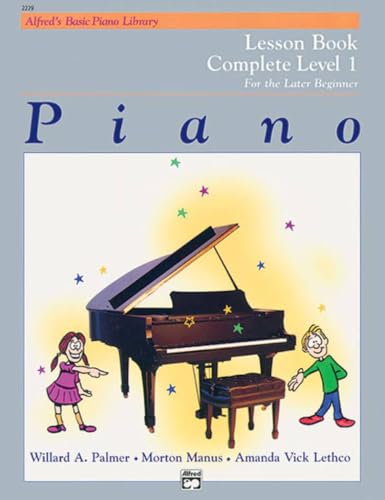
10Alfred's Basic Adult Piano Course Lesson Book, Bk 1
A beginning course for adults who prefer a chord approach. It teaches chords for both hands so that the student can play more than single note melodies. This course is most effective when used under the direction of a piano teacher or experienced musician. Titles: Alouette • Alpine Melody • Amazing Grace • At Last • Au Claire de la Lune • Aura Lee • The Ballad of Gilligan's Island • Beautiful Brown Eyes • Blow the Man Down! • Brother John • Caf� Vienna • The Can-Can • Chiapanecas • Cockles and Mussels • The Cuckoo • The Donkey • The Entertainer • A Friend Like You • The Gift to Be Simple • Go Down, Moses • Good King Wenceslas • Good Morning to You! • Got Those Blues • Greensleeves • Happy Birthday to You! • Harp Song • Have Yourself a Merry Little Christmas • Here's a Happy Song! • He's Got the Whole World in His Hands • Jericho • Jingle Bells • Joy to the World! • Kum-ba-yah! • Largo (Dvorak) • Laura • Lavender's Blue • Little Brown Jug • London Bridge • Lone Star Waltz • Love Somebody • The Marine's Hymn • Mary Ann • Merrily We Roll Along • Mexican Hat Dance • Michael, Row the Boat Ashore • Money Can't Buy Everything • My Fifth • Ode to Joy • On Top of Old Smoky • O Sole Mio • Over the Rainbow • Raisins and Almonds • Rockets • Rockin' Intervals • Rock It Away! • Scarborough Fair • Singin' in the Rain • Standing in the Need of Prayer • Tisket, a Tasket • Waltz Time • What Can I Share • When the Saints Go Marching In • Why Am I Blue?
 11
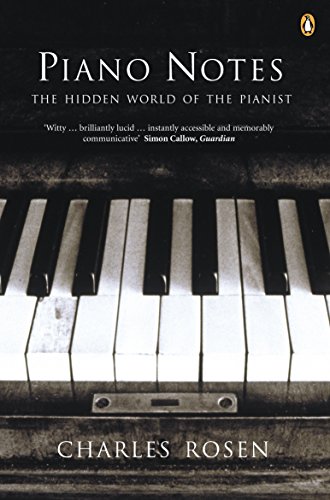
11Piano Notes: The World of the Pianist
Among the world's instruments, the piano stands out as the most versatile, powerful, and misunderstood -- even by those who have spent much of their lives learning to play. In Piano Notes, a finalist for a 2003 National Book Critics Circle Award, Charles Rosen, one of the world's most talented pianists, distills a lifetime of wisdom and lore into an unforgettable tour of the hidden world of piano playing.
You'll read about how a note is produced, why a chord can move us, why the piano -- "hero and villain" of tonality -- has shaped the course of Western music, and why it is growing obsolete. Rosen explains what it means that Beethoven composed in his head whereas Mozart would never dream of doing so, why there are no fortissimos in the works of Ravel, and why a piano player's acrobatics have an important dramatic effect but nothing more. Ending on a contemplative note, Piano Notes offers an elegant argument that piano music "is not just sound or even significant sound" but a mechanical, physical, and fetishistic experience that faces new challenges in an era of recorded music. Rosen ponders whether piano playing will ever again be the same, and his insights astonish.
You'll read about how a note is produced, why a chord can move us, why the piano -- "hero and villain" of tonality -- has shaped the course of Western music, and why it is growing obsolete. Rosen explains what it means that Beethoven composed in his head whereas Mozart would never dream of doing so, why there are no fortissimos in the works of Ravel, and why a piano player's acrobatics have an important dramatic effect but nothing more. Ending on a contemplative note, Piano Notes offers an elegant argument that piano music "is not just sound or even significant sound" but a mechanical, physical, and fetishistic experience that faces new challenges in an era of recorded music. Rosen ponders whether piano playing will ever again be the same, and his insights astonish.
 12
12Jane Eyre
Orphaned as a child, Jane has felt an outcast her whole young life. Her courage is tested once again when she arrives at Thornfield Hall, where she has been hired by the brooding, proud Edward Rochester to care for his ward Adèle. Jane finds herself drawn to his troubled yet kind spirit. She falls in love. Hard.
But there is a terrifying secret inside the gloomy, forbidding Thornfield Hall. Is Rochester hiding from Jane? Will Jane be left heartbroken and exiled once again?

Audrey Penn
My next one is Jane Eyre. She was orphaned and sent to a very rich aunt, who had her own very selfish children. Jane Eyre was not the perfect child and she was sent to live in a girls’ school. She made one friend, but unfortunately the little girl died, so she had to toughen up. She grew up there and learned everything she needed to know about teaching. She was a very good artist, she played a little piano, she learned French. When she got older she became the governess for a little French girl who was the ward of a man who lived in a manor. They fell in love, but it turned out that he had a wife, who was insane and lived in the attic. So Jane Eyre ran away and found out she had an uncle who had left her a great deal of money. But she couldn’t get the man out of her mind, so she went back. She found out that after she left, the man’s wife had set the place on fire. The wife had died in the fire, and it had blinded him. They were still very much in love and they married. And they lived happily ever after. [source]

John Sutherland
There is an interesting debate … that the real heroine of Jane Eyre is not the plain little governess but the mad woman in the attic, Bertha Mason [source]

I think Charlotte Brontë’s most accomplished book is Villette. It’s probably a better book, it’s tighter and more sophisticated in some ways. But there’s something about Jane Eyre that is just deeply emotionally compelling for me. [source]
 13
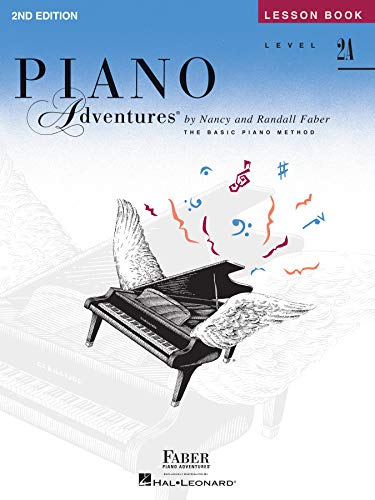
13Piano Adventures Lesson Book, Level 2A
Faber Piano Adventures The 2nd Edition Level 2A Lesson Book follows Piano Adventures Level 1. The book opens with a Note Reading Guide and an introduction to eighth note rhythm patterns. Students work with 5-finger transposition, functional harmony, and musical phrases. Exploration of C, G, D and A major and minor 5-finger positions builds on intervallic reading skills that were introduced in the earlier level. Appealing repertoire reinforces key concepts and encourages students to explore musical expression through varied dynamics and tempos. Selections include well-known classics from the great composers and original compositions.
 14
14Playing the Piano for Pleasure
 15
15The Piano Handbook
(Book). With clear and easy-to-understand exercises, The Piano Handbook is perfect for anyone interested in learning the piano or improving their skills. It provides fresh material and techniques in styles ranging from classical to jazz, rock, bebop and fusion, and gives new players everything they need to learn and enjoy the piano. This book's innovative tutorial approach covers classical and contemporary music styles in an integrated way, and the companion audio brings the playing techniques and concepts to life. A full-color photo gallery illustrates the history of the piano and its essential recordings. The book also includes access to audio downloads of selected examples and pieces. This hardcover, deluxe edition also features semi-concealed spiral binding so the book stays open on the piano. The Piano Handbook prepares you not just to play, but to perform and not just as a pianist, but as a complete musician.
 16
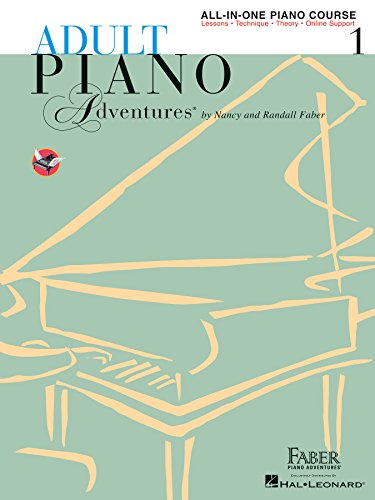
16Adult Piano Adventures All-In-One Lesson Book 1: A Comprehensive Piano Course
(Faber Piano Adventures ). Adult Piano Adventures enables the adult beginner to play music for pleasure while developing musical understanding. This comprehensive "All-In-One" book includes lessons, technique, and theory in a single volume for ease of use. Book 1 presents the fundamentals of music notation, chord playing, and musical form. The redesigned layout improves information hierarchy, putting focus on key concepts and step-by-step learning. Online support is now included, with over two hours of instructional videos and audio accompaniment tracks that inspire rhythmic vitality and artistic expression. Songs include: Amazing Grace • The Can-Can • Catch a Falling Star • Danny Boy • Eine Kleine Nachtmusik • The Entertainer • Greensleeves • The Lion Sleeps Tonight • and more!
 17
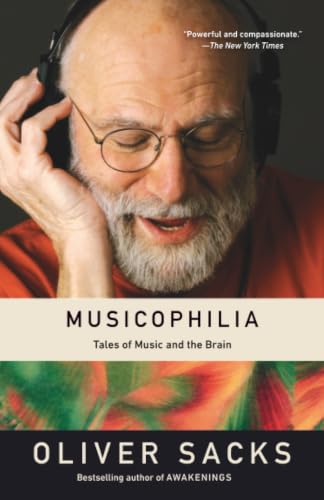
17Musicophilia: Tales of Music and the Brain
With the same trademark compassion and erudition he brought to The Man Who Mistook His Wife for a Hat, Oliver Sacks explores the place music occupies in the brain and how it affects the human condition. In Musicophilia, he shows us a variety of what he calls “musical misalignments.” Among them: a man struck by lightning who suddenly desires to become a pianist at the age of forty-two; an entire group of children with Williams syndrome, who are hypermusical from birth; people with “amusia,” to whom a symphony sounds like the clattering of pots and pans; and a man whose memory spans only seven seconds-for everything but music. Illuminating, inspiring, and utterly unforgettable, Musicophilia is Oliver Sacks’ latest masterpiece.

 Recommended by Aniela Gregorek and Justin Boreta.
 18
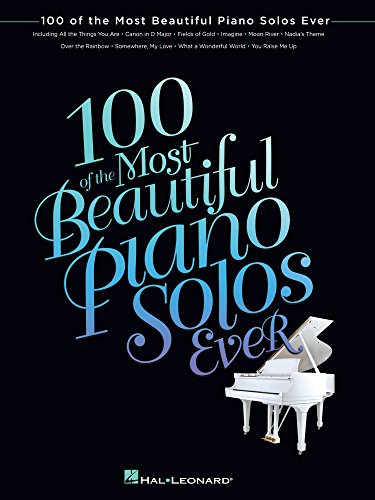
18100 of the Most Beautiful Piano Solos Ever
(Piano Solo Songbook). 100 pop and classical standards that every piano player should master, including: Air on the G String • Bridge over Troubled Water • Canon in D • Clair de Lune • Fields of Gold • Fur Elise • I Dreamed a Dream • I Will Always Love You • Imagine • Lullaby of Birdland • Memory • Misty • Moon River • On My Own • Over the Rainbow • The Shadow of Your Smile • Smile • Stardust • Summertime • Sunrise, Sunset • Time After Time • Unexpected Song • The Way You Look Tonight • We've Only Just Begun • What a Wonderful World • Yesterday • You Raise Me Up • Your Song • and more!
 19
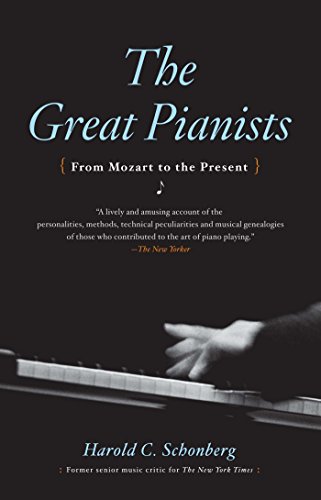
19The Great Pianists
From Mozart’s fabulous legato that “flowed like oil” to Beethoven’s oceanlike surge, from Clara Schumann’s touch “sharp as a pencil sketch” to Rubinstein’s volcanic and sensual playing, The Great Pianists brings to life the brilliant, stylish, and sometimes eccentric personalities, methods, and technical peculiarities of history’s greatest pianists.
Pulitzer Prize–winning critic and author Harold C. Schonberg presents vivid accounts of the artists’ performances, styles, and even their personal lives and quirky characteristics— such as Mozart’s intense competition with Clementi, Lizst’s magnetic effect on women (when he played, ladies flung their jewels on stage), and Gottschalk’s persistent nailbiting, which left the keys covered with blood.
Including profiles of Horowitz and Van Cliburn, among others, and chapters detailing the playing and careers of such modern pianists as de Larrocha, Ashkenazy, Gilels, Gould, Brendel, Bolet, Gutierrez, and Watts, The Great Pianists is a comprehensive and fascinating look at legendary performers past and present.
Pulitzer Prize–winning critic and author Harold C. Schonberg presents vivid accounts of the artists’ performances, styles, and even their personal lives and quirky characteristics— such as Mozart’s intense competition with Clementi, Lizst’s magnetic effect on women (when he played, ladies flung their jewels on stage), and Gottschalk’s persistent nailbiting, which left the keys covered with blood.
Including profiles of Horowitz and Van Cliburn, among others, and chapters detailing the playing and careers of such modern pianists as de Larrocha, Ashkenazy, Gilels, Gould, Brendel, Bolet, Gutierrez, and Watts, The Great Pianists is a comprehensive and fascinating look at legendary performers past and present.
 20
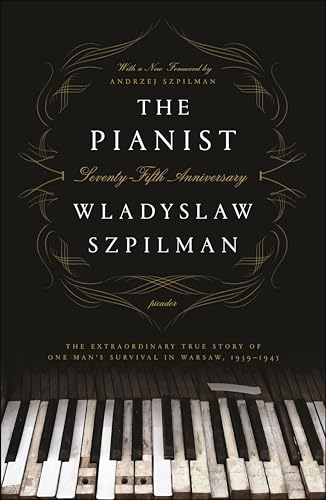
20The Pianist: The Extraordinary Story of One Man's Survival in Warsaw, 1939–45
The last live broadcast on Polish Radio, on September 23, 1939, was Chopin's Nocturne in C# Minor, played by a young pianist named Wladyslaw Szpilman, until his playing was interrupted by German shelling. It was the same piece and the same pianist, when broadcasting was resumed six years later. The Pianist is Szpilman's account of the years inbetween, of the death and cruelty inflicted on the Jews of Warsaw and on Warsaw itself, related with a dispassionate restraint borne of shock. Szpilman, now 88, has not looked at his description since he wrote it in 1946 (the same time as Primo Levi's If This Is A Man?; it is too personally painful. The rest of us have no such excuse.
Szpilman's family were deported to Treblinka, where they were exterminated; he survived only because a music-loving policeman recognised him. This was only the first in a series of fatefully lucky escapes that littered his life as he hid among the rubble and corpses of the Warsaw Ghetto, growing thinner and hungrier, yet condemned to live. Ironically it was a German officer, Wilm Hosenfeld, who saved Szpilman's life by bringing food and an eiderdown to the derelict ruin where he discovered him. Hosenfeld died seven years later in a Stalingrad labour camp, but portions of his diary, reprinted here, tell of his outraged incomprehension of the madness and evil he witnessed, thereby establishing an effective counterpoint to ground the nightmarish vision of the pianist in a desperate reality. Szpilman originally published his account in Poland in 1946, but it was almost immediately withdrawn by Stalin's Polish minions as it unashamedly described collaborations by Lithuanians, Ukrainians, Poles and Jews with the Nazis. In 1997 it was published in Germany after Szpilman's son found it on his father's bookcase. This admirably robust translation by Anthea Bell is the first in the English language. There were 3,500,000 Jews in Poland before the Nazi occupation; after it there were 240,000. Wladyslaw Szpilman's extraordinary account of his own miraculous survival offers a voice across the years for the faceless millions who lost their lives. --David Vincent
 21
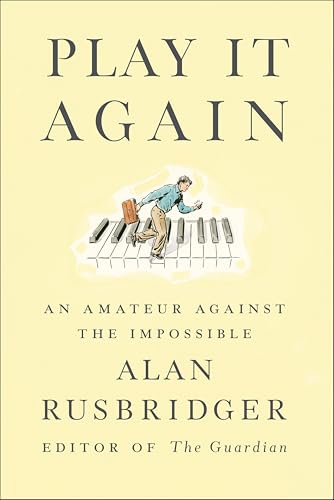
21Play it Again: An Amateur Against the Impossible
The Guardian editor’s account of a remarkable musical challenge during an extraordinary year for news
As the editor of The Guardian, Alan Rusbridger’s life is dictated by the demands of the twenty-four-hour news cycle. It is not the kind of job that leaves time for hobbies.
But in the summer of 2010, Rusbridger determined to learn, in the course of a year, Chopin’s Ballade No.1 in G minor, one of the most beautiful and challenging pieces of music ever composed. With passages that demand feats of memory, dexterity, and power, even concert pianists are intimidated by its pyrotechnical requirements.
Rusbridger’s timing could have been better. The next twelve months witnessed the Arab Spring and the Japanese tsunami and were bookended by The Guardian breaking two major news stories: WikiLeaks and the News of the World phone-hacking scandal. It was a defining year for The Guardian and its editor.
In Play It Again, Rusbridger recounts trying to carve out twenty minutes a day to practice, find the right teacher, the right piano, the right fingering—even if it meant practicing in a Libyan hotel in the midst of a revolution. He sought advice from legendary pianists, from historians and neuroscientists, and even occasionally from secretaries of state. But was he able to conquer the piece?
A book about distraction, absorption, discipline, and desire, Play It Again resonates far beyond the realm of music, for anyone with an instinct to “wall off a small part of . . . life for creative expression.”
As the editor of The Guardian, Alan Rusbridger’s life is dictated by the demands of the twenty-four-hour news cycle. It is not the kind of job that leaves time for hobbies.
But in the summer of 2010, Rusbridger determined to learn, in the course of a year, Chopin’s Ballade No.1 in G minor, one of the most beautiful and challenging pieces of music ever composed. With passages that demand feats of memory, dexterity, and power, even concert pianists are intimidated by its pyrotechnical requirements.
Rusbridger’s timing could have been better. The next twelve months witnessed the Arab Spring and the Japanese tsunami and were bookended by The Guardian breaking two major news stories: WikiLeaks and the News of the World phone-hacking scandal. It was a defining year for The Guardian and its editor.
In Play It Again, Rusbridger recounts trying to carve out twenty minutes a day to practice, find the right teacher, the right piano, the right fingering—even if it meant practicing in a Libyan hotel in the midst of a revolution. He sought advice from legendary pianists, from historians and neuroscientists, and even occasionally from secretaries of state. But was he able to conquer the piece?
A book about distraction, absorption, discipline, and desire, Play It Again resonates far beyond the realm of music, for anyone with an instinct to “wall off a small part of . . . life for creative expression.”
 22
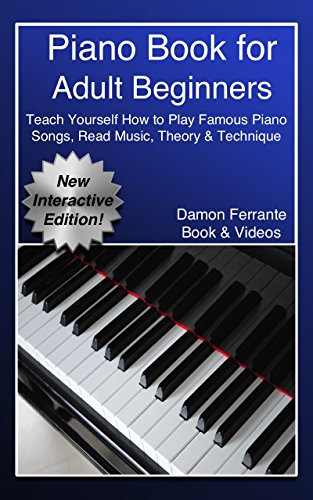
22Piano Book for Adult Beginners: Teach Yourself How to Play Famous Piano Songs, Read Music, Theory & Technique (Book & Streaming Video Lessons)
This book and streaming video course is all that you will ever need for getting started playing the most famous and cherished piano classics!
Piano Professor, Damon Ferrante guides you through how to play the piano with step-by-step lessons for beginners and 20 streaming video lessons.
This easy-to-follow method, used by thousands of piano students and teachers, is designed to be interactive, engaging and fun.
No music reading is required! Learn great piano songs!
The lessons will greatly expand your repertoire of beloved piano songs and improve your piano technique, creativity, and understanding of music. Whether you are teaching yourself piano or learning with a music instructor, this book and streaming video course will take your piano playing to a whole new level!
Ask yourself this:
1. Have you always wanted to learn how to play famous piano pieces, but did not know where to start?
2. Did you start piano lessons once and give up because the lessons were too difficult?
3. Are you struggling to follow online piano lessons that seem to jump all over the place without any sense of direction or consistency?
4. Would you like to expand your musical understanding and learn how to play the piano through an affordable, step-by-step book and video course?
If your answer to any of the these questions is yes, then this beginner piano book and video course is definitely for you!
The following great music is covered in this book and streaming video course:
* F�r Elise by Beethoven
* The Entertainer by Scott Joplin
* Amazing Grace
* Pachelbel's Canon
* House of the Rising Sun
* Scarborough Fair
* Turkish Rondo by Mozart
* Shenandoah
* Happy Birthday
* Danny Boy
* Kum-Bah-Yah
* Jingle Bells
* J.S. Bach's Prelude in C Major
* Home on the Range
* This Little Light of Mine
* Hall of the Mountain King by Grieg
* Take Me Out to the Ballgame
* Red River Valley
* Silent Night
* New World Symphony Theme
* When the Saints Go Marching In
* Greensleeves
* Aura Lee
* Brahms' Famous Lullaby
* Simple Gifts
* And Many More Great Songs and Pieces!
Piano Professor, Damon Ferrante guides you through how to play the piano with step-by-step lessons for beginners and 20 streaming video lessons.
This easy-to-follow method, used by thousands of piano students and teachers, is designed to be interactive, engaging and fun.
No music reading is required! Learn great piano songs!
The lessons will greatly expand your repertoire of beloved piano songs and improve your piano technique, creativity, and understanding of music. Whether you are teaching yourself piano or learning with a music instructor, this book and streaming video course will take your piano playing to a whole new level!
Ask yourself this:
1. Have you always wanted to learn how to play famous piano pieces, but did not know where to start?
2. Did you start piano lessons once and give up because the lessons were too difficult?
3. Are you struggling to follow online piano lessons that seem to jump all over the place without any sense of direction or consistency?
4. Would you like to expand your musical understanding and learn how to play the piano through an affordable, step-by-step book and video course?
If your answer to any of the these questions is yes, then this beginner piano book and video course is definitely for you!
The following great music is covered in this book and streaming video course:
* F�r Elise by Beethoven
* The Entertainer by Scott Joplin
* Amazing Grace
* Pachelbel's Canon
* House of the Rising Sun
* Scarborough Fair
* Turkish Rondo by Mozart
* Shenandoah
* Happy Birthday
* Danny Boy
* Kum-Bah-Yah
* Jingle Bells
* J.S. Bach's Prelude in C Major
* Home on the Range
* This Little Light of Mine
* Hall of the Mountain King by Grieg
* Take Me Out to the Ballgame
* Red River Valley
* Silent Night
* New World Symphony Theme
* When the Saints Go Marching In
* Greensleeves
* Aura Lee
* Brahms' Famous Lullaby
* Simple Gifts
* And Many More Great Songs and Pieces!
 23
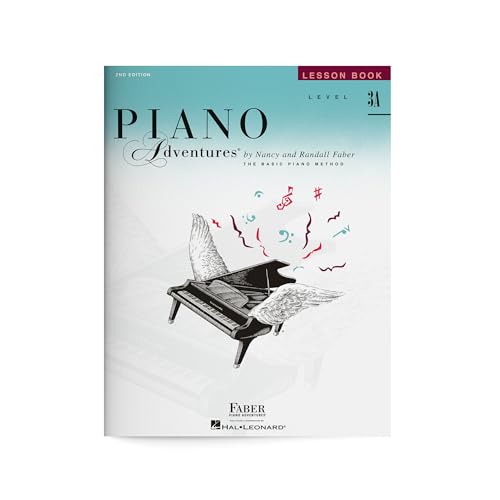
23Piano Adventures Lesson Book, Level 3A
Faber Piano Adventures Level 3A introduces 3/8 and 6/8 time signatures and the triplet. Students learn the chromatic scale, the 7th, one-octave arpeggios, and explore the key of D major. Contents include: Amazing Grace • Campbells are Coming • Cool Walkin' Bass • Cossak Ride • Echoes of the Harp • Eine Kleine Nachtmusik • Ice Dancing • Joshua Fought the Battle of Jericho • Land of the Silver Birch • Looking-Glass River • Lunar Eclipse • March Slav • and more.
 24
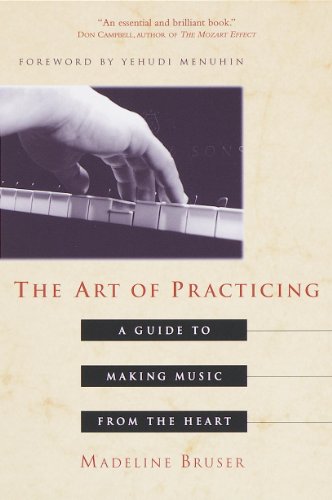
24The Art of Practicing: A Guide to Making Music from the Heart
This landmark book enlightens amateur and professional musicians about a way of practicing that transforms a sometimes frustrating, monotonous, and overly strenuous labor into an exhilarating and rewarding experience. Acclaimed pianist and teacher Madeline Bruser combines physiological and meditative principles to help musicians release physical and mental tension and unleash their innate musical talent. She offers practical techniques for cultivating free and natural movement, a keen enjoyment of sounds and sensations, a clear and relaxed mind, and an open heart and she explains how to
Prepare the body and mind to practice with ease
Understand the effect of posture on flexibility and expressiveness
Make efficient use of the hands and arms
Employ listening techniques to improve coordination
Increase the range of color and dynamics by using less effort
Cultivate rhythmic vitality
Perform with confidence, warmth, and freedom
Photographs show essential points of posture and movement for a variety of instruments.
Prepare the body and mind to practice with ease
Understand the effect of posture on flexibility and expressiveness
Make efficient use of the hands and arms
Employ listening techniques to improve coordination
Increase the range of color and dynamics by using less effort
Cultivate rhythmic vitality
Perform with confidence, warmth, and freedom
Photographs show essential points of posture and movement for a variety of instruments.
 25
25Bastien Piano Basics: Piano Level 1
Bastien Piano Basics
 26
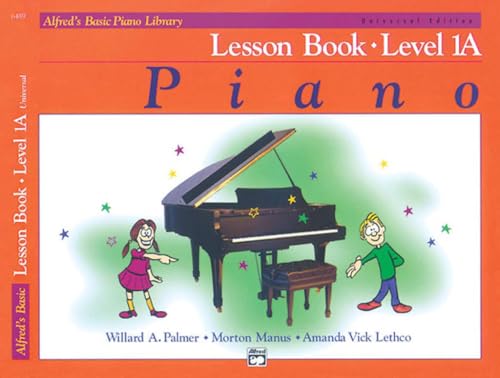
26Alfred's Basic Piano Library Lesson Book, Bk 1a: Book & CD
This easy step-by-step method emphasizes correct playing habits and note reading through interval recognition. Lesson Book Level 1A begins by teaching basic keyboard topography and fluent recognition of white key names in relation to black keys. It focuses on simple rhythms and prepares students for intervallic reading with entertaining songs that focus on "same," "stepping up" and "stepping down." It then introduces lines and space notes in treble and bass clefs, melodic and harmonic intervals of 2nds, 3rds, 4ths and 5ths, and graduates to reading on the grand staff. It also introduces the flat and sharp signs. This course is most effective when used under the direction of a piano teacher or experienced musician. Songs Include: Balloons • Batter Up! • The Donkey • A Friend Like You • Hand-Bells • A Happy Song • Horse Sense • Totem Pole Song • It's Halloween! • Jingle Bells! • Jolly Old Saint Nicholas • July the Fourth! • Just a Second! • Love Somebody • Merrily We Roll Along O'er the Deep Blue Sea • Mexican Hat Dance • My Clever Pup • My Fifth • My Robot • Old MacDonald • Old Uncle Bill • Play a Fourth • Raindrops • Rain, Rain! • Rockets • Rockin' Tune • Rock Song • Sailing • Sea Divers • See-Saws • Skating • Who's on Third? • Willie and Tillie • Wishing Well • The Zoo
 27
27Adult All-in-one Course: Alfred's Basic Adult Piano Course, Level 2
 28
28A Romance on Three Legs: Glenn Gould's Obsessive Quest for the Perfect Piano
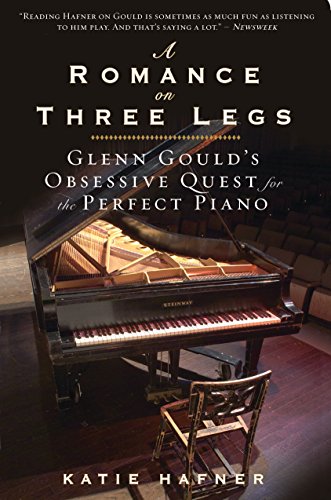
Glenn Gould was famous for his obsessions: the scarves, sweaters and fingerless gloves that he wore even on the hottest summer days; his deep fear of germs and illness; the odd wooden "pygmy" chair that he carried with him wherever he performed; and his sudden withdrawal from the public stage at the peak of his career. But perhaps Gould's greatest obsession of all was for a particular piano, a Steinway concert grand known as CD318 (C, meaning for the use of Steinway Concert Artists only, and D, denoting it as the largest that Steinway built). A Romance on Three Legs is the story of Gould's love for this piano, from the first moment of discovery, in a Toronto dept. store, to the tragic moment when the piano was dropped and seriously damaged while being transported from a concert overseas. Hafner also introduces us to the world and art of piano tuning, including a central character in Gould's life, the blind tuner Verne Edquist, who lovingly attended to CD318 for more than two decades. We learn how a concert grand is built, and the fascinating story of how Steinway & Sons weathered the war years by supplying materials for the military effort. Indeed, CD318 came very close to ending up as a series of glider parts or, worse, a casket. The book has already been lauded by Kevin Bazzana, author of the definitive Gould biography, who notes that Hafner "has clarified some old mysteries and turned up many fresh details."
 29
29What Every Pianist Needs to Know About the Body
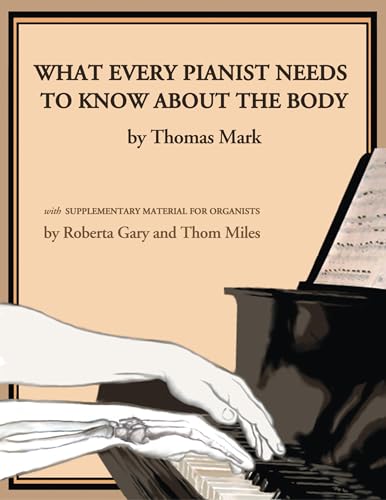
Techniques on how to gain greater fluidity of movement while playing to improve the quality of the experience are offered in this manual for serious piano players. This book encourages musicians to develop a broader understanding of the involvement of the entire body in playing—and the strains playing places on the body—by focusing on body mapping to increase awareness of the body’s function, size, and structure. Ways in which piano, organ, harpsichord, clavichord, and digital keyboard players can eliminate or prevent carpal tunnel syndrome and other debilitating conditions without traditional medical treatments are also explored.
 30
30Piano Lessons: Music, Love, and True Adventures
Piano Lessons is Noah Adams's delightful and moving chronicle of his fifty-second year--a year already filled with long, fast workdays and too little spare time--as he answers at last a lifelong call: to learn to play the piano. The twelve monthly chapters span from January--when after decades of growing affection for keyboard artists and artisans he finally plunges in and buys a piano--through December, when as a surprise Christmas present for his wife he dresses in a tuxedo and, in flickering candlelight, snow falling outside the windows, he attempts their favorite piece of music, a difficult third-year composition he's been struggling with in secret to get to this very moment.
Among the up-tempo triumphs and unexpected setbacks, Noah Adams interweaves the rich history and folklore that surround the piano. And along the way, set between the ragtime rhythms and boogie-woogie beats, there are encounters with--and insights from--masters of the keyboard, from Glenn Gould and Leon Fleisher ("I was a bit embarrassed," he writes; "telling Leon Fleisher about my ambitions for piano lessons is like telling Julia Child about plans to make toast in the morning") to Dr. John and Tori Amos.
As a storyteller, Noah Adams has perfect pitch. In the foreground here, like a familiar melody, are the challenges of learning a complex new skill as an adult, when enthusiasm meets the necessary repetition of tedious scales at the end of a twelve-hour workday. Lingering in the background, like a subtle bass line, are the quiet concerns of how we spend our time and how our priorities shift as we proceed through life. For Piano Lessons is really an adventure story filled with obstacles to overcome and grand leaps forward, eccentric geniuses and quiet moments of pre-dawn practice, as Noah Adams travels across country and keyboard, pursuing his dream and keeping the rhythm.
Among the up-tempo triumphs and unexpected setbacks, Noah Adams interweaves the rich history and folklore that surround the piano. And along the way, set between the ragtime rhythms and boogie-woogie beats, there are encounters with--and insights from--masters of the keyboard, from Glenn Gould and Leon Fleisher ("I was a bit embarrassed," he writes; "telling Leon Fleisher about my ambitions for piano lessons is like telling Julia Child about plans to make toast in the morning") to Dr. John and Tori Amos.
As a storyteller, Noah Adams has perfect pitch. In the foreground here, like a familiar melody, are the challenges of learning a complex new skill as an adult, when enthusiasm meets the necessary repetition of tedious scales at the end of a twelve-hour workday. Lingering in the background, like a subtle bass line, are the quiet concerns of how we spend our time and how our priorities shift as we proceed through life. For Piano Lessons is really an adventure story filled with obstacles to overcome and grand leaps forward, eccentric geniuses and quiet moments of pre-dawn practice, as Noah Adams travels across country and keyboard, pursuing his dream and keeping the rhythm.
 31
31The Last Song
Alternate Cover Edition can be found here
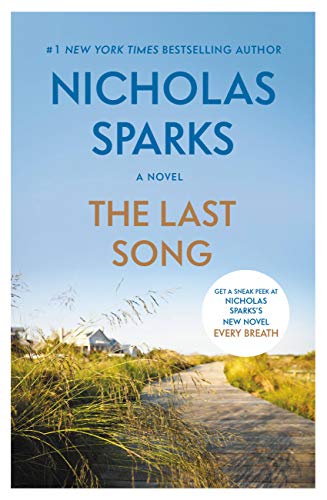
Seventeen-year-old Veronica 'Ronnie' Miller’s life was turned upside-down when her parents divorced and her father moved from New York City to Wilmington, North Carolina. Three years later, she remains angry and alienated from her parents, especially her father . . . until her mother decides it would be in everyone’s best interest if she spent the summer in Wilmington with him. Ronnie’s father, a former concert pianist and teacher, is living a quiet life in the beach town, immersed in creating a work of art that will become the centerpiece of a local church.
The tale that unfolds is an unforgettable story about love in its myriad forms - first love, the love between parents and children - that demonstrates, as only a Nicholas Sparks novel can, the many ways that deeply felt relationships can break our hearts . . . and heal them.
Seventeen-year-old Veronica 'Ronnie' Miller’s life was turned upside-down when her parents divorced and her father moved from New York City to Wilmington, North Carolina. Three years later, she remains angry and alienated from her parents, especially her father . . . until her mother decides it would be in everyone’s best interest if she spent the summer in Wilmington with him. Ronnie’s father, a former concert pianist and teacher, is living a quiet life in the beach town, immersed in creating a work of art that will become the centerpiece of a local church.
The tale that unfolds is an unforgettable story about love in its myriad forms - first love, the love between parents and children - that demonstrates, as only a Nicholas Sparks novel can, the many ways that deeply felt relationships can break our hearts . . . and heal them.
 32
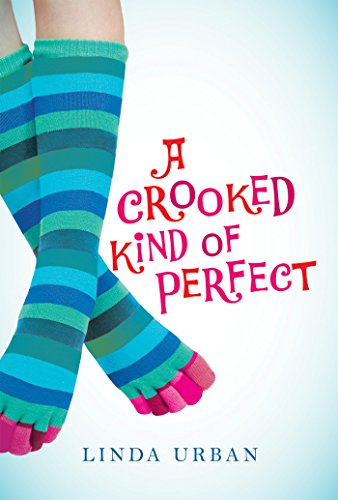
32A Crooked Kind of Perfect
Ten-year-old Zoe Elias has perfect piano dreams. She can practically feel the keys under her flying fingers; she can hear the audience's applause. All she needs is a baby grand so she can start her lessons, and then she'll be well on her way to Carnegie Hall.
But when Dad ventures to the music store and ends up with a wheezy organ instead of a piano, Zoe's dreams hit a sour note. Learning the organ versions of old TV theme songs just isn't the same as mastering Beethoven on the piano. And the organ isn't the only part of Zoe's life in Michigan that's off-kilter, what with Mom constantly at work, Dad afraid to leave the house, and that odd boy, Wheeler Diggs, following her home from school every day.
Yet when Zoe enters the annual Perform-O-Rama organ competition, she finds that life is full of surprises--and that perfection may be even better when it's just a little off center.
But when Dad ventures to the music store and ends up with a wheezy organ instead of a piano, Zoe's dreams hit a sour note. Learning the organ versions of old TV theme songs just isn't the same as mastering Beethoven on the piano. And the organ isn't the only part of Zoe's life in Michigan that's off-kilter, what with Mom constantly at work, Dad afraid to leave the house, and that odd boy, Wheeler Diggs, following her home from school every day.
Yet when Zoe enters the annual Perform-O-Rama organ competition, she finds that life is full of surprises--and that perfection may be even better when it's just a little off center.
 33
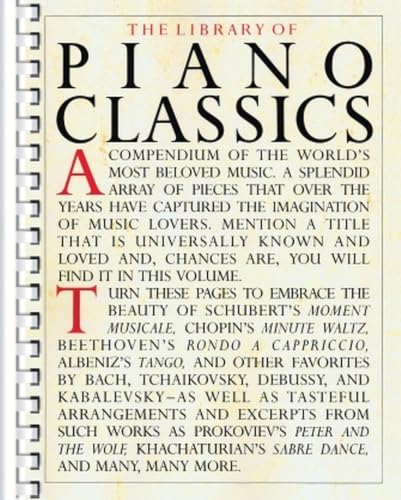
33Library of Piano Classics: Piano Solo
(Music Sales America). A compendium of the world's most loved music. True to the spirit of the great composers, this volume fills the needs of students and teachers. Over 100 works, including Schubert's "Moment Musicale," Chopin's "Minute Waltz," Beethoven's "Rondo a Cappriccio," and much more. Spiral bound.
 34
34Complete Piano Sonatas, Volume 1 (Nos. 1-15)
The entire corpus of Beethoven's piano sonatas is contained in this two-volume work — 32 sonatas in all. Volume One contains the fifteen sonatas from Beethoven's first period, including the popular Pathétique, Moonlight, and Pastorale sonatas. Volume Two contains the 17 sonatas from Beethoven's second and third periods, including the Waldstein, the Appassionata, and the Hammerklavier.
The music is reproduced directly from the exemplary Universal Edition set edited by Heinrich Schenker. Combining scrupulous scholarship and profound artistic vision, Schenker achieved an edition which is universally admired by musicians and scholars. He used more autographs as sources than any previous editor of the sonatas, and he was the first to reproduce in print the visual impression of the autographs. For this Dover edition, Schenker's footnotes have been translated into English and his preface translated. A new introduction by Carl Schachter has also been included.
Noteheads have been reproduced in a size large enough to be read easily at the keyboard. Margins and spaces between staves are generous, permitting insertion of written notes, analysis, fingerings, etc. Running measure numbers and many fingerings have already been included by the editor — the last a particularly unusual and valuable feature of this edition. This edition will be welcomed by all pianists, both professional and amateur, for its accuracy and reliability; it is highly desirable for instruction, study, reference, and enjoyment.
The music is reproduced directly from the exemplary Universal Edition set edited by Heinrich Schenker. Combining scrupulous scholarship and profound artistic vision, Schenker achieved an edition which is universally admired by musicians and scholars. He used more autographs as sources than any previous editor of the sonatas, and he was the first to reproduce in print the visual impression of the autographs. For this Dover edition, Schenker's footnotes have been translated into English and his preface translated. A new introduction by Carl Schachter has also been included.
Noteheads have been reproduced in a size large enough to be read easily at the keyboard. Margins and spaces between staves are generous, permitting insertion of written notes, analysis, fingerings, etc. Running measure numbers and many fingerings have already been included by the editor — the last a particularly unusual and valuable feature of this edition. This edition will be welcomed by all pianists, both professional and amateur, for its accuracy and reliability; it is highly desirable for instruction, study, reference, and enjoyment.
 35
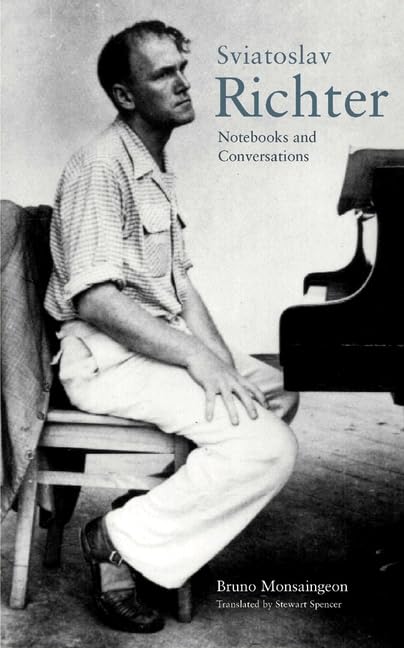
35Sviatoslav Richter: Notebooks and Conversations
Sviatoslav Richter was a dazzling performer but an intensely private man. Though world famous and revered by classical music lovers everywhere, he guarded himself and his thoughts as carefully as his talent. Fascinated, author and filmmaker Bruno Monsaingeon tried vainly for years to interview the enigmatic pianist. Richter eventually yielded, granting Monsaingeon hours of taped conversation, unlimited access to his diaries and notebooks, and, ultimately, his friendship. This book is the product of that friendship.
Richter reveals himself as a man and an artist. Unsentimentally and with his characteristic dry humor and intelligence, the musician describes his poignant childhood and spectacular career, including his tumultuous early days at the Moscow Conservatory and his triumphant 1960 tour of the United States. His laconic recounting of playing in the orchestra at Stalin's surreal, interminable state funeral is riveting. Most important for music lovers, Richter discusses his influences and views on musical interpretation. He describes his encounters with other great Russian performers and composers, including Prokoviev, Shostakovich, Oistrakh, and Gilels. Candid sections from his personal journals offer his sober and unguarded impressions of dozens of performances and recordings--both his own and those of other musicians.
This volume offers readers the sizable pleasure of lingering in the thoughts and words of one of the most important pianists of the twentieth century. Unlike many other star performers, Richter was also an intellectual who had interesting things to say, particularly about the musician's proper role as interpreter of the composer's art. This alone makes the book worth reading. Sviatoslav Richter belongs on the shelves of everyone with a classical music collection and will also appeal to lovers of autobiography and admirers of Russian musical culture.
Richter reveals himself as a man and an artist. Unsentimentally and with his characteristic dry humor and intelligence, the musician describes his poignant childhood and spectacular career, including his tumultuous early days at the Moscow Conservatory and his triumphant 1960 tour of the United States. His laconic recounting of playing in the orchestra at Stalin's surreal, interminable state funeral is riveting. Most important for music lovers, Richter discusses his influences and views on musical interpretation. He describes his encounters with other great Russian performers and composers, including Prokoviev, Shostakovich, Oistrakh, and Gilels. Candid sections from his personal journals offer his sober and unguarded impressions of dozens of performances and recordings--both his own and those of other musicians.
This volume offers readers the sizable pleasure of lingering in the thoughts and words of one of the most important pianists of the twentieth century. Unlike many other star performers, Richter was also an intellectual who had interesting things to say, particularly about the musician's proper role as interpreter of the composer's art. This alone makes the book worth reading. Sviatoslav Richter belongs on the shelves of everyone with a classical music collection and will also appeal to lovers of autobiography and admirers of Russian musical culture.
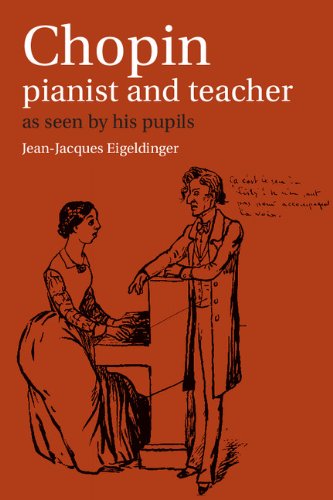 36
36Chopin: Pianist and Teacher: As Seen by His Pupils
The accounts of Chopin's pupils, acquaintances and contemporaries, together with his own writing, provide valuable insights into the musician's pianistic and stylistic practice, his teaching methods and his aesthetic beliefs. This unique collection of documents, edited and annotated by Jean-Jacques Eigeldinger, reveals Chopin as teacher and interpreter of his own music. Included in this study is extensive appendix material that presents annotated scores, and personal accounts of Chopin's playing by pupils, writers, and critics.
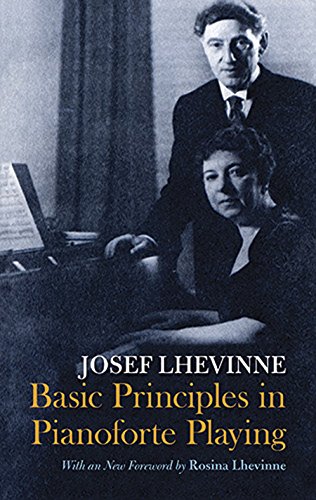 37
37Basic Principles in Pianoforte Playing
This little book, written at the height of his career by Josef Lhevinne, the "inward poet of the piano," is a clear statement of principles based on his lifelong experience in performance and teaching. Lhevinne was, with Rachmaninoff, Schnabel, and Hoffman, one of the great modern masters, and was the first artist invited to teach at the newly formed Julliard Graduate School of Music.
Technique, through essential, must be subordinate to musical understanding. Complete knowledge of scales, apprehended not mechanically but musically; understanding of the uses of rests and silence, which Mozart considered the greatest effect in music; a feeling for rhythm and training of the ear; these are the basic elements of a thorough grounding in musicianship and are accordingly emphasized in the opening chapters.
The heart of the book is devoted to the attainment of a beautiful tone. Anyone who has heard Lhevinne play or has listened to one of his recordings will know how great were his achievements in that area. The secret lay, at least in part, in the technique he called "the arm floating in air," and in the use of the wrists as natural shock absorbers. The achievement of varieties of tone, of the singing, ringing tone, of brilliancy, of delicacy, and of power are all explained in terms of a careful analysis of the ways in which the fingers, hand, wrist, arm, and indeed the whole body function in striking the keys. There are further remarks about how to get a clear staccato and an unblurred legato, about the dangers of undue emphasis on memorization and the need for variety in practicing, and special comments on the use of the pedal, which should be employed with as much precision as the keys.
Throughout, specific musical examples are presented as illustrations. The author draws not only upon his own experiences and methods, but upon the examples of Anton Rubenstein and of his teacher, Safonoff, for this remarkably lucid and concise formulation of basic principles.
Technique, through essential, must be subordinate to musical understanding. Complete knowledge of scales, apprehended not mechanically but musically; understanding of the uses of rests and silence, which Mozart considered the greatest effect in music; a feeling for rhythm and training of the ear; these are the basic elements of a thorough grounding in musicianship and are accordingly emphasized in the opening chapters.
The heart of the book is devoted to the attainment of a beautiful tone. Anyone who has heard Lhevinne play or has listened to one of his recordings will know how great were his achievements in that area. The secret lay, at least in part, in the technique he called "the arm floating in air," and in the use of the wrists as natural shock absorbers. The achievement of varieties of tone, of the singing, ringing tone, of brilliancy, of delicacy, and of power are all explained in terms of a careful analysis of the ways in which the fingers, hand, wrist, arm, and indeed the whole body function in striking the keys. There are further remarks about how to get a clear staccato and an unblurred legato, about the dangers of undue emphasis on memorization and the need for variety in practicing, and special comments on the use of the pedal, which should be employed with as much precision as the keys.
Throughout, specific musical examples are presented as illustrations. The author draws not only upon his own experiences and methods, but upon the examples of Anton Rubenstein and of his teacher, Safonoff, for this remarkably lucid and concise formulation of basic principles.
 38
38The Piano Tuner
In 1886 a shy, middle-aged piano tuner named Edgar Drake receives an unusual commission from the British War Office: to travel to the remote jungles of northeast Burma and there repair a rare piano belonging to an eccentric army surgeon who has proven mysteriously indispensable to the imperial design. From this irresistible beginning, The Piano Tuner launches its protagonist into a world of seductive loveliness and nightmarish intrigue. And as he follows Drake’s journey, Mason dazzles readers with his erudition, moves them with his vibrantly rendered characters, and enmeshes them in the unbreakable spell of his storytelling.
 Recommended by Sue Arnold.
Sue Arnold
The Piano Tuner, by Daniel Mason. It’s a first novel, and it’s extraordinarily original and interesting. It’s set in the southern Shan States in 1886 and it’s about Edgar Drake who specialises in tuning rare pianos. Drake gets a call from someone at the War Office saying would he come to see him about going out to Burma to tune an Erard, which is the rarest of all pianos: there were only maybe 90, and Napoleon was sent one and Beethoven had one. But in 1886, to get to Burma? You’re talking about at least six weeks’ travel. [source]
 39
39Instrumental: A Memoir of Madness, Medication and Music
James Rhodes' passion for music has been his absolute lifeline. It has been the thread that has held him together through a life that has encompassed abuse, breakdown and addiction. Listening to Rachmaninov on a loop as a traumatised teenager or discovering an Adagio by Bach while in a psychiatric ward - such exquisite miracles of musical genius have helped him survive his demons, and, along with a chance encounter with a stranger, inspired him to become the renowned concert pianist he is today. This is a memoir like no other: unapologetically candid, boldly outspoken and surprisingly funny - James' prose is shot through with an unexpectedly mordant wit, even at the darkest of moments. An impassioned tribute to the therapeutic powers of music, Instrumental also weaves in fascinating facts about how classical music actually works and about the extraordinary lives of some of the great composers. It explains why and how music has the potential to transform all of our lives.
 40
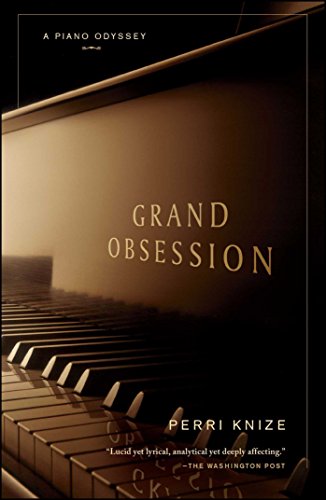
40Grand Obsession: A Piano Odyssey
"A fascinating, lyrical memoir about one woman's obsessive search for the perfect piano-and about finding and pursuing passion at any age"How can a particular piano be so seductive that someone would turn her life upside down to answer its call? How does music change human consciousness and transport us to rapture? What makes it beautiful? In this elegantly written and heartfelt account, Perri Knize explores these questions with a music lover's ardor, a poet's inspiration, and a reporter's thirst for knowledge.
The daughter of a professional musician, Knize was raised in a home saturated in classical music, but years have passed since she last played the instrument that mesmerized her most: the piano. Surprised by a sudden, belated realization that she is meant to devote her life to the instrument, she finds a teacher and soon decides to buy a piano of her own.
What begins as a search for a modestly priced upright leads Knize through dozens of piano stores all over the country, and eventually ends in a New York City showroom where she falls madly in love with the sound of a rare and pricey German grand.
"At the touch of the keys, I am swept away by powerful waves of sound," Knize writes. "The middle section is smoky and mysterious, as if rising from the larynx of a great contralto. The treble is bell-like and sparkling, full of color, a shimmering northern lights. A soul seems to reside in the belly of this piano, and it reaches out to touch mine, igniting a spark of desire that quickly catches fire."
The seduction is complete. But the piano far exceeds Knize's budget. After a long and painful dalliance, she refinances her house to purchase the instrument that has transfixed her. The dealer ships it to her home in Montana, and she counts the days until its arrival. When at last she sits down to play, almost delirious with anticipation, the magical sound is gone and the tone is dead and dull. Devastated, she calls in one piano technician after another to "fix" it, but no one can.
So begins the author's epic quest to restore her piano to its rightful sound, and to understand its elusive power. This journey leads her into an international subculture of piano aficionados -- concert artists, passionate amateurs, dealers, technicians, composers, and builders -- intriguing characters all, whose lives have also been transformed by the spell of a piano. Along the way she plays hundreds of pianos, new and vintage, rare and common, always listening for the bewitching tone she once heard from her own grand, a sound she cannot forget.
In New York, she visits the high-strung technician who prepared her piano for the showroom, and learns how a wire tightened just so, or an artfully softened hammer can transform an unremarkable instrument into one that touches listeners to their core. In Germany, she watches the workers who built her piano shape wood, iron, wool, and steel into musical instruments, and learns why each has its own unique voice. In Austria, she hikes the Alps to learn how trees are selected to build pianos, and how they are grown and harvested. With each step of her journey, Knize draws ever-closer to uncovering the reason her piano's sound vanished, how to get it back, and the deeper secret of how music leads us to a direct experience of the nature of reality.
Beautifully composed, passionately performed, "Grand Obsession" is itself a musical masterpiece.
The daughter of a professional musician, Knize was raised in a home saturated in classical music, but years have passed since she last played the instrument that mesmerized her most: the piano. Surprised by a sudden, belated realization that she is meant to devote her life to the instrument, she finds a teacher and soon decides to buy a piano of her own.
What begins as a search for a modestly priced upright leads Knize through dozens of piano stores all over the country, and eventually ends in a New York City showroom where she falls madly in love with the sound of a rare and pricey German grand.
"At the touch of the keys, I am swept away by powerful waves of sound," Knize writes. "The middle section is smoky and mysterious, as if rising from the larynx of a great contralto. The treble is bell-like and sparkling, full of color, a shimmering northern lights. A soul seems to reside in the belly of this piano, and it reaches out to touch mine, igniting a spark of desire that quickly catches fire."
The seduction is complete. But the piano far exceeds Knize's budget. After a long and painful dalliance, she refinances her house to purchase the instrument that has transfixed her. The dealer ships it to her home in Montana, and she counts the days until its arrival. When at last she sits down to play, almost delirious with anticipation, the magical sound is gone and the tone is dead and dull. Devastated, she calls in one piano technician after another to "fix" it, but no one can.
So begins the author's epic quest to restore her piano to its rightful sound, and to understand its elusive power. This journey leads her into an international subculture of piano aficionados -- concert artists, passionate amateurs, dealers, technicians, composers, and builders -- intriguing characters all, whose lives have also been transformed by the spell of a piano. Along the way she plays hundreds of pianos, new and vintage, rare and common, always listening for the bewitching tone she once heard from her own grand, a sound she cannot forget.
In New York, she visits the high-strung technician who prepared her piano for the showroom, and learns how a wire tightened just so, or an artfully softened hammer can transform an unremarkable instrument into one that touches listeners to their core. In Germany, she watches the workers who built her piano shape wood, iron, wool, and steel into musical instruments, and learns why each has its own unique voice. In Austria, she hikes the Alps to learn how trees are selected to build pianos, and how they are grown and harvested. With each step of her journey, Knize draws ever-closer to uncovering the reason her piano's sound vanished, how to get it back, and the deeper secret of how music leads us to a direct experience of the nature of reality.
Beautifully composed, passionately performed, "Grand Obsession" is itself a musical masterpiece.
 41
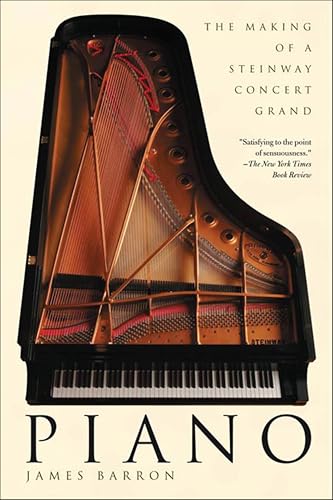
41Piano: The Making of a Steinway Concert Grand
 42
42Piano Adventures Performance Book, Level 2A
Faber Piano Adventures The 2nd Edition Level 2A Performance Book offers an array of colorful elementary pieces that reinforce the concepts presented in the Lesson Book. The selections range from arrangements of classical compositions to American folk songs and imaginative originals. Students and teachers will enjoy the wide variety of sounds and musical textures in this collection.
43Alfred's Basic Adult All-in-One Course, Book 1: Learn How to Play Piano with Lesson, Theory and Technic: Lesson, Theory, Technique (Alfred's Basic Adult Piano Course)
 44
44Piano Adventures, Primer Level, Theory Book
(Faber Piano Adventures ). The 2nd Edition Primer Theory Book provides important reinforcement and creative application of basic theory concepts. Students will enjoy note-naming with StoryRhymes, exploring improvisation, and engage with eye-training and ear-training activities all within a fun-filled context tied thematically to the Primer Lesson Book pieces.
 45
45On Piano Playing: Motion, Sound, and Expression
Points out common errors pianists make, shows the correct way to play basic technical patterns, and gives exercises for improving coordination, strength, and flexibility.
 46
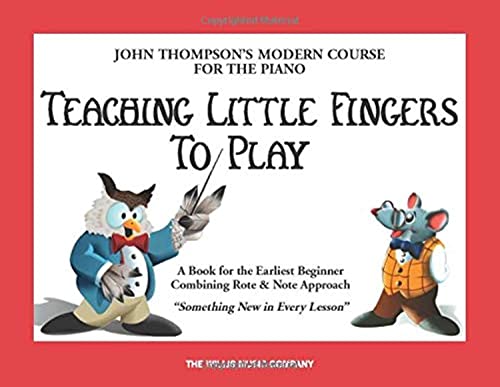
46Teaching Little Fingers to Play
(Willis). A book for the early beginner combining rote and note approach. The melodies are written with careful thought and are kept as simple as possible, yet they are refreshingly delightful. All the music lies within the grasp of the child's small hands. A best-seller around the world! Teacher accompaniments are available in a separate book - Teaching Little Fingers to Play Ensemble (412228). NOTE: The latest reprint (2017) features fewer fingerings and refreshed images.
 47
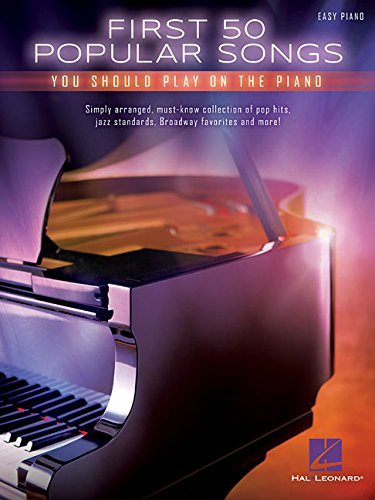
47First 50 Popular Songs You Should Play on the Piano
(Easy Piano Songbook). 50 great pop classics for beginning pianists to learn, including: Autumn Leaves • Candle in the Wind • Chopsticks • Don't Know Why • Good Riddance (Time of Your Life) • Hallelujah • Happy • Happy Birthday to You • Heart and Soul • Hotel California • I Walk the Line • Just the Way You Are • Let It Be • Let It Go • Your Song • Moon River • Over the Rainbow • Piano Man • Stand by Me • Summertime • Unchained Melody • What a Wonderful World • Yesterday • and more.
 48
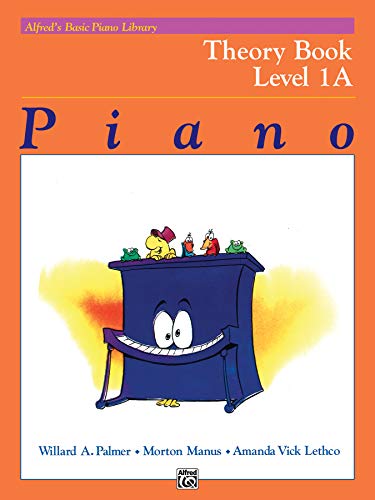
48Alfred's Basic Piano Library Theory, Bk 1a
Designed to coordinate page-by-page with the Lesson Books. Contains enjoyable games and quizzes that reinforce the principles presented in the Lesson Books. Students can increase their musical understanding while they are away from the keyboard.
 49
49Piano Adventures Performance Book, Level 1 (Faber Piano Adventures)
(Faber Piano Adventures ). The 2nd Edition Performance Book provides a collection of 24 effective pieces in a variety of styles that reinforce the concepts presented in the Level 1 Lesson Book. Discovery questions encourage students to explore the music in a new light. Selections include: The Spanish Guitar • I'm a Fine Musician • Painting with Pastels • Hill and Gully Rider • Rain Dance • Silver Moon Boat • and more.
 50
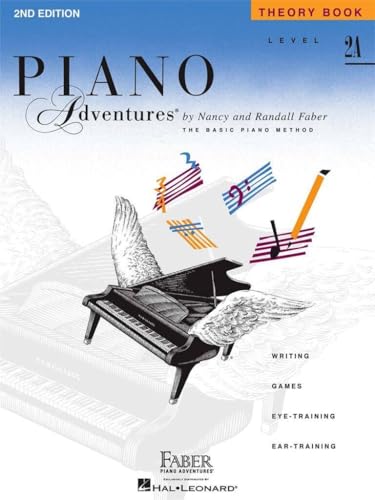
50Piano Adventures Theory Book, Level 2A
Faber Piano Adventures The 2nd Edition Level 2A Theory Book has thematic tie-in with the Level 2A Lesson Book, inviting students into the pages for deeper understanding. A wide variety of theory activities engage students with eighth notes, phrases, transposition, and 5-finger scales. Composer biographies provide valuable context for Lesson Book pieces while helping students review key concepts.
 51
51The Musician's Way: A Guide to Practice, Performance, and Wellness
In The Musician's Way, veteran performer and educator Gerald Klickstein combines the latest research with his 30 years of professional experience to provide aspiring musicians with a roadmap to artistic excellence. Part I, Artful Practice, describes strategies to interpret and memorize compositions, fuel motivation, collaborate, and more. Part II, Fearless Performance, lifts the lid on the hidden causes of nervousness and shows how musicians can become confident performers. Part III, Lifelong Creativity, surveys tactics to prevent music-related injuries and equips musicians to tap their own innate creativity. Written in a conversational style, The Musician's Way presents an inclusive system for all instrumentalists and vocalists to advance their musical abilities and succeed as performing artists.
 52
52My First Piano Adventure, Lesson Book A with CD
 53
53Alfred's Basic Adult Piano Course Lesson Book, Bk 2
This book begins with an extensive review of the chords and keys previously studied, using fresh and interesting material that will provide enjoyment as well as reinforcement. Particularly noteworthy is the systematic presentation of chords in all positions in both hands. Titles: America the Beautiful • Arkansas Traveler • The Battle Hymn of the Republic • Black is the Color of My True Love's Hair • Brahms Lullaby • Canon in D (Pachelbel) • Deep River • Down in the Valley • Farewell to Thee (Aloha Oe) • Fascination • A Festive Rondeau • Frankie and Johnnie • The Hokey-Pokey • The House of the Rising Sun • Introduction and Dance • La Cucaracha • La Donna E Mobile • La Raspa • Light and Blue • Loch Lomond • Lonesome Road • The Marriage of Figaro • Morning Has Broken • Musetta's Waltz • Musette • Night Song • Nobody Knows the Trouble I've Seen • Polyvetsian Dances • Pomp and Circumstance No. 1 • The Riddle • Rock-a My Soul • Roman Holiday • Sakura • Scherzo • Space Shuttle Blues • Swingin' Sevenths • Theme from Symphony No. 6 (Tchaikovsky) • Tumbalalaika • Village Dance • Waves of the Danube • When Johnny Comes Marching Home • You're in My Heart
 54
54Easy Classics to Moderns: Music for Millions Series
(Music Sales America). These 142 pieces by the masters of piano literature date from the second half of the 17th century to the present day.
Cover unavailable
55Beginner Piano Lessons for Kids Book: with Online Video & Audio Access
 56
56WP232 - Theory And Technic for the Young Beginner - Primer A - Bastien
Cover unavailable
57How to Play Keyboard: A Complete Guide for Absolute Beginners
NEW! From #1 Best-selling author Ben Parker, this book is the perfect introduction to the electronic Keyboard for absolute beginner's of all ages. This great beginner's guide also provides an easy introduction to reading and playing music - so whether you have no previous musical experience OR are simply new to the keyboard, this clear and concise guide will have you playing tunes on your new keyboard in no time ! For kids under the age of 10, you may prefer Ben's My First Keyboard book instead - created especially for the youngest beginner. Search under Ben Parker. • Easy to follow instructions and illustrations • Simple exercises to follow and practice • Learn at your own pace • Fun and easy songs, exercises and tunes to play • Simply follow the lessons in the book and you will be playing Keyboard in no time ! Ben Parker's best-selling range of beginner's music tuition books for adults and children include the 'How To Play'...and also the 'My First' series of books covering: Keyboard, Piano, Guitar, Ukulele, Banjo, Harmonica and Recorder.
 58
58Complete Preludes, Nocturnes & Waltzes: 26 Preludes, 21 Nocturnes, 19 Waltzes for Piano
(Piano Collection). This volume includes all of Chopin's 26 preludes, 21 nocturnes and 19 waltzes. It features a biography of the composer, notes on the individual genres, and pieces that surfaced after Joseffy's time-honored editions were initially published. Contents: 24 Preludes, Op. 28 • Prelude in C-sharp minor, Op. 45 • Prelude in A-flat Major, B. 86 • 3 Nocturnes, Op. 9 • 3 Nocturnes Op. 15 • 2 Nocturnes, Op. 27 • 2 Nocturnes, Op. 32 • 2 Nocturnes, Op. 37 • 2 Nocturnes, Op. 48 • 2 Nocturnes, Op. 55 • 2 Nocturnes, Op. 62 • Nocturne in E minor, Op. 72, No. 1 • Nocturne in C-sharp minor, B. 49 • Nocturne in C minor, B. 108 • Grand Valse Brillante in E-flat Major, Op. 18 • 3 Waltzes, Op. 34 • Waltz in A-flat Major, Op. 42 • 3 Waltzes, Op. 64 • 2 Waltzes, Op. 69 • 3 Waltzes, Op. 70 • Waltz in E Minor, B. 56 • Waltz in E Major, B. 44 • Waltz in A-flat Major, B. 21 • Waltz in E-flat Major, B. 46 • Waltz in E-flat Major, B. 133 • Waltz in A minor, B. 150
 59
59Faber Piano Adventures Primer Level Learning Library Pack - Lesson, Theory, Performance, and Technique & Artistry Books
 60
60The School of Velocity, Op. 299 (Complete): Piano Technique
Viennese composer, pianist and renowned teacher Carl Czerny (1791-1857) wrote more than a thousand works, including masses, operas, orchestral, chamber and piano works. But his fame rests on his many studies and exercises for the piano. These are new editions, newly engraved, with introductory articles in English, for the moderately advanced pianist, in progressive order of difficulty.
 61
61Piano Adventures Performance Book, Level 2B
(Faber Piano Adventures ). The use of connected pedal and variety of styles in this collection keep the students musically engaged as they explore the I, IV, and V7 chords. An ideal supplement with other piano methods. Contents include: The Time Machine • The Dragon Hunt • Pagoda Tree • A Day at the Carnival • Sunburst Waltz • Theme by Haydn • Minuet • Music Box Waltz • Everybody Loves Saturday Night • Fur Elise • Kum Ba Yah • Tingalayo • The Milky Way • The British Grenadiers • and more.
 62
62Piano Adventures Theory Book, Level 1 (Faber Piano Adventures)
(Faber Piano Adventures ). The 2nd Edition Theory Book provides instruction, reinforcement, and creative applications of basic theory concepts. Students will enjoy note-naming with StoryRhymes, explore improvisation, and engage with eye-training and ear-training activities all within a fun-filled context tied thematically to the Level 1 Lesson Book pieces.
 63
63The Lucy Variations
Lucy Beck-Moreau once had a promising future as a concert pianist. The right people knew her name, her performances were booked months in advance, and her future seemed certain.
That was all before she turned fourteen.
Now, at sixteen, it's over. A death, and a betrayal, led her to walk away. That leaves her talented ten-year-old brother, Gus, to shoulder the full weight of the Beck-Moreau family expectations. Then Gus gets a new piano teacher who is young, kind, and interested in helping Lucy rekindle her love of piano -- on her own terms. But when you're used to performing for sold-out audiences and world-famous critics, can you ever learn to play just for yourself?
The Lucy Variations is a story of one girl's struggle to reclaim her love of music and herself. It's about finding joy again, even when things don't go according to plan. Because life isn't a performance, and everyone deserves the chance to make a few mistakes along the way.
That was all before she turned fourteen.
Now, at sixteen, it's over. A death, and a betrayal, led her to walk away. That leaves her talented ten-year-old brother, Gus, to shoulder the full weight of the Beck-Moreau family expectations. Then Gus gets a new piano teacher who is young, kind, and interested in helping Lucy rekindle her love of piano -- on her own terms. But when you're used to performing for sold-out audiences and world-famous critics, can you ever learn to play just for yourself?
The Lucy Variations is a story of one girl's struggle to reclaim her love of music and herself. It's about finding joy again, even when things don't go according to plan. Because life isn't a performance, and everyone deserves the chance to make a few mistakes along the way.
 64
64Alfred's Basic Piano Library Vol. 3: Adult All-In-One
Alfred's Basic Adult All-in-One Course is designed for use with an instructor for the beginning student looking for a truly complete piano course. It is a greatly expanded version of Alfred's Basic Adult Piano Course that will include lesson, theory, technic, and additional repertoire in a convenient, "all-in-one" format. This comprehensive course features written assignments that reinforce each lesson's concepts, a smooth, logical progression between each lesson, a thorough explanation of chord theory and playing styles, and outstanding extra songs, including folk, classical, and contemporary selections. At the completion of this course, the student will have learned to play some of the most popular music ever written and will have gained a good understanding of basic musical concepts and styles.
 65
65Etudes: Piano Solo
The aim of this Urtext edition is to present as far as is possible the text and notation that reflects most completely the original intentions of the composer, drawing upon the most important sources. Chopin's original manuscripts, the French and German first editions, and surviving the contemporary handwritten copies have been consulted. Editorial editions in the music have been restricted only to those exceptional cases where they are obviously necessary. Chopin's fingerings have been preserved with no others added in the awareness that some of them, arising from his unusual piano technique, are on occasion very strange to the modern performer. The same applies to pedal markings, which only approximate Chopin's performance and must be interpreted by the performer for today's instruments. A section of notes details the discrepancies between sources.
 66
66Franz Liszt: The Virtuoso Years, 1811-1847
Franz Liszt--child prodigy, virtuoso pianist, co-founder with Chopin and Schumann of the Romantic movement in music--has been the subject of literally hundreds of biographies, but it is only in the last few decades that the importance of Liszt the composer, as opposed to Liszt the Romantic hero, has been recognized. This new perspective has created the need for a fresh, full-scale approach, biographical and critical, to the evaluation of the man and his music.
For more than ten years Alan Walker, a leading authority on nineteenth-century music and the author of important studies of Chopin and Schumann, has traveled throughout Europe discovering unpublished material in museums and private collections, in the parish registries of tiny villages in Austria and Hungary, and in major archives in Weimar and Budapest, seeking out new information and corroborating or correcting the old. He has left virtually no source unexamined--from the hundreds of contemporary biographies (many of them more fiction than fact) to the scores of memoirs, reminisces, and diaries of his pupils and disciples (the list of his students from his Weimar masterclasses reads like a Burke's Peerage of pianists). Dr. Walker's efforts have culminated in a study that will stand as definitive for years to come. A feat of impeccable scholarship, it also displays a strong and compelling narrative impulse and a profound understanding of the complicated man Liszt was.
In this, the first of three volumes, Dr. Walker examines in greater detail than has ever before been amassed Liszt's family background and his early years. We see "Franzi," a deeply religious and mystical child, whose extraordinary musical gifts lead to studies with the great Carl Czerny in Vienna and propel him into overnight fame in Paris--his youthful opera, Don Sanche, performed when he is fourteen--and in a disorderly and impulsive way of life by the time he is sixteen....We see Liszt drifting into obscurity after a nervous breakdown at the age of seventeen, then hearing Paganini for the first time and being so fired by the violinist's amazing technique that he sets for himself a titanic program of work, his aim no less than to create an entirely new repertoire for the piano....We see him, after years if successful touring, returning triumphantly to Hungary, his homeland, and publishing in the same year his "Transcendental" and "Paganini" studies. the signposts of his astonishing technical breakthrough....Finally, we see Liszt at the height of his artistic powers, giving well over a thousand concerts across Europe and Russia during the years 1839-47: "inventing" the modern piano recital, playing entire programs from memory, performing the complete contemporary piano repertoire, breaking down the barriers that had traditionally separated performing artists from their "social superiors," fostering the Romantic view of the artist as superior bring, because divinely gifted....until--his colossal career virtually impossible to sustain--he gives his last paid performance at the age of thirty-five.
Alan Walker explores as well Liszt's relationships with Berlioz, Chopin, and Schumann; his long, tumultuous affair with Countess Marie d'Agoult (who abandoned husband, family and social standing in order to follow the twenty-one-year-old genius and who, later, in her thinly disguised roman à clef Nélida, depicted him as an artistically impotent painter, and herself as a callously abandoned noblewoman); and his close associations with Lamennais, Lamartaine, Victor Hugo, George Sand, and other leading figures of the Romantic era. Dr. Walker reveals the origin and development of the psychological and emotional influences that so strongly informed Liszt's art throughout his life; and he analyzes individual pieces of music and discusses, in considerable detail, Liszt's piano technique.
Unparalleled in its completeness, its soundness of documentation, and in the quality of its writing, The Virtuoso Years is the first volume of what will unquestionably be the most important biography of Franz Liszt in English or any other language.
For more than ten years Alan Walker, a leading authority on nineteenth-century music and the author of important studies of Chopin and Schumann, has traveled throughout Europe discovering unpublished material in museums and private collections, in the parish registries of tiny villages in Austria and Hungary, and in major archives in Weimar and Budapest, seeking out new information and corroborating or correcting the old. He has left virtually no source unexamined--from the hundreds of contemporary biographies (many of them more fiction than fact) to the scores of memoirs, reminisces, and diaries of his pupils and disciples (the list of his students from his Weimar masterclasses reads like a Burke's Peerage of pianists). Dr. Walker's efforts have culminated in a study that will stand as definitive for years to come. A feat of impeccable scholarship, it also displays a strong and compelling narrative impulse and a profound understanding of the complicated man Liszt was.
In this, the first of three volumes, Dr. Walker examines in greater detail than has ever before been amassed Liszt's family background and his early years. We see "Franzi," a deeply religious and mystical child, whose extraordinary musical gifts lead to studies with the great Carl Czerny in Vienna and propel him into overnight fame in Paris--his youthful opera, Don Sanche, performed when he is fourteen--and in a disorderly and impulsive way of life by the time he is sixteen....We see Liszt drifting into obscurity after a nervous breakdown at the age of seventeen, then hearing Paganini for the first time and being so fired by the violinist's amazing technique that he sets for himself a titanic program of work, his aim no less than to create an entirely new repertoire for the piano....We see him, after years if successful touring, returning triumphantly to Hungary, his homeland, and publishing in the same year his "Transcendental" and "Paganini" studies. the signposts of his astonishing technical breakthrough....Finally, we see Liszt at the height of his artistic powers, giving well over a thousand concerts across Europe and Russia during the years 1839-47: "inventing" the modern piano recital, playing entire programs from memory, performing the complete contemporary piano repertoire, breaking down the barriers that had traditionally separated performing artists from their "social superiors," fostering the Romantic view of the artist as superior bring, because divinely gifted....until--his colossal career virtually impossible to sustain--he gives his last paid performance at the age of thirty-five.
Alan Walker explores as well Liszt's relationships with Berlioz, Chopin, and Schumann; his long, tumultuous affair with Countess Marie d'Agoult (who abandoned husband, family and social standing in order to follow the twenty-one-year-old genius and who, later, in her thinly disguised roman à clef Nélida, depicted him as an artistically impotent painter, and herself as a callously abandoned noblewoman); and his close associations with Lamennais, Lamartaine, Victor Hugo, George Sand, and other leading figures of the Romantic era. Dr. Walker reveals the origin and development of the psychological and emotional influences that so strongly informed Liszt's art throughout his life; and he analyzes individual pieces of music and discusses, in considerable detail, Liszt's piano technique.
Unparalleled in its completeness, its soundness of documentation, and in the quality of its writing, The Virtuoso Years is the first volume of what will unquestionably be the most important biography of Franz Liszt in English or any other language.
 67
67Fundamentals of Piano Practice
 68
68Behind Bars: The Definitive Guide to Music Notation
Behind Bars is the indispensable reference book for composers, arrangers, teachers and students of composition, editors, and music processors. In the most thorough and painstakingly researched book to be published since the 1980s, specialist music editor Elaine Gould provides a comprehensive grounding in notational principles.
Behind Bars covers everything from basic rules, conventions and themes to complex instrumental techniques, empowering the reader to prepare music with total clarity and precision. With the advent of computer technology, it has never been more important for musicians to have ready access to principles of best practice in this dynamic field, and this book will support the endeavors of software users and devotees of hand-copying alike. The author's understanding of, and passion for, her subject has resulted in a book that is not only practical but also compellingly readable.
This seminal and all-encompassing guide encourages new standards of excellence and accuracy and, at a weighty 704 pages, it is supported by 1,500 music examples of published scores from Bach to Xenakis.
Behind Bars covers everything from basic rules, conventions and themes to complex instrumental techniques, empowering the reader to prepare music with total clarity and precision. With the advent of computer technology, it has never been more important for musicians to have ready access to principles of best practice in this dynamic field, and this book will support the endeavors of software users and devotees of hand-copying alike. The author's understanding of, and passion for, her subject has resulted in a book that is not only practical but also compellingly readable.
This seminal and all-encompassing guide encourages new standards of excellence and accuracy and, at a weighty 704 pages, it is supported by 1,500 music examples of published scores from Bach to Xenakis.
 69
69Piano Servicing, Tuning, and Rebuilding: For the Professional, the Student, and the Hobbyist
The second edition of this world famous book puts into clear pictures and language how anyone handy with tools can repair, regulate, maintain, and even completely rebuild a piano.
 70
70First Lessons in Bach, Complete: Schirmer Library of Classics Volume 2066 for the Piano
(Piano Collection). Books I and II of this traditional edition in Schirmer's Library of Musical Classics have been combined in an affordable new volume. An excellent resource for Late Elementary to Early Intermediate pianists. Contents: Minuet in G Major, BWV App. 114 • Minuet in G minor, BWV App. 115 • Minuet in G Major, BWV App. 116 • Polonaise in G minor, BWV App. 119 • March in D Major, BWV 122 • Minuet in G Major from Overture in G minor, BWV 822 • Minuet in G minor from Overture in G minor, BWV 822 • Minuet in G minor (II) from Overture in G minor, BWV 822 • March in G Major, BWV App. 124 • Minuet in D minor, BWV App. 132 • Musett in G Major from English Suite No. 3, BWV 808 • Bourree in E minor from Lute Suite No. 1, BWV 996 • Musette in D Major, BWV App. 126 • Minuet in C minor, BWV App. 121 • Gavotte in G minor from Overture in G minor, BWV 822 • March in E-flat Major, BWV App. 127 • Polonaise in G minor BWV App. 125 • Gavotte in D Major from English Suite No. 6, BWV 811 • Polonaise in G Major, BWV App. 130 • Gavotte in G minor from English Suite No. 3, BWV 808 • Minuet in F Major from Overture in F Major, BWV 820 • Polonaise in G minor, BWV App. 123 • Gavotte in G Major from French Suite No. 5, BWV 816 • Minuet in E Major from French Suite No. 6 in E Major, BWV 817 • Scherzo in A minor from Partita No. 3, BWV 827 • Sarabande in E minor from English Suite No. 5, BWV 810 • Minuet in C minor from French Suite No. 2 in C minor, BWV 813 • Prelude in F minor from Suite in F minor, BWV 823
 71
71Piano Adventures Technique & Artistry Book, Level 2A
Faber Piano Adventures The 2nd Edition Level 2A Technique & Artistry Book features effective "Technique Secret" exercises which train students in firm fingertips, light thumb, fast fingers, hands together coordination, and wrist float-off. An "Artistry Magic" piece at the end of each unit explores expressive playing. A useful reference section presents all twelve major 5-finger scales plus the seven white key minor 5-finger scales, grouped in easy to memorize patterns.
 72
72The Classical Style: Haydn, Mozart, Beethoven
This outstanding book treating the three most beloved composers of the Vienna School is basic to any study of Classical-era music. Drawing on his rich experience and intimate familiarity with the works of these giants, Charles Rosen presents his keen insights in clear and persuasive language. For this expanded edition, now available in paperback for the first time, Rosen has provided a new, 64-page chapter on the later years of Beethoven and the musical conventions he inherited from Haydn and Mozart. The author has also written an extensive new preface in which he responds to other writers who have commented on his ideas.
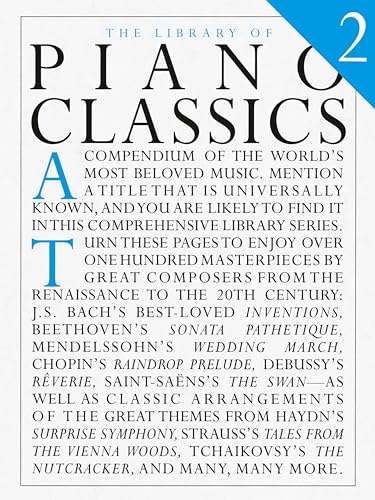 73
73Library of Piano Classics 2: Piano Solo
(Music Sales America). A second collection of the world's best beloved music, over 100 masterpieces by great composers from the Renaissance to the twentieth century. Over 100 works, including Bach's Inventions, Mendelssohn's Wedding March, the theme from Tchaikovsky's The Nutcracker, and many more.
 74
74Chopsticks
After her mother died, Glory retreated into herself and her music. Her single father raised her as a piano prodigy, with a rigid schedule and the goal of playing sold-out shows across the globe. Now, as a teenager, Glory has disappeared. As we flash back to the events leading up to her disappearance, we see a girl on the precipice of disaster. Brilliant and lonely, Glory is drawn to an artistic new boy, Frank, who moves in next door. The farther she falls, the deeper she spirals into madness. Before long, Glory is unable to play anything but the song "Chopsticks."
But nothing is what it seems, and Glory's reality is not reality at all. In this stunningly moving novel told in photographs, pictures, and words, it's up to the reader to decide what is real, what is imagined, and what has been madness all along....
But nothing is what it seems, and Glory's reality is not reality at all. In this stunningly moving novel told in photographs, pictures, and words, it's up to the reader to decide what is real, what is imagined, and what has been madness all along....
 75
75Piano Adventures Popular Repertoire, Level 1
Faber Piano Adventures Contents: The Boogie Woogie March • Fiddler on the Roof • I Taut I Taw a Puddy-Tat • Matchmaker (from Fiddler on the Roof ) • Once Upon a December (from Anastasia ) • Over the Rainbow (from The Wizard of Oz ) • Superman (Theme) • This Is It (Theme from the Bugs Bunny Show) • We're Off to See the Wizard (from The Wizard of Oz ).
 76
76Note by Note: A Celebration of the Piano Lesson
In this luminous book, Tricia Tunstall explores the enduring fascination of the piano lesson. Even as everything else about the world of music changes, the piano lesson retains its appeal. Drawing on her own lifelong experience as a student and teacher, Tunstall writes about the mysteries and delights of piano teaching and learning. What is it that happens in a piano lesson to make it such a durable ritual? In a world where music is heard more often on the telephone and in the elevator than in the concert hall, why does the piano lesson still have meaning in the lives of children? What does it matter whether one more child learns to play Bach's Minuet in G? "Note by Note" is in part a memoir in which Tunstall recalls her own childhood piano teachers and their influence. As she observes, the piano lesson is unlike the experience of being coached on an athletic team or taught in a classroom, in that it is a one-on-one, personal communication. Physically proximate, mutually concentrating on the transfer of a skill that is often arduous, complicated and frustrating, teacher and student occasionally experience breakthroughs-moments of joy when the student has learned something, mastered a musical passage or expressed a feeling through music. The relationship is not only one-way: teaching the piano is a lifelong endeavor of particular intensity and power.
Anyone who has ever studied the piano-or wanted to-will cherish this gem of a book.
Anyone who has ever studied the piano-or wanted to-will cherish this gem of a book.
 77
77The Secret Piano: From Mao's Labor Camps to Bach's Goldberg Variations
Zhu Xiao-Mei was born to middle-class parents in post-war China, and her musical proficiency became clear at an early age. Taught to play the piano by her mother, she developed quickly into a prodigy, immersing herself in the work of classical masters like Bach and Brahms. She was just ten years old when she began a rigorous course of study at the Beijing Conservatory, laying the groundwork for what was sure to be an extraordinary career. But in 1966, when Xiao-Mei was seventeen, the Cultural Revolution began, and life as she knew it changed forever. One by one, her family members were scattered, sentenced to prison or labor camps. By 1969, the art schools had closed, and Xiao-Mei was on her way to a work camp in Mongolia, where she would spend the next five years. Life in the camp was nearly unbearable, thanks to horrific living conditions and intensive brainwashing campaigns. Yet through it all Xiao-Mei clung to her passion for music and her sense of humor. And when the Revolution ended, it was the piano that helped her to heal. Heartbreaking and heartwarming, The Secret Piano is the incredible true story of one woman’s survival in the face of unbelievable odds—and in pursuit of a powerful dream.
Cover unavailable
78Contemporary Disney: 50 Favorite Songs
(Piano/Vocal/Guitar Songbook). 50 songs are featured in this third edition of an outstanding collection of Disney favorites. Includes: Beauty and the Beast • Can You Feel the Love Tonight • Colors of the Wind • Evil like Me • For the First Time in Forever • Go the Distance • Hakuna Matata • If I Didn't Have You • Lava • Let It Go • My Funny Friend and Me • Part of Your World • Reflection • Seize the Day • Sophie's Theme • That's How You Know • True Love's Kiss • We're All in This Together • A Whole New World • Written in the Stars • You'll Be in My Heart (Pop Version) • and many more.
 79
79Men, Women and Pianos: A Social History
As the "social anchor" in middle-class homes of the nineteenth century, the piano was simultaneously an elegant piece of drawing-room furniture, a sign of bourgeois prosperity, and a means of introducing the young to music. In this admirably balanced and leisurely account of the popular instrument, the late, internationally known concert pianist Arthur Loesser takes a "piano's-eye view" of the recent social history of Western Europe and the United States.
Drawing on newspapers, music manuscripts, popular accounts, and other sources, Loesser traces the history of the piano from its predecessors, the clavichord and the harpsichord, to the modern spinet and concert grand. Chapter headings such as "Clavichords Make Weeping Easier," "The Harpsichord Grows Feet," "The More Pianos the Merrier," and "The Keyboards Go West" suggest the author's lighthearted approach to topics ranging from the piano's European origins and its introduction in the United States to the decline of piano manufacturing in the early twentieth century and the "victory of airborne music" by mid-century. A preface by historian Jacques Barzun and a new foreword by music critic Edward Rothstein enhance a volume rich in wit and knowledge — one that will delight any reader with an interest in the piano and on Western cultural history.
Drawing on newspapers, music manuscripts, popular accounts, and other sources, Loesser traces the history of the piano from its predecessors, the clavichord and the harpsichord, to the modern spinet and concert grand. Chapter headings such as "Clavichords Make Weeping Easier," "The Harpsichord Grows Feet," "The More Pianos the Merrier," and "The Keyboards Go West" suggest the author's lighthearted approach to topics ranging from the piano's European origins and its introduction in the United States to the decline of piano manufacturing in the early twentieth century and the "victory of airborne music" by mid-century. A preface by historian Jacques Barzun and a new foreword by music critic Edward Rothstein enhance a volume rich in wit and knowledge — one that will delight any reader with an interest in the piano and on Western cultural history.
 80
80John Thompson's Easiest Piano Course - Part 1 - Book Only
 81
81The Disney Collection
(Easy Piano Vocal Selections). This updated 3rd edition for easy piano features 60 Disney favorites, including new selections from Tangled, Frozen and much more. Songs include: The Bare Necessities • Beauty and the Beast • Can You Feel the Love Tonight • Cruella De Vil • A Dream Is a Wish Your Heart Makes • He's a Tramp • I See the Light • I've Got No Strings • Let It Go • Mickey Mouse March • Some Day My Prince Will Come • Supercalifragilisticexpialidocious • Under the Sea • When You Wish Upon a Star • Zip-a-Dee-Doo-Dah • and more.
Cover unavailable
82Piano Scales, Chords & Arpeggios Lessons with Elements of Basic Music Theory: Fun, Step-By-Step Guide for Beginner to Advanced Levels (Book & Streaming Videos)
 83
83The Pianist's Guide to Standard Teaching and Performance Literature
This reference book is an invaluable resource for teachers, students and performers for evaluating and selecting piano solo literature. Concise and thoroughly researched, thousands of works, from the Baroque through the Contemporary periods, have been graded and evaluated in detail. Includes an alphabetical list of composers, explanations of works, and much more.
 84
84The Perfect Wrong Note: Learning to Trust Your Musical Self
In this groundbreaking book, prize-winning pianist and noted educator William Westney helps readers discover their own path to the natural, transcendent fulfillment of making music. Drawing on experience, psychological insight, and wisdom ancient and modern, Westney shows how to trust yourself and set your own musicality free. He offers healthy alternatives for lifelong learning and suggests significant change in the way music is taught. For example, playing a wrong note can be constructive, useful, even enlightening. The creator of the acclaimed Un-Master Class(R) workshop also explores the special potential of group work, outlining the basics of his revelatory workshop that has transformed the music experience for participants the world over. Practicing, in Westney's view, is a lively, honest, adventurous, and spiritually rewarding enterprise, and it can (and should) meet with daily success, which empowers us to grow even more. Teachers, professionals, and students of any instrument will benefit from this unique guide, which brings artistic vitality, freedom, and confidence within everyone's reach
 85
85Playing Beyond the Notes: A Pianist's Guide to Musical Interpretation
Playing Beyond the Notes: A Pianist's Guide to Musical Interpretation demystifies the complex concepts of musical interpretation in Western tonal piano music by boiling it down to basic principles in an accessible writing style. Author and veteran piano instructor Deborah Rambo Sinn tackles a different interpretive principle, explaining clearly, for example, how to play effective ornaments and rubatos. As a whole, the book helps pianists understand concrete ways to apply interpretive concepts to their own playing and gives teachers practical ways to teach interpretation to their students. The book is illustrated with over 200 repertoire excerpts and supplemented by a companion website with over 100 audio recordings. Playing Beyond the Notes is essential reading for all performing pianists, independent piano teachers, and piano pedagogy students.
 86
86Piano Technique
The volume presents two book by Walter Gieseking, foremost pianist of his generation, and his teacher for five years, Karl Leimer, that have long been sought after by students and teachers looking for a radical approach toward developing not only finger-technique but expression-technique. Emphasis throughout is on listening to one's self and proper understanding as the basis of proper technique for the piano.
In book one, originally titled The Shortest Way to Pianistic Perfection, Gieseking and Leimer work with a series of piano works — a study from Lebert and Stark, Bach's Two- and Three-Part Inventions in C, and Beethoven's Sonata in F Minor, Op. 2, No. 1. Before beginning to play, the student is asked to visualize each piece through silent reading. Through Leimer's instruction in this area the student soon discovers how to approach each piece as not merely a series of notes to memorize but as a coherent musical structure to understand. Following are instructions on natural interpretation, with consideration of touch, relaxation, and proper emphasis in the practice. Also given are notes on such topics as etudes, scales, broken chords, the trill, and tranquility.
In book two, Rhythmics, Dynamics, Pedal and Other Problems of Piano Playing, Leimer carries his method of visualization further with a study of the Allemande from Bach's French Suite in E Major. Following are further exercises and practices for developing other pianistic technique with reference to works of other composers. Specific exercises which cover rhythmics, dynamics, and phrasing are designed so that they will benefit not only the pianist but also performers on other instruments. Extensive chapters on variety of touch and the pedal give a great number of techniques and exercises for extending the expressive and dynamic range.
In book one, originally titled The Shortest Way to Pianistic Perfection, Gieseking and Leimer work with a series of piano works — a study from Lebert and Stark, Bach's Two- and Three-Part Inventions in C, and Beethoven's Sonata in F Minor, Op. 2, No. 1. Before beginning to play, the student is asked to visualize each piece through silent reading. Through Leimer's instruction in this area the student soon discovers how to approach each piece as not merely a series of notes to memorize but as a coherent musical structure to understand. Following are instructions on natural interpretation, with consideration of touch, relaxation, and proper emphasis in the practice. Also given are notes on such topics as etudes, scales, broken chords, the trill, and tranquility.
In book two, Rhythmics, Dynamics, Pedal and Other Problems of Piano Playing, Leimer carries his method of visualization further with a study of the Allemande from Bach's French Suite in E Major. Following are further exercises and practices for developing other pianistic technique with reference to works of other composers. Specific exercises which cover rhythmics, dynamics, and phrasing are designed so that they will benefit not only the pianist but also performers on other instruments. Extensive chapters on variety of touch and the pedal give a great number of techniques and exercises for extending the expressive and dynamic range.
 87
87Abby Whiteside On Piano Playing: Indispensables Of Piano Playing And Mastering The Chopin Etudes And Other Essays
Revolutionary piano pedagogue Abby Whiteside (1881-1956) influenced generations of pianists in America and elsewhere. Whiteside's pioneering approach to piano technique stood apart from the mainstream of piano teaching in her day, and her ideas remain essential to piano pedagogy even now. Fiercely committed to developing in her students what she called a "basic rhythm" - a sense of physical continuity and ease that emphasizes musical structures - Whiteside as a teacher encouraged students to express the basic emotional rhythm of the music, and her understanding of the mechanics of piano playing enabled them to avoid the strains and injuries often experienced by pianists. This reprint of the two long-out-of-print works has been eagerly awaited by teachers and students of piano music in many countries. At last Whiteside's ideas will be accessible to new as well as to longtime disciples of this devoted and brilliant teacher of piano.
 88
88The Greatest Showman: Music from the Motion Picture Soundtrack
(Piano/Vocal/Guitar Songbook). A musical drama biopic chronicling P.T. Barnum (played by Hugh Jackman) and his founding of the Barnum & Bailey Circus, this December 2017 film features a stunning soundtrack by Benj Pasek and Justin Paul of La La Land and Dear Evan Hansen fame. Our songbook features piano/vocal/guitar arrangements of 9 songs including the Golden Globe-winning "This Is Me" and: Come Alive • From Now On • The Greatest Show • A Million Dreams • Never Enough • The Other Side • Rewrite the Stars • Tightrope. Also includes full-color scenes from the movie.
 89
89The Craft of Piano Playing: A New Approach to Piano Technique
This work presents a comprehensive approach to piano technique with a series of exercises designed to help the reader put this approach into practice. Alan Fraser has combined his extensive concert pedagogical experience, his long-standing collaboration with the virtuoso Kemal Gekich and his professional training in Feldenkrais Method to create this innovative technique. Using numerous musical examples and sketches he shows how many common movement habits at the keyboard are counterproductive and provides a new way of manipulating the skeletal frame of the hand to produce sonic results from the instrument. movement, a further development of piano technique is now possible and that improved physical ability can free musical individuality to express itself more fully. The author presents a series of movement exercises that activate the physical functions necessary to the pianist. The exercises help both students who need remedial work in basic strength at the keyboard and those who seek a new dimension of musical understanding and a new path for the development of pianist skills - synthesizing musical and physical issues. This approach can also serve as an effective antidote to debilitating performance anxiety, increasing one's emotional security by improving the physical and musical basis for it. By filling in a missing link between intention and physical execution, this book aims to advance the craft of piano playing.
Cover unavailable
90Fundamentals of Piano Theory
 91
91Every Note Played
An accomplished concert pianist, Richard received standing ovations from audiences all over the world in awe of his rare combination of emotional resonance and flawless technique. That was eight months ago.
Richard now has ALS, and his entire right arm is paralyzed. His fingers are impotent, still, devoid of possibility. The loss of his hand feels like a death, a loss of true love, a divorce—his divorce.
He knows his left arm will go next.
Three years ago, Karina removed their framed wedding picture from the living room wall and hung a mirror there instead. But she still hasn’t moved on. Karina is paralyzed by excuses and fear, stuck in an unfulfilling life as a piano teacher, afraid to pursue the path she abandoned as a young woman, blaming Richard and their failed marriage for all of it.
When Richard becomes increasingly paralyzed and is no longer able to live on his own, Karina becomes his reluctant caretaker. As Richard’s muscles, voice, and breath fade, both he and Karina try to reconcile their past before it’s too late.
Richard now has ALS, and his entire right arm is paralyzed. His fingers are impotent, still, devoid of possibility. The loss of his hand feels like a death, a loss of true love, a divorce—his divorce.
He knows his left arm will go next.
Three years ago, Karina removed their framed wedding picture from the living room wall and hung a mirror there instead. But she still hasn’t moved on. Karina is paralyzed by excuses and fear, stuck in an unfulfilling life as a piano teacher, afraid to pursue the path she abandoned as a young woman, blaming Richard and their failed marriage for all of it.
When Richard becomes increasingly paralyzed and is no longer able to live on his own, Karina becomes his reluctant caretaker. As Richard’s muscles, voice, and breath fade, both he and Karina try to reconcile their past before it’s too late.
 92
92John W. Schaum Piano Course: A-The Red Book: Leading to Mastery of the Instrument
A time-honored tradition just got better! The John W. Schaum Piano Course has been newly revised with 100 percent new engravings and typesetting, color highlighting for concept emphasis, updated song titles and lyrics, and full-color illustrations.
 93
93Famous Pianists and Their Technique, New Edition
Famous Pianists and Their Technique has been a standard in the field since its first publication in 1974. This widely used and acclaimed history of piano technical thought includes insights into the techniques of masters such as C.P.E. Bach, Bartok, Beethoven, Brahms, Chopin, Clementi, Czerny, Debussy, Godowsky, Horowitz, Levinskaya, Leschetizky, the Lhevinnes, Liszt, Mozart, Prokofiev, Ravel, Rubinstein, and Schubert, among others.
Called "the bible of piano technique" by Maurice Hinson, this book is a comprehensive resource for the student, teacher, and professional pianist who seek to discover the secrets of how the immortal professional pianists developed and polished their mechanical and musical technique. This expanded edition contains a foreword by Alan Walker, a new preface, and multiple new appendices.
Called "the bible of piano technique" by Maurice Hinson, this book is a comprehensive resource for the student, teacher, and professional pianist who seek to discover the secrets of how the immortal professional pianists developed and polished their mechanical and musical technique. This expanded edition contains a foreword by Alan Walker, a new preface, and multiple new appendices.
Cover unavailable
94The Giant Book of Intermediate Classical Piano Music: Schirmer's Library of Musical Classics, Vol. 2139
(Piano). 269 pieces by 32 composers nearly 400 pages of music!
 95
95The Art of Piano Playing
So many of the great pianists and teachers have come out of Poland and Russia (Rubinstein, Anton as well as Arthur, Leschetizky, Paderewski, the Lhevinnes, Gilels, Richter, and others), yet we know little about their methods of learning and teaching. Geor
 96
96Frozen II: Music from the Motion Picture Soundtrack
(Piano/Vocal/Guitar Songbook). The sequel to the uber-popular Disney film Frozen is here, and the soundtrack features more songs from Robert Lopez & Kristen Anderson-Lopez. Our matching songbook includes the new breakout song "Into the Unknown," a continuation from the first film, "Reindeers Are Better Than People," and 6 more new songs: All Is Found • Lost in the Woods • The Next Right Thing • Show Yourself • Some Things Never Change • When I Am Older.
 97
97If You Ever Want to Bring a Piano to the Beach, Don't!
If your mom says to get ready to play at the beach, she means with a boat, or a Frisbee, or a shovel. She is NOT talking about the piano. But Magnolia is a little girl with a big idea, determination, and one very heavy upright piano that, she insists, she needs to take with her. What's the worst that can happen? In a riotous series of mishaps, Magnolia quickly learns that--not surprisingly--a piano doesn't mix well with sand, sun, and seagulls!
 98
98My First Learn to Write Workbook: Practice for Kids with Pen Control, Line Tracing, Letters, and More!
Cover unavailable
99Big Book of Beginner's Piano Classics: 83 Favorite Pieces in Easy Piano Arrangements with Downloadable MP3s
Beginning pianists of all ages will cherish this excellent compilation of beloved piano classics. Each piece has been carefully selected and simplified to help students develop their skills. The special arrangements also offer novices the pleasure and satisfaction of playing music that's usually beyond their grasp — and free MP3 downloads of each tune make mastering the music even easier.
Some of the master composers are represented by several pieces each: nine works by Bach include Jesu, Joy of Man's Desiring; Mozart's Rondo alla Turca appears along with eight other selections from his oeuvre; seven by Chopin include Funeral March; the "Emperor" Concerto, Ode to Joy, and "Für Elise" are among the eight Beethoven features; and eight by Tchaikovsky include Dance of the Sugar Plum Fairy from The Nutcracker. Other well-known pieces include Hungarian Rhapsody No. 2 by Liszt, Brahms' "Lullaby," Morning Mood by Grieg, Haydn's "Surprise" Symphony, plus compositions by Schubert, Verdi, Debussy, Handel, Mendelssohn, and others.
Some of the master composers are represented by several pieces each: nine works by Bach include Jesu, Joy of Man's Desiring; Mozart's Rondo alla Turca appears along with eight other selections from his oeuvre; seven by Chopin include Funeral March; the "Emperor" Concerto, Ode to Joy, and "Für Elise" are among the eight Beethoven features; and eight by Tchaikovsky include Dance of the Sugar Plum Fairy from The Nutcracker. Other well-known pieces include Hungarian Rhapsody No. 2 by Liszt, Brahms' "Lullaby," Morning Mood by Grieg, Haydn's "Surprise" Symphony, plus compositions by Schubert, Verdi, Debussy, Handel, Mendelssohn, and others.
 100
100Masterwork Classics: Level 1-2, Book & CD
A progressive repertoire series designed to motivate students while allowing them to progress evenly and smoothly from the earliest classics toward intermediate literature. These pieces are from the standard classical literature, chosen to appeal both to teacher and student. Each volume comes with a corresponding CD.
PIanist Kim O'Reilly Newman holds a Master of Music degree from the University of Illinois. She has performed throughout North America and Europe with the Hambro Quartet of Pianos and was an editor and recording pianist for Alfred Music. Kim is a brain tumor survivor and now specializes in performing music for the left hand.
PIanist Kim O'Reilly Newman holds a Master of Music degree from the University of Illinois. She has performed throughout North America and Europe with the Hambro Quartet of Pianos and was an editor and recording pianist for Alfred Music. Kim is a brain tumor survivor and now specializes in performing music for the left hand.