We've ranked the best landscape books using expert recommendations, sales data, and millions of reader ratings. At Shortform, we know books. Our book guides are the best in the world. Learn why.
Cover unavailable
1
The Hobbit
J. R. R. Tolkien
5.0
Bilbo Baggins is a hobbit who enjoys a comfortable, unambitious life, rarely traveling any farther than his pantry or cellar. But his contentment is disturbed when the wizard Gandalf and a company of dwarves arrive on his doorstep one day to whisk him away on an adventure. They have launched a plot to raid the treasure hoard guarded by Smaug the Magnificent, a large and very dangerous dragon. Bilbo reluctantly joins their quest, unaware that on his journey to the Lonely Mountain he will encounter both a magic ring and a frightening creature known as Gollum. (back cover)
Today is World Book Day, a wonderful opportunity to address this #ChallengeRichard sent in by Mike Gonzalez of New Jersey: Make a list of your top 65 books to read in a lifetime. [source]
First up, The Hobbit, or There and Back Again, by JRR Tolkien. But you knew I was going to say that. This one book, which was published in 1937, defined so many variables for the fantasy tradition that are still in place today. Tolkien’s extraordinary achievement was to recover the epic landscapes of Anglo-Saxon myth, bring them back to life, and then to take us through them on foot, so we could see the details up close, at human scale. The Hobbit is both mythic and relatable at the same time – The New Yorker writer Adam Gopnik recently called it “an arranged marriage between the Elder Edda and The Wind in the Willows”, and I think that’s entirely fair. Though I would give more credit to the bass register of Tolkien’s imagination, its abyssal depths. Mole never delved as deep as the Mines of Moria. [source]
Cover unavailable
2
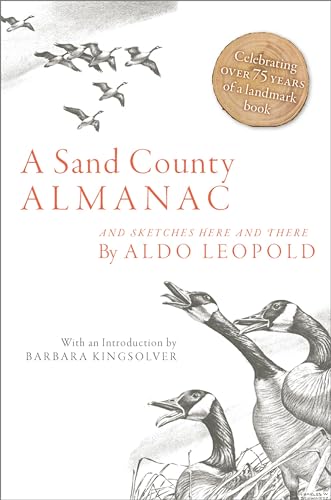
A Sand County Almanac and Sketches Here and There
Aldo Leopold
4.8
First published in 1949, A Sand County Almanac combines some of the finest nature writing since Thoreau with an outspoken and highly ethical regard for America's relationship to the land.
Written with an unparalleled understanding of the ways of nature, the book includes a section on the monthly changes of the Wisconsin countryside; another part that gathers informal pieces written by Leopold over a forty-year period as he traveled through the woodlands of Wisconsin, Iowa, Arizona, Sonora, Oregon, Manitoba, and elsewhere; and a final section in which Leopold addresses the philosophical issues involved in wildlife conservation. As the forerunner of such important books as Annie Dillard's Pilgrim at Tinker Creek, Edward Abbey's Desert Solitaire, and Robert Finch's The Primal Place, this classic work remains as relevant today as it was sixty-five years ago.
…
Recommended by Isabella Tree, Mark Boyle, and Mike Phillips.
Isabella Tree
Leopold wrote that one of the penalties of an ecological education is that one lives alone in a world of wounds. To me, that rings painfully true. [source]
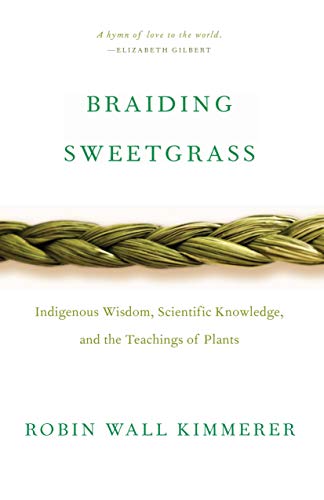
As a botanist, Robin Wall Kimmerer has been trained to ask questions of nature with the tools of science. As a member of the Citizen Potawatomi Nation, she embraces the notion that plants and animals are our oldest teachers. In Braiding Sweetgrass, Kimmerer brings these lenses of knowledge together to show that the awakening of a wider ecological consciousness requires the acknowledgment and celebration of our reciprocal relationship with the rest of the living world. For only when we can hear the languages of other beings are we capable of understanding the generosity of the earth, and learning to give our own gifts in return.
…
Recommended by Oliver Sacks Fdn. and Sarah Taber.
Oliver Sacks Fdn.
As a writer, Oliver Sacks found gardens essential to the creative process. Check out our year-end newsletter, devoted to some beautiful books by botanist-writers that would make great gifts for all your plant-loving friends. https://t.co/2U8iEv4L1x https://t.co/IK1cgIMJhE [source]
Sarah Taber
Yeah that's because most of those books are actually just sanctimonious classists pretending they're trying to fix problems. That's why they're depressing If you want a book that's actually about moving forward, "Braiding Sweetgrass" is FANTASTIC. https://t.co/Drr1tmwhSs [source]
Cover unavailable
4
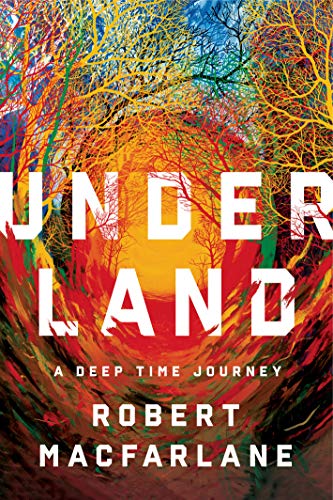
Underland
Robert Macfarlane
4.8
From the best-selling, award-winning author of Landmarks and The Old Ways, a haunting voyage into the planet’s past and future.
Hailed as "the great nature writer of this generation" (Wall Street Journal), Robert Macfarlane is the celebrated author of books about the intersections of the human and the natural realms. In Underland, he delivers his masterpiece: an epic exploration of the Earth’s underworlds as they exist in myth, literature, memory, and the land itself.
In this highly anticipated sequel to his international bestseller The Old Ways, Macfarlane takes us on an extraordinary journey into our relationship with darkness, burial, and what lies beneath the surface of both place and mind. Traveling through “deep time”—the dizzying expanses of geologic time that stretch away from the present—he moves from the birth of the universe to a post-human future, from the prehistoric art of Norwegian sea caves to the blue depths of the Greenland ice cap, from Bronze Age funeral chambers to the catacomb labyrinth below Paris, and from the underground fungal networks through which trees communicate to a deep-sunk “hiding place” where nuclear waste will be stored for 100,000 years to come. Woven through Macfarlane’s own travels are the unforgettable stories of descents into the underland made across history by explorers, artists, cavers, divers, mourners, dreamers, and murderers, all of whom have been drawn for different reasons to seek what Cormac McCarthy calls “the awful darkness within the world.”
Global in its geography and written with great lyricism and power, Underland speaks powerfully to our present moment. Taking a deep-time view of our planet, Macfarlane here asks a vital and unsettling question: “Are we being good ancestors to the future Earth?” Underland marks a new turn in Macfarlane’s long-term mapping of the relations of landscape and the human heart. From its remarkable opening pages to its deeply moving conclusion, it is a journey into wonder, loss, fear, and hope. At once ancient and urgent, this is a book that will change the way you see the world.
…
Recommended by Alastair Humphreys, Cal Flyn, and Jonathan Green.
Alastair Humphreys
The cleverest and nicest man in the world of travel writing has just published a brilliant new book which you should definitely buy. And so has @robgmacfarlane... 😂 https://t.co/7tWMRoB08W https://t.co/2UmUfDUqpt [source]
Cal Flyn
Having climbed the highest heights in his debut Mountains of the Mind, Macfarlane now dives down to the lowest of the lows. He goes caving in limestone caverns deep underground, rattles through salt mines under the sea in carts and stumbles across (literal) underground subcultures in the Paris catacombs, all interwoven with learned digressions into geological epochs and classical conceptions of the underworld. What can I say? Macfarlane is the most remarkable writer. [source]
Jonathan Green
@mmbrenn yes the best book i read last year without question. beautiful. harrowing. [source]
At Walden Pond, Henry David Thoreau reflected on simpler living in the natural world. By removing himself from the distractions of materialism, Thoreau hoped to not only improve his spiritual life but also gain a better understanding of society through solitary introspection.
In Walden, Thoreau condenses his two-year, two-month, two-day stay into a single year, using the four seasons to symbolize human development—a cycle of life shared by both nature and man. A celebration of personal renewal through self-reliance, independence, and simplicity, composed for all of us living in “quiet desperation,” Walden is eternal.
…
Recommended by Emma Watson, Donna Dickenson, Emily Thomas, and 5 others.
Donna Dickenson
He discusses how the original ideals that America was founded on were being compromised, and how massive industrial interests were starting to dominate. [source]
Emily Thomas
The beginning is hard going. Once you get past that, then suddenly you’re into these beautiful and inspiring descriptions of nature. [source]
Joan Boixados
In case you were deceived and expected me to name Walden by Henry David Thoreau, you should read it too if you haven’t, it obviously is the inspiration to Walden Two. :) [source]
Cover unavailable
6
Arctic Dreams
Barry Lopez
4.7
Barry Lopez's National Book Award-winning classic study of the Far North is widely considered his masterpiece.
Lopez offers a thorough examination of this obscure world-its terrain, its wildlife, its history of Eskimo natives and intrepid explorers who have arrived on their icy shores. But what turns this marvelous work of natural history into a breathtaking study of profound originality is his unique meditation on how the landscape can shape our imagination, desires, and dreams. Its prose as hauntingly pure as the land it describes, Arctic Dreams is nothing less than an indelible classic of modern literature.
this book doesn’t directly address climate change. That’s one of the things I love about it. We so often hear about the Arctic in the context of threats: it’s disappearing, it’s changing, we’ll never see it again. I think it’s useful, though, to stop thinking of the Arctic only as a symbol of climate change and to remember it’s a real place. If we appreciate the Arctic for itself, maybe that makes it harder to write it off as an inevitable casualty of climate change………..I included Arctic Dreams on my list because it’s the only ‘science’ book I’ve read that’s really got close to my experience of doing science. It’s meandering and there’s no real structure; there are seriously pages and pages describing how ice melts in great detail. And then a meditation on musk oxen, and then some more ice melting. It’s all a bit of a mess, but there’s a real sense of wonder and gratitude and beauty that permeate the book. [source]
This book changed my life and really made me become a writer, if any one book did. I remember finding a very battered secondhand copy of it in a bookshop in Vancouver while I was out climbing in the Rockies, in my early twenties. [source]
Sara Wheeler
Barry Lopez is an American man and in Arctic Dreams he describes the clarity of the landscape that has such a profound effect on the human spirit. Everyone says it has a profound effect.He’s a proper nature writer and it’s a brilliant book. He wrote it 25 years ago, I think, and it’s very lyrical and uplifting………..It takes you outside your normal existence and sets you loose from your spiritual moorings. Everywhere in the Antarctic is like that and in the Arctic you feel it when you get away from the settlements. [source]
Cover unavailable
7
The Living Mountain: A Celebration of the Cairngorm Mountains of Scotland
Nan Shepherd, Robert Macfarlane
4.6
In this masterpiece of nature writing, Nan Shepherd describes her journeys into the Cairngorm mountains of Scotland. There she encounters a world that can be breathtakingly beautiful at times and shockingly harsh at others. Her intense, poetic prose explores and records the rocks, rivers, creatures and hidden aspects of this remarkable landscape.
Shepherd spent a lifetime in search of the 'essential nature' of the Cairngorms; her quest led her to write this classic meditation on the magnificence of mountains, and on our imaginative relationship with the wild world around us. Composed during the Second World War, the manuscript of The Living Mountain lay untouched for more than thirty years before it was finally published.
This slim work of nature writing, an account of gentle and repeated interaction with those same mountains in all seasons, requires total immersion. [source]
This book is a geo-philosophical meditation on the Cairngorm landscape in particular, but more generally on how mind and place interpenetrate, as Shepherd puts it. It’s a sensual and, well, erotic text. Shepherd talks about tasting the landscape, and describes walking barefoot, sleeping out. It’s the record of a long-term and full-body immersion in a place. [source]
Cover unavailable
8
A Pattern Language: Towns, Buildings, Construction
Christopher Alexander, Sara Ishikawa, Murray Silverstein, Max Jacobson, Ingrid Fiksdahl-King, Shlomo Angel
4.6
At the core of A Pattern Language is the philosophy that in designing their environments people always rely on certain ‘languages,’ which, like the languages we speak, allow them to articulate and communicate an infinite variety of designs within a formal system which gives them coherence.
This book provides a language of this kind. It will enable making a design for almost any kind of building, or any part of the built environment. ‘Patterns,’ the units of this language, are answers to design problems: how high should a window sill be?; how many stories should a building have?; how much space in a neighborhood should be devoted to grass and trees?
More than 250 of the patterns in this language are outlined, each consisting of a problem statement, a discussion of the problem with an illustration, and a solution. As the authors say in their introduction, many of the patterns are archetypal, so deeply rooted in the nature of things that it seems likely that they will be a part of human nature and human action as much in five hundred years as they are today.
A Pattern Language is related to Alexander’s other works in the Center for Environmental Structure series: The Timeless Way of Building (introductory volume) and The Oregon Experiment.
Here, published for the first time in the United States, is the last book by Roger Deakin, famed British nature writer and icon of the environmentalist movement. In Deakin's glorious meditation on wood, the "fifth element" -- as it exists in nature, in our culture, and in our souls -- the reader accompanies Deakin through the woods of Britain, Europe, Kazakhstan, and Australia in search of what lies behind man's profound and enduring connection with trees.
Deakin lives in forest shacks, goes "coppicing" in Suffolk, swims beneath the walnut trees of the Haut-Languedoc, and hunts bushplums with Aboriginal women in the outback. Along the way, he ferrets out the mysteries of woods, detailing the life stories of the timber beams composing his Elizabethan house and searching for the origin of the apple.
As the world's forests are whittled away, Deakin's sparkling prose evokes woodlands anarchic with life, rendering each tree as an individual, living being. At once a traveler's tale and a splendid work of natural history, Wildwood reveals, amid the world's marvelous diversity, that which is universal in human experience.
@OliverPyle @emergence_zine Wildwood is such a special book. The brilliant illustrations in this new @emergence_zine version of the apple-chapter are by Naï Zakharia. She's caught the atmosphere so well, I think. [source]
Cover unavailable
10
Prisoners of Geography: Ten Maps That Explain Everything About the World
In the bestselling tradition of Why Nations Fail and The Revenge of Geography, an award-winning journalist uses ten maps of crucial regions to explain the geo-political strategies of the world powers.
All leaders of nations are constrained by geography. Their choices are limited by mountains, rivers, seas, and concrete. To understand world events, news organizations and other authorities often focus on people, ideas, and political movements, but without geography, we never have the full picture. Now, in the relevant and timely Prisoners of Geography, seasoned journalist Tim Marshall examines Russia, China, the USA, Latin America, the Middle East, Africa, Europe, Japan and Korea, and Greenland and the Arctic—their weather, seas, mountains, rivers, deserts, and borders—to provide a context often missing from our political reportage: how the physical characteristics of these countries affect their strengths and vulnerabilities and the decisions made by their leaders.
In ten, up-to-date maps of each region, Marshall explains in clear and engaging prose the complex geo-political strategies of these key parts of the globe. What does it mean that Russia must have a navy, but also has frozen ports six months a year? How does this affect Putin’s treatment of Ukraine? How is China’s future constrained by its geography? Why will Europe never be united? Why will America never be invaded? Shining a light on the unavoidable physical realities that shape all of our aspirations and endeavors, Prisoners of Geography is the critical guide to one of the major (and most often overlooked) determining factors in world history.
…
Recommended by Lee Mckenzie, Lucas Morales, and Sunil Chhetri.
Lee Mckenzie
This is a great book and by far the best thing I have read for a while. If you are curious about the world in which we live, geopolitics or just fancy something a little different, you couldn’t do much better than this. Coffee optional! @Itwitius 👏🏻 #prisonersofgeography https://t.co/Gd3G2tDVyT [source]
Lucas Morales
Depending on your interest and goals, if you are like me and always looking for the trends in the big picture then I highly recommend being an active contrarian reader. Read what no one else is reading. Your goal is to think outside the box. To look at the world and ask “why hasn’t this been solved?” And that gives you a roadmap as to what opportunities may exist for your entrepreneurial efforts. So to that, here’s a snapshot, in no particular order, of what might help you push your intellectual boundaries: Born a Crime: Stories from a South African Childhood by Trevor Noah 23 Things They Don't Tell You About Capitalism by Ha-Joon Chang Postcapitalism: A Guide to Our Future by Paul Mason Capital in the Twenty-First Century by Thomas Piketty Who Gets What--And Why: The New Economics of Matchmaking and Market Design by Alvin E. Roth The Political Economy of Participatory Economics by Michael Albert and Robin Hahnel The Zero Marginal Cost Society: The Internet of Things, the Collaborative Commons, and the Eclipse of Capitalism by Jeremy Rifkin Why America Misunderstands the World by Paul R. Pillar A Theory of Justice by John Rawls Prisoners of Geography by Tim Marshall [source]
@TaranaRaja The cover got me and I'm sure the book is very, very interesting! [source]
Cover unavailable
11
Desert Solitaire
Edward Abbey
4.5
First published in 1968, Desert Solitaire is one of Edward Abbey’s most critically acclaimed works and marks his first foray into the world of nonfiction writing. Written while Abbey was working as a ranger at Arches National Park outside of Moab, Utah, Desert Solitaire is a rare view of one man’s quest to experience nature in its purest form.
Through prose that is by turns passionate and poetic, Abbey reflects on the condition of our remaining wilderness and the future of a civilization that cannot reconcile itself to living in the natural world as well as his own internal struggle with morality. As the world continues its rapid development, Abbey’s cry to maintain the natural beauty of the West remains just as relevant today as when this book was written.
Abbey is full of passion, fury and contempt – a fiery fighter to shake up the sometimes over-tranquil atmosphere of nature writing. [source]
Cover unavailable
12
The Botany of Desire: A Plant's-Eye View of the World
Michael Pollan
4.5
Every schoolchild learns about the mutually beneficial dance of honeybees and flowers: The bee collects nectar and pollen to make honey and, in the process, spreads the flowers’ genes far and wide. InThe Botany of Desire, Michael Pollan ingeniously demonstrates how people and domesticated plants have formed a similarly reciprocal relationship. He masterfully links four fundamental human desires—sweetness, beauty, intoxication, and control—with the plants that satisfy them: the apple, the tulip, marijuana, and the potato. In telling the stories of four familiar species, Pollan illustrates how the plants have evolved to satisfy humankind’s most basic yearnings. And just as we’ve benefited from these plants, we have also done well by them. So who is really domesticating whom?
…
Recommended by David George Haskell and Kenneth Cox.
David George Haskell
Through the stories of four familiar plant species–apples, tulips, marijuana, and potatoes–he demolishes the erroneous impression that we’re in charge. [source]
Kenneth Cox
You can’t fail to be fascinated by this exposition of the motivations of plants to cuddle up to humans. One of several excellent Michael Pollan books, it’s a fun read. [source]
Cover unavailable
13
The Hidden Life of Trees: What They Feel, How They Communicate – Discoveries from a Secret World
In The Hidden Life of Trees, Peter Wohlleben shares his deep love of woods and forests and explains the amazing processes of life, death, and regeneration he has observed in the woodland and the amazing scientific processes behind the wonders of which we are blissfully unaware. Much like human families, tree parents live together with their children, communicate with them, and support them as they grow, sharing nutrients with those who are sick or struggling and creating an ecosystem that mitigates the impact of extremes of heat and cold for the whole group. As a result of such interactions, trees in a family or community are protected and can live to be very old. In contrast, solitary trees, like street kids, have a tough time of it and in most cases die much earlier than those in a group.
Drawing on groundbreaking new discoveries, Wohlleben presents the science behind the secret and previously unknown life of trees and their communication abilities; he describes how these discoveries have informed his own practices in the forest around him. As he says, a happy forest is a healthy forest, and he believes that eco-friendly practices not only are economically sustainable but also benefit the health of our planet and the mental and physical health of all who live on Earth.
'Enormously pleasurable, deeply moving. A bid to save our rich hoard of landscape language, and a blow struck for the power of a deep creative relationship to place' Financial Times
Landmarks is Robert Macfarlane's joyous meditation on words, landscape and the relationship between the two.
Words are grained into our landscapes, and landscapes are grained into our words. Landmarks is about the power of language to shape our sense of place. It is a field guide to the literature of nature, and a glossary containing thousands of remarkable words used in England, Scotland, Ireland and Wales to describe land, nature and weather.
Travelling from Cumbria to the Cairngorms, and exploring the landscapes of Roger Deakin, J. A. Baker, Nan Shepherd and others, Robert Macfarlane shows that language, well used, is a keen way of knowing landscape, and a vital means of coming to love it.
'Thoughtful and lyrical writing . . . It's gorgeous' Independent on Sunday
'His writing has a confidence and enjoyment, a passionate purpose . . . he celebrates our vast, but evaporating, vocabulary for the landscape' Daily Telegraph
'A book that ought to be read by policymakers, educators, armchair environmentalists and active conservationists the world over' Guardian
'What is remarkable about these words is how precise they are, and how deeply local. They feel as if they somehow grew out of the land itself. A delight' Sunday Times
'Few books give such a sense of enchantment; it is a book to give to many, and to return to repeatedly' Independent
SHORTLISTED FOR THE SAMUEL JOHNSON PRIZE
SHORTLISTED FOR THE WAINWRIGHT PRIZE
…
Cover unavailable
15
Growing Gourmet and Medicinal Mushrooms
Paul Stamets
4.5
After years of living in awe of the mysterious fungi known as mushrooms-chefs, health enthusiasts, and home cooks alike can't get enough of these rich, delicate morsels. With updated production techniques for home and commercial cultivation, detailed growth parameters for 31 mushroom species, a trouble-shooting guide, and handy gardening tips, this revised and updated handbook will make your mycological landscapes the envy of the neighborhood.
…
Cover unavailable
16
The Wild Places
Robert Macfarlane
4.5
"An eloquent (and compulsively readable) reminder that, though we're laying waste the world, nature still holds sway over much of the earth's surface." Bill McKibben
Are there any genuinely wild places left in Britain and Ireland? That is the question that Robert Macfarlane poses to himself as he embarks on a series of breathtaking journeys through some of the archipelago's most remarkable landscapes. He climbs, walks, and swims by day and spends his nights sleeping on cliff-tops and in ancient meadows and wildwoods. With elegance and passion he entwines history, memory, and landscape in a bewitching evocation of wildness and its vital importance. A unique travelogue that will intrigue readers of natural history and adventure, The Wild Places solidifies Macfarlane's reputation as a young writer to watch.
…
Cover unavailable
17
Landscape And Memory
Simon Schama
4.5
The forest primeval, the river of life, the sacred mount -- read Landscape and Memory to have these explained... 'One of the most intelligent, original, stimulating, self-indulgent, perverse and irresistibly enjoyable books I have ever read. ' Philip Ziegler Landscape and Memory is a history book unlike any other. In a series of journeys through space and time, it examines our relationship with the landscape around us -- rivers, mountains, forests -- the impact each of them has had on our culture and imaginations, and the way in which we, in turn, have shaped them to answer our needs. This is not a conventional history book -- but a history book that builds up its argument by a series of poetic stories and impressions which cumulatively have the effect of a great novel. The forest primeval, the river of life, the sacred mount -- and the end of the wonderful book we understand where these ideas have come from, why they are so compelling and how they still lie all around us.
…
Recommended by Andrea Wulf.
Andrea Wulf
I’ve found this one of the most extraordinary books of cultural history I’ve ever read and it certainly seems to be one that has set all sorts of hares running. [source]
Cover unavailable
18
In the Land of the Long White Cloud (In the Land of the Long White Cloud saga Book 1)
Sarah Lark
4.4
Hardworking London governess Helen Davenport longs for a family of her own but knows the prospect of finding a suitable husband grows dimmer each year. Then she spots an advertisement seeking wives for the churchgoing bachelors of colonial New Zealand and begins an affectionate correspondence with a gentleman farmer. Meanwhile, not far away in Wales, society life bores Gwyneira Silkham, beautiful, daring daughter of a wealthy sheep breeder. She finds an unexpected escape when her father loses a blackjack hand to a mysterious New Zealand baron ? and Gwyn's hand in marriage goes to the baron's son. The women cross paths on the ship to Christchurch ? Helen traveling steerage, Gwyn first class ? and form an unlikely friendship, one they?ll rely on when the husbands awaiting them turn out very different than they?d imagined. This nineteenth-century saga of two unforgettable young women ? navigating a new world and finding friendship, romance, and adventure at every turn ? is as lush and sweeping as the hills of New Zealand themselves.
…
Cover unavailable
19
Mountains of the Mind: Adventures in Reaching the Summit
Robert Macfarlane
4.4
Combining accounts of legendary mountain ascents with vivid descriptions of his own forays into wild, high landscapes, Robert McFarlane reveals how the mystery of the world’s highest places has came to grip the Western imagination—and perennially draws legions of adventurers up the most perilous slopes. His story begins three centuries ago, when mountains were feared as the forbidding abodes of dragons and other mysterious beasts. In the mid-1700s the attentions of both science and poetry sparked a passion for mountains; Jean-Jacques Rousseau and Lord Byron extolled the sublime experiences to be had on high; and by 1924 the death on Mt Everest of an Englishman named George Mallory came to symbolize the heroic ideals of his day. Macfarlane also reflects on fear, risk, and the shattering beauty of ice and snow, the competition and contemplation of the climb, and the strange alternate reality of high altitude, magically enveloping us in the allure of mountains at every level.
…
Recommended by Sara Maitland.
Cover unavailable
20
The Old Ways: A Journey on Foot
Robert Macfarlane
4.4
Cover unavailable
21
The Great Alone
Kristin Hannah
4.4
Alaska, 1974. Unpredictable. Unforgiving. Untamed. For a family in crisis, the ultimate test of survival.
Ernt Allbright, a former POW, comes home from the Vietnam war a changed and volatile man. When he loses yet another job, he makes an impulsive decision: he will move his family north, to Alaska, where they will live off the grid in America’s last true frontier.
Thirteen-year-old Leni, a girl coming of age in a tumultuous time, caught in the riptide of her parents’ passionate, stormy relationship, dares to hope that a new land will lead to a better future for her family. She is desperate for a place to belong. Her mother, Cora, will do anything and go anywhere for the man she loves, even if it means following him into the unknown
At first, Alaska seems to be the answer to their prayers. In a wild, remote corner of the state, they find a fiercely independent community of strong men and even stronger women. The long, sunlit days and the generosity of the locals make up for the Allbrights’ lack of preparation and dwindling resources.
But as winter approaches and darkness descends on Alaska, Ernt’s fragile mental state deteriorates and the family begins to fracture. Soon the perils outside pale in comparison to threats from within. In their small cabin, covered in snow, blanketed in eighteen hours of night, Leni and her mother learn the terrible truth: they are on their own. In the wild, there is no one to save them but themselves.
In this unforgettable portrait of human frailty and resilience, Kristin Hannah reveals the indomitable character of the modern American pioneer and the spirit of a vanishing Alaska―a place of incomparable beauty and danger. The Great Alone is a daring, beautiful, stay-up-all-night story about love and loss, the fight for survival, and the wildness that lives in both man and nature.
…
Cover unavailable
22
Call of the Kiwi (In the Land of the Long White Cloud Saga #3)
Sarah Lark
4.4
In the exhilarating conclusion to the internationally bestselling In the Land of the Long White Cloud trilogy, the spirited Warden and McKenzie clan continues its trials—and triumphs—in New Zealand and beyond.
The great-granddaughter of Gwyneira McKenzie—who arrived in New Zealand as a naïve young bride in In the Land of the Long White Cloud—Gloria Martyn has enjoyed an idyllic childhood at Kiward Station, her family’s sprawling sheep farm in the Canterbury Plains. When her parents send word from Europe that it’s time for Gloria to become a proper “lady” by attending boarding school half a world away in England, Gloria must leave everything and everyone she loves most in the world, including her steadfast protector Jack McKenzie. Wrenched from her beloved homeland and struggling to fit in with the stifling strictures of British boarding-school life, Gloria has never felt more alone. Upon discovering that her parents have no intention of ever sending her home, Gloria takes matters into her own hands and sets off on an adventure that will change her forever.
A stirring coming-of-age tale of love, loss, endurance, shame, and redemption that takes readers from the lush plains of New Zealand’s South Island to the bloody shores of Gallipoli, across Australia’s Northern Territory and beyond, Call of the Kiwi is a profoundly satisfying conclusion to the saga that has captured readers’ hearts across the globe.
…
Cover unavailable
23
Bringing Nature Home: How Native Plants Sustain Wildlife in Our Gardens
Douglas W. Tallamy
4.4
As development and subsequent habitat destruction accelerate, there are increasing pressures on wildlife populations. But there is an important and simple step toward reversing this alarming trend: Everyone with access to a patch of earth can make a significant contribution toward sustaining biodiversity.
There is an unbreakable link between native plant species and native wildlife—native insects cannot, or will not, eat alien plants. When native plants disappear, the insects disappear, impoverishing the food source for birds and other animals. In many parts of the world, habitat destruction has been so extensive that local wildlife is in crisis and may be headed toward extinction.
Bringing Nature Home has sparked a national conversation about the link between healthy local ecosystems and human well-being, and the new paperback edition—with an expanded resource section and updated photos—will help broaden the movement. By acting on Douglas Tallamy's practical recommendations, everyone can make a difference.
…
Cover unavailable
24
Southeast Home Landscaping
Roger Holmes and Rita Buchanan
4.4
Southeast Home Landscaping, third edition, is a larger-format edition of Creative Homeowner's award-winning best seller on landscaping southeast-style. Readers will find inspiring ideas for making the home landscape more attractive and functional. The 54 featured designs are created by landscape professionals from the region and use more than 200 plants that thrive in the southeast. Detailed instructions for projects such as paths, patios, ponds, and arbors are also included. Over 450 full-color photos and paintings are complemented by easy, step-by-step instructions. The southeast will be in full bloom with Southeast Home Landscaping, third edition. States: AL, AR, FL, GA, KY, LA, MS, NC, SC, TN
…
Cover unavailable
25
Planting: A New Perspective
Piet Oudolf, Noel Kingsbury
4.4
Cover unavailable
26
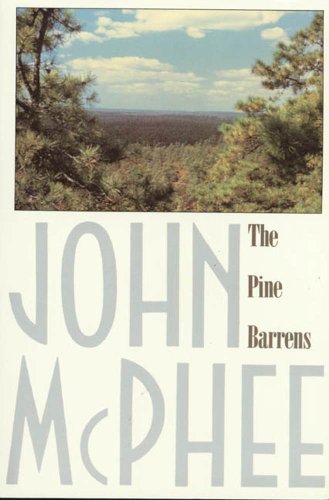
The Pine Barrens
John McPhee, James Graves
4.4
Most people think of New Jersey as a suburban-industrial corridor that runs between New York and Philadelphia. Yet in the low center of the state is a near wilderness, larger than most national parks, which has been known since the seventeenth century as the Pine Barrens.
The term refers to the predominant trees in the vast forests that cover the area and to the quality of the soils below, which are too sandy and acid to be good for farming. On all sides, however, developments of one kind or another have gradually moved in, so that now the central and integral forest is reduced to about a thousand square miles. Although New Jersey has the heaviest population density of any state, huge segments of the Pine Barrens remain uninhabited. The few people who dwell in the region, the "Pineys," are little known and often misunderstood. Here McPhee uses his uncanny skills as a journalist to explore the history of the region and describe the people "and their distinctive folklore" who call it home.
…
Recommended by Brandon Stosuy.
Brandon Stosuy
@thewrens I really love that book. It's one that I've read a bunch of times—I saw it again on a different bookshelf the other day, and so brought it back to this pile, ha. This was my mother's copy. I grew up in Chatsworth, "capital of the pines." [source]
Cover unavailable
27
Song of the Spirits (In the Land of the Long White Cloud Saga #2)
Sarah Lark, D.W. Lovett
4.3
Song of the Spirits continues the soaring saga begun with In the Land of the Long White Cloud, as the founding families of colonial New Zealand experience trials and triumphs of friendship, romance, and unforgettable adventure.
Elaine O’Keefe is the radiant grand-daughter of Gwyneira McKenzie, who made her way to New Zealand to take a wealthy sheep baron’s hand in marriage in In the Land of the Long White Cloud. Elaine inherited not only her grandmother’s red hair but also her feisty spirit, big heart, and love of the land. When William Martyn, a handsome young Irishman of questionable integrity, walks into her life, she succumbs rapidly to his charms. Only to have her heart broken when her sensual half-Maori cousin Kura Warden arrives for a visit and draws William away.
Though both young women must endure hardships and disappointments as they learn to live with the choices they make, each of them also discovers an inner resilience—and eventually finds love and happiness in new, unexpected places. Tested by the harsh realities of colonial life, both girls mature into spirited young women with a greater understanding of the challenges—and joys—of love, friendship, and family.
…
Cover unavailable
28
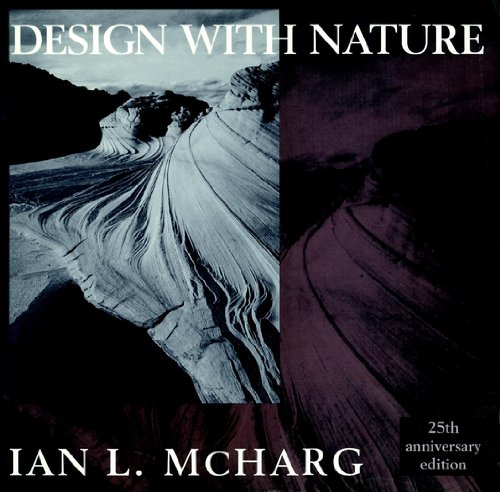
Design With Nature
Ian L. McHarg
4.3
In presenting us with a vision of organic exuberance and humandelight, which ecology and ecological design promise to open up forus, McHarg revives the hope for a better world." --LewisMumford
". . . important to America and all the rest of the world in ourstruggle to design rational, wholesome, and productive landscapes."--Laurie Olin, Hanna Olin, Ltd.
"This century's most influential landscape architecture book."--Landscape Architecture
". . . an enduring contribution to the technical literature oflandscape planning and to that unfortunately small collection ofwritings which speak with emotional eloquence of the importance ofecological principles in regional planning." --Landscape and UrbanPlanning
In the twenty-five years since it first took the academic world bystorm, Design With Nature has done much to redefine the fields oflandscape architecture, urban and regional planning, and ecologicaldesign. It has also left a permanent mark on the ongoing discussionof mankind's place in nature and nature's place in mankind withinthe physical sciences and humanities. Described by one enthusiasticreviewer as a "user's manual for our world," Design With Natureoffers a practical blueprint for a new, healthier relationshipbetween the built environment and nature. In so doing, it providesnothing less than the scientific, technical, and philosophicalfoundations for a mature civilization that will, as Lewis Mumfordecstatically put it in his Introduction to the 1969 edition,"replace the polluted, bulldozed, machine-dominated, dehumanized, explosion-threatened world that is even now disintegrating anddisappearing before our eyes.
…
Recommended by Andrew Revkin.
Andrew Revkin
Great to see a blog for those designing a decent #anthropocene, drawing on the brimstone energy of "Design With Nature" Ian McHarg. Here he was in action: https://t.co/cssGaxMsM6 Here's my foreword for the related new @McHargCenter @landpolicy book: https://t.co/cJkfAoiZyQ https://t.co/XgU3Xj871c [source]
Cover unavailable
29
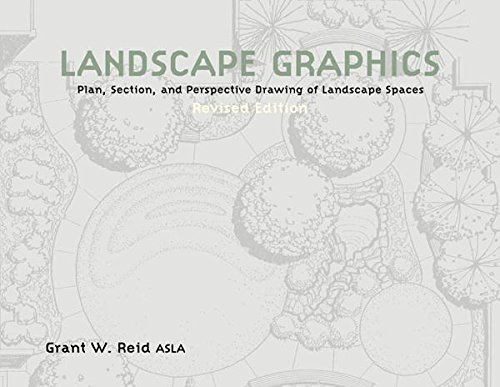
Landscape Graphics
Grant Reid
4.3
Announcing the new revised edition of the classic industry reference! Landscape Graphics is the architect's ultimate guide to all the basic graphics techniques used in landscape design and landscape architecture. Progressing from the basics into more sophisticated techniques, this guide offers clear instruction on graphic language and the design process, the basics of drafting, lettering, freehand drawing and conceptual diagramming, perspective drawing, section elevations, and more. It also features carefully sequenced exercises, a complete file of graphic symbols for sections and perspectives, and a handy appendix of conversions and equivalents.
…
Cover unavailable
30
Perennial Combinations: Stunning Combinations That Make Your Garden Look Fantastic Right from the Start
C. Colston Burrell
4.3
Perennial Combinations by C. Colston Burrell features plant medleys that bring color, texture, and excitement to the garden in every season. The book features 130 of the best perennial combinations with photographs of each grouping, along with a numbered photo key and plant list. Each grouping features just two to six plants; gardeners can plant the combinations as they appear for small garden spaces or they can repeat or mix the combinations for large beds and landscapes.
Available for the first time in paperback, with a new chapter of plant combinations featuring today's big, dramatic perennials, backyard gardeners will find the best choices to accent wide open spaces, marry slopes and high foundations, and make an impact on the landscape with impressive and showy plants. From tall plumes to bold foliage, many of these plant combinations create a living privacy screen and offer a bounty of bloom for those looking to make an "architectural" statement in their perennial beds. Plant cultivar names have been updated throughout the book so gardeners can choose perennials that are readily available at local nurseries.
…
Cover unavailable
31
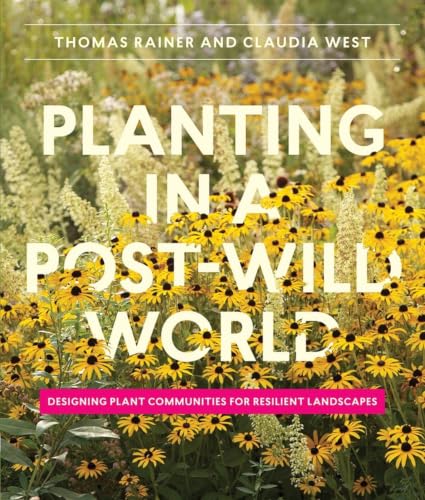
Planting in a Post-Wild World: Designing Plant Communities for Resilient Landscapes
Thomas Rainer
4.3
“As practical as it is poetic. . . . an optimistic call to action.” —Chicago Tribune
Over time, with industrialization and urban sprawl, we have driven nature out of our neighborhoods and cities. But we can invite it back by designing landscapes that look and function more like they do in the wild: robust, diverse, and visually harmonious. Planting in a Post-Wild World by Thomas Rainer and Claudia West is an inspiring call to action dedicated to the idea of a new nature—a hybrid of both the wild and the cultivated—that can flourish in our cities and suburbs. This is both a post-wild manifesto and practical guide that describes how to incorporate and layer plants into plant communities to create an environment that is reflective of natural systems and thrives within our built world.
…
Cover unavailable
32
Midwest Home Landscaping
Roger Holmes, Rita Buchanan, et al.
4.3
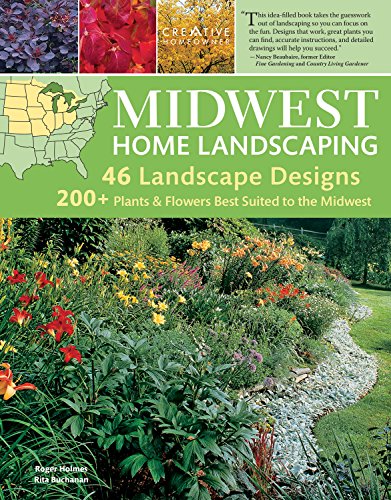
Midwest Home Landscaping, Including Southern Canada, third edition, shows how to beautify 23 common landscape situations, such as front and back entries, walkways, borders, slopes, and patios. Each situation is presented with a variation, for a total of 46 designs. In addition, the book explains how to install and care for the plants, ponds, walls, and fences involved in the landscape designs. Plants that are proven performers in the Midwest are used in the designs and described in full detail. Step-by-step instructions provide the essential knowledge to tackle each project. United States: IA, IL, IN, MI, MN, MO, OH, WI Canada: Ontario (southern)
…
Cover unavailable
33
Toward the Sea of Freedom (The Sea of Freedom Trilogy #1)
Sarah Lark
4.3
In mid-nineteenth-century Ireland, charming Kathleen and dashing Michael harbor secrets and dreams. Imagining a life beyond the kitchen and fields of the wealthy family they both work for, they plot to leave their homeland, marry, and raise the child Kathleen is secretly carrying. The luck of the Irish, however, is not on their side.
Soon, they find themselves swept up in circumstances they never could have fathomed. Kathleen is forced to marry against her will and immigrate to New Zealand. Michael is imprisoned for rebellion and exiled to Australia. As time passes and their new lives march on, they long for those stolen moments in the lush green fields of their native land. And they both still dream of escape, with no idea of how close fate will eventually bring them.
…
Cover unavailable
34
The Shepherd's Life: A People's History of the Lake District
James Rebanks
4.3
Some people's lives are entirely their own creations. James Rebanks' isn't. The first son of a shepherd, who was the first son of a shepherd himself, he and his family have lived and worked in and around the Lake District for generations. Their way of life is ordered by the seasons and the work they demand, and has been for hundreds of years. A Viking would understand the work they do: sending the sheep to the fells in the summer and making the hay; the autumn fairs where the flocks are replenished; the gruelling toil of winter when the sheep must be kept alive, and the light-headedness that comes with spring, as the lambs are born and the sheep get ready to return to the fells.
…
Cover unavailable
35
A Sense of Place, a Sense of Time
John Brinckerhoff Jackson
4.3
J.B. Jackson, a pioneer in the field of landscape studies, here takes us on a tour of American landscapes past and present, showing how our surroundings reflect important changes in our culture.
Because we live in urban and industrial environments that are constantly evolving, says Jackson, time and movement are increasingly important to us and place and permanence are less so. We no longer gain a feeling of community from where we live or where we assemble but from common work hours, habits, and customs. Jackson examines the new vernacular landscape of trailers, parking lots, trucks, loading docks, and suburban garages, which all reflect this emphasis on mobility and transience; he redefines roads as scenes of work and leisure and social intercourse—as places, rather than as means of getting to places; he argues that public parks are now primarily for children, older people, and nature lovers, while more mobile or gregarious people seek recreation in shopping malls, in the street, and in sports arenas; he traces the development of dwellings in New Mexico from prehistoric Pueblo villages to mobile homes; and he criticizes the tendency of some environmentalists to venerate nature instead of interacting with it and learning to share it with others in temporary ways.
Written with his customary lucidity and elegance, this book reveals Jackson's passion for vernacular culture, his insights into a style of life that blurs the boundaries between work and leisure, between middle and working classes, and between public and private spaces.
…
Cover unavailable
36
The Layered Garden: Design Lessons for Year-Round Beauty from Brandywine Cottage
David L. Culp, Adam Levine, Rob Cardillo
4.3
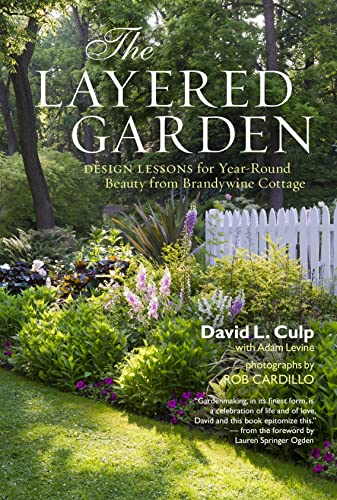
Brandywine Cottage is David Culp's beloved two-acre Pennsylvania garden where he mastered the design technique of layering and interplanting many different species in the same area so that as one plant passes its peak, another takes over. The result is a nonstop parade of color that begins with a tapestry of heirloom daffodils and hellebores in spring and ends with a jewel-like blend of Asian wildflowers at the onset of winter.
The Layered Garden shows you how to recreate Culp's majestic display. It starts with a basic lesson in layering; how to choose the correct plants by understanding how they grow and change throughout the seasons, how to design a layered garden, and how to maintain it. To illustrate how layering works, Culp takes you on a personal tour through each part of his celebrated garden: the woodland garden, the perennial border, the kitchen garden, the shrubbery, and the walled garden. The book culminates with a chapter dedicated to signature plants for all four seasons.
As practical as it is inspiring, The Layered Garden will provide you with expert information gleaned from decades of hard work and close observation. If you thought that a four-season garden was beyond your reach, this book will show you how to achieve that elusive, tantalizing goal.
…
Cover unavailable
37
La isla de las mil fuentes (Jamaika #1)
Sarah Lark
4.3
Isla de Jamaica. Tras la muerte de su primer amor, Nora, la hija de un comerciante londinense, se une, a través de un matrimonio de conveniencia, a Elias, un viudo propietario de un plantación de azúcar. La vida en el Caribe, sin embargo, no es como Nora había soñado. A partir del asalto nocturno a la plantación, Nora se verá envuelta en los tumultos provocados por esclavos rebeldes relacionados con la Abuela Nanny, quien también fue esclava. Nora lo pierde todo, salvo la vida y la esperanza de encontrar de nuevo el amor y decidir libremente sobre su futuro.
…
Cover unavailable
38
Die Schmetterlingsinsel
Corina Bomann
4.2
Diana Wagenbach steht vor den Trümmern ihrer Ehe, als sie den Nachlass ihrer geliebten Tante in England auflösen muss. In ihren letzten Worten an Diana hatte die Tante sie gebeten, ein lange gehütetes Familiengeheimnis zu lüften. Diana folgt den Hinweisen, die die Tante im prachtvollen Tremayne House für sie hinterlassen hat bis ans andere Ende der Welt in eine exotische Landschaft voller neuer Erfahrungen und Gefühle. Dort stößt sie auf eine bittersüße Prophezeiung, die das Schicksal ihrer Familie für immer veränderte, eine verbotene Liebe, die niemals endete, und auf ihre eigene Bestimmung...
…
Cover unavailable
39
Western Garden Book: More than 8,000 Plants - The Right Plants for Your Climate - Tips from Western Garden Experts
Editors of Sunset Books and Kathleen Norris Brenzel
4.2
Gardeners throughout the region will be welcoming a thoroughly updated and fresh-looking 8th edition of the "bible of Western gardening." With a new, easy-to-read design, more plant photography, larger illustrations, and more than 8,000 plant listings--500 of them new--it's THE essential book for gardeners in the Western states. What plants to grow, how to nurture them, and where they do the very best--it's all here. You'll also find updated information on the Western climate zones, 30 Plant Selection Guides, plus a Practical Guide to Gardening with basic advice on plant care and essential gardening techniques. New plant lists reflect current trends, such as Mediterranean gardening and easy-care plants for beginners. For more than 70 years, Sunset has been the source for no-nonsense gardening advice, easy-to-follow diagrams, and encyclopedic knowledge of plant varieties. In this edition, we introduce an exciting new feature: gardening tips from well-known plant experts throughout the West. The Western Garden Book has never been better! Features:
8th Edition of this perennial bestseller
More than 8,000 plant listings, 500 new, keyed to climate zones
30 Plant Selection Guides to find the perfect plant for every situation
Special contributions from 40 eminent Western garden experts
Introduction by Sunset garden editor Kathleen N. Brenzel, with a photographic tour of gardens that are truly the `Best of the West' gardens
…
Cover unavailable
40
The Golden Compass (His Dark Materials, #1)
Philip Pullman
4.2
Lyra is rushing to the cold, far North, where witch clans and armored bears rule. North, where the Gobblers take the children they steal--including her friend Roger. North, where her fearsome uncle Asriel is trying to build a bridge to a parallel world.
Can one small girl make a difference in such great and terrible endeavors? This is Lyra: a savage, a schemer, a liar, and as fierce and true a champion as Roger or Asriel could want--but what Lyra doesn't know is that to help one of them will be to betray the other.
…
Cover unavailable
41
The Living Landscape: Designing for Beauty and Biodiversity in the Home Garden
Rick Darke, Douglas W. Tallamy
4.2
“This thoughtful, intelligent book is all about connectivity, addressing a natural world in which we are the primary influence.” —The New York Times Books Review
Many gardeners today want a home landscape that nourishes and fosters wildlife, but they also want beauty, a space for the kids to play, privacy, and maybe even a vegetable patch. Sure, it’s a tall order, but The Living Landscape shows you how to do it. You’ll learn the strategies for making and maintaining a diverse, layered landscape—one that offers beauty on many levels, provides outdoor rooms and turf areas for children and pets, incorporates fragrance and edible plants, and provides cover, shelter, and sustenance for wildlife. Richly illustrated and informed by both a keen eye for design and an understanding of how healthy ecologies work, The Living Landscape will enable you to create a garden that fulfills both human needs and the needs of wildlife communities.
…
Cover unavailable
42
National Wildlife Federation(r) Attracting Birds, Butterflies, and Other Backyard Wildlife, Expanded Second Edition
David Mizejewski
4.2
From renowned National Wildlife Federation naturalist and TV host David Mizejewski comes a new book to show you how to create a magical ecosystem right in your backyard! Invite beautiful songbirds, colorful butterflies, buzzing bees and other fascinating wildlife by nurturing a wildlife habitat garden. With more than 200 high-quality photographs, lists of the best native plants to support wildlife and 17 gardening projects the whole family can enjoy, from building bird houses to creating garden ponds, Attracting Birds, Butterflies, and Other Backyard Wildlife, Expanded Second Edition is a must-have resource for nature enthusiasts, gardeners, and animal lovers.
…
Cover unavailable
43
Waterlog
Roger Deakin
4.2
Roger Deakin set out in 1996 to swim through the British Isles. The result a uniquely personal view of an island race and a people with a deep affinity for water. From the sea, from rock pools, from rivers and streams, tarns, lakes, lochs, ponds, lidos, swimming pools and spas, from fens, dykes, moats, aqueducts, waterfalls, flooded quarries, even canals, Deakin gains a fascinating perspective on modern Britain. Detained by water bailiffs in Winchester, intercepted in the Fowey estuary by coastguards, mistaken for a suicude on Camber sands, confronting the Corryvreckan whirlpool in the Hebrides, he discovers just how much of an outsider the native swimmer is to his landlocked, fully-dressed fellow citizens. Encompassing cultural history, autobiography, travel writing and natural history, Waterlog is a personal journey, a bold assertion of the native swimmer's right to roam, and an unforgettable celebration of the magic of water.
…
Cover unavailable
44
Downsview Park Toronto
Julia Czerniak
4.2
In 1999, an international competition was held to select an urban park design for a former military base in Toronto. This 320-acre federal park will provide natural and formal garden environments, offering both passive and active recreation while promoting such themes as environmental sustainability, new ecologies, and the rich heritage of the site. Contributors to this volume analyze the entries of the competition finalists and consider a range of issues raised by the competition, including landscape architecture, geography, landscape ecology, and contemporary urbanism.
This competition was especially noteworthy because it encouraged submissions from teams comprised of designers from varying fields, including ecology, graphic design, and landscape architecture. The historically charged site, the competition's visionary parameters, and the resulting innovative collaborations of the five finalists-including the winning design by a diverse team led by Rem Koolhaas of the Office for Metropolitan Architecture-make the Downsview competition and its outcome a particularly significant case study for architecture, urbanism, and landscape design.
…
Cover unavailable
45
The Bee Book
DK
4.2
The Bee Book shows you step-by-step how to create a bee-friendly garden, get started in beekeeping, and harness the power of honey for well-being.
Fully illustrated with full-color photographs throughout, this beautiful guide covers everything you need to know to start your own backyard hive, from setup to harvest. Practical beekeeping techniques are explained with clear step-by-step sequences, photos, and diagrams so you'll be prepared to establish your own colony, deal with diseases, collect a swarm, and much more.
A comprehensive gardening chapter features planting plans to fill container and border gardens, bee "hotel" and habitat projects, and an at-a-glance flower gallery of bees' favorite plants. The Bee Book also shows you how to harvest honey, beeswax, and propolis from the hive and use these ingredients in 38 recipes for home remedies, beauty treatments, and candle-making.
Discover the wonder of bees in nature, in your garden, and in the hive with The Bee Book, lavishly bound in a beautiful gold-foil and texture cover and perfect for gift giving.
Reviews:
"This enticing book will keep readers occupied for days, if not longer." - School Library Journal (Starred Review)
…
Cover unavailable
46
Hidden Histories: A Spotter's Guide to the British Landscape
Mary-Ann Ochota
4.2
For the times when you’ re driving past a lumpy, bumpy field and you wonder what made the lumps and bumps; for when you’ re walking between two lines of grand trees, wondering when and why they were planted; for when you see a brown heritage sign pointing to a ‘ tumulus’ but you don’ t know what to look for… Entertaining and factually rigorous, Hidden Histories will help you decipher the story of our landscape through the features you can see around you.
This Spotter’ s Guide arms the amateur explorer with the crucial information needed to ‘ read’ the landscape and spot the human activities that have shaped our green and pleasant land. Photographs and diagrams point out specific details and typical examples to help the curious Spotter ‘ get their eye in’ and understand what they’ re looking at, or looking for. Specially commissioned illustrations bring to life the processes that shaped the landscape (from medieval ploughing to Roman road building).
Stand-alone capsules explore interesting aspects of history (like the Highland Clearances or the coming of Christianity), and text boxes provide definitions of jargon or handy references as required (like a glossary of what different field names mean). Each chapter culminates in a checklist of key details to look for, other things it might be, and gives details of where to find some of the best examples in Britain.
…
Cover unavailable
47
The New Western Garden Book: The Ultimate Gardening Guide
The Editors of Sunset
4.2
As surely as gardens change with the seasons, gardening is ever changing. New plants, techniques, materials, and lifestyles are constantly broadening the choices you have and reshaping the way you garden in the West. In response to this natural evolution, the editors of Sunset-the West's most trusted source of gardening information for more than 80 years-have completely redesigned and updated The Western Garden Book in this new 2012 Ninth Edition. Following the best-selling success of the previous editions of The Western Garden Book, this edition includes a fresh new look, thousands of color photographs, fresh illustrations, and an easy-to-follow format. Written by experts for gardeners in the West, this book is an indispensable reference for beginning and expert gardeners alike.
The New Western Garden Book features include: A photo gallery shows the West's most innovative gardens, from all-edibles front yards to stylish water-wise and fire-wise gardens to living walls and green roofs-all with ideas you can use. Climate Zone Maps and growing-season graphs for all regions of the West including Alaska and Hawaii. A new "Plant Finder" section helps you choose plants for their garden's problem areas or for special effects. "A to Z Plant Encyclopedia" lists some 8,000 plants that thrive in the West, including more than 500 new ones. Gorgeous color photographs illustrate all plant entries-for the first time ever in The Western Garden Book. "Gardening From Start to Finish" is a new visual guide that leads readers through all steps of making a garden, from soil prep through planting, growing and care, with special sections on natives, veggies, grasses and more.
…
Cover unavailable
48
How to Paint Landscapes Quickly and Beautifully in Watercolor and Gouache
Nathan Fowkes
4.2
Cover unavailable
49
The Making Of The English Landscape
W.G. Hoskins
4.2
Recommended by Paul Brassley.
Paul Brassley
The interesting thing about the book is that in effect it created an entirely new subject of landscape history. Hoskins and his colleague Maurice Beresford, as a result of walking in the English Midlands during the Second World War, realised that there was a whole story about the landscape that hadn’t really been told. He published the book in 1955. It examined the way in which the countryside had come to look as it does, starting from pre-historic times and going right up to the time of writing. [source]
Cover unavailable
50
Dark Emu
Bruce Pascoe
4.2
Dark Emu puts forward an argument for a reconsideration of the hunter-gatherer tag for precolonial Aboriginal Australians. The evidence insists that Aboriginal people right across the continent were using domesticated plants, sowing, harvesting, irrigating and storing – behaviours inconsistent with the hunter-gatherer tag. Gerritsen and Gammage in their latest books support this premise but Pascoe takes this further and challenges the hunter-gatherer tag as a convenient lie. Almost all the evidence comes from the records and diaries of the Australian explorers, impeccable sources.
…
Cover unavailable
51
Rainwater Harvesting for Drylands and Beyond, Volume 2: Water-Harvesting Earthworks
Brad Lancaster
4.2
Rainwater Harvesting for Drylands and Beyond, Volume 2, 2nd Edition is a how-to guide enabling you to “plant the rain” by creating water-harvesting “earthworks” or “rain gardens.” Earthworks are simple, inexpensive strategies and landforms that passively harvest multiple sources of free on-site water including rainfall, stormwater runoff, air conditioning condensate, and greywater within “living tanks” of soil and vegetation. The plants then pump the water back out in the form of beauty, food, shelter, wildlife habitat, timber and forage, while controlling erosion, reducing down-stream flooding, dropping utility costs, increasing soil fertility, enhancing the soil carbon sponge, and improving water and air quality.
This dramatically revised and expanded full-color second edition builds on the information in Volume 1 by showing you how to turn your yard, school, business, park, ranch, and neighborhood into lively, regenerative producers of resources. Conditions at home will improve as you simultaneously enrich the ecosystem and inspire the surrounding community.
Learn to select, place, size, construct, and plant your chosen earthworks. All is made easier and more effective by the illustrations of natural patterns of water and sediment flow with which you can collaborate or mimic. Detailed step-by-step instructions with over 550 images show you how to do it, and plentiful stories of success motivate you so you will do it!
…
Cover unavailable
52
Drawing for Landscape Architecture: Sketch to Screen to Site
Edward Hutchison
4.2
Across design disciplines, drawing by hand has largely become a lost art. With digital tools at their disposal, the majority of designers create while sitting at their computer screens. Attitudes are changing, however. Eager to push the boundaries of their creative processes and spurred by a sense of being disconnected from their briefs, today’s designers seek a greater and more immediate connection with their projects. There is no better way to stimulate the imagination than by learning to draw what one sees, and in the fluid, living world of landscape architecture, it is particularly important. This essential publication reintroduces the importance of learning to “see by hand,” to visualize large-scale design schemes and explain them through drawing, before using the digital tools that are time- and cost-efficient building solutions. Combining traditional drawing techniques with those from CAD rendering, Drawing for Landscape Architecture guides practitioners from their very first impression. This expanded edition includes a new chapter on the relationship between landscape design and architecture, along with a selection of updated images.
…
Cover unavailable
53
Under the Rock: The Poetry of a Place
Benjamin Myers
4.2
‘A bone-tingling book’ – Richard Benson
Carved from the land above Mytholmroyd in West Yorkshire, Scout Rock is a steep crag overlooking wooded slopes and weed-tangled plateaus. To many it is unremarkable; to others it is a doomed place where 18th-century thieves hid out, where the town tip once sat, and where suicides leapt to their deaths. Its brooding form presided over the early years of Ted Hughes, who called Scout Rock 'my spiritual midwife . . . both the curtain and backdrop to existence'.
Into this beautiful, dark and complex landscape steps Benjamin Myers, asking: are unremarkable places made remarkable by the minds that map them? Seeking a new life and finding solace in nature's power of renewal, Myers excavates stories both human and elemental. The result is a lyrical and unflinching investigation into nature, literature, history, memory and the meaning of place in modern Britain.
UNDER THE ROCK is about badgers, balsam, history, nettles, mythology, moorlands, mosses, poetry, bats, wild swimming, slugs, recession, floods, logging, peacocks, community, apples, asbestos, quarries, geology, industrial music, owls, stone walls, farming, anxiety, relocation, the North, woodpiles, folklore, landslides, ruins, terriers, woodlands, ravens, dales, valleys, walking, animal skulls, trespassing, crows, factories, maps, rain - lots of rain - and a great big rock.
'A bone-tingling book' -- Richard Benson, author of The Valley and The Farm
“Extraordinary, elemental … never less than compelling: this is a wild, dark grimoire of a book” – The Times Literary Supplement
'The writing is perfectly poised and seductive, luminous, an earthy immersion into the granular dark of place. The prose has an intense, porous quality, inhabiting the reader right from the stunning start with the voices of rock, earth, wood and water. This is a truly elemental read from which I emerged subtly changed. The writing has a shamanic quality; Benjamin Myers is a writer of exceptional talent and originality ... it has all the makings of a classic' -- Miriam Darlington, author of Otter Country and Owl Sense
“Compelling … admirable and engrossing. Myers writes of the rain with a poet’s eye worthy of Hughes” – Erica Wagner, New Statesman
'One of the many joys of Under the Rock - this absorbing, compelling, moving book - is its language; it trickles like a rivulet, thunders like a cataract, and sticks to you like mud. It is full of crannies and dips and peaks wherein wonders hide; explore it for a lifetime and you will not exhaust its mysteries. Unafraid of blood-drenched history and the darkest of despair, this is nonetheless a defiantly life-praising book; it accompanied me to bed and bar, train and plane, and each situation was enriched and brightened by its presence... . It is utterly vital' -- Niall Griffiths, author of Grits, Sheepshagger and Stump
'Richly layered, densely and elegantly structured, discursive, elegiac and beautiful. Under the Rock is a stunning exploration of place, mind and myth' -- Jenn Ashworth, author of Fell and The Friday Gospels
“Prodigious, awe-incurring … few are as impressive as the formidable Benjamin Myers, who has developed a voice as pure and authentic as it is stark, honest and resolutely northern … creates an overall sense of dreamy, quiet beauty, born of love for the lie of the land.” – The Big Issue
“Compelling … an atmospheric exploration of the landscape and its history” – Irish Times
“A visionary work of immense power and subtlety which establishes Myers as one of Britain’s most consistently interesting and gifted writers” – Morning Star
'Place-writing at its most supple: both deeply considered, and deeply felt' -- Melissa Harrison, author of Rain: Four Walks in English Weather
“Best known for his bleak and brilliant crime fiction Myers turns his focus to nature writing with absorbing results in this lyrical exploration of Scout Rock in Yorkshire’s Calder Valley” – i-news, Best Books to Take on Holiday 2018
“Exceptionally engaging … beguiling … this is a startling, unclassifiable book” – Stuart Kelly, The Scotsman
“Thoughtful, engaging and beautifully crafted … the writing is lyrical yet muscular and elemental, transporting the reader to this plaece of rugged beauty and dark secrets” – The Yorkshire Post
“[A] beautifully poetic, passionate and elegiac book … Myers’ writing left me with a heart-wrenching desire to be there” – Harry Gallon, Minor Literatures
'What distinguishes Under the Rock is Myers' unshakeable commitment. He writes at all times with rock-solid conviction, fashioning a book which is less a work of simple description than a new contribution to the mythology of Elmet' -- Will Ashon, author of Strange Labyrinth, Clear Water and The Heritage
'I have become a Benjamin Myers junkie in the last 12 months . . . Myers' place-writing is as good as anything being scrawled in Britain today' - Horatio Clare, author of Down to the Sea in Ships and Orison for a Curlew
“Terrific… It’s a book which doesn’t just discuss or describe landscape, but immerses you within it… if this doesn’t put Ben Myers on everyone’s radar then I don’t know what will” – Daniel Carpenter, Bookmunch
“An author to adopt as your own, a book to turn others on to ... boy does it rock” – Cally Callomon, Caught by the River
“A daring new work … make[s] the unremarkable truly remarkable. It’s a work that is focused on landscape and place and is another step on this special writer cementing himself as more than just a cult favourite” – Narc Magazine
“An extraordinary blend of power, poetry and grit … Benjamin Myers has made his rock sing” – Richard Littledale, The Preacher’s Blog
“Myers’ prose is outstanding” – Marcel Krueger, Hong Kong Review of Books
“Under the Rock is the most beautifully written non-fiction book… There is an extremely powerful sense of place. I was fully immersed in the landscape, the water, the woods, the rock. Lyrical, powerful, engaging, moving and fascinating. Highly recommended” – The Book Corner, Halifax
…
Cover unavailable
54
Practice of the Wild
Gary Snyder
4.2
Gary Snyder has been a major cultural force in America for five decades. Future readers will come to see this book as one of the central texts on wilderness and the interaction of nature and culture. The nine essays in The Practice of the Wild reveal why Snyder has gone on to become one of America's cultural leaders, comprehending things about our world before they were ever discussed in public. With thoughts ranging from political and spiritual matters to those regarding the environment and the art of becoming native to this continent, this collection of essays, first published in 1990, reflect the mature centerpiece of the author's work and thought.
…
Cover unavailable
55
Surfacing
Kathleen Jamie
4.2
In this remarkable blend of memoir, cultural history, and travelogue, poet and author Kathleen Jamie touches points on a timeline spanning millennia, and considers what surfaces and what reconnects us to our past. From the thawing tundra linking a Yup'ik village in Alaska to its hunter-gatherer past to the shifting sand dunes revealing the impressively preserved homes of neolithic farmers in Scotland, Jamie explores how the changing natural world can alter our sense of time. Most movingly, she considers, as her father dies and her children leave home, the surfacing of an older, less tethered sense of herself. In precise, luminous prose, Surfacing offers a profound sense of time passing and an antidote to all that is instant, ephemeral, unrooted.
…
Cover unavailable
56
California Home Landscaping
Roger Holmes and Lance Walheim
4.1
Make a Californian home landscape more attractive and functional with California Home Landscaping, third edition. Like the other titles in this series, this book contains three parts: Design Portfolio, Guide to Installations, and Plant Portraits. In the "Design Portfolio" section, readers will find 48 designs created by landscape professionals in California. "Guide to Installations" explains how to install the plants, paths, patios, and arbors used in the designs. More than 200 of the best plants for the region are fully described in "Plant Portraits." Clearly written in a friendly style and with 450 color photographs and paintings, California Home Landscaping, third edition, provides everything Californians need to know to landscape like a pro.
…
Cover unavailable
57
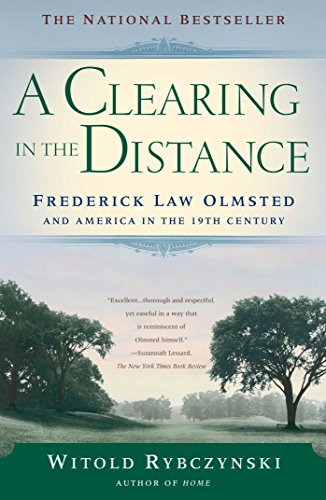
A Clearing in the Distance: Frederick Law Olmsted and America in the 19th Century
Witold Rybczynski
4.1
In a brilliant collaboration between writer and subject, Witold Rybczynski, the bestselling author of Now I Sit Me Down, illuminates Frederick Law Olmsted's role as a major cultural figure at the epicenter of nineteenth-century American history.
We know Olmsted through the physical legacy of his stunning landscapes—among them, New York's Central Park, California's Stanford University campus, and Boston's Back Bay Fens. But Olmsted's contemporaries knew a man of even more extraordinarily diverse talents. Born in 1822, he traveled to China on a merchant ship at the age of twenty-one. He cofounded The Nation magazine and was an early voice against slavery. He managed California's largest gold mine and, during the Civil War, served as the executive secretary to the United States Sanitary Commission, the precursor of the Red Cross.
Rybczynski's passion for his subject and his understanding of Olmsted's immense complexity and accomplishments make his book a triumphant work. In A Clearing in the Distance, the story of a great nineteenth-century American becomes an intellectual adventure.
…
Cover unavailable
58
The Amber Spyglass (His Dark Materials, #3)
Philip Pullman
4.1
Will is the bearer of the knife. Now, accompanied by angels, his task is to deliver that powerful, dangerous weapon to Lord Asriel - by the command of his dying father.
But how can he go looking for Lord Asriel when Lyra is gone? Only with her help can he fathom the myriad plots and intrigues that beset him.
The two great powers of the many worlds are lining up for war, and Will must find Lyra, for together they are on their way to battle, an inevitable journey that will even take them to the world of the dead...
…
Cover unavailable
59
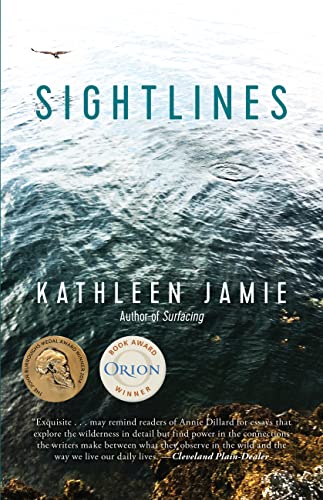
Sightlines
Kathleen Jamie
4.1
The outer world flew open like a door, and I wondered—what is it that we're just not seeing? In this greatly anticipated sequel to Findings, prize-winning poet and renowned nature writer Kathleen Jamie takes a fresh look at her native Scottish landscapes, before sailing north into iceberg-strewn seas. Her gaze swoops vertiginously too; from a countryside of cells beneath a hospital microscope, to killer whales rounding a headland, to the constellations of satellites that belie our sense of the remote. Written with her hallmark precision and delicacy, and marked by moments in her own life, Sightlines offers a rare invitation to pause and to pay heed to our surroundings.
…
Cover unavailable
60
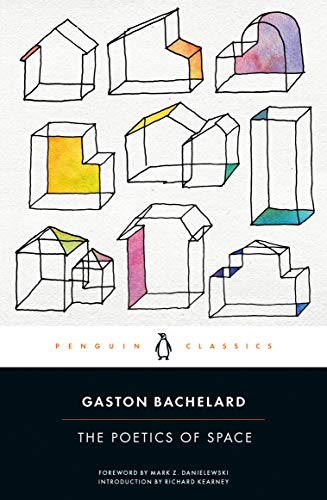
The Poetics of Space
Gaston Bachelard, Maria Jolas, John R. Stilgoe
4.1
Since its first publication in English in 1964, French philosopher Gaston Bachelard's Poetics of Space remains one of the most appealing and lyrical explorations of home. Bachelard takes us on a journey, from cellar to attic, to show how our perceptions of houses and other shelters shape our thoughts, memories, and dreams.
"A magical book. . . . The Poetics of Space is a prism through which all worlds from literary creation to housework to aesthetics to carpentry take on enhanced-and enchanted-significances. Every reader of it will never see ordinary spaces in ordinary ways. Instead the reader will see with the soul of the eye, the glint of Gaston Bachelard." -from the new foreword by John R. Stilgoe
…
Cover unavailable
61
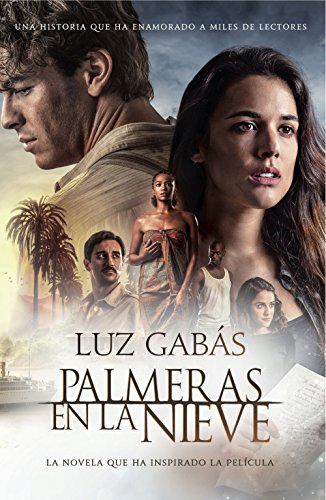
Palmeras en la nieve
Luz Gabás
4.1
Es 1953 y Kilian abandona la nieve de la montaña oscense para iniciar junto a su hermano, Jacobo, el viaje de ida hacia una tierra desconocida, lejana y exótica, la isla de Fernando Poo. En las entrañas de este territorio exuberante y seductor, le espera su padre, un veterano de la finca Sampaka, el lugar donde se cultiva y tuesta uno de los mejores cacaos del mundo.
En esa tierra eternamente verde, cálida y voluptuosa, los jóvenes hermanos descubren la ligereza de la vida social de la colonia en comparación con una España encorsetada y gris; comparten el duro trabajo necesario para conseguir el cacao perfecto de la finca Sampaka; aprenden las diferencias y similitudes culturales entre coloniales y autóctonos; y conocen el significado de la amistad, la pasión, el amor y el odio. Pero uno de ellos cruzará una línea prohibida e invisible y se enamorará perdidamente de una nativa. Su amor por ella, enmarcado en unas complejas circunstancias históricas, y el especial vínculo que se crea entre el colono y los oriundos de la isla transformarán la relación de los hermanos, cambiarán el curso de sus vidas y serán el origen de un secreto cuyas consecuencias alcanzarán el presente.
En el año 2003, Clarence, hija y sobrina de ese par de hermanos, llevada por la curiosidad del que desea conocer sus orígenes, se zambulle en el ruinoso pasado que habitaron Kilian y Jacobo y descubre los hilos polvorientos de ese secreto que finalmente será desentrañado.
…
Cover unavailable
62
Life Between Buildings: Using Public Space
Jan Gehl, Jo Koch
4.1
“. . .thoughtful, beautiful, and enlightening...” —Jane Jacobs
“This book will have a lasting infl uence on the future quality of public open spaces. By helping us better understand the larger public life of cities, Life between Buildings can only move us toward more lively and healthy public places. Buy this book, fi nd a comfortable place to sit in a public park or plaza, begin reading, look around. You will be surprised at how you will start to see (and design) the world differently.” —Landscape Architecture
…
Cover unavailable
63
The Outrun: A Memoir
Amy Liptrot
4.1
When Amy Liptrot returns to Orkney after more than a decade away, she is drawn back to the Outrun on the sheep farm where she grew up. Approaching the land that was once home, memories of her childhood merge with the recent events that have set her on this journey.
Amy was shaped by the cycle of the seasons, birth and death on the farm, and her father’s mental illness, which were as much a part of her childhood as the wild, carefree existence on Orkney. But as she grew up, she longed to leave this remote life. She moved to London and found herself in a hedonistic cycle. Unable to control her drinking, alcohol gradually took over. Now thirty, she finds herself washed up back home on Orkney, standing unstable at the cliff edge, trying to come to terms with what happened to her in London.
Spending early mornings swimming in the bracingly cold sea, the days tracking Orkney’s wildlife—puffins nesting on sea stacks, arctic terns swooping close enough to feel their wings—and nights searching the sky for the Merry Dancers, Amy slowly makes the journey toward recovery from addiction.
The Outrun is a beautiful, inspiring book about living on the edge, about the pull between island and city, and about the ability of the sea, the land, the wind, and the moon to restore life and renew hope.
A Guardian Best Nonfiction Book of 2016 Sunday Times Top Ten Bestseller New Statesman Book of the Year
…
Cover unavailable
64
Genius of Place: The Life of Frederick Law Olmsted
Justin Martin
4.1
Frederick Law Olmsted is arguably the most important historical figure that the average American knows the least about. Best remembered for his landscape architecture, from New York's Central Park to Boston's Emerald Necklace to Stanford University's campus, Olmsted was also an influential journalist, early voice for the environment, and abolitionist credited with helping dissuade England from joining the South in the Civil War. This momentous career was shadowed by a tragic personal life, also fully portrayed here.Most of all, he was a social reformer. He didn't simply create places that were beautiful in the abstract. An awesome and timeless intent stands behind Olmsted's designs, allowing his work to survive to the present day. With our urgent need to revitalize cities and a widespread yearning for green space, his work is more relevant now than it was during his lifetime. Justin Martin restores Olmsted to his rightful place in the pantheon of great Americans.
…
Cover unavailable
65
Practical Permaculture: for Home Landscapes, Your Community, and the Whole Earth
Jessi Bloom, Dave Boehnlein, Mr. Paul Kearsley
4.1
“Practical Permaculture is powerful, visceral, readable, and inspiring. It shows us how we can and should live.” —Joel Salatin, farmer and author
Permaculture is more popular than ever, but it can still be a daunting concept. If you are new to permaculture and interested in learning more, Practical Permaculture offers authoritative, in-depth, and hands-on advice for a more holistic approach to sustainable living. Jessi Bloom and Dave Boehnlein, two dynamic leaders in the permaculture community, explain the basics of permaculture, share their design process, and explore various permaculture systems including soil, water, waste, energy, shelter, food and plants, and animals and wildlife. They also profile the fifty most useful plants for permaculture landscapes.
…
Cover unavailable
66
Im Schatten des Kauribaums (Kauri-Trilogie, #2)
Sarah Lark
4.1
Neuseeland 1875: Lizzie und Michael Drury haben sich den Traum von einer großen Schaffarm erfüllt, vor ihnen liegt eine verheißungsvolle Zukunft. Doch ihr Leben gerät jäh aus den Fugen, als ihre älteste Tochter Matariki entführt wird ? von ihrem leiblichen Vater, dem Maori-Häuptling Kahu Heke ... Während die Drurys um ihre Tochter bangen, steht der Familie Burton ein scheinbar glückliches Ereignis bevor: Kathleens Sohn Colin kehrt nach Neuseeland zurück. Noch ahnt niemand, was der junge Mann heraufbeschwören wird - Der zweite, in sich abgeschlossene Band von Sarah Larks farbenprächtigem Bestseller-Epos.
…
Cover unavailable
67
Changes in the Land: Indians, Colonists, and the Ecology of New England
William Cronon
4.1
The book that launched environmental history now updated.
Winner of the Francis Parkman Prize
In this landmark work of environmental history, William Cronon offers an original and profound explanation of the effects European colonists' sense of property and their pursuit of capitalism had upon the ecosystems of New England. Reissued here with an updated afterword by the author and a new preface by the distinguished colonialist John Demos, Changes in the Land, provides a brilliant inter-disciplinary interpretation of how land and people influence one another. With its chilling closing line, "The people of plenty were a people of waste," Cronon's enduring and thought-provoking book is ethno-ecological history at its best.
…
Recommended by Matt Garcia.
Matt Garcia
Many see Cronon’s book as ecological studies or environmental history. But what I see is his study of the consequences of raising livestock on the land, the consequences of extracting food from a place . . . in this first book, he also makes clear that livestock agricultural practices, food production practices, have consequences. [source]
Cover unavailable
68
Social Formation and Symbolic Landscape
Denis E. Cosgrove
4.1
Hailed as a landmark in its field since its first publication in 1984, Denis E. Cosgrove’s Social Formation and Symbolic Landscape has been influential well beyond geography. It has continued to spark lively debate among historians, geographers, art historians, social theorists, landscape architects, and others interested in the social and cultural politics of landscape.
Cover unavailable
69
The Landscape Photography Book
Scott Kelby
4.1
Cover unavailable
70
Northeast Home Landscaping: Including Southeast Canada
Roger Holmes, Rita Buchanan, et al.
4.1
Northeast Home Landscaping shows how to beautify 27 common landscape situations, such as front and back entries, walkways, borders, slopes, and patios. 54 design variations incorporate more than 200 of the best plants for the region. Readers also learn all they need to know to install the paths, fences, walls, arbors, and trellises that make up the designs. Step-by-step instructions show how to tackle each project. Plant descriptions also explain planting and care.
…
Cover unavailable
71
The Social Life of Small Urban Spaces
William H. Whyte
4.1
Cover unavailable
72
Discovering the Vernacular Landscape
John Brinckerhoff Jackson
4.1
A pioneer in landscape studies takes us on a tour of landscapes past and present to show how our surroundings reflect our culture.
“No one who cares deeply about landscape issues can overlook the scores of brilliant insights and challenges to the mind, eye and conscience contained in Discovering the Vernacular Landscape. It is a book to be deeply cherished and to be read and pondered many times.”—Wilbur Zelinsky, Landscape
“While it is fashionable to speak of man as alienated from his environment, Mr. Jackson shows us all the ties that bind us to it, consciously or unconsciously. He teaches us to speak intelligently—rather than polemically or wistfully—of the sense of place.”—Anatole Broyard, New York Times
“This book is a vital and seminal text: do beg, borrow or buy it.”—Robert Holden, Landscape Design (London)
“Incisive and overpoweringly influential. It will probably tell you something about how you live that you’ve never thought about.”—Thomas Hine, The Philadelphia Inquirer
“No one can come close to Jackson in his unique combination of historical scholarship and field experience, in his deep knowledge of European high culture as well as of American trailer parks, in his archivist’s nose for the unusual fact and his philosopher’s mind for the trenchant, surprising question.”—Yi-Fu Tuan
…
Cover unavailable
73
Jamaica Inn
Daphne Du Maurier
4.1
On a bitter November evening, young Mary Yellan journeys across the rainswept moors to Jamaica Inn in honour of her mother's dying request. When she arrives, the warning of the coachman begins to echo in her memory, for her aunt Patience cowers before hulking Uncle Joss Merlyn. Terrified of the inn's brooding power, Mary gradually finds herself ensnared in the dark schemes being enacted behind its crumbling walls -- and tempted to love a man she dares not trust.
…
Recommended by Rachel Hickman.
Rachel Hickman
A dark, gothic and truly scary modern classic. [source]
Cover unavailable
74
Foundations of Landscape Architecture: Integrating Form and Space Using the Language of Site Design
Norman Booth
4.1
A visually engaging introduction to landscape architectural design
Landscape architectural design seeks to create environments that accommodate users' varying lifestyles and needs, incorporate cultural heritage, promote sustainability, and integrate functional requirements for optimal enjoyment. Foundations of Landscape Architecture introduces the foundational concepts needed to effectively integrate space and form in landscape design.
With over five hundred hand-rendered and digital drawings, as well as photographs, Foundations of Landscape Architecture illustrates the importance of spatial language. It introduces concepts, typologies, and rudimentary principles of form and space. Including designs for projects such as parks, campuses, and memorials, this text provides the core concepts necessary for designers to shape functional landscapes. Additionally, chapters discuss organizational and spatial design structures based on orthogonal forms, angular forms, and circular forms.
Helping students, professionals, and lifelong learners alike, Foundations of Landscape Arch-itecture delivers a concrete understanding of landscape architectural design to inspire one's imagination for countless types of projects.
…
Cover unavailable
75
Home Ground: A Guide to the American Landscape
Barry Lopez
4.1
Hailed by book reviewers as a "masterpiece," "gorgeous and fascinating," and "sheer pleasure," Home Ground: Language for an American Landscape was published in fall 2006 in hardcover. It was met with outstanding reviews and strong sales, going into three printings. A language-lover's dream, this visionary reference revitalized a descriptive language for the American landscape by combining geography, literature, and folklore in one volume. This is a totally redesigned, near-pocket-sized field guide edition of the best-selling hardcover.
Home Ground brings together 45 poets and writers to create more than 850 original definitions for words that describe our lands and waters. The writers draw from careful research and their own distinctive stylistic, personal, and regional diversity to portray in bright, precise prose the striking complexity of the landscapes we inhabit. Includes an introductory essay by Barry Lopez. At the heart of the book is a community of writers in service to their country, emphasizing a language suggesting the vastness and mystery that lie beyond our everyday words.
…
Cover unavailable
76
Patina Living
Steve Giannetti
4.0
The heartwarming story of how the Giannetties live and entertain in the well-designed and lushly planted gardens of their farm in Ojai, California.
An intimate look at life on Patina Farm enjoying the interplay of rustic and modern European farmhouse charm--including the sheds, outbuildings and well-designed gardens where the Giannettis entertain and enjoy their miniature goats, sheep and donkeys, the chickens and ducks, and dogs. In addition to the home, charming sheds and outbuildings in the Patina landscape are inspiration for a beautiful life in the popular Patina Style.
"We decided to write this book to share why we decided to create this life and what we have learned along the way. We share how we decided where to live, how to design and lay out our property and how to think about the individual spaces. One of the main nuggets of wisdom that we have learned is that there is not only one way to live this life. The idea of this book is to give you some options."
Brooke Gianetti is a California-based interior decorator, shop opener, and blogger. Her projects frequently incorporate Belgian and Swedish antiques paired with industrial and outdoor elements. She frequently collaborates with architect husband, Steve Giannetti, on projects as well as their home store, Gianetti Home in Santa Barbara. They live in Ojai.
…
Cover unavailable
77
Rainwater Harvesting for Drylands and Beyond, Volume 1: Guiding Principles to Welcome Rain Into Your Life and Landscape
Brad Lancaster
4.0
Turn water scarcity into water abundance!
"Rainwater Harvesting for Drylands and Beyond, Volume 1, 3rd Edition" is the best-selling, award-winning guide on how to conceptualize, design, and implement life-enhancing water-, sun-, wind-, and shade-harvesting systems for your home, landscape, and community. This book enables you to assess your on-site resources, gives you a diverse array of strategies to maximize their potential, and empowers you with guiding principles to create an integrated, multi-functional plan specific to your site and needs.
Clearly written with more than 290 illustrations, this full-color edition helps bring your site to life, reduce your cost of living, endow yourself and your community with skills of self-reliance and cooperation, and create living air conditioners of vegetation growing beauty, food, and wildlife habitat. Stories of people who are successfully welcoming rain into their life and landscape will invite you to do the same.
…
Cover unavailable
78
The Bob Ross Coloring Book
Bob Ross
4.0
The first and only coloring book based on the art of the beloved and acclaimed painter and television personality. This exclusive authorized collection of art, derived directly from Bob Ross's own paintings, offers his legions of fans a contemplative, relaxing, and inspiring way to connect with the work and personality of the pop-culture icon. Featuring many of Ross's most famous quotes and catchphrases about happy little trees, friendly squirrels, and more, the book also includes a gallery of his original artwork. But as he would no doubt want, coloring fans of all ages are encouraged to make their own decisions, embrace their mistakes, and make each painting their own. Bob Ross is a cult figure around the world among varying age groups, especially Generation X. And everyone agrees he is about more than just painting. His fans--few of whom identify themselves as artists--agree that his quiet, nurturing disposition is a form of therapy, making his work the absolutely perfect subject of an adult coloring book. This coloring book presents more than seventy-five line drawings created from Ross's own artwork.
…
Cover unavailable
79
Cass Turnbull's Guide to Pruning: What, When, Where, and How to Prune for a More Beautiful Garden
Cass Turnbull
4.0
Prune trees, shrubs, and other plants with the knowledge that will make your plants grow in healthy and aesthetic ways. Covering 160 plants with clear instructions and illustrations, Cass Turnbull will show you exactly how to prune any plant in your garden. This 3rd Edition of Cass Turnbull's Guide to Pruning covers more than twenty additional plants in three new chapters. The result is the new definitive guide for the home gardener with friendly, expert advice from Cass Turnbull, founder of Seattle's PlantAmnesty, whose mission is "to end the senseless torture and mutilation of trees and shrubs caused by mal-pruning."
Here are ten commandments for preventing mal-pruning and other gardening sins:
The Ten Gardener Commandments 1. Thou shalt not shear thy bush. 2. Thou shalt not top thy tree. 3. Thou shalt not plant thy sun-lover in the shade, nor thy shade-lover in the sun. 4. Thou shalt mulch. 5. Thou shalt not leave stubs. 6. Thou shalt not flush cut, neither shalt thou paint wounds. 7. Thou shalt not cover up the base of thy plant, or thy tree, or thy shrub. Neither with mulch, nor with soil, nor with any landscape material. 8. Thou shalt cut circling/girdling roots. 9. Thou shalt not compact the root zone of thy tree, nor trench near the trunk of thy tree. 10. Thou shalt not weed-whip the trunk of thy tree, nor bash it with thine mower, nor leave anything tied on thy tree or the branches of thy tree, as is done in the land of the philistines.
…
Cover unavailable
80
The Gardener's Garden
Madison Cox, Toby Musgrave, Bill Noble, Lindsey Taylor
4.0
The ultimate garden book – both a collection of gardens from around the world and a resource for those seeking inspiration on garden design and planting. Featuring over 250 permanent gardens by leading garden designers, horticulturalists and landscape architects, from the 14th century to the present day, and covering all key types and styles of garden, this well‐illustrated compendium combines images, text, key information and captions for each of the featured gardens, appealing to both amateur and professional gardeners, as well as garden designers.
…
Cover unavailable
81
Infrastructure: A Guide to the Industrial Landscape
Brian Hayes
4.0
Replete with the author's striking photographs, the revised and expanded edition of Infrastructure is a unique and spectacular guide to all the major "ecosystems" of our modern industrial world. In exploring railroad tracks, antenna towers, highway overpasses, power lines, coal mines, nuclear power plants, grain elevators, oil refineries, steel mills, and more, Brian Hayes reveals how our familiar and often-overlooked industrial environment can be as dazzling as nature.
With a new chapter reflecting on recent natural and technological disasters—from Hurricane Katrina to the meltdown of the Fukushima Daiichi reactors—Infrastructure is a compelling and clear guide for those who want to explore and understand this mysterious world we've made for ourselves.
…
Cover unavailable
82
The Songlines
Bruce Chatwin
4.0
In this extraordinary book, Bruce Chatwin has adapted a literary form common until the eighteenth century though rare in ours; a story of ideas in which two companions, traveling and talking together, explore the hopes and dreams that animate both them and the people they encounter. Set in almost uninhabitable regions of Central Australia, The Songlines asks and tries to answer these questions: Why is man the most restless, dissatisfied of animals? Why do wandering people conceive the world as perfect whereas sedentary ones always try to change it? Why have the great teachers—Christ or the Buddha—recommended the Road as the way. to salvation? Do we agree with Pascal that all man's troubles stem from his inability to sit quietly in a room?
We do not often ask these questions today for we commonly assume that living in a house is normal and that the wandering life is aberrant. But for more than twenty years Chatwin has mulled over the possibility that the reverse might be the case.
Pre-colonial Australia was the last landmass on earth peopled not by herdsmen, farmers, or city dwellers, but by hunter-gatherers. Their labyrinths of invisible pathways across the continent are known to us as Songlines or Dreaming Tracks, but to the Aboriginals as the tracks of their ancestors—the Way of the Law. Along these "roads" they travel in order to perform all those activities that are distinctively human—song, dance, marriage, exchange of ideas, and arrangements of territorial boundaries by agreement rather than force.
In Chatwin's search for the Songlines, Arkady is an ideal friend and guide: Australian by birth, the son of a Cossack exile, with all the strength and warmth of his inheritance. Whether hunting kangaroo from a Land Cruiser, talking to the diminutive Rolf in his book-crammed trailer, buying drinks for a bigoted policeman (and would-be writer), cheering as Arkady's true love declares herself (part of The Songlines is a romantic comedy), Chatwin turns this almost implausible picaresque adventure into something approaching the scale of a Greek tragedy.
The life of the Aboriginals stands in vivid contrast, of course, to the prevailing cultures of our time. And The Songlines presents unforgettable details about the kinds of disputes we know all too well from less traumatic confrontations: over sacred lands invaded by railroads, mines, and construction sites, over the laws and rights of a poor people versus a wealthy invasive one. To Chatwin these are but recent, local examples of an eternal basic distinction between settlers and wanderers. His book, devoted to the latter, is a brilliant evocation of this profound optimism: that man is by nature not a bellicose aggressor but a pacific, song-creating, adaptive species whose destiny is to quest for the truth.
…
Cover unavailable
83
Recovering Landscape: Essays in Contemporary Landscape Theory
James Corner
4.0
The past decade has been witness to a remarkable resurgence of interest in landscape. While this recovery invokes a return of past traditions and ideas, it also implies renewal, invention, and transformation. Recovering Landscape collects a number of essays that discuss why landscape is gaining increased attention today, and what new possibilities might emerge from this situation. Themes such as reclamation, urbanism, infrastructure, geometry, representation, and temporality are explored in discussions drawn from recent developments not only in the United States but also in the Netherlands, France, India, and Southeast Asia. The contributors to this collection, all leading figures in the field of landscape architecture, include Alan Balfour, Denis Cosgrove, Georges Descombes, Christophe Girot, Steen Hoyer, David Leatherbarrow, Bart Lootsma, Sebastien Marot, Anuradha Mathur, Marc Treib, and Alex Wall.
…
Cover unavailable
84
Native Texas Plants: Landscaping Region by Region
Sally Wasowski and Andy Wasowski
4.0
In this indispensable guide, you'll find landscape designs for every type of terrain found in Texas--from the Gulf Coast to the Panhandle, and from East Texas to West of the Pecos. This book also includes 21 landscaping design plans that are sure to inspire even the most traditional homeowner to go native.
Cover unavailable
85
The Pollinator Victory Garden: Win the War on Pollinator Decline with Ecological Gardening; Attract and Support Bees, Beetles, Butterflies, Bats, and Other Pollinators
Kim Eierman
4.0
The passion and urgency that inspired WWI and WWII Victory Gardens is needed today to meet another threat to our food supply and our environment—the steep decline of pollinators. The Pollinator Victory Garden offers practical solutions for winning the war against the demise of these essential animals.
Pollinators are critical to our food supply and responsible for the pollination of the vast majority of all flowering plants on our planet. Pollinators include not just bees, but many different types of animals, including insects and mammals. Beetles, bats, birds, butterflies, moths, flies, and wasps can be pollinators.
But, many pollinators are in trouble, and the reality is that most of our landscapes have little to offer them. Our residential and commercial landscapes are filled with vast green pollinator deserts, better known as lawns. These monotonous green expanses are ecological wastelands for bees and other pollinators.
With The Pollinator Victory Garden, you can give pollinators a fighting chance. Learn how to transition your landscape into a pollinator haven by creating a habitat that includes pollinator nutrition, larval host plants for butterflies and moths, and areas for egg laying, nesting, sheltering, overwintering, resting, and warming. Find a wealth of information to support pollinators while improving the environment around you: • The importance of pollinators and the specific threats to their survival• How to provide food for pollinators using native perennials, trees, and shrubs that bloom in succession• Detailed profiles of the major pollinator types and how to attract and support each one• Tips for creating and growing a Pollinator Victory Garden, including site assessment, planning, and planting goals• Project ideas like pollinator islands, enriched landscape edges, revamped foundation plantings, meadowscapes, and other pollinator-friendly lawn alternatives The time is right for a new gardening movement. Every yard, community garden, rooftop, porch, patio, commercial, and municipal landscape can help to win the war against pollinator decline with The Pollinator Victory Garden.
…
Cover unavailable
86
Roberto Burle Marx in Caracas: Parque del Este, 1956 - 1961
Anita Berrizbeitia
4.0
For most landscape architects, and designers in general, the name Roberto Burle Marx immediately brings to mind his painterly vision of the landscape as well as his inspired use of the flora of his native Brazil. However, his work has consistently been presented in the design literature as if it existed in a vacuum, disengaged from the historical circumstances that provide both shape and meaning to public landscapes.
In Roberto Burle Marx in Caracas: Parque del Este, 1956-1961, Anita Berrizbeitia goes beyond the common formal analysis of his designs to explore the multiple contexts and cultural conditions that give rise to his uncompromising vision for gardens and landscapes. She charts a middle ground for the interpretation of built landscapes that explores the various ways in which the complex web of political and socioeconomic circumstances and Burle Marx's personal aesthetic intersect in the making of landscapes. Roberto Burle Marx in Caracas is the only in-depth study of this major site, a two-hundred-acre urban park built between 1956 and 1961, and offers an approach for future studies of the Venezuelan and Latin American landscape.
…
Cover unavailable
87
Hijas de la luz del Norte
Christine Kabu
4.0
Oslo, 2011. Nora Nybol sabe que sólo podrá encontrar la felicidad si se dirige a casa de su padre, en Laponia. Si bien el encuentro con los samis y su cultura al principio le parece algo lejano y extraño, será allí donde Nora podrá descubrir la verdadera historia de sus orígenes y por qué su madre ocultó durante tanto tiempo aquel revelador secreto que ha transformado su presente.
Finnmark, 1915. La vida nómada, libre y pacífica de la pequeña Ailu, una sami de nueve años, termina de forma abrupta cuando es enviada a un internado para que adopte las costumbres civilizadas de una señorita del norte. Ailu llegará a olvidar sus orígenes, pero la llamada de la tierra, de las raíces y de un amor prohibido no puede permanecer mucho tiempo silenciada.
…
Cover unavailable
88
The Garden Awakening: Designs to Nurture Our Land and Ourselves
Mary Reynolds
4.0
An award-winning garden designer’s unique union of a practical how-to book with stories and philosophy
The Wild Way is a step-by-step manual to creating a garden in harmony with the life force in the earth, addressing not only what the people in charge of the land want but also asking what the land wants to become. Mary Reynolds demonstrates how to create a groundbreaking garden that is not simply a solitary space but an expanding, living, interconnected ecosystem. Drawing on old Irish ways and methods of working with the land, this beautiful book is both art and inspiration for any garden lover seeking to create a positive, natural space.
…
Cover unavailable
89
Posh Adult Coloring Book: Thomas Kinkade Designs for Inspiration Relaxation
Thomas Kinkade
4.0
Now you can color along with the master, Thomas Kinkade, painter of light. From luminous lighthouses and frothy seascapes to candlelit villages and welcoming front porches, relax as you color in this soothing atmosphere of beauty and inspiration.
In this unique coloring book, sixty-three of Thomas Kinkade's most popular paintings are presented in color across from the black line art of the same image to be colored. Enter the world of the painter of light yourself, as you create your own renditions of these classic artworks, including such gems as Aspen Chapel, Garden of Prayer, and Stairway to Paradise.
…
Cover unavailable
90
Mellon Square: Discovering a Modern Masterpiece
Susan Rademacher, Charles Birnbaum
4.0
The second volume in our Modern Landscapes series examines the evolution of Pittsburgh's first modern garden plaza. Completed in 1955 from a design by the acclaimed landscape design firm Simonds & Simonds and architects Mitchell & Ritchey, Mellon Square functioned as an urban oasis that provided downtown office workers a much-needed respite from the city's infamous smoke pollution. Now, more than six decades later, Mellon Square has has undergone a major restoration led by the Pittsburgh Parks Conservancy, the City of Pittsburgh, and lead designer Patricia O Donnell of Heritage Landscapes that has restored this urban garden and spurred major revitalization in downtown Pittsburgh. Featuring new photography and archival material, Mellon Square is the only book to showcase the development of this iconic urban landscape.
…
Cover unavailable
91
Die Tränen der Maori-Göttin (Kauri-Trilogie, #3)
Sarah Lark
4.0
Neuseeland, 1899: Lizzie und Michael verabschieden ihren Sohn nach Südafrika. Kevin, junger Mediziner und verwegener Reiter, zieht als Stabsarzt in den Burenkrieg. Für Roberta bricht damit eine Welt zusammen; sie ist entschlossen, für ihr gemeinsames Glück zu kämpfen - und ihr Wagemut ist dabei grenzenlos. Auch Matarikis Tochter Atamarie stellt sich einer großen Herausforderung: Sie schreibt sich als einziges Mädchen an der Universität für Ingenieurswissenschaften ein. Seit ihrer Kindheit faszinieren sie die Lenkdrachen der Maori. Das bringt sie mit dem Flugpionier Richard Pearce zusammen - und verlangt von ihr eine folgenschwere Entscheidung ...
…
Cover unavailable
92
Carlson's Guide to Landscape Painting
John F. Carlson
4.0
Written by a famous American painter and teacher, whose landscapes are found in many of the world's most noted museums, this book is known as one of the art student's most helpful guides. It provides a wealth of advice on the choice of subject; it tells what to look for and aim for, and explains the mysteries of color, atmospheric conditions, and other phenomena to be found in nature. Through his profound understanding of the physical nature of landscapes and his highly developed artistic sense, John Carlson is able to explain both the whys and the hows of the various aspects of landscape painting. Among the subjects covered are angles and consequent values (an insightful concept necessary for strong overall unity of design), aerial and linear perspective, the painting of trees, the emotional properties of line and mass in composition, light, unity of tone, choice of subject, and memory work. In the beginning chapters, the author tells how to make the best of canvas, palette, colors, brushes, and other materials and gives valuable advice about texture, glazing, varnishing, bleaching, retouching, and framing. Thirty-four reproductions of Mr. Carlson's own work and 58 of his explanatory diagrams are shown on pages adjoining the text. As Howard Simon says in the introduction: "Crammed into its pages are the thoughts and experiences of a lifetime of painting and teaching. Undoubtedly it is a good book for the beginner, but the old hand at art will appreciate its honesty and broadness of viewpoint. It confines itself to the mechanics of landscape painting but, philosophically, it roams far and wide. . . . This is a book to keep, to read at leisure, and to look into for the solution of problems as they arise, when the need for an experienced hand is felt."
…
Cover unavailable
93
The Necessity for Ruins and Other Topics
J. B. Jackson
4.0
Essays examine the way we perceive landscape, the effect of gardens and cities of the past on the landscapes of the present, and the way American architecture has broken with tradition. Discussion relates the importance of space to relativism throughout time.
Cover unavailable
94
The Anthropology of Turquoise: Reflections on Desert, Sea, Stone, and Sky
Ellen Meloy
4.0
In this invigorating mix of natural history and adventure, artist-naturalist Ellen Meloy uses turquoise—the color and the gem—to probe deeper into our profound human attachment to landscape.
From the Sierra Nevada, the Mojave Desert, the Yucatan Peninsula, and the Bahamas to her home ground on the high plateaus and deep canyons of the Southwest, we journey with Meloy through vistas of both great beauty and great desecration. Her keen vision makes us look anew at ancestral mountains, turquoise seas, and even motel swimming pools. She introduces us to Navajo “velvet grandmothers” whose attire and aesthetics absorb the vivid palette of their homeland, as well as to Persians who consider turquoise the life-saving equivalent of a bullet-proof vest. Throughout, Meloy invites us to appreciate along with her the endless surprises in all of life and celebrates the seduction to be found in our visual surroundings.
…
Cover unavailable
95
The Language of Landscape
Professor Anne Whiston Spirn, Anne Whiston Spirn
4.0
This eloquent and powerful book combines poetry and pragmatism to teach the language of landscape. Anne Whiston Spirn, author of the award-winning The Granite Garden: Urban Nature and Human Design, argues that the language of landscape exists with its own syntax, grammar, and metaphors, and that we imperil ourselves by failing to learn to read and speak this language. To understand the meanings of landscape, our habitat, is to see the world differently and to enable ourselves to avoid profound aesthetic and environmental mistakes.
Offering examples that range across thousands of years and five continents, Spirn examines urban, rural, and natural landscapes. She discusses the thought of renowned landscape authors—Thomas Jefferson, Frank Lloyd Wright, Frederick Law Olmsted, Lawrence Halprin—and of less well known pioneers, including Australian architect Glenn Murcutt and Danish landscape artist C. Th. Sørensen. She discusses instances of great landscape designers using landscape fluently, masterfully, and sometimes cynically. And, in a probing analysis of the many meanings of landscape, Spirn shows how one person’s ideal landscape may be another’s nightmare, how Utopian landscapes can be dark. There is danger when we lose the connection between a place and our understanding of it, Spirn warns, and she calls for change in the way we shape our environment, based on the notions of nature as a set of ideas and landscape as the expression of action and ideas in place.
…
Cover unavailable
96
Landscape Infrastructure: Case Studies by SWA
Ying-Yu Hung, Gerdo Aquino, Charles Waldheim, Julia Czerniak, Adriaan Geuze, Alexander Robinson, Matthew Skjonsberg
4.0
Infrastructure is a much discussed topic within the field of landscape architecture. It regards the entire urban and rural space as a network that calls for an integrated planning and urban design approach. Natural and man-made infrastructures are viewed as forming a single, overarching whole. The book examines this robust and ecologically sustainable approach with essays by well-known experts in the field. It also documents 14 international case studies by SWA landscape architects and urban designers, among them the technologically innovative roof domes for Renzo Piano's California Academy of Science in San Francisco, the restoration of the Buffalo Bayou in Houston, and several master plans for ecological corridors in China and Korea. Other projects develop smart re-use concepts for railroad tracks that no longer serve their original purpose, such as Kyung-Chun railway in Seoul or Katy Trail in Dallas. All projects are described extensively with technical diagrams and plans. The publication offers ideas for reinventing, repurposing, and repositioning infrastructure as a viable medium for addressing issues of ecology, transit, urbanism, and habitat.
…
Cover unavailable
97
Northwest Home Landscaping
Roger Holmes and Don Marshall
4.0
Northwest Home Landscaping, including Western British Columbia is an updated, expanded edition of Creative Homeowner's award-winning best seller on landscaping northwest-style. Readers will find inspiring ideas for making the home landscape more attractive and functional. The 48 featured designs are created by landscape professionals from the region and use more than 200 plants that thrive in the southeast. Detailed instructions for projects such as paths, patios, ponds, and arbors are also included. Over 420 full-color photos and paintings are complemented by easy, step-by-step instructions. The Pacific Northwest will be in full bloom with Northwest Home Landscaping US: WA, OR CAN: Western British Columbia
…
Cover unavailable
98
Las olas del destino
Sarah Lark
4.0
Isla de Jamaica, 1753. Deirdre, la hija de la inglesa Nora Fortnam y del esclavo Akwasi, lleva una vida protegida en la plantación de su madre y de su padre adoptivo.
Pese a los orígenes poco claros de la joven, los muchachos de la isla beben los vientos por ella. Deirdre, sin embargo, no siente el menor interés por ninguno de ellos hasta que el joven médico Victor Dufresne pide su mano.
Tras una espléndida ceremonia nupcial, la pareja de recién casados zarpa hacia Saint-Domingue, en La Española. Los sucesos que allí acontecerán transformarán sus vidas por completo…
…
Cover unavailable
99
The Illustrated History of the Countryside
Oliver Rackham
4.0
Oliver Rackham's book tells the many-layered story of the British landscape using landscape photography and a series of photographic essays, describing eight of the author's walks within areas of natural beauty.
Cover unavailable
100
Topophilia: A Study of Environmental Perceptions, Attitudes, and Values
Yi-Fu Tuan
4.0
What are the links between environment and world view? Topophilia, the affective bond between people and place, is the primary theme of this book that examines environmental perceptions and values at different levels: the species, the group, and the individual.
Yi-Fu Tuan holds culture and environment and topophilia and environment as distinct in order to show how they mutually contribute to the formation of values. Topophilia examines the search for environment in the city, suburb, countryside, and wilderness from a dialectical perspective, distinguishes different types of environmental experience, and describes their character.


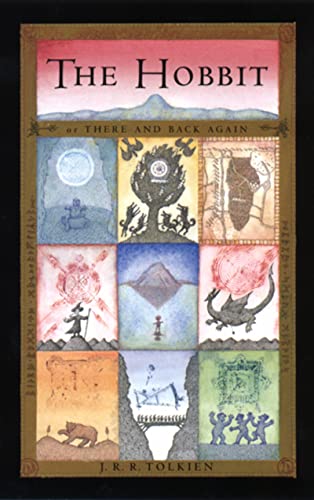 1
1