We've ranked the best hinduism books using expert recommendations, sales data, and millions of reader ratings. At Shortform, we know books. Our book guides are the best in the world. Learn why.
I read The Bhagavad Gita, which is something I wasn’t ready for before, but glad to finally understand. [source]
Bernard Tan
The “Tao Te King” by Lao Tzu probably resonated with me the strongest, but others like the “Art of War” by Sun Tzu, “Bhagavad Gita” or Zen Buddhist scriptures were also real eye-openers, even for a non-religious person like myself. [source]
Bill Liao
The human world occurs in language so best get good at it! [source]
Cover unavailable
2
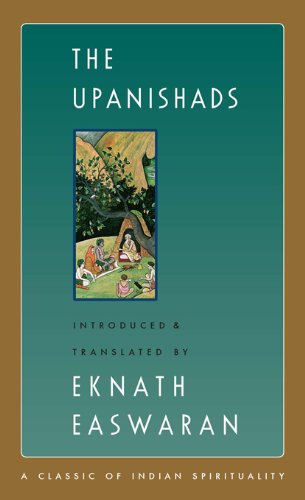
The Upanishads
Eknath Easwara
4.8
The Upanishads, the earliest of which were composed in Sanskrit between 800 and 400 bce by sages and poets, form part of the Vedas - the sacred and ancient scriptures that are the basis of the Hindu religion. Each Upanishad, or lesson, takes up a theme ranging from the attainment of spiritual bliss to karma and rebirth, and collectively they are meditations on life, death and immortality. The essence of their teachings is that truth can by reached by faith rather than by thought, and that the spirit of God is within each of us - we need not fear death as we carry within us the promise of eternal life.
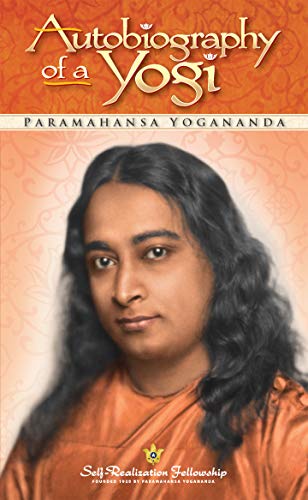
Autobiography of a Yogi is one of the best-selling spiritual biographies of all time. The book is not merely read it is treasured and cherished by millions of spiritual seekers throughout the world.
Recommended by Steve Jobs, Marc Benioff, Dan Engle, and 2 others.
One book in particular stayed with Jobs his entire life, and Isaacson noted that it was the only book Jobs had downloaded on his iPad 2: “Autobiography of a Yogi,” “the guide to meditation and spirituality that he had first read as a teenager,” Isaacson writes, “then re-read in India and had read once a year ever since.” [source]
Marc Benioff
CEO/Salesforce
If you haven't read it, and if you want to understand Steve Jobs, it's a goood idea to dip into this book. [source]
Dan Engle
One of the more impactful books for me when I was living down in the jungle and experiencing more of the deeper reflections through the medicine space. [source]
Cover unavailable
4
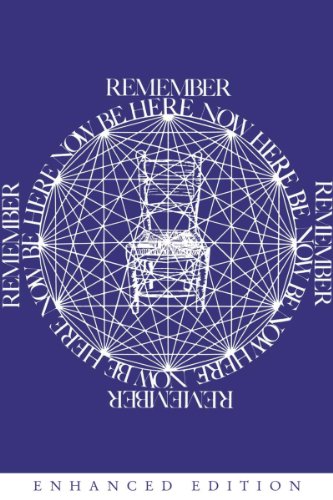
Be Here Now
Ram Dass
4.5
Describes one man's transformation upon his acceptance of the principles of Yoga & gives a modern restatement of the importance of the spiritual side of human nature. Illustrated. The book is divided into four sections: Journey: The Transformation: Dr Richard Alpert, PhD into Baba Ram Dass From Bindu to Ojas: The Core Book Cookbook for a Sacred Life: A Manual for Conscious Being Painted Cakes (Do Not Satisfy Hunger): Books
…
Recommended by Steve Jobs, Jack Kornfield, and Travis Brewer.
In late 1972, Jobs had just started at Reed College, an elite liberal arts school in Portland, Oregon. He started doing lots of LSD and reading lots of books about spirituality. [source]
Travis Brewer said this is one of his most-recommended books. [source]
Cover unavailable
5
Life of Pi
Yann Martel
4.5
Yann Martel's imaginative and unforgettable Life of Pi is a magical reading experience, an endless blue expanse of storytelling about adventure, survival, and ultimately, faith. The precocious son of a zookeeper, 16-year-old Pi Patel is raised in Pondicherry, India, where he tries on various faiths for size, attracting "religions the way a dog attracts fleas." Planning a move to Canada, his father packs up the family and their menagerie and they hitch a ride on an enormous freighter. After a harrowing shipwreck, Pi finds himself adrift in the Pacific Ocean, trapped on a 26-foot lifeboat with a wounded zebra, a spotted hyena, a seasick orangutan, and a 450-pound Bengal tiger named Richard Parker ("His head was the size and color of the lifebuoy, with teeth"). It sounds like a colorful setup, but these wild beasts don't burst into song as if co-starring in an anthropomorphized Disney feature. After much gore and infighting, Pi and Richard Parker remain the boat's sole passengers, drifting for 227 days through shark-infested waters while fighting hunger, the elements, and an overactive imagination. In rich, hallucinatory passages, Pi recounts the harrowing journey as the days blur together, elegantly cataloging the endless passage of time and his struggles to survive: "It is pointless to say that this or that night was the worst of my life. I have so many bad nights to choose from that I've made none the champion."
The protagonist Piscine "Pi" Molitor Patel, an Indian boy from Pondicherry, explores the issues of religion and spirituality from an early age and survives 227 days shipwrecked in the Pacific Ocean.
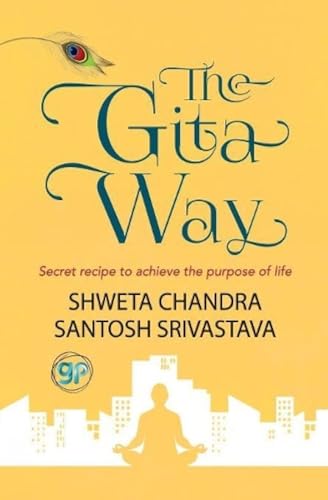
The Gita Way- Secret Recipe to achieve the purpose of life
Shweta Chandra, Santosh Srivastava
4.5
'The Gita Way' is an irreligious take on the tenets of the Bhagavad Gita. Without delving into either mythological or God-centric discourse, the book attempts to understand and explain various insights from the Gita through, in the author's words, derived theory and application. The Gita Way attempts to shed light on matters of self-realisation, and identifying and following the path to achieve the purpose of life.
Within the framework of Vedic philosophy represented by Gita, this book explores: How to discover the swa-bhava, the inherent natural strength of our real-self? Is my profession aligned with my swa-bhava? What is my purpose of life? What is the real meaning of moksha, the liberation? How the realization of individual purpose leads us to attain supreme purpose we are born to achieve?
Using the principles of Gita, this book presents innovative findings on theory of prarabdha, the luck or destiny, role of knowledge and karma, continuous improvement, yoga of universal harmony and yoga of devotion. To highlight few, in chapter combined discipline of knowledge and karma, authors introduce most important part of their research—Centring. Centring summarizes power of combined application of yoga of knowledge and karma along with simplified theory of spirit and supreme spirit. Chapter Vision of Universal Form and Yoga of Liberation simplifies the meaning of moksha, the state of liberation by linking it to the attainment of supreme purpose of life. Chapters on Yoga of Devotion and Continuous improvement focus on recipe of staying on the unique path of achieving individual goal.
Unlike other books on Bhagavad Gita, the Gita Way is not a chapter wise discourse. Instead it presents deduced concepts in first place supported with relevant reference from the whole Gita. For example, in the first chapter of the Gita Way, you may get a reference of last chapter of Gita relevant to the topic of discussion.
Contents: 1. INTRODUCTION TO ‘THE GITA WAY’ 11 Development of ‘The Gita Way’ 17
2. DEVELOPING A SENSE OF PURPOSE IN LIFE 25 Goal 28 Finding Unique Strength and Developing It 32 Joy of the Self-Hobby vs Profession 35 How to Set a Goal? 39 Doubt in any form is the Biggest Enemy to Self-realisation 45 The Story of Barbarika: Why was Barbarika Sacrificed? 47
3. YOGA OF KNOWLEDGE 51 Knowledge of Self 54 Elements of Self 56 Consciousness of Self-Identity 57 Intellect 60 Primordial Matter 62 Source of Perception and Action, One Mind and Five Senses 63 Physical Body and Fitness 63 False Goals such as Desire, Aversion and Pleasure 64 Required Qualities in Self 64 How Does One Achieve ‘Absolute Knowledge’? 67 Lack of Knowledge is Ignorance which creates Fear 71
4. KARMA YOGA 74 Prescribed Act and Prohibited Act 76 Yoga and the Attributes of a Yogi 79 How does One Achieve Equipoise? 80 Desire-Entrap 84 Hierarchy of Control 86 Theory of Prarabdha or Destiny 88 Butterfly Effect 90 Hurdles in the Path of Karma-Yoga 93 Vikarma 95 Law of Growth 96 Ultimate Dispassion: Nishkam Karma 97 How to stay on the Path of Karma-Yoga? 99
5. COMBINED DISCIPLINE OF KNOWLEDGE AND KARMA 101 Self-Realisation 102 Wisdom 104 Sacrifice 108 Centring and Power of Real-Self 112 Power of Real-self 113 Centring 116 Yoga of Self-Control 119
6. YOGA OF DEVOTION 121 The Cycle of Liberation 123 How does devotion come to us? 127 Devotion to Tame the Mind 129 Relevance of Devotion to the Theory of Prarabdha 130 Symptoms of Lack of Devotion 134
7. VISION OF THE UNIVERSAL FORM 136 Universal Form of Goal 140 Concept of Self 147 Redirecting the Purpose of Desire 150
8. CONTINUOUS IMPROVEMENT ON THREE MODES OF NATURE 152 Inner Purification by Knowing Sattva, Rajas and Tamas 159 Sattva 159 Rajas 161 Tamas 164 The Gita Way of Continuous Improvement 165 Elimination of Waste 166
9. YOGA OF LIBERATION 170 How is Sattva linked with the Supreme Goal? 173 How does one attain sattva? 174 Non-violence in thoughts and Action. 175 Absence of Pride 175 Internal and External Purity 176 Steadfastness of Mind 176 Control of Body, Mind and Senses 176 Sincerity 177 Forbearance 177 Uprightness of Speech and Mind 177 Devout Service to the Preceptor 177 Austerity of Mind 178 Sattvika Intellect 178 Sattvika Sacrifice 179 Leadership by Creating Order Around 180 Yoga of Liberation 182
…
Cover unavailable
7
The Mahabharata
Anonymous, John D. Smith
4.4
Originally published in the year 1951, the huge popularity of the book has resulted in the book being re-printed several times. Centuries ago, it was proclaimed of the Mahabharata: "What is not in it, is nowhere." But even now, we can use the same words about it. He who knows it not, knows not the heights and depths of the soul; he misses the trials and tragedy and the beauty and grandeur of life. The Mahabharata is not a mere epic; it is a romance telling the tale of heroic men and women, and of some who were divine. It is a whole literature in itself, containing a code of life, a philosophy of social and ethical relations, and speculative thought on human problems that is hard to rival.
It’s one of the world’s great myths, an epic poem. It’s eight times the length of the Bible, one of the great works of literature of mankind. I came to it via the Peter Brook film, and read the script subsequently, and it is every bit as good as it’s made out to be. A very rare thing. It has a sort of Shakespearian ambiguity; you feel as much for the baddies as for the goodies. No one is pure. The bad guys aren’t entirely bad, the good guys aren’t entirely good. It’s brilliantly done, and the most gripping story ever told. [source]
Cover unavailable
8
The Story of My Experiments with Truth: Mahatma Gandhi's Autobiography with a Foreword by the Gandhi Research Foundation
M. K. Gandhi
4.4
It is not my purpose to attempt a real autobiography. I simply want to tell the story of my numerous experiments with truth, and as my life consists of nothing but those experiments, it is true that the story will take the shape of an autobiography.
...Identification with everything that lives is impossible without self-purification; without self-purification, the observance of the law of Ahimsa must remain an empty dream; God can never be realised by one who is not pure of heart. Self-purification, therefore, must remain purification in all walks of life. And purification being highly infectious, purification of oneself necessarily leads to the purification of one's surroundings.
But the path to self-purification is hard and steep. To attain perfect purity, one has to become absolutely passion-free in thought, speech and action; to rise above the opposing currents of love and hatred, attachment and repulsion. I know that I have not in me as yet the triple purity, in spite of constant ceaseless striving for it. That is why the world's praise fails to move me; indeed it very often stings me. To conquer the subtle passions seems to me far harder than the physical conquest of the world by the force of arms. Ever since my return to India, I have had experiences of the dormant passions lying hidden within me. The knowledge of them has made me feel humiliated though not defeated. The experiences and experiments have sustained me and given me great joy. But I know I still have before me a difficult path to traverse. I must reduce myself to zero. So long as a man does not of his own free will put himself last among his fellow creatures, there is no salvation for him. Ahimsa is the farthest limit of humility.
Mohandas Karamchand Gandhi, 26 November, 1925.
…
Recommended by Barack Obama, Tim Cook, Cory Booker, and 2 others.
According to the president’s Facebook page and a 2008 interview with the New York Times, this title is among his most influential forever favorites. [source]
Tim Cook
CEO/Apple
I have two books going right now: One is the Bobby Kennedy book “Bobby Kennedy: The Making of a Liberal Icon,” by Larry Tye that just came out. The other is quite an old book. It’s a Gandhi book “Mohandas K. Gandhi, Autobiography: The Story of My Experiments With Truth” that I got interested in because we went to the Gandhi museum when we were in India recently. I tend to like nonfiction and particularly reading about people and how they lived and how they fought, and what motivated them and their philosophy and so forth. [source]
This translation and commentary are guided by scholarship, and devotion in spirituality, in the line of the greatest Gaudiya Vaishnavas such as Srila Bhaktisiddhanta Saraswati Maharaja, the spiritual master of the author, which is directly descending from Sri Chaitanya Mahaprabhu, which make His comments upon the Gita legitimate.
Cover unavailable
10
Siddhartha
Hermann Hesse
4.3
Herman Hesse's classic novel has delighted, inspired, and influenced generations of readers, writers, and thinkers. In this story of a wealthy Indian Brahmin who casts off a life of privilege to seek spiritual fulfillment. Hesse synthesizes disparate philosophies--Eastern religions, Jungian archetypes, Western individualism--into a unique vision of life as expressed through one man's search for meaning.
He says, 'Love is stronger than hate. Soft is stronger than hard. Water is stronger than stone.' [source]
Cover unavailable
11
The Little Book of Hindu Deities: From the Goddess of Wealth to the Sacred Cow
Sanjay Patel
4.3
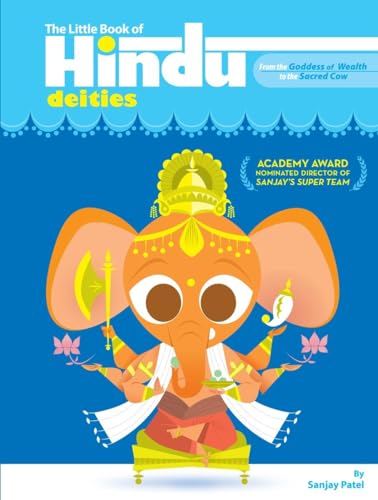
Pixar animator and Academy Award–nominated director Sanjay Patel (Sanjay’s Super Team) brings to life Hinduism’s most important gods and goddesses (and one sacred stone) in fun, full-color illustrations, each accompanied by a short, lively profile. The Little Book of Hindu Deities is chock-full of monsters, demons, noble warriors, and divine divas. Find out why Ganesha has an elephant’s head (his father cut his off!); why Kali, the goddess of time, is known as the “Black One” (she’s a bit goth); and what “Hare Krishna” really means.
“Throw another ingredient in the American spirituality blender. Pop culture is veering into Hinduism.”—USA Today
…
Cover unavailable
12
I Am That: Talks with Sri Nisargadatta Maharaj
Nisargadatta Maharaj, Sudhaker S. Dikshit, Maurice Frydman
4.3
This collection of the timeless teachings of one of the greatest sages of India, Sri Nisargadatta Maharaj, is a testament to the uniqueness of the seer's life and work and is regarded by many as a "modern spiritual classic".
I Am That preserves Maharaj's dialogues with the followers who came from around the world seeking his guidance in destroying false identities. The sage's sole concern was with human suffering and the ending of suffering. It was his mission to guide the individual to an understanding of his true nature and the timelessness of being. He taught that mind must recognize and penetrate its own state of being, "being this or that, here or that, then or now," but just timeless being.
…
Recommended by Bill Liao.
Bill Liao
The human world occurs in language so best get good at it! [source]
Cover unavailable
13
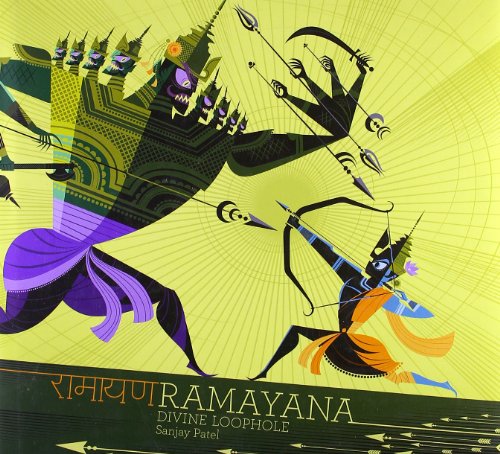
The Ramayana: A Shortened Modern Prose Version of the Indian Epic
R. K. Narayan
4.3
The Ramayana is, quite simply, the greatest of Indian epics - and one of the world's supreme masterpieces of storytelling 'Almost every individual living in India,' writes R. K. Narayan in the Introduction to this new interpretation, 'is aware of the story of The Ramayana. Everyone of whatever age, outlook, education or station in life knows the essential part of the epic and adores the main figures in it - Rama and Sita. Every child is told the story at bedtime . . . The Ramayana pervades our cultural life.' Although the Sanskrit original was composed by Valmiki, probably around the fourth century BC, poets have produced countless variant versions in different languages. Here, drawing his inspiration from the work of an eleventh-century Tamil poet called Kamban, Narayan has used the talents of a master novelist to recreate the excitement and joy he has found in the original. It can be enjoyed and appreciated, he suggests, for its psychological insight, its spiritual depth and its practical wisdom - or just as a thrilling tale of abduction, battle and courtship played out in a universe thronged with heroes, deities and demons.
…
Cover unavailable
14
The Yoga Sutras of Patanjali
Sri Swami Satchidananda
4.3
This valuable book provides a complete manual for the study and practice of Raja Yoga, the path of concentration and meditation. This new edition of these timeless teachings is a treasure to be read and referred to again and again by seekers treading the spiritual path. The classic Sutras (thought-threads), at least four thousand years old, cover the yogic teachings on ethics, meditation, and physical postures, and provide directions for dealing with situations in daily life. The Sutras are presented here in the purest form, with the original Sanskrit and with translation, transliteration, and commentary by Sri Swami Satchidananda, one of the most respected and revered contemporary Yoga masters. In this classic context, Sri Swami offers practical advice, based on his own experience, for mastering the mind and achieving physical, mental, and emotional harmony.
…
Cover unavailable
15
Ramayana
William Buck
4.3
Cover unavailable
16
The Rig Veda
Anonymous
4.3
The earliest of the four Hindu religious scriptures known as the Vedas, and the first extensive composition to survive in any Indo-European language, the Rig Veda is a collection of over 1000 individual Sanskrit hymns. A work of intricate beauty, it provides a unique insight into early Indian mythology, religion and culture. This selection of 18 of the hymns, chosen for their eloquence and wisdom, focuses on the enduring themes of creation, sacrifice, death, women, the sacred plant soma and the gods. Inspirational and profound, it provides a fascinating introduction to one of the founding texts of Hindu scripture, an awesome and venerable ancient work of Vedic ritual, prayer, philosophy, legend and faith.
…
Cover unavailable
17
The Essentials of Hinduism: A Comprehensive Overview of the World's Oldest Religion
Swami Bhaskarananda
4.2
Cover unavailable
18
The Bhagavad-Gita: Krishna's Counsel in Time of War
Barbara Stoler Miller
4.2
The Bhagavad-Gita" has been an essential text of Hindu culture in India since the time of its composition in the first century A.D. One of the great classics of world literature, it has inspired such diverse thinkers as Henry David Thoreau, Mahatma Gandhi, and T.S. Eliot; most recently, it formed the core of Peter Brook's celebrated production of the "Mahabharata.
I love this book because for one thing it’s just a great story, well-told. A lot of books about Indian sages are written in such a way that they just send you to sleep . . . But Ishwerood is a great writer, and he’s smart. He explains lots of things about Hindu tradition and thought throughout. It’s actually a very informative read on that level. [source]
Cover unavailable
20
The Hindus: An Alternative History
Wendy Doniger
4.2
From one of the world?s foremost scholars on Hinduism, a vivid reinterpretation of its history
An engrossing and definitive narrative account of history and myth that offers a new way of understanding one of the world?s oldest major religions, The Hindus elucidates the relationship between recorded history and imaginary worlds.
Hinduism does not lend itself easily to a strictly chronological account: many of its central texts cannot be reliably dated even within a century; its central tenets?karma, dharma, to name just two?arise at particular moments in Indian history and differ in each era, between genders, and caste to caste; and what is shared among Hindus is overwhelmingly outnumbered by the things that are unique to one group or another. Yet the greatness of Hinduism?its vitality, its earthiness, its vividness?lies precisely in many of those idiosyncratic qualities that continue to inspire debate today.
Wendy Doniger is one of the foremost scholars of Hinduism in the world. With her inimitable insight and expertise Doniger illuminates those moments within the tradition that resist forces that would standardize or establish a canon. Without reversing or misrepresenting the historical hierarchies, she reveals how Sanskrit and vernacular sources are rich in knowledge of and compassion toward women and lower castes; how they debate tensions surrounding religion, violence, and tolerance; and how animals are the key to important shifts in attitudes toward different social classes.
The Hindus brings a fascinating multiplicity of actors and stories to the stage to show how brilliant and creative thinkers?many of them far removed from Brahmin authors of Sanskrit texts?have kept Hinduism alive in ways that other scholars have not fully explored. In this unique and authoritative account, debates about Hindu traditions become platforms from which to consider the ironies, and overlooked epiphanies, of history.
…
Cover unavailable
21
The End of Sorrow (The Bhagavad Gita for Daily Living, #1)
Eknath Easwaran
4.2
The Bhagavad Gita for Daily Living is Easwaran's verse-by-verse commentary on the Bhagavad Gita.
Easwaran's translation of the Bhagavad Gita is the best-selling English edition in the US. In this verse-by-verse commentary, Easwaran brings the Gita's teachings into our own lives. Full of insights, stories, and practical spiritual exercises, each volume of this set covers six chapters of the Gita, and can be read on its own. The three volumes together form a comprehensive manual for living a spiritual life.
Easwaran was a professor of English literature and taught meditation and spiritual living for 40 years. He is an authority on world mysticism, and lived what he taught, giving him lasting appeal as a spiritual teacher and an author of deep insight and warmth.
This first volume in the three-volume set, The End of Sorrow, covers chapters 1-6 of the Gita, and concentrates on the individual: the nature of our innermost Self, how it can be discovered in the depths of consciousness, and how this discovery transforms daily life. The introduction includes instructions in Easwaran's universal method of passage meditation.
…
Cover unavailable
22
Being Different: An Indian Challenge to Western Universalism
Rajiv Malhotra
4.2
Synopsis
India is more than a nation state. It is also a unique civilization with philosophies and cosmologies that are markedly distinct from the dominant culture of our times – the West. India’s spiritual traditions spring from dharma which has no exact equivalent in western frameworks. Unfortunately, in the rush to celebrate the growing popularity of India on the world stage, its civilizational matrix is being digested into western universalism, thereby diluting its distinctiveness and potential.
This book addresses the challenge of direct and honest engagement on differences, by reversing the gaze, repositioning India from being the observed to the observer and looking at the West from the dharmic point of view. In doing so it challenges many hitherto unexamined beliefs that both sides hold about themselves and each other. It highlights that unique historical revelations are the basis for western religions, as opposed to dharma’s emphasis on self-realization in the body here and now. It describes the integral unity that underpins dharma’s metaphysics and contrasts this with western thought and history as a synthetic unity. The west’s anxiety over difference and fixation for order runs in contrast with the creative role of chaos in dharma. The book critiques fashionable reductive translations and argues for preserving certain non-translatable words of Sanskrit. It concludes with a rebuttal against western claims of universalism and recommends a multi-civilizational worldview.
The discussions and debate within the book employ the venerable tradition of purva-paksha, an ancient dharmic technique where a debater must first authentically understand in the opponent’s perspective, test the merits of that point of view and only then engage in debate using his own position. Purva-paksha encourages individuals to become truly knowledgeable about all perspectives, to approach the other side with respect and to forego the desire to simply win the contest. Purva-paksha also demands that all sides be willing to embrace the shifts in thinking, disruptive and controversial as they may be, that emerge from such a dialectical process.
Being Different highlights six distinct and fundamental points of divergence between the dharmic traditions and the West. These are as follows:
1) Approaches to difference: The West’s pervasive anxiety over personal and cultural differences have resulted in the endless need for the appropriation, assimilation, “conversion” and/or digestion and obliteration of all that does not fit its fundamental paradigms. The roots of this anxiety lie in the inherent schisms in its worldview. Dharmic traditions, in contrast, while not perfect, are historically more comfortable with differences, both individual and collective; they are not driven by mandates for expansion and control.
2) History-centrism vs. Inner Sciences: The Judeo-Christian religious narrative is rooted in the history of a specific people and place. Further, the divine is external rather than within and guides humanity through unique and irreplaceable revelations. The dharmic traditions, in contrast, emphasize a series of sophisticated techniques of meditation and related inner sciences to achieve higher states of embodied knowing.
3) Integral unity vs. synthetic unity: Since the time of Aristotle, the West has assumed an atomic partitioning of reality into distinct and unrelated parts. The Judeo-Christian worldview is based on separate essences for God, the world and/ human souls. Additionally, there is an unbridgeable gap between Greek reason and religious revelation. The result has been a forced unity of separate entities, and such a unity always feels threatened to disintegrate and remains synthetic at best. In dharmic cosmology all things emerge from a unified whole. In Hinduism this integral unity is the very nature of Brahman; in Buddhism there is no ultimate essence like Brahman, but the principle of impermanence and co-dependence provides unity. Dharma and science are enmeshed as part of the same exploration. Every aspect of reality mirrors and relates to every other aspect in a web of interdependency.
4) The nature of chaos and uncertainty: The West privileges order in its aesthetics, ethics, religions, society and politics, and manifests a deep-rooted fear of chaos, uncertainty and complexity. The dharmic worldview see chaos as a creative catalyst built into the cosmos to balance out order that could become stultifying., and hence it adopts a more relaxed attitude towards it
5) Translatability vs. Sanskrit: Unlike Western languages, in Sanskrit the fundamental sounds have an existential link to the experience of the object they represent. This makes Sanskrit a key resource for personal and cultural development. It also implies that the process of translation and digestion into Western schemas is unavoidably reductive.
6) Western universalism challenged: In the “grand narrative” of the West, whether secular or religious, it is the agent or driver of historical unfolding and sets the template for all nations and peoples. This book challenges this self-serving universalism. It contrasts this with dharma’s non-linear approach to the past and multiple future trajectories.
The very openness that makes dharma appealing, however, often makes it vulnerable to invasion, appropriation and erosion by a more aggressive and externally ambitious civilization. The book uses the metaphor of digestion to point to the destructive effects of what is usually white-washed as assimilation, globalization or postmodern deconstruction of difference. For complex reasons, which are analyzed at length, the dharmic traditions have been a particular target of digestion into the West, and Being Different challenges the uncritical acceptance of this process by both Westerners and Indians.
…
Cover unavailable
23
The Journey Home: Autobiography of an American Swami
Radhanath Swami
4.2
Cover unavailable
24
The World's Religions
Huston Smith
4.1
The World’s Religions, by beloved author and pioneering professor Huston Smith (Tales of Wonder), is the definitive classic for introducing the essential elements and teachings of the world's predominant faiths, including Hinduism, Buddhism, Confucianism, Taoism, Judaism, Christianity, Islam, as well as regional native traditions.
This revised and updated edition provides sympathetic descriptions of the various traditions, explaining how they work “from the inside,” which is a big reason why this cherished classic has sold more than two million copies since it first appeared in 1958.
…
Cover unavailable
25
Like a Thousand Suns (The Bhagavad Gita for Daily Living, #2)
Eknath Easwaran
4.1
The Bhagavad Gita for Daily Living is Easwaran’s magnum opus, a practical verse-by-verse commentary on India’s timeless scripture, the Bhagavad Gita.
The Bhagavad Gita is set on a battlefield in a mythic war between good and evil. Easwaran translates each verse, relates it to modern life through stories and anecdotes, and gives spiritual exercises that you can use every day.
This second volume in a three-volume set covers chapters 7–12 of the Gita, and concentrates on the supreme Reality which underlies all creation. Easwaran builds a bridge between science and spiritual wisdom, culminating in the final chapter, The Way of Love.
…
Cover unavailable
26
Hindu Goddesses: Visions of the Divine Feminine in the Hindu Religious Tradition
David Kinsley
4.1
Goddess worship has long been a significant aspect of Hinduism. In this book David Kinsley, author of The Sword and the Flute—Kali & Krsna: Dark Visions of the Terrible and the Sublime in Hindu Mythology, sorts out the rich yet often chaotic history of Hindu goddess worship.
Cover unavailable
27
The Book: On the Taboo Against Knowing Who You Are
Alan Watts asks what is the cause of the illusion that the self is a separate ego, housed in a bag of skin, and which confronts a universe of physical objects that are alien to it. Rather a person's identity (their ego) binds them to the physical universe, creating a relationship with their environment and other people. The separation of the self and the physical world leads to the misuse of technology and the attempt to violently subjugate man's natural environment, leading to its destruction.
Explaining man's role in the universe as a unique expression of the total universe, and interdependent on it, Alan Watts offers a new understanding of personal identity. It reveals the mystery of existence, presenting and alternative to the feelings of alienation that is prevalent in Western society, and a vision of how we can come to understand the cosmic self that is within every living thing.
…
Recommended by Kevin Lamping and Kyle Russell.
Kevin Lamping
Not a business book, but *The Book* is one that I can say shines out among the other stars. It's hard to pick a book that's had the most impact on me, because they always have some effect. But there was something so calming, so reassuring about *The Book* that really helped me in a time of lots of self-doubt. I know this is supposed to focus on less "spiritual" books, and I'm not a religious guy, but I really enjoyed the notions put forth by *The Book*. Watts, the author, has some really profound thinking, and his writing guides you through Eastern thought for Western thinkers. I highly recommend this book for anyone searching for answers to the unknown. [source]
Kyle Russell
Book 20 Lesson: Distinction is not separation. To understand something, you must also understand its relationships with other parts of the environment or context around it. https://t.co/DB453aY565 [source]
Who are you? When you start to explore this question, you find out how elusive it really is. Are you a physical body? A collection of experiences and memories? A partner in a relationship? Each time you consider these aspects of yourself, you realize that there is much more to you than any of these can define.
InThe Untethered Soul—now a New York Times bestseller—spiritual teacher Michael Singer explores the question of who we are and arrives at the conclusion that our identity is to be found in our consciousness, the fact of our ability to observe ourselves, and the world around us. By tapping into traditions of meditation and mindfulness, Singer shows how the development of consciousness can enable us all to dwell in the present moment and let go of painful thoughts and memories that keep us from achieving happiness and self-realization.
This book, copublished with the Institute of Noetic Sciences (IONS), offers a frank and friendly discussion of consciousness and how we can develop it. In part one, he examines the notion of self and the inner dialogue we all live with. Part two examines the experience of energy as it flows through us and works to show readers how to open their hearts to the energy of experience that permeates their lives. Ways to overcome tendencies to close down to the rest of the world are the subject of part three. Enlightenment, the embrace of universal consciousness, is the subject of part four. And finally, in part five, Singer returns to daily life and the pursuit of unconditional happiness. Throughout, the book maintains a light and engaging tone, free from heavy dogma and prescriptive religious references. The easy exercises that figure in each chapter help readers experience the ideas that Singer presents.
Visit www.untetheredsoul.com for more information.
In the book The Untethered Soul, Michael A. Singer takes you step-by-step through the process of Gyana, the yoga of the Intellect, to the Source. Moreover, he does it with elegant simplicity. Read this book carefully, and you will get more than a glimpse of eternity. [source]
Michael moved to an empty patch of forest, set up his trailer, and started to meditate in the early 70s. He surrendered to whatever happened in his life. Well...what ended up happening is that he created a multi-billion dollar company. His book is about the spiritual beauty of surrender. And how that can go hand in hand with financial success. I was so astonished by the book that I contacted him and flew down to Florida and stayed several days in his “compound” and interviewed him about his success. I re-read the book at least once every few months. [source]
East is East and West is West, but Michael A. Singer bridges these two great traditions in a radiant treatise on how to succeed in life from our spiritual quest to our everyday tribulations. Freud said that life was composed of love and work. With great eloquence, wit, and compelling logic, Singer’s brilliant book completes this thought by showing them to be two poles of the same selfless devotion. [source]
Cover unavailable
29
The Life Divine
Sri Aurobindo
4.1
Cover unavailable
30
An Introduction to Hinduism
Gavin D Flood
4.1
This book provides a much-needed thematic and historical introduction to Hinduism, the religion of the majority of people in India. Dr. Flood traces the development of Hindu traditions from ancient origins and the major deities to the modern world. Hinduism as both a global religion and a form of nationalism are discussed. Emphasis is given to the tantric traditions, which have been so influential; to Hindu ritual, more fundamental than belief or doctrine; and to Dravidian influences. It introduces some debates within contemporary scholarship.
…
Cover unavailable
31
Aghora: At the Left Hand of God (Aghora)
Robert E. Svoboda
4.1
Aghora: At the Left Hand of God is the first book in the Aghora trilogy. Written almost entirely in Vimalananda's own words, it presents events from his life, tenets of his philosophy, and highlights from his spiritual practices. Designed partly to shock and partly to comfort, but wholly as an offering to his Beloved, Aghora is as clear a picture as possible of a man who was a riddle wrapped up in an enigma. Vimalananda insisted that this book be published only after his demise, that he might be spared pursuit by those whose curiosity might be inflamed by some of the sensational events described within. He believed in devoting his all to the pursuit of the direct perception of Reality, and advised others to be similarly dedicated to attaining personal experience of God. To readers he offered this warning: "Don't take anything I say as gospel truth. I am human, I make mistakes. Test on yourselves what I've told you. Try it out, experience it, and then you will know whether or not I'm telling you the truth."
…
Cover unavailable
32
The Ramayana: A Modern Retelling of the Great Indian Epic
Ramesh Menon
4.1
Cover unavailable
33
The Principal Upanishads
S. Radhakrishnan
4.1
Believed to hold the secrets of unseen reality, The Upanishads are the most ancient of the Hindu texts. They hold the secrets of the divine and have inspired generations of devotees by their vision and inexhaustible spiritual powers. Now everyone, from serious scholars to spiritual seekers, can glimpse into the texts that have shaped a vital spiritual history.
Cover unavailable
34
Complete Works of Swami Vivekananda, 9 Vols.
Swami Vivekananda
4.1
All the nine published volumes of Swami Vivekananda's works are available here. All proceeds from the sale of this book are donated to Advaita Ashrama, founded by Swami Vivekananda.
In these volumes we have not only a principles to the world at large, but also, to its own children, the Charter of the Hindu faith. For the first time in history, Hinduism itself forms here the subject of generalization of a Hindu mind of the highest order. What Hinduism had needed was the organizing and consolidating of its own idea, a rock where she could lie at anchor, and an authoritative utterance in which she might recognise herself. What the world had needed was a faith that had no fear of truth. Both are found in the words and writings of Swami Vivekananda. It is the latest principles or beliefs of a modern Prophet of religion and spirituality to the mankind.
Defending Hinduisms Philosophical Unity ,it is fashionable among intellectuals to assert that dharma traditions lacked any semblance of unity before the British period and that the contours of contemporary Hinduism were bequeathed to us by our colonial masters. Such arguments routinely target Swami Vivekananda, a key interlocutor who shattered many deeply rooted prejudices against Indian civilization. They accuse him of having camouflaged various alleged contradictions within traditional Hinduism and charge him with having appropriated the principles of Western religion to manufacture a coherent and unified worldview and set of practices known today as Hinduism. Indras Net: Defending Hinduisms Philosophical Unity provides a foundation for theories that slander contemporary Hinduism as illegitimate, ascribing sinister motives to its existence and characterizing its fabric as oppressive. Rajiv Malhotra offers a detailed, systematic rejoinder to such views and articulates the multidimensional, holographic understanding of reality that grounds Hindu dharma. He also argues that Vivekanandas creative interpretations of Hindu dharma informed and influenced many Western intellectual movements of the post-modern era. Indeed, as he cites with many insightful examples, appropriations from Hinduism have provided a foundation for cutting-edge discoveries in several fields, including cognitive science and neuroscience.
…
Cover unavailable
36
The Palace of Illusions
Chitra Banerjee Divakaruni
4.1
A reimagining of the world-famous Indian epic, the Mahabharat—told from the point of view of an amazing woman.
Relevant to today’s war-torn world, The Palace of Illusions takes us back to a time that is half history, half myth, and wholly magical. Narrated by Panchaali, the wife of the legendary Pandavas brothers in the Mahabharat, the novel gives us a new interpretation of this ancient tale.
The novel traces the princess Panchaali's life, beginning with her birth in fire and following her spirited balancing act as a woman with five husbands who have been cheated out of their father’s kingdom. Panchaali is swept into their quest to reclaim their birthright, remaining at their side through years of exile and a terrible civil war involving all the important kings of India. Meanwhile, we never lose sight of her strategic duels with her mother-in-law, her complicated friendship with the enigmatic Krishna, or her secret attraction to the mysterious man who is her husbands' most dangerous enemy. Panchaali is a fiery female redefining for us a world of warriors, gods, and the ever-manipulating hands of fate.
…
Cover unavailable
37
Light on Yoga
B. K. S. Iyengar
4.1
Light on Yoga has become the bible for hundreds of thousands of people who practice Yoga daily with the Iyengar method, for exercise, meditation, or simply relaxation. With more than 600 photographs depicting all the postures and breathing exercises, it remains the fullest, most practical, and most profusely illustrated guide by the world's foremost yoga teacher. Light on Yoga is a comprehensive and definitive source-book for the initiated, as well as the best introduction for the novice who seeks the healthful benefits of Yoga for mind, body, and soul.
…
Cover unavailable
38
Paths to God: Living the Bhagavad Gita
Ram Dass
4.1
For centuries, readers have turned to the Bhagavad Gita for inspiration and guidance as they chart their own spiritual paths. As profound and powerful as this classic text has been for generations of seekers, integrating its lessons into the ordinary patterns of our lives can ultimately seem beyond our reach. Now, in a fascinating series of reflections, anecdotes, stories, and exercises, Ram Dass gives us a unique and accessible road map for experiencing divinity in everyday life. In the engaging, conversational style that has made his teachings so popular for decades, Ram Dass traces our journey of consciousness as it is reflected in one of Hinduism's most sacred texts. The Gita teaches a system of yogas, or "paths for coming to union with God."
In Paths to God, Ram Dass brings the heart of that system to light for a Western audience and translates the Gita's principles into the manual for living the yoga of contemporary life.
While being a guide to the wisdom of the Bhagavad Gita, Paths to God is also a template for expanding our definition of ourselves and allowing us to appreciate a new level of meaning in our lives.
…
Cover unavailable
39
Lord of Light
Roger Zelazny
4.1
Earth is long since dead. On a colony planet, a band of men has gained control of technology, made themselves immortal, and now rule their world as the gods of the Hindu pantheon. Only one dares oppose them: he who was once Siddhartha and is now Mahasamatman. Binder of Demons, Lord of Light.
Recommended by Nicholas Whyte.
Nicholas Whyte
It’s one of my guilty pleasures. I can’t claim that Lord of Light is as great a work of literature as the other four, but I enjoy it hugely. The story is essentially about one of them who decides that this isn’t good enough and attempts to reinvent himself as the Buddha, and therefore attempts to cause a religious revolution on this planet. [source]
Cover unavailable
40
Sermon on the Mount According to Vedanta
Swami Prabhavananda
4.1
Cover unavailable
41
The Complete Idiot's Guide to Hinduism
Linda Johnsen
4.1
A new look at an ancient religion.
The Complete Idiot's Guide® to Hinduism, Second Edition, contains updated and expanded information on how the religion developed from its very fragmented origins, the basic Hindu beliefs, and the multiple Hindu deities, as well as the sociological aspects of the religion including ethics, sacraments, dietary habits, the caste system, and much more.
? Hinduism is the third-largest religion in the world, with over 765 million followers worldwide
? Updated information on the state of Hinduism today
? An exploration of the Hindu paths to enlightenment including karma yoga, bhakti yoga, jnana yoga, tantra and laya yoga
? Expanded information on the Hindu Reformation
…
Cover unavailable
42
To Love Is to Know Me (The Bhagavad Gita for Daily Living, #3)
Eknath Easwaran
4.1
The Bhagavad Gita for Daily Living is Easwaran’s magnum opus, a practical verse-by-verse commentary on India’s timeless scripture, the Bhagavad Gita.
The Bhagavad Gita is set on a battlefield in a mythic war between good and evil. Easwaran translates each verse, relates it to modern life through stories and anecdotes, and gives spiritual exercises that you can use every day.
This third volume in a three-volume set covers chapters 13–18 of the Gita, and concentrates on the relationship between the Self within and the supreme Reality which underlies all creation. Global in scope, the emphasis is on what you can do to make a difference.
…
Cover unavailable
43
The Immortals of Meluha (Shiva Trilogy, #1)
Amish Tripath
4.1
1900 BC. In what modern Indians mistakenly call the Indus Valley Civilisation. The inhabitants of that period called it the land of Meluha a near perfect empire created many centuries earlier by Lord Ram, one of the greatest monarchs that ever lived. This once proud empire and its Suryavanshi rulers face severe perils as its primary river, the revered Saraswati, is slowly drying to extinction. They also face devastating terrorist attacks from the east, the land of the Chandravanshis. To make matters worse, the Chandravanshis appear to have allied with the Nagas, an ostracised and sinister race of deformed humans with astonishing martial skills!
The only hope for the Suryavanshis is an ancient legend: When evil reaches epic proportions, when all seems lost, when it appears that your enemies have triumphed, a hero will emerge.
Is the rough-hewn Tibetan immigrant Shiva, really that hero? And does he want to be that hero at all? Drawn suddenly to his destiny, by duty as well as by love, will Shiva lead the Suryavanshi vengeance and destroy evil?
…
Cover unavailable
44
Be As You Are
Sri Ramana Maharshi, David Godman
4.1
Cover unavailable
45
Ganesha's Sweet Tooth
Sanjay Patel
4.1
The bold, bright colors of India leap off the page in this fresh and funny picture book retelling of how Ganesha came to help write the epic poem of Hindu literature, the Mahabharata. Ganesha is just like any other kid, except that he has the head of an elephant and rides around on a magical mouse. And he loves sweets, but when Ganesha insists on biting into a super jumbo jawbreaker laddoo, his tusk breaks off! With the help of the wise poet Vyasa, and his friend Mr. Mouse, Ganesha learns that what seems broken can be quite useful after all. With vibrant, graphic illustrations, expressive characters, and offbeat humor, this is a wonderfully inventive rendition of a classic tale.
…
Cover unavailable
46
Chakra Healing: A Beginner's Guide to Self-Healing Techniques that Balance the Chakras
Margarita Alcantara
4.1
Discover the ancient knowledge of chakra healing and restore balance to your mind, body, and spirit.
Within all living beings are powerful centers of energy called chakras. Each chakra holds the potential for immense healing and restoration. However, learning how to harness the chakra system's amazing power can be challenging when so much of the information available is dense and academic or subjective and hard to trust.
In her successful New York practice, energy healer, acupuncturist, and Reiki master Margarita Alcantara addresses the most common ailments people experience today. She's successfully taught her clients a wide range of different healing techniques for removing energy blockages and balancing their chakras. Through practical instruction and compassionate guidance, Margarita shows each client how to find the self-healing chakra technique that resonates best for their own unique needs.
In Chakra Healing Margarita brings these powerful techniques for chakra healing to anyone who wants to better their emotional, physical, and spiritual health through:
A THREE-PART CHAKRA HEALING APPROACH to identify your ailment, discover the affected chakra, and select from an array of effective chakra healing techniques
A VARIETY OF THERAPEUTIC METHODS TO CHOOSE FROM including Meditations & Visualizations, Crystals, Essential Oils, Yoga, Food & Diet, Behavioral Changes, and more
HELPFUL ILLUSTRATIONS AND PHOTOS of chakra locations, yoga poses, and crystals for easier than ever application of these self-healing techniques The chakra techniques offered in Chakra Healing address a wide array of ailments and concerns, such as: Asthma and Allergies, Back Pain, Fatigue, Guilt, Anger, Digestive Issues, Neuropathy, Disconnection from Self and Others, Skin Issues, Headache, Loneliness, and more.
…
Cover unavailable
47
Gospel of Sri Ramakrishna
Swami Nikhilananda, Aldous Huxley
4.1
The Gospel of Sri Ramakrishna is published by The Ramakrishna-Vivekananda Center of New York which bases it teachings on the principles of Vedanta, or Hinduism. Hinduism teaches that every soul is potentially divine, and that its divinity may be manifested through worship, contemplation, unselfish work, and philosophical discrimination. According to Hinduism, Truth is universal and all humankind and all existence are one. It preaches the unity of the Godhead, or ultimate Reality, and accepts every faith as a valid means for its own followers to realize the Truth. For more information about the Ramakrishna-Vivekananda Center of New York.
…
Cover unavailable
48
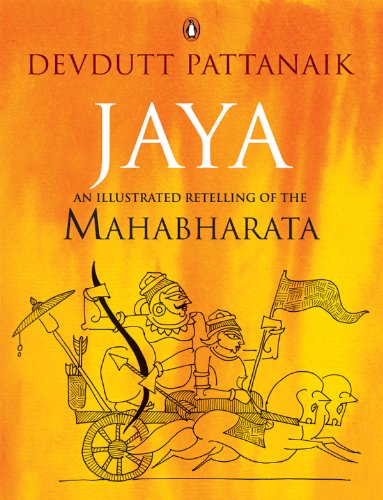
Jaya: An Illustrated Retelling of the Mahabharata
Devdutt Pattanaik
4.1
High above the sky stands Swarga, paradise, abode of the gods. Still above is Vaikuntha, heaven, abode of God.
The doorkeepers of Vaikuntha are the twins, Jaya and Vijaya, both whose names mean 'victory'. One keeps you in Swarga; the other raises you into Vaikuntha.
In Vaikuntha there is bliss forever, in Swarga there is pleasure for only as long as you deserve. What is the difference between Jaya and Vijaya? Solve this puzzle and you will solve the mystery of the Mahabharata.
In this enthralling retelling of India's greatest epic, the Mahabharata originally known as Jaya, Devdutt Pattanaik seamlessly weaves into a single narrative plots from the Sanskrit classic as well as its many folk and regional variants, including the Pandavani of Chhattisgarh, Gondhal of Maharashtra, Terukkuttu of Tamil Nadu and Yakshagana of Karnataka.
Richly illustrated with over 250 line drawings by the author, the 108 chapters abound with little-known details such as the names of the hundred Kauravas, the worship of Draupadi as a goddess in Tamil Nadu, the stories of Astika, Madhavi, Jaimini, Aravan and Barbareek, the Mahabharata version of the Shakuntalam and the Ramayana, and the dating of the war based on astronomical data.
With clarity and simplicity, the tales in this elegant volume reveal the eternal relevance of the Mahabharata, the complex and disturbing meditation on the human condition that has shaped Indian thought for over 3000 years.
…
Cover unavailable
49
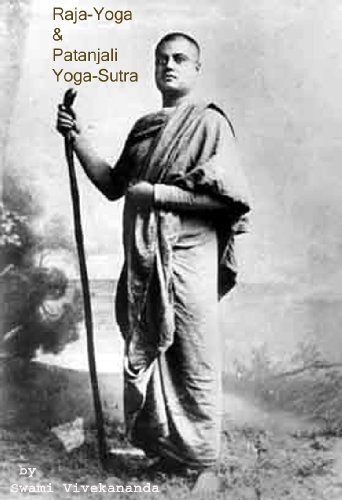
Raja-Yoga
Swami Vivekananda
4.1
Cover unavailable
50
Hinduism: A Very Short Introduction
Kim Knott
4.1
Hinduism is practiced by about 80 percent of India's population, and by about 30 million people outside India. But how is Hinduism defined, and what basis does the religion have? In this Very Short Introduction, Kim Knott provides clear insight into the beliefs and authority of Hindus and Hinduism, and considers the ways in which it has been affected by colonialism and modernity. Knott offers succinct explanations of Hinduism's central preoccupations, including the role of contemporary gurus and teachers in the quest for spiritual fulfillment; and the function of regular performances of the Mahabharata and Ramayana--scriptures which present the divine in personal form (avatara) and provide models of behavior for everyone, from kings and warriors to servants and children, and which focus on the dharma, the appropriate duties and moral responsibilities of the different varna or classes. The author also considers the challenges posed to Hinduism at the end of the twentieth century as it spreads far beyond India, and as concerns are raised about issues such as dowry, death, caste prejudice, and the place of women in Hindu society. About the Series: Combining authority with wit, accessibility, and style, Very Short Introductions offer an introduction to some of life's most interesting topics. Written by experts for the newcomer, they demonstrate the finest contemporary thinking about the central problems and issues in hundreds of key topics, from philosophy to Freud, quantum theory to Islam.
…
Cover unavailable
51
Aghora II: Kundalini
Robert E. Svoboda
4.1
This, the second volume in the Aghora series, focuses on Kundalini, the transformative power of the enlightened self. Kundalini, the root from which all spiritual experiences sprout, has remained secret for so long because it cannot be explained, only experienced. This book recounts how Vimalananda introduced me to Kundalini, and took me step by step through the practices used to awaken Her. It examines mantras, yantras, tantric practices, and shows how normally mundane things like music, food, and even the noise of trains rumbling down tracks can be turned to one's spiritual benefit. For Vimalananda Kundalini was not some sort of impersonal serpent energy, but rather took the form of his beloved deity Smashan Tara, the "Saviouress of the Cemetery." He trusted Kundalini implicitly, and She never let him down.
…
Cover unavailable
52
Man's Eternal Quest (Collected Talks & Essays 1)
Paramahansa Yogananda
4.1
In this first volume of the collected talks and essays of Paramahansa Yogananda, readers will journey through some little-known and seldom-explained aspects of meditation, life after death, healing, and the power of the mind.
Achieve absolute well-being with the classical science of yoga
The practice of what is commonly known as hatha yoga is but one of eight branches of the body of knowledge that is yoga. Yoga is a sophisticated system of self-empowerment that is capable of harnessing and activating inner energies in such a way that your body and mind function at their optimal capacity. It is a means to create inner situations exactly the way you want them, turning you into the architect of your own joy. A yogi lives life in this expansive state, and in this transformative book Sadhguru tells the story of his own awakening from a boy with an unusual affinity for the natural world to a young daredevil who crossed the Indian continent on his motorcycle. He relates the moment of his enlightenment on a mountaintop in southern India, where time stood still and he emerged radically changed.
Teachings and tools for a life of joy
As Sadhguru explains, the term guru means, "Dispeller of darkness, someone who opens the door for you. As a guru, I have no doctrine to teach, no philosophy to impart, no belief to propagate. And that is because the only solution for all the ills that plague humanity is self-transformation. Self-transformation means that nothing of the old remains. It is a dimensional shift in the way you perceive and experience life." The wisdom distilled in this accessible, profound, and engaging audiobook offers you time-tested tools that are fresh, alive, and radiantly new. Inner Engineering presents a revolutionary way of thinking about our humanity and the opportunity to achieve nothing less than a life of joy.
…
Cover unavailable
55
The Wisdom of Insecurity: A Message for an Age of Anxiety
In this fascinating book, Alan Watts explores man's quest for psychological security, examining our efforts to find spiritual and intellectual certainty in the realms of religion and philosophy. The Wisdom of Insecurity underlines the importance of our search for stability in an age where human life seems particularly vulnerable and uncertain. Watts argues our insecurity is the consequence of trying to be secure and that, ironically, salvation and sanity lie in the recognition that we have no way of saving ourselves.
This is a very thin book but a mind-blowing one. In many ways it was part of my motivation to write my book. Alan Watts was a philosophical populariser. He called himself a “spiritual entertainer”, and went around the world giving lectures and writing popular books about Eastern philosophies such as Zen Buddhism and Taoism. This book is about non-dualism – the theory that in some sense, everything is one. It’s the principle encapsulated in the symbols of yin and yang. These days it is often seen as cheesy and New Age. But there’s vastly more to it than that. [source]
Cover unavailable
56
The Bhagavad Gita: Royal Science of God-Realization
Paramahansa Yogananda
4.1
States that the words of Lord Krishna to Arjuna in the "Bhagavad Gita" are at once a profound scripture the science of Yoga, union with God, and a textbook for everyday living.
Cover unavailable
57
Nine Lives
William Dalrymple
4.1
From the author of The Last Mughal and In Xanadu, comes a mesmerizing book that explores how traditional religions are observed in today’s India, revealing ways of life that we might otherwise never have known.
A middle-class woman from Calcutta finds unexpected fulfillment living as a Tantric in an isolated, skull-filled cremation ground . . . A prison warder from Kerala is worshipped as an incarnate deity for two months of every year . . . A Jain nun tests her powers of detachment watching her closest friend ritually starve herself to death . . . The twenty-third in a centuries-old line of idol makers struggles to reconcile with his son’s wish to study computer engineering . . . An illiterate goatherd keeps alive in his memory an ancient 200,000-stanza sacred epic . . . A temple prostitute, who resisted her own initiation into sex work, pushes her daughters into the trade she nonetheless regards as a sacred calling.
William Dalrymple tells these stories, among others, with expansive insight and a spellbinding evocation of remarkable circumstance, giving us a dazzling travelogue of both place and spirit
…
Cover unavailable
58
The Heart of Awareness: A Translation of the Ashtavakra Gita
Thomas Byrom
4.1
The Ashtavakra Gita conveys with beauty and simplicity the essential teachings of Advaita Vedanta, the most influential of the Hindu philosophical systems. Composed by an anonymous master of the school of the great sage Shankara, it is a book of practical advice for seekers of wisdom as well as an ecstatic expression of the experience of enlightenment. In this simple, aphoristic version, the translator conveys the clarity and lyricism of the Sanskrit original with fluency and precision.
…
Cover unavailable
59
Holy Science
Swami Sri Yukteswar
4.1
This extraordinary treatise explores parallel passages from the Bible and the Hindu scriptures to reveal the essential unity of all religions. Swami Sri Yukteswar, the revered guru of Paramahansa Yogananda, outlines the universal path that every human being must travel to enlightenment. He also explains the vast recurring cycles of civilization, affording a profound understanding of history and the ever-changing panorama of turbulent world events.
…
Cover unavailable
60
Sacred Woman: A Guide to Healing the Feminine Body, Mind, and Spirit
Queen Afua
4.1
Queen Afua is a nationally renowned herbalist, natural health expert, and dedicated healer of women’s bodies and women’s souls who practices a uniquely Afrocentric spirituality. Her classic bestseller, Heal Thyself, forever changed the way African Americans practice holistic health. Now, with Sacred Woman, she takes us on a transforming journey of physical and ancestral healing that will restore the magnificence of our spirits through sacred initiation.
Queen Afua begins by helping us to discover our unique “womb-an-ness”–and to honor the womb as the center of our consciousness and creativity, giving us a twenty-one-day program for womb purification and spirit rejuvenation. Then Queen Afua summons us to enter the Nine Gateways of Initiation, where she blesses us with the exact tools we need to bring our beings into true harmony with the earth and the cosmos. Through extraordinary meditations, affirmations, and rituals rooted in ncient Egyptian temple teachings, Queen Afua teaches us how to love and rejoice in our bodies by spiritualizing the words we speak; the foods we eat; the spaces we live and work in; the beauty we create in our lives; the healing energy we transmit to self and others; the relationships we nurture; the service we offer; and the transcendent woman spirit we manifest.
With love, wisdom, and passion, Queen Afua guides us to accept our mission and our mantle as Sacred Women–to heal ourselves, the generations of women in our families, our communities, and our world.
…
Cover unavailable
61
Jnana-Yoga
Swami Vivekananda
4.1
Cover unavailable
62
Midnight's Children
Salman Rushdie
4.0
Saleem Sinai was born at midnight, the midnight of India's independence, and found himself mysteriously "handcuffed to history" by the coincidence. He is one of 1,001 children born at the midnight hour, each of them endowed with an extraordinary talent—and whose privilege and curse it is to be both master and victims of their times. Through Saleem's gifts—inner ear and wildly sensitive sense of smell—we are drawn into a fascinating family saga set against the vast, colourful background of the India of the 20th century.
…
Cover unavailable
63
Becoming Supernatural: How Common People Are Doing the Uncommon
What would it mean to become supernatural? What if you could train your brain to tune in to frequencies beyond our material world . . . change your brain circuitry and chemistry to access transcendent level of awareness . . . and transform your very biology to enable profound healing?
This one of the abilities Dr. Joe Dispenza offers in this revolutionary book: a set of tools that allow ordinary people to reach extraordinary states of being.
Dr. Joe, author of the New York Times bestseller You Are The Placebo draws on up-to-the-minute research in neuroscience, epigenetics, psychoneuroimmunology, neurocardiology, electromagnetism, and quantum physics to show how human transformation and change takes place and what it can mean for our lives. In these pages, you'll explore how to free yourself from the past by reconditioning your body to new mind; how to shift your awareness into the quantum field of infinite possibilities; and much more. Using tools and practices ranging from state-of-the-art brain imaging to exercises such as a walking meditation and a technique to strengthen your immune system by thoughts alone, Dr. Joe offers nothing less than a program for stepping outside our physical reality and into a new world.
…
Cover unavailable
64
7 Secrets Of Shiva
Devdutt Pattanaik
4.0
Smeared with ash, draped in animal hide, he sits atop the snow-capped mountain, skull in hand, withdrawn, with dogs for company, destroying the world with his indifference. He is God who the Goddess shall awaken. His name is Shiva. Locked in his stories, symbols and rituals are the secrets of our ancestors. This book attempts to unlock seven.
Cover unavailable
65
Who Am I?: The Teachings of Bhagavan Sri Ramana Maharshi
Bhagavan Sri Ramana Maharshi
4.0
Cover unavailable
66
Be Love Now: The Path of the Heart
Ram Dass, Rameshwar Das
4.0
Ram Dass’s long-awaited Be Love Now is the transformational teaching of a forty year journey to the heart. The author of the two-million-copy classic Remember, Be Here Now and its influential sequel Still Here, Dass is joined once more by Rameshwar Das—a collaborator from the Love Serve Remember audio recordings—to offer this intimate and inspiring exploration of the human soul. Like Deepak Chopra’s Book of Secrets, the Dalai Lama’s Art of Happiness, and Jon Kabat-Zinn’s Coming to Our Senses, Ram Dass’s Be Love Now will serve as a lodestar for anyone seeking to enhance their spiritual awareness and improve their capacity to serve—and love—the world around them.
…
Cover unavailable
67
Darsan: Seeing the Divine Image in India
Diana Eck
4.0
The role of the visual is essential to Hindu tradition and culture, but many attempts to understand India's divine images have been laden with misperceptions. "Darsan, " a Sanskrit word that means "seeing," is an aid to our vision, a book of ideas to help us read, think, and look at Hindu images with appreciation and imagination.
Cover unavailable
68
Mahabharata: The Greatest Spiritual Epic of All Time
Krishna Dharma
4.0
Cover unavailable
69
The Battle for Sanskrit: Is Sanskrit Political or Sacred, Oppressive or Liberating, Dead or Alive?
Rajiv Malhotra
4.0
There is a new awakening in India that is challenging the ongoing westernization of the discourse about India. The Battle for Sanskrit seeks to alert traditional scholars of Sanskrit and sanskriti - Indian civilization - concerning an important school of thought that has its base in the US and that has started to dominate the discourse on the cultural, social and political aspects of India. This academic field is called Indology or Sanskrit studies. From their analysis of Sanskrit texts, the scholars of this field are intervening in modern Indian society with the explicitly stated purpose of removing 'poisons' allegedly built into these texts. They hold that many Sanskrit texts are socially oppressive and serve as political weapons in the hands of the ruling elite; that the sacred aspects need to be refuted; and that Sanskrit has long been dead. The traditional Indian experts would outright reject or at least question these positions. The start of Rajiv Malhotra's feisty exploration of where the new thrust in Western Indology goes wrong, and his defence of what he considers the traditional, Indian approach, began with a project related to the Sringeri Sharada Peetham in Karnataka, one of the most sacred institutions for Hindus. There was, as he saw it, a serious risk of distortion of the teachings of the peetham, and of sanatana dharma more broadly. Whichever side of the fence one may be on, The Battle for Sanskrit offers a spirited debate marshalling new insights and research. It is a valuable addition to an important subject, and in a larger context, on two ways of looking. Is each view exclusive of the other, or can there be a bridge between them? Readers can judge for themselves.
…
Cover unavailable
70
Siva Sutras: The Yoga of Supreme Identity - Text of the Sutras and the Commentary Vimarsini of Ksemaraja
Jaideva Singh
4.0
Cover unavailable
71
The Crystal Bible: A Definitive Guide to Crystals
Judy Hall
4.0
Cover unavailable
72
Yoga: Immortality and Freedom
Mircea Eliade, Willard R. Trask
4.0
In this landmark book the renowned scholar of religion Mircea Eliade lays the groundwork for a Western understanding of Yoga, exploring how its guiding principle, that of freedom, involves remaining in the world without letting oneself be exhausted by such conditionings as time and history. Drawing on years of study and experience in India, Eliade provides a comprehensive survey of Yoga in theory and practice from its earliest foreshadowings in the Vedas through the twentieth century. The subjects discussed include Pata�jali, author of the Yoga-sutras; yogic techniques, such as concentration on a Single Point, postures, and respiratory discipline; and Yoga in relation to Brahmanism, Buddhism, Tantrism, Oriental alchemy, mystical erotism, and shamanism.
…
Cover unavailable
73
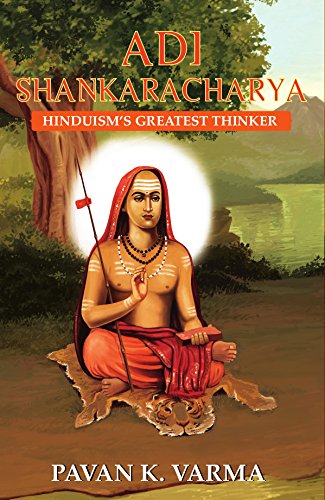
Adi Shankaracharya: Hinduism's Greatest Thinker
Pavan K Varma
4.0
What is Brahman? What is its relationship to Atman? What is an individual’s place in the cosmos? Is a personalised god and ritualistic worship the only path to attain moksha? Does caste matter when a human is engaging with the metaphysical world?
The answers to these perennial questions sparkle with clarity in this seminal account of a man, and a saint, who revived Hinduism and gave to Upanishadic insights a rigorously structured and sublimely appealing philosophy.
Jagad Guru Adi Shankaracharya (788–820 CE) was born in Kerala and died in Kedarnath, traversing the length of India in his search for the ultimate truth. In a short life of thirty-two years, Shankaracharya not only revived Hinduism, but also created the organisational structure for its perpetuation through the mathas he established in Sringeri, Dwaraka, Puri, and Joshimatha.
Adi Shankaracharaya: Hinduism’s Greatest Thinker is a meticulously researched and comprehensive account of his life and philosophy. Highly readable, and including a select anthology of Shankaracharya’s seminal writing, the book also examines the startling endorsement that contemporary science is giving to his ideas today. A must-read for people across the ideological spectrum, this book reminds readers about the remarkable philosophical underpinning of Hinduism, making it one of the most vibrant religions in the world.
…
Cover unavailable
74
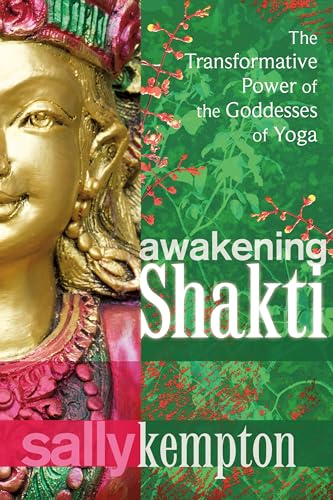
Awakening Shakti: The Transformative Power of the Goddesses of Yoga
Sally Kempton
4.0
How do you live a life of spiritual awakening as well as outer abundance, inner freedom as well as deep intimacy? How do you serve the world selflessly, yet passionately celebrate your life?
The sages of Tantra have known for centuries that when you follow the path of Shakti--the sacred feminine principle personified by the goddesses of yoga--these gifts can manifest spontaneously. Yet most of us, women as well as men, have yet to experience the full potential of our inner feminine energies. When you know these powers for what they are, they heighten your capacity to open spiritually, love more deeply and fearlessly, create with greater mastery, and move through the world with skill and delight. In Awakening Shakti, you will learn how to recognize and invite:
Kali, bringer of strength, fierce love, and untamed freedom Lakshmi, who confers prosperity and beauty Saraswati, for clarity of communication and intuition Radha, who carries the divine energy of spiritual longing Bhuvaneshvari, who creates the space for sacred transformation Parvati, to awaken creativity and the capacity to love With a wealth of meditations, visualizations, mantras, teachings, and beautifully told stories, Awakening Shakti provides a practical guide for activating the currents of the divine feminine in every aspect of your life.
…
Cover unavailable
75
Ask and It Is Given: Learning to Manifest Your Desires
Esther Hicks and Jerry Hicks
4.0
Ask and It Is Given, by Esther and Jerry Hicks, which presents the teachings of the nonphysical entity Abraham, will help you learn how to manifest your desires so that you're living the joyous and fulfilling life you deserve.
As you read, you'll come to understand how your relationships, health issues, finances, career concerns, and more are influenced by the Universal laws that govern your time-space-reality—and you'll discover powerful processes that will help you go with the positive flow of life.
It's your birthright to live a life filled with everything that is good—and this book will show you how to make it so in every way!
Foreword by Dr. Wayne W. Dyer.
…
Cover unavailable
76
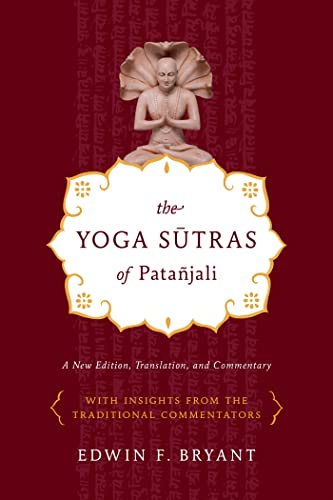
The Yoga Sūtras of Patañjali: A New Edition, Translation, and Commentary
Edwin F. Bryant
4.0
A landmark new translation and edition
Written almost two millennia ago, Pata�jali's work focuses on how to attain the direct experience and realization of the purusa the innermost individual self, or soul. As the classical treatise on the Hindu understanding of mind and consciousness and on the technique of meditation, it has exerted immense influence over the religious practices of Hinduism in India and, more recently, in the West.
Edwin F. Bryant's translation is clear, direct, and exact. Each sutra is presented as Sanskrit text, transliteration, and precise English translation, and is followed by Bryant's authoritative commentary, which is grounded in the classical understanding of yoga and conveys the meaning and depth of the su-tras in a user-friendly manner for a Western readership without compromising scholarly rigor or traditional authenticity. In addition, Bryant presents insights drawn from the primary traditional commentaries on the sutras written over the last millennium and a half.
…
Cover unavailable
77
American Veda: From Emerson and the Beatles to Yoga and Meditation How Indian Spirituality Changed the West
Philip Goldberg, Huston Smith
4.0
In February 1968 the Beatles went to India for an extended stay with their new guru, Maharishi Mahesh Yogi. It may have been the most momentous spiritual retreat since Jesus spent those forty days in the wilderness.
With these words, Philip Goldberg begins his monumental work, American Veda, a fascinating look at India’s remarkable impact on Western culture. This eye-opening popular history shows how the ancient philosophy of Vedanta and the mind-body methods of Yoga have profoundly affected the worldview of millions of Americans and radically altered the religious landscape.
What exploded in the 1960s actually began more than two hundred years earlier, when the United States started importing knowledge as well as tangy spices and colorful fabrics from Asia. The first translations of Hindu texts found their way into the libraries of John Adams and Ralph Waldo Emerson. From there the ideas spread to Henry David Thoreau, Walt Whitman, and succeeding generations of receptive Americans, who absorbed India’s “science of consciousness” and wove it into the fabric of their lives. Charismatic teachers like Swami Vivekananda and Paramahansa Yogananda came west in waves, prompting leading intellectuals, artists, and scientists such as Aldous Huxley, Joseph Campbell, Allen Ginsberg, J. D. Salinger, John Coltrane, Dean Ornish, and Richard Alpert, aka Ram Dass, to adapt and disseminate what they learned from them. The impact has been enormous, enlarging our current understanding of the mind and body and dramatically changing how we view ourselves and our place in the cosmos.
Goldberg paints a compelling picture of this remarkable East-to-West transmission, showing how it accelerated through the decades and eventually moved from the counterculture into our laboratories, libraries, and living rooms. Now physicians and therapists routinely recommend meditation, words like karma and mantra are part of our everyday vocabulary, and Yoga studios are as ubiquitous as Starbuckses. The insights of India’s sages permeate so much of what we think, believe, and do that they have redefined the meaning of life for millions of Americans—and continue to do so every day.
Rich in detail and expansive in scope, American Veda shows how we have come to accept and live by the central teaching of Vedic wisdom: “Truth is one, the wise call it by many names.”
…
Cover unavailable
78
Shankara's Crest-Jewel of Discrimination: Timeless Teachings on Nonduality - The Vivekachudamani
Shankara
4.0
Cover unavailable
79
A Yogic Path Oracle Deck and Guidebook (Keepsake Box Set)
Sahara Rose Ketabi
4.0
Steeped in the wisdom of the Vedas, this ancient yet visionary deck is a tool to access your yogic intuition. Each card represents aspects of the self, symbolized by sacred figures and concepts that are integral to yoga and Ayurveda. Illustrated by beautiful, original artwork, the cards provide insight into the present and guidance for the future, unlocking a deeper understanding of self and the energies that flow through us.
The accompanying guide provides complete descriptions of each card as well as suggestions for working with the deck, allowing you to uncover sacred meanings and receive cosmic intuition from the universe.
A Yogic Path Oracle Deck and Guide includes: - Foil-embellished keepsake box with magnetic closure and lifting ribbon - 54 full-colour cards in a lift-top box - 128-page full-colour guidebook
…
Cover unavailable
80
Introduction to the Study of the Hindu Doctrines
Rene Guenon
4.0
René Guénon's Introduction to the Study of Hindu Doctrines can serve as an introduction to all his later works-especially those which, like Man and His Becoming according to the Vedanta, The Symbolism of the Cross, The Multiple States of the Being, and Studies in Hinduism, expound the more profound aspects of metaphysical doctrines in greater detail. In Part I Guenon clears away certain ingrained prejudices inherited from the 'Renaissance', with its adulation of the Greco-Roman culture and its compensating depreciation-both deliberate and instinctive-of other civilizations. In Part II he establishes the fundamental distinctions between various modes of thought and brings out the real nature of metaphysical or universal knowledge-an understanding of which is the first condition for the personal realization of that 'Knowledge' which partakes of the Absolute. Words like 'religion', 'philosophy', 'symbolism', 'mysticism', and 'superstition', are here given a precise meaning. Part III presents a more detailed examination of the Hindu doctrine and its applications at different levels, leading up to the Vedanta, which constitutes its metaphysical essence. Lastly, Part IV resumes the task of clearing away current misconceptions, but is this time concerned not with the West itself, but with distortions of the Hindu doctrines that have arisen as a result of attempts to read into them, or to graft onto them, modern Western conceptions. The concluding chapter lays down the essential conditions for any genuine understanding between East and West, which can only come through the work of those who have attained, at least in some degree, to the realization of 'wisdom uncreate'-that intellective, suprarational knowledge called in the East jana, and in the West gnosis.
…
Cover unavailable
81
My Gita
Devdutt Pattanaik, Vivek Madan, et al
4.0
In My Gita, acclaimed mythologist Devdutt Pattanaik demystifies The Bhagavad Gita for the contemporary reader. His unique approach—thematic rather than verse-by-verse—makes the ancient treatise eminently accessible, combined as it is with his trademark illustrations and simple diagrams. In a world that seems spellbound by argument over dialogue, vi-vaad over sam-vaad, Devdutt highlights how Krishna nudges Arjuna to understand rather than judge his relationships. This becomes relevant today when we are increasingly indulging and isolating the self (self-improvement, self-actualization, self-realization—even selfies!).We forget that we live in an ecosystem of others, where we can nourish each other with food, love and meaning, even when we fight. So let My Gita inform your Gita.
…
Cover unavailable
82
Scion of Ikshvaku (Ram Chandra #1)
Amish Tripathi
4.0
Ram Rajya. The Perfect Land. But perfection has a price. He paid that price.
3400 BCE. INDIA Ayodhya is weakened by divisions. A terrible war has taken its toll. The damage runs deep. The demon King of Lanka, Raavan, does not impose his rule on the defeated. He, instead, imposes his trade. Money is sucked out of the empire. The Sapt Sindhu people descend into poverty, despondency and corruption. They cry for a leader to lead them out of the morass. Little do they appreciate that the leader is among them. One whom they know. A tortured and ostracised prince. A prince they tried to break. A prince called Ram.
He loves his country, even when his countrymen torment him. He stands alone for the law. His band of brothers, his Sita, and he, against the darkness of chaos.
Will Ram rise above the taint that others heap on him? Will his love for Sita sustain him through his struggle? Will he defeat the demon Lord Raavan who destroyed his childhood? Will he fulfil the destiny of the Vishnu?
Begin an epic journey with Amish’s latest: the Ram Chandra Series.
…
Cover unavailable
83
Self-Knowledge: Sankara's "Atmabodha"
Swami Nikhilananda
4.0
From the author of The Complete Commentary by Sankara on the Yoga Sutras, this book deals with the karma-yoga meditation practice and the realization of the supreme self as described in the Bhagava Gita yoga.
Cover unavailable
84
Apprenticed to a Himalayan Master: A Yogi's Autobiography
Sri M
4.0
The author Sri ‘M’ is an extraordinary individual. His uniqueness lies not only in the fact that at the young age of 19 and a half, he travelled to snow clad Himalayas from Kerala, and there he met and lived for several years with a ‘real-time’ yogi, Babaji, but also that he should undertake such an unusual and adventurous exploration, given his non-Hindu birth and antecedents.
The metamorphosis of Mumtaz Ali Khan into Sri ‘M’, a yogi with profound knowledge of the Upanishads and deep personal insights, born of first hand experiences with higher levels of consciousness is indeed a fascinating story. The bonus for those interested in the secrets of yoga, meditation and sankhyan metaphysics is that Sri ‘M’ is still living and easily reachable. He leads a normal life, married with two children, wears no special robes and conducts himself without pomp or paraphernalia.
Someone who met him recently said, “I expected a flashy godman and instead I saw a jean clad gentleman with a smile of his face, ready to discuss my problems. In five minutes flat, I said to myself, this is no ordinary man. The peace and tranquility that enters your system is tangible”.
…
Cover unavailable
85
Ramayana: Divine Loophole (Hindu Mythology Books, Books on Hindu Gods and Goddesses, Indian Books for Kids)
Sanjay Patel
4.0
Artist and veteran Pixar animator Sanjay Patel lends a lush, whimsical illustration style and lighthearted voice to one of Hindu mythology's best-loved and most enduring tales. Teeming with powerful deities, love-struck monsters, flying monkey gods, magic weapons, demon armies, and divine love, Ramayana tells the story of Rama, a god-turned-prince, and his quest to rescue his wife Sita after she is kidnapped by a demon king. This illustrated tale features over 100 colorful full-spread illustrations, a detailed pictorial glossary of the cast of characters who make up the epic tale, and sketches of the work in progress. From princesses in peril to gripping battles, scheming royals, and hordes of bloodthirsty demons, Ramayana is the ultimate adventure story presented with an unforgettably modern touch.
…
Cover unavailable
86
The Serpent Power: The Secrets of Tantric and Shaktic Yoga
Arthur Avalon
4.0
Two works on Laya-yoga, translated from the Sanskrit, with introduction & commentary. Written by a leading authority on Shaktic & Tantric thought, this book is considered the prime document for study & application of Kundalini yoga. It probes the philosophical & mythological nature of Kundalini, the esoteric anatomy associated with it, the study of mantras, the chakras, or psychic centers in the human body, etc. Sir John George Woodroffe (1865–1936), aka Arthur Avalon, was a British Orientalist whose work helped to unleash in the West an interest in Hindu philosophy & Yogic practices. His The Serpent Power is a source for many modern Western adaptations of Kundalini yoga practice. It's a philosophically sophisticated commentary on, & translation of, the Satcakra-nirupana ("Description of & Investigation into the Six Bodily Centres") of Purnananda (dated c.AD 1550) & the Paduka-Pancaka ("Five-fold Footstool of the Guru"). The term "Serpent Power" refers to the kundalini, an energy said to be released within an individual by meditation techniques.
…
Cover unavailable
87
The Yoga of Power: Tantra, Shakti, and the Secret Way
Julius Evola
4.0
Drawing from original texts on self-mastery, Evola discusses two Hindu movements--Tantrism and Shaktism--which emphasize a path of action to gain power over energies latent within the body.
Cover unavailable
88
Kali: The Black Goddess of Dakshineswar
Elizabeth U. Harding
4.0
Kali, The Black Goddess of Dakshineswar by Elizabeth U. Harding provides a wealth of information about the worship of the Goddess Kali. This book gives an intimate and detailed description of Kolkata's famous Dakshineswar temple and Ma Bhavatarini, the form of Kali worshipped there. Learn about the temple's festivals & daily rituals, and discover inspiring accounts of some of this traditions ecstatic saints. A great introduction to Kali worship.
…
Cover unavailable
89
Aru Shah and the End of Time (Pandava Quartet, #1)
Roshani Chokshi
4.0
Twelve-year-old Aru Shah has a tendency to stretch the truth in order to fit in at school. While her classmates are jetting off to family vacations in exotic locales, she'll be spending her autumn break at home, in the Museum of Ancient Indian Art and Culture, waiting for her mom to return from her latest archeological trip. Is it any wonder that Aru makes up stories about being royalty, traveling to Paris, and having a chauffeur?
One day, three schoolmates show up at Aru's doorstep to catch her in a lie. They don't believe her claim that the museum's Lamp of Bharata is cursed, and they dare Aru to prove it. Just a quick light, Aru thinks. Then she can get herself out of this mess and never ever fib again.
But lighting the lamp has dire consequences. She unwittingly frees the Sleeper, an ancient demon whose duty it is to awaken the God of Destruction. Her classmates and beloved mother are frozen in time, and it's up to Aru to save them.
The only way to stop the demon is to find the reincarnations of the five legendary Pandava brothers, protagonists of the Hindu epic poem, the Mahabharata, and journey through the Kingdom of Death. But how is one girl in Spider-Man pajamas supposed to do all that?
…
Cover unavailable
90
Ashtavakra Gita
Sri Sri Ravi Shankar
4.0
Transcript of discourses recorded in 1991 at Art of Living International Centre, Bangalore, India.
Cover unavailable
91
Freedom from the Known
Jiddu Krishnamurti, Mary Lutyens
4.0
Krishnamurti shows how people can free themselves radically and immediately from the tyranny of the expected, no matter what their age--opening the door to transforming society and their relationships.
Cover unavailable
92
Indian Philosophy: A Very Short Introduction
Sue Hamilton
4.0
India has a long, rich, and diverse tradition of philosophical thought, spanning some two and a half millennia and encompassing several major religious traditions.
In this intriguing introduction to Indian philosophy, the diversity of Indian thought is emphasized. It is structured around six schools of thought that have received classic status. Sue Hamilton explores how the traditions have attempted to understand the nature of reality in terms of inner or spiritual quest and introduces distinctively Indian concepts, such as karma and rebirth. She also explains how Indian thinkers have understood issues of reality and knowledge--issues that are also an important part of the Western philosophical tradition.
About the Series: Combining authority with wit, accessibility, and style, Very Short Introductions offer an introduction to some of life's most interesting topics. Written by experts for the newcomer, they demonstrate the finest contemporary thinking about the central problems and issues in hundreds of key topics, from philosophy to Freud, quantum theory to Islam.
…
Cover unavailable
93
No-Nonsense Buddhism for Beginners: Clear Answers to Burning Questions About Core Buddhist Teachings
Noah Rasheta
4.0
Cover unavailable
94
The Mahabharata: A Modern Rendering, Vol. 1
Ramesh Menon
4.0
The Mahabharata is the more recent of India's two great epics, and by far the longer. First composed by the Maharishi Vyasa in verse, it has come down the centuries in the timeless oral tradition of guru and sishya, profoundly influencing the history, culture, and art of not only the Indian subcontinent but most of south-east Asia. At 100,000 couplets, it is seven times as long as the Iliad and the Odyssey combined: far and away the greatest recorded epic known to man.
The Mahabharata is the very Book of Life: in its variety, majesty and, also, in its violence and tragedy. It has been said that nothing exists that cannot be found within the pages of this awesome legend. The epic describes a great war of some 5000 years ago, and the events that led to it. The war on Kurukshetra sees ten million warriors slain, brings the dwapara yuga to an end, and ushers in a new and sinister age: this present kali yuga, modern times.
At the heart of the Mahabharata nestles the Bhagavad Gita, the Song of God. Senayor ubhayor madhye, between two teeming armies, Krishna expounds the eternal dharma to his warrior of light, Arjuna. At one level, all the restless action of the Mahabharata is a quest for the Gita and its sacred stillness. After the carnage, it is the Gita that survives, immortal lotus floating upon the dark waters of desolation: the final secret!
With its magnificent cast of characters, human, demonic, and divine, and its riveting narrative, the Mahabharata continues to enchant readers and scholars the world over. This new rendering brings the epic to the contemporary reader in sparkling modern prose. It brings alive all the excitement, magic, and grandeur of the original - for our times.
…
Cover unavailable
95
In Praise of the Goddess: The Devimahatmya and Its Meaning
Devadatta Kali
4.0
About 16 centuries ago, an unknown Indian author or authors gathered together the diverse threads of already ancient traditions and wove them into a verbal tapestry that today is still the central text for worshippers of the Hindu Devi, the Divine Mother. This spiritual classic, the Devimahatmya, addresses the perennial questions of the nature of the universe, humankind, and divinity. How are they related, how do we live in a world torn between good and evil, and how do we find lasting satisfaction and inner peace?
These questions and their answers form the substance of the Devimahatmya. Its narrative of a dispossessed king, a merchant betrayed by the family he loves, and a seer whose teaching leads beyond existential suffering sets the stage for a trilogy of myths concerning the all-powerful Divine Mother, Durga, and the fierce battles she wages against throngs of demonic foes. In these allegories, her adversaries represent our all-too-human impulses toward power, possessions, and pleasure. The battlefields symbolize the field of human consciousness on which our lives' dramas play out in joy and sorrow, in wisdom and folly.
The Devimahatmya speaks to us across the ages of the experiences and beliefs of our ancient ancestors. We sense their enchantment at nature's bounty and their terror before its destructive fury, their recognition of the good and evil in the human heart, and their understanding that everything in our experience is the expression of a greater reality, personified as the Divine Mother.
…
Cover unavailable
96
Myth = Mithya: A Handbook of Hindu Mythology
Devdutt Pattanaik
4.0
A decoding of Hindu mythology, Hindus have one God. They also have 330 million gods: male gods, female gods, personal gods, family gods, household gods, village gods, gods of space and time, gods for specific castes and particular professions, gods who reside in trees, in animals, in minerals, in geometrical patterns and in man-made objects. Then there are a whole host of demons. But no Devil. In this groundbreaking book Dr Devdutt Pattanaik, one of India’s most popular mythologists, seeks an answer to these apparent paradoxes and unravels an inherited truth about life and death, nature and culture, perfection and possibility. He retells sacred Hindu stories and decodes Hindu symbols and rituals, using a unique style of commentary, illustrations and diagrams. We discover why the villainous Kauravas went to heaven and the virtuous Pandavas (all except Yudhishtira) were sent to hell; why Rama despite abandoning the innocent Sita remains the model king; why the blood-drinking Kali is another form of the milk-giving Gauri and why Shiva wrenched off the fifth head of Brahma. Constructed over generations, Hindu myths serve as windows to the soul, and provide an understanding of the world around us. The aim is not to outgrow myth, but to be enriched and empowered by its ancient, potent and still relevant language
…
Cover unavailable
97
The Dance of Siva: Essays on Indian Art and Culture
Ananda K. Coomaraswamy
4.0
Ananda Coomaraswamy, late curator of Indian art at the Boston Museum of Fine Arts, was unexcelled in his knowledge of the arts of the Orient, and unmatched in his understanding of Indian culture, language, religion, and philosophy. In this excellent reprint of a rare volume of essays, he reveals the essence of the Indian experience, rooted in "a constant intuition" of the unity and harmony of all life. Everything has its place, every being its function and all play a part in the divine concert led by Natarājā (Śiva), Lord of Dancers. In a series of 14 stimulating and provocative essays, Coomaraswamy unfolds the vast metaphysic of India: the magnificent revelation of its art; its conception of the universe; social organization; attitudes toward feminism; problems of family; romantic love, and marriage. His sweeping commentary considers the "intellectual fraternity" of mankind; the venerable past as it survives side by side with emerging modern India; and the individual, autonomy, and repudiation of "the will to govern." Enhancing the text are 27 black-and-white photographs — mostly of masterpieces of painting and sculpture from the second century B.C. to the eighteenth century, and including the glorious "Cosmic Dance of Nàtaraja." This handsome volume offers rich insight into the art, philosophy, and culture of a fascinating forty-centuries-old civilization.
…
Cover unavailable
98
Speaking of Siva
Anonymous, A. K. Ramanujan
4.0
Speaking of Siva is a selection of vacanas or free-verse sayings from the Virasaiva religious movement, dedicated to Siva as the supreme god. Written by four major saints, the greatest exponents of this poetic form, between the tenth and twelfth centuries, they are passionate lyrical expressions of the search for an unpredictable and spontaneous spiritual vision of 'now'. Here, yogic and tantric symbols, riddles and enigmas subvert the language of ordinary experience, as references to night and day, sex and family relationships take on new mystical meanings. These intense poems of personal devotion to a single deity also question traditional belief systems, customs, superstitions, image worship and even moral strictures, in verse that speaks to all men and women regardless of class and caste.
…
Cover unavailable
99
Death of a Guru
Rabi R. Maharaj, Dave Hunt
4.0
Rabi R. Maharaj came from a long line of Brahmin priests and gurus and trained as a yogi. He meditated for many hours each day, but gradually disillusionment set in. He describes Hindu life and custom, vividly and honestly tracing his difficult search for meaning and his struggle to choose between Hinduism and Christianity.
At a time when Eastern mysticism, religion, and philosophy fascinate many in the West, Maharaj offers fresh and important insights from the perspective of his own experience.
“A unique revelation of the inward struggles of a Hindu and the ultimate triumph over death that he discovered. I found it challenging and inspiring. Must reading.”—Hal Lindsey
…
Cover unavailable
100
Many Many Many Gods of Hinduism: Turning believers into non-believers and non-believers into believers
Swami Achuthananda
4.0
"Religion is the opium of the people," said Karl Marx many centuries ago. For more than a billion people living in India and abroad, Hinduism is the religion and a way of life. In this book Swami Achuthananda cracks open the opium poppy pods, analyzes the causes for euphoria, and comes away with a deeper understanding of the people and their religion.This is a comprehensive book on Hinduism. It tells you why Hindus do the things they do - and don't. Written in a casual style, the book guides you through the fundamentals of the religion. It then goes further and debunks a number of long-standing myths, some of them coming from the academia (of all places). While most books shy away from contentious issues, this book plunges headlong by taking on controversies, like the Aryan Invasion Theory, idol worship, RISA scholarship and many more. In fact one-third of the book is just on controversies that you rarely find in any other literature.


 1
1