We've ranked the best haskell books using expert recommendations, sales data, and millions of reader ratings. At Shortform, we know books. Our book guides are the best in the world. Learn why.
Cover unavailable
1
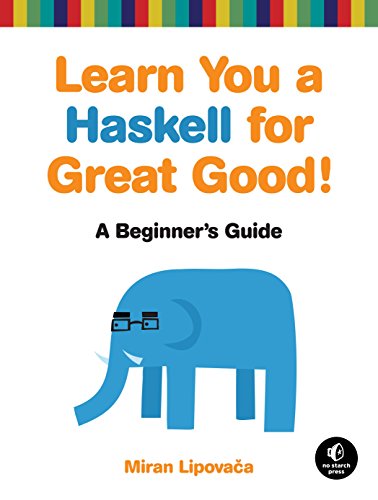
Learn You a Haskell for Great Good!
Miran Lipovača
5.0
Learn You a Haskell for Great Good! is a fun, illustrated guide to learning Haskell, a functional programming language that's growing in popularity. Learn You a Haskell for Great Good! introduces programmers familiar with imperative languages (such as C++, Java, or Python) to the unique aspects of functional programming. Packed with jokes, pop culture references, and the author's own hilarious artwork, Learn You a Haskell for Great Good! eases the learning curve of this complex language, and is a perfect starting point for any programmer looking to expand his or her horizons. The well-known web tutorial on which this book is based is widely regarded as the best way for beginners to learn Haskell, and receives over 30,000 unique visitors monthly.
…
Recommended by Santiago Basulto.
Santiago Basulto
I love the following books, even though I don’t code in these languages in a daily basis. It’s still interesting to learn the concepts behind them Programming in Scala (Odersky) Learn You a Haskell for Great Good [source]
Cover unavailable
2
Programming in Haskell
Graham Hutton
4.9
Haskell is a purely functional language that allows programmers to rapidly develop clear, concise, and correct software. The language has grown in popularity in recent years, both in teaching and in industry. This book is based on the author's experience of teaching Haskell for more than twenty years. All concepts are explained from first principles and no programming experience is required, making this book accessible to a broad spectrum of readers. While Part I focuses on basic concepts, Part II introduces the reader to more advanced topics. This new edition has been extensively updated and expanded to include recent and more advanced features of Haskell, new examples and exercises, selected solutions, and freely downloadable lecture slides and example code. The presentation is clean and simple, while also being fully compliant with the latest version of the language, including recent changes concerning applicative, monadic, foldable, and traversable types.
…
Cover unavailable
3
Parallel and Concurrent Programming in Haskell: Techniques for Multicore and Multithreaded Programming
Simon Marlow
4.9
If you have a working knowledge of Haskell, this hands-on book shows you how to use the language’s many APIs and frameworks for writing both parallel and concurrent programs. You’ll learn how parallelism exploits multicore processors to speed up computation-heavy programs, and how concurrency enables you to write programs with threads for multiple interactions.
Author Simon Marlow walks you through the process with lots of code examples that you can run, experiment with, and extend. Divided into separate sections on Parallel and Concurrent Haskell, this book also includes exercises to help you become familiar with the concepts presented:
Express parallelism in Haskell with the Eval monad and Evaluation Strategies Parallelize ordinary Haskell code with the Par monad Build parallel array-based computations, using the Repa library Use the Accelerate library to run computations directly on the GPU Work with basic interfaces for writing concurrent code Build trees of threads for larger and more complex programs Learn how to build high-speed concurrent network servers Write distributed programs that run on multiple machines in a network
…
Cover unavailable
4
Real World Haskell: Code You Can Believe In
Bryan O'Sullivan, John Goerzen, Don Stewart
4.8
This easy-to-use, fast-moving tutorial introduces you to functional programming with Haskell. You'll learn how to use Haskell in a variety of practical ways, from short scripts to large and demanding applications. Real World Haskell takes you through the basics of functional programming at a brisk pace, and then helps you increase your understanding of Haskell in real-world issues like I/O, performance, dealing with data, concurrency, and more as you move through each chapter.
With this book, you will:
Understand the differences between procedural and functional programming Learn the features of Haskell, and how to use it to develop useful programs Interact with filesystems, databases, and network services Write solid code with automated tests, code coverage, and error handling Harness the power of multicore systems via concurrent and parallel programming You'll find plenty of hands-on exercises, along with examples of real Haskell programs that you can modify, compile, and run. Whether or not you've used a functional language before, if you want to understand why Haskell is coming into its own as a practical language in so many major organizations, Real World Haskell is the best place to start.
…
Cover unavailable
5
Practical Haskell: A Real World Guide to Programming
Alejandro Serrano Mena
4.8
Get a practical, hands-on introduction to the Haskell language, its libraries and environment, and to the functional programming paradigm that is fast growing in importance in the software industry. This book contains excellent coverage of the Haskell ecosystem and supporting tools, which include the Cabal build tool for managing projects and modules, the HUnit and QuickCheck tools for software testing, the Scotty framework for developing web applications, Persistent and Esqueleto for database access, and parallel and distributed programming libraries.
You'll see how functional programming is gathering momentum, allowing you to express yourself in a more concise way, reducing boilerplate, and increasing the safety of your code. Haskell is an elegant and noise-free pure functional language with a long history, having a huge number of library contributors and an active community. This makes Haskell the best tool for both learning and applying functional programming, and Practical Haskell takes advantage of this to show off the language and what it can do.
What You Will Learn
Get started programming with Haskell
Examine the different parts of the language
Gain an overview of the most important libraries and tools in the Haskell ecosystem
Apply functional patterns in real-world scenarios
Carry out data mining
Program using Monads
Handle resources with Haskell Who This Book Is For
Experienced programmers who may be new to the Haskell programming language. However, some prior exposure to Haskell is recommended.
…
Cover unavailable
6
Get Programming with Haskell
Will Kurt
4.8
Unlike any other programming language, Haskell is purely functional with a strong type system and lazy evaluation. It is arguable the most interesting language but also has the reputation of being one of the most challenging to learn. Learning Haskell doesn't have to be difficult, and this book can help!
Learn Haskell teaches readers the Haskell language and functional programming concepts while they hack on interesting problems that are challenging but never frustrating. This example-filled tutorial will take users from the basics to tackling the tough topics. There are lots of crystal-clear illustrations, hands-on exercises, and open-ended tasks that encourage readers to explore Haskell on their own.
Purchase of the print book includes a free eBook in PDF, Kindle, and ePub formats from Manning Publications.
…
Cover unavailable
7
Thinking Functionally with Haskell
Richard Bird
4.8
Richard Bird is famed for the clarity and rigour of his writing. His new textbook, which introduces functional programming to students, emphasises fundamental techniques for reasoning mathematically about functional programs. By studying the underlying equational laws, the book enables students to apply calculational reasoning to their programs, both to understand their properties and to make them more efficient. The book has been designed to fit a first- or second-year undergraduate course and is a thorough overhaul and replacement of his earlier textbooks. It features case studies in Sudoku and pretty-printing, and over 100 carefully selected exercises with solutions. This engaging text will be welcomed by students and teachers alike.
…
Cover unavailable
8
Introduction to Functional Programming
Richard Bird
4.8
Cover unavailable
9
Haskell: the Craft of Functional Programming
Simon Thompson
4.8
Introducing functional programming in the Haskell language, this book is written for students and programmers with little or no experience. It emphasises the process of crafting programmes, problem solving and avoiding common programming pitfalls.
Covering basic functional programming, through abstraction to larger scale programming, students are lead step by step through the basics, before being introduced to more advanced topics.
This edition includes new material on testing and domain-specific languages and a variety of new examples and case studies, including simple games. Existing material has been expanded and re-ordered, so that some concepts - such as simple data types and input/output - are presented at an earlier stage.
…
Cover unavailable
10
The Other Voice: A Companion to the Text of the Course, Chapters 1-15 (Miracles Studies Book)
Brent Haskell
4.8
Cover unavailable
11
Seven Languages in Seven Weeks
Bruce Tate
4.7
You should learn a programming language every year, as recommended by The Pragmatic Programmer. But if one per year is good, how about Seven Languages in Seven Weeks? In this book you'll get a hands-on tour of Clojure, Haskell, Io, Prolog, Scala, Erlang, and Ruby. Whether or not your favorite language is on that list, you'll broaden your perspective of programming by examining these languages side-by-side. You'll learn something new from each, and best of all, you'll learn how to learn a language quickly.
Ruby, Io, Prolog, Scala, Erlang, Clojure, Haskell. With Seven Languages in Seven Weeks, by Bruce A. Tate, you'll go beyond the syntax-and beyond the 20-minute tutorial you'll find someplace online. This book has an audacious goal: to present a meaningful exploration of seven languages within a single book. Rather than serve as a complete reference or installation guide, Seven Languages hits what's essential and unique about each language. Moreover, this approach will help teach you how to grok new languages.
For each language, you'll solve a nontrivial problem, using techniques that show off the language's most important features. As the book proceeds, you'll discover the strengths and weaknesses of the languages, while dissecting the process of learning languages quickly--for example, finding the typing and programming models, decision structures, and how you interact with them.
Among this group of seven, you'll explore the most critical programming models of our time. Learn the dynamic typing that makes Ruby, Python, and Perl so flexible and compelling. Understand the underlying prototype system that's at the heart of JavaScript. See how pattern matching in Prolog shaped the development of Scala and Erlang. Discover how pure functional programming in Haskell is different from the Lisp family of languages, including Clojure.
Explore the concurrency techniques that are quickly becoming the backbone of a new generation of Internet applications. Find out how to use Erlang's let-it-crash philosophy for building fault-tolerant systems. Understand the actor model that drives concurrency design in Io and Scala. Learn how Clojure uses versioning to solve some of the most difficult concurrency problems.
It's all here, all in one place. Use the concepts from one language to find creative solutions in another-or discover a language that may become one of your favorites.
…
Cover unavailable
12
The Science of Self-Learning: How to Teach Yourself Anything, Learn More in Less Time, and Direct Your Own Education
Peter Hollins
4.7
Most Haskell tutorials on the web seem to take a language-reference-manual approach to teaching. They show you the syntax of the language, a few language constructs, and then have you construct a few simple functions at the interactive prompt. The "hard stuff" of how to write a functioning, useful program is left to the end, or sometimes omitted entirely.
This tutorial takes a different tack. You'll start off with command-line arguments and parsing, and progress to writing a fully-functional Scheme interpreter that implements a good-sized subset of R5RS Scheme. Along the way, you'll learn Haskell's I/O, mutable state, dynamic typing, error handling, and parsing features. By the time you finish, you should be fairly fluent in both Haskell and Scheme.
This is the Wikibooks version of a tutorial originally written by Jonathan Tang.
…
Cover unavailable
13
Haskell W. Harr Drum Method: Book Two
Haskell W. Harr
4.7
(Drum Instruction). Covers 26 rudiments and etudes in various time signatures.
Cover unavailable
14
Journey Beyond Words: A Companion to the Workbook of the Course (Miracles Studies Book)
Brent A Haskell
4.7
JOURNEY BEYOND WORDS brings a new and refreshing simplicity ot many of the seemingly difficult concepts of the Course, and will be extremely helpful to all students, advanced or novice, as well as to study groups, especially those lacking a facilitator who is well versed in the Course.
Cover unavailable
15
The Songs of Trees: Stories from Nature's Great Connectors
David George Haskell
4.7
The author of the Pulitzer Prize finalist The Forest Unseen visits with nature s most magnificent networkers trees David Haskell s award-winning The Forest Unseen won acclaim for eloquent writing and deep engagement with the natural world. Now, Haskell brings his powers of observation to the biological networks that surround all species, including humans. Haskell repeatedly visits a dozen trees around the world, exploring the trees connections with webs of fungi, bacterial communities, cooperative and destructive animals, and other plants. An Amazonian ceibo tree reveals the rich ecological turmoil of the tropical forest, along with threats from expanding oil fields. Thousands of miles away, the roots of a balsam fir in Canada survive in poor soil only with the help of fungal partners. These links are nearly two billion years old: the fir s roots cling to rocks containing fossils of the first networked cells. By unearthing charcoal left by Ice Age humans and petrified redwoods in the Rocky Mountains, Haskell shows how the Earth s climate has emerged from exchanges among trees, soil communities, and the atmosphere. Now humans have transformed these networks, powering our societies with wood, tending some forests, but destroying others. Haskell also attends to trees in places where humans seem to have subdued nature a pear tree on a Manhattan sidewalk, an olive tree in Jerusalem, a Japanese bonsai demonstrating that wildness permeates every location. Every living being is not only sustained by biological connections, but is made from these relationships. Haskell shows that this networked view of life enriches our understanding of biology, human nature, and ethics. When we listen to trees, nature s great connectors, we learn how to inhabit the relationships that give life its source, substance, and beauty."
…
Cover unavailable
16
Pearls of Functional Algorithm Design
Richard Bird
4.7
Richard Bird takes a radically new approach to algorithm design, namely, design by calculation. These 30 short chapters each deal with a particular programming problem drawn from sources as diverse as games and puzzles, intriguing combinatorial tasks, and more familiar areas such as data compression and string matching. Each pearl starts with the statement of the problem expressed using the functional programming language Haskell, a powerful yet succinct language for capturing algorithmic ideas clearly and simply. The novel aspect of the book is that each solution is calculated from an initial formulation of the problem in Haskell by appealing to the laws of functional programming. Pearls of Functional Algorithm Design will appeal to the aspiring functional programmer, students and teachers interested in the principles of algorithm design, and anyone seeking to master the techniques of reasoning about programs in an equational style.
…
Cover unavailable
17
The Haskell School of Expression: Learning Functional Programming Through Multimedia
Paul Hudak
4.7
Functional programming is a style of programming that emphasizes the use of functions (in contrast to object-oriented programming, which emphasizes the use of objects). It has become popular in recent years because of its simplicity, conciseness, and clarity. This book teaches functional programming as a way of thinking and problem solving, using Haskell, the most popular purely functional language. Rather than using the conventional (boring) mathematical examples commonly found in other programming language textbooks, the author uses examples drawn from multimedia applications, including graphics, animation, and computer music, thus rewarding the reader with working programs for inherently more interesting applications. Aimed at both beginning and advanced programmers, this tutorial begins with a gentle introduction to functional programming and moves rapidly on to more advanced topics. Details about progamming in Haskell are presented in boxes throughout the text so they can be easily found and referred to.
…
Cover unavailable
18
Haskell W. Harr Drum Method, Book One: For Band & Orchestra
Haskell W. Harr
4.7
Cover unavailable
19
Concurrent Programming on Windows
Joe Duffy
4.7
"When you begin using multi-threading throughout an application, the importance of clean architecture and design is critical. . . . This places an emphasis on understanding not only the platform's capabilities but also emerging best practices. Joe does a great job interspersing best practices alongside theory throughout his book." - From the Foreword by Craig Mundie, Chief Research and Strategy Officer, Microsoft Corporation Author Joe Duffy has risen to the challenge of explaining how to write software that takes full advantage of concurrency and hardware parallelism. In Concurrent Programming on Windows, he explains how to design, implement, and maintain large-scale concurrent programs, primarily using C# and C++ for Windows. Duffy aims to give application, system, and library developers the tools and techniques needed to write efficient, safe code for multicore processors. This is important not only for the kinds of problems where concurrency is inherent and easily exploitable--such as server applications, compute-intensive image manipulation, financial analysis, simulations, and AI algorithms--but also for problems that can be speeded up using parallelism but require more effort--such as math libraries, sort routines, report generation, XML manipulation, and stream processing algorithms. Concurrent Programming on Windows has four major sections: The first introduces concurrency at a high level, followed by a section that focuses on the fundamental platform features, inner workings, and API details. Next, there is a section that describes common patterns, best practices, algorithms, and data structures that emerge while writing concurrent software. The final section covers many of the common system-wide architectural and process concerns of concurrent programming. This is the only book you'll need in order to learn the best practices and common patterns for programming with concurrency on Windows and .NET.
…
Cover unavailable
20
Maybe Haskell
Mike Faric
4.7
Programming Without Null
What would it be like to program in a language without the frustrating concept of null? In our new book, Maybe Haskell, we explore exactly this. Haskell takes the idea that some values may not be present and makes it a first-class concept in the type system. In this book, you'll learn just enough Haskell to really see how this idea works in practice.
Cover unavailable
21
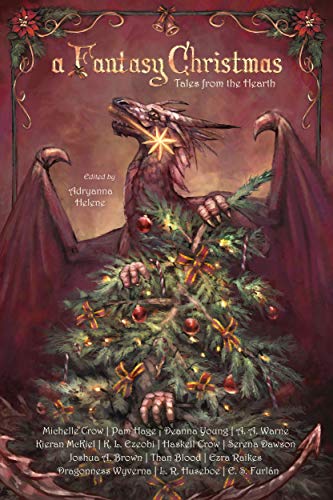
A Fantasy Christmas: Tales From the Hearth
Adryanna Monteiro, Michelle Crow, et al.
4.7
• 13 UNFORGETTABLE CHRISTMAS TALES IN ONE MASSIVE FANTASY COLLECTION *
Thirteen stories - Thirteen authors
One theme - A Fantasy Christmas.
Christmas magic just got more enchanting
with this collection of fantasy festive tales...
FEATURING IN THIS ANTHOLOGY:
Michelle Crow- It's Beginning to Look a Lot Like Tinkmas When a little bit of Christmas magic pulls Tink through space-time continuum, she finds herself face-to-face with two surprises: a curious little human and a tray of cookies.
Deanna Young- Late To The Party Chaz's magical career goes up in smoke when the Christmas Eve delivery of a baby dragon goes terribly wrong.
A. A. Warne - FrankenSanta Three naughty Elves accidently kill Santa Clause and decide to bring him back to life. Unfortunately, he's not quite the same.
Kieran McKiel- The Snows At Asrum Far away from home, Alecksi fights a war he doesn't understand against a foe he doesn't know. As the holy of Rodestuo approaches, he decides he's had enough.
Haskell Crow- Sugared Dates Adventure is just on the other side of the river, during the festival of lights. Aelynn wished he could celebrate, but he couldn't miss this opportunity while everyone was destracted.
Serena Dawson- A Heist, A Prophecy, And A Unicorn When Taramon hears his arch enemy has taken a forbidden prophecy, he decides to steal it back; and with the help of his unicorn, rescue his brother from execution.
Joshua A. Brown- For All Of Clainsmyth The light of the winter solstice holiday Clainsmyth, has been sent by the gods as a gift to the mortals. But dark forces want her magic, and so the race is on.
R. A. Darlinge- The Faded Photograph Nicholai doesn't celebrate Christmas. Will sharing the pain of the past bring healing and Christmas spirit into his life?
Ezra Raikes- Half Chained, Entirely Unwanted A brother and sister flee from prison, and take a chance to survive in the nightmarish forest beyond.
Dragonness Wyverna- A Solstice Promise Four friends combine their holiday tradition to celebrate the arrival of winter solstice.
L. R. Huseboe- Folly Amongst The Holly Invited to Christmas dinner with her best friend, Myrah is confronted with the magical truth about herself and the world around her.
And stories from:
E. S. Fulr�n- Hunter's Moon
Pam Hage- Winter Gardens
…
Cover unavailable
22
Haskell Himself
Gary Seigel
4.7
Meet Haskell Hodge. At sixteen he’s already garnered some fame as a former child actor and star of a popular cereal commercial. But that doesn’t do much for him when he’s dumped at his aunt’s house in the suburbs of Los Angeles to face an assortment of neighborhood bullies.
He thinks he might be gay. In fact, he could be the only gay person in the valley, maybe on the entire planet. Even if he does manage to find a boyfriend, their relationship would have to be secret and invisible.
After all it’s 1966. And though Time Magazine claims the sexual revolution is in full swing, the freedoms straight people are enjoying don’t seem to apply to everyone. And as much as Haskell attempts to hide his true self, carefully navigating the tricky and risky terrain of being queer, he’s still taunted and teased relentlessly.
Rather than give in to the irrationality of this hate, Haskell fights back, eventually finding an unlikely outlet to vent his frustration and angst—playing a bully in a screen test for a major motion picture. If he plays his cards right, it could catapult him into Hollywood stardom.
Of course, like most things in life, it comes with a heavy price Haskell’s not certain he’s willing to pay.
…
Cover unavailable
23
Drum Method for Band & Orchestra: Book 1
Haskell W. Harr
4.7
(Drum Instruction). This best-selling instruction book was developed to meet the needs of the young student aspiring to become a drummer in the school band or orchestra. Book 1 spans 52 lessons and includes: rudiments • study of various time figures found in every day playing • care and maintenance of drums • and more. Building on the lessons from Book 1, Book 2 covers 26 rudiments and contains additional studies in various time signatures utilizing the 26 rudiments.
…
Cover unavailable
24
The Fun of Programming
Jeremy Gibbons, Oege de Moor
4.7
In this textbook, leading researchers give tutorial expositions on the current state of the art of functional programming. The text is suitable for an undergraduate course immediately following an introduction to functional programming, and also for self-study. All new concepts are illustrated by plentiful examples, as well as exercises. A website gives access to accompanying software.
Cover unavailable
25
The Story of Daniel the Prophet
Stephen N Haskell
4.7
Cover unavailable
26
Leading Ladies: The 50 Most Unforgettable Actresses of the Studio Era
Turner Classic Movies, Molly Haskell, et al.
4.7
Sexy, stylish, and powerful: from Lillian Gish to Katharine Hepburn, Myrna Loy to Lauren Bacall, Jean Harlow to Grace Kelly, each of the legendary actresses featured in this book left an indelible mark in film history and define roles for women on and off the screen. Produced by Turner Classic Movies, this playful and definitive guide to fifty unforgettable actresses mirrors the focus of a month-long film festival on the channel. The life and accomplishments of each actress is celebrated in an insightful career overview, accompanied by an annotated list of essential films, filmographies, behind the scenes facts and style notes, Academy Award wins and nominations. Full of delightful trivia, film stills, posters, and glamorous photos, Leading Ladies pays tribute to the most charismatic, enduring, and elegant actresses of the silver screen.
…
Cover unavailable
27
An Invitation to Applied Category Theory: Seven Sketches in Compositionality
Brendan Fong
4.7
Category theory is unmatched in its ability to organize and layer abstractions and to find commonalities between structures of all sorts. No longer the exclusive preserve of pure mathematicians, it is now proving itself to be a powerful tool in science, informatics, and industry. By facilitating communication between communities and building rigorous bridges between disparate worlds, applied category theory has the potential to be a major organizing force. This book offers a self-contained tour of applied category theory. Each chapter follows a single thread motivated by a real-world application and discussed with category-theoretic tools. We see data migration as an adjoint functor, electrical circuits in terms of monoidal categories and operads, and collaborative design via enriched profunctors. All the relevant category theory, from simple to sophisticated, is introduced in an accessible way with many examples and exercises, making this an ideal guide even for those without experience of university-level mathematics.
…
Cover unavailable
28
The Haskell School of Music: From Signals to Symphonies
Paul Hudak and Donya Quick
4.7
This is a textbook on functional programming in Haskell, with a strong focus on computer music concepts and applications. The book describes Euterpea, a computer music library developed in Haskell, that allows programming computer music applications both at the note level and the signal level. The book also teaches functional programming in Haskell from scratch.
Cover unavailable
29
О Haskell по-человечески
About how to live like a human
4.7
Представляю вашему вниманию книгу о прекрасном и удивительном языке Haskell. Я написал её специально для тех, кто плохо представляет себе, что такое функциональное программирование и с чем его едят, но хочет наконец разобраться.
Почему эта книга появилась Потому что меня достало. Почти все книги по Haskell начинаются с демонстрации быстрой сортировки, и ещё что-то там про факториал... Эта книга не такая. Я расскажу о Haskell человеческим языком, с минимумом академизма, с действительно понятными примерами и по возможности лаконично.
Зачем это нужно Функциональное программирование — это своеобразное гетто посреди мирового мегаполиса программной разработки. Доля функциональных языков на рынке очень мала, а программистов, использующих эти языки, считают либо недосягаемой элитой, либо асоциальными идиотами. Цель этой книги — разрушить такое представление.
…
Cover unavailable
30
Haskell Data Analysis Cookbook
Nishant Shukla
4.7
Explore intuitive data analysis techniques and powerful machine learning methods using over 130 practical recipes.
This book will take you on a voyage through all the steps involved in data analysis. It provides synergy between Haskell and data modeling, consisting of carefully chosen examples featuring some of the most popular machine learning techniques.
You will begin with how to obtain and clean data from various sources. You will then learn how to use various data structures such as trees and graphs. The meat of data analysis occurs in the topics involving statistical techniques, parallelism, concurrency, and machine learning algorithms, along with various examples of visualizing and exporting results. By the end of the book, you will be empowered with techniques to maximize your potential when using Haskell for data analysis.
…
Cover unavailable
31
Haskell Design Patterns
Ryan Lemmer
4.7
Cover unavailable
32
From Simple IO to Monad Transformers
J Adrian Zimme
4.7
Cover unavailable
33
Foundations of Mathematical Logic
Haskell B. Curry
4.7
Written by a pioneer of mathematical logic, this comprehensive graduate-level text explores the constructive theory of first-order predicate calculus. It covers formal methods — including algorithms and epitheory — and offers a brief treatment of Markov's approach to algorithms. It also explains elementary facts about lattices and similar algebraic systems. 1963 edition.
Cover unavailable
34
Purely Functional Data Structures
Chris Okasaki
4.7
Most books on data structures assume an imperative language such as C or C++. However, data structures for these languages do not always translate well to functional languages such as Standard ML, Haskell, or Scheme. This book describes data structures from the point of view of functional languages, with examples, and presents design techniques that allow programmers to develop their own functional data structures. The author includes both classical data structures, such as red-black trees and binomial queues, and a host of new data structures developed exclusively for functional languages. All source code is given in Standard ML and Haskell, and most of the programs are easily adaptable to other functional languages. This handy reference for professional programmers working with functional languages can also be used as a tutorial or for self-study.
…
Cover unavailable
35
Haskell of Gettysburg: His Life and Civil War Papers
Frank L. Byrne and Andrew T. Weaver
4.7
All students of the Civil War are indebted to Frank Haskell for his classic description of the battle of Gettysburg. A lieutenant on the staff of John Gibbon, Haskell stood at the focus of the Confederate assault on July 3, 1863. He wrote of the battle in a letter to his brother. When it came to light after the war it became and remains probably the most read and repeated account of Civil War combat written by a participant. It captures wholly the terrible fascination that the Civil War--and Gettysburg--holds for all Americans. Haskell wrote other letters (thirty-one in this collection) and attained the rank of colonel before he was killed at Cold Harbor on June 3, 1864.This 1989 paperback reprinting of the 1970 edition contains a new preface by Frank L. Byrne.
…
Cover unavailable
36
Gettysburg: Two Eyewitness Accounts
Frank Haskell and William C. Oates
4.7
In this unique series the Civil War comes vividly to life. Here an eyewitness accounts--many available for the first time in decades--by generals, journalist, and ordinary foot soldiers, both blue and gray, who relive the conflict in all its terrible glory. Each volume brings you a human perspective on the war--its most decisive battles, its most remarkable personalities. Gettysburg: Two Eyewitness Accounts is American history at its finest--and a reading experience you will never forget. In some ways it epitomized the entire war: three hot days in July filled with missed opportunities, great courage, inconsistent leadership, and horrific, relentless carnage. In rare volume we see the battle from both sides, as experienced by two very different combatants, one Union and the other Confederate. From Little Round Top to Devil's Den to Pickett's Charge, Lt. Frank A. Haskell and Col. William C. Oates, one in a meticulous hindsight and the other still feverish with war, re-create three days that changed American history. Here are the momentous decisions of Lee, Longstreet, and Meade. Here are the fatal maneuverings of the forces in the field. And here, in descriptions unmatched in Civil War literature, is all the heartbreak and triumph of Gettysburg.
…
Cover unavailable
37
Haskell in Depth
Vitaly Bragilevsky
4.7
Turn the corner from “Haskell student” to “Haskell developer.” Haskell in Depth explores the important language features and programming skills you’ll need to build production-quality software using Haskell. And along the way, you’ll pick up some interesting insights into why Haskell looks and works the way it does. Get ready to go deep!
Cover unavailable
38
An Introduction to Functional Programming Systems Using Haskell
Antony J. T. Davie
4.6
Functional programming, is a style of programming that has become increasingly popular during the past few years. Applicative programs have the advantage of being almost immediately expressible as functional descriptions; they can be proved correct and transformed through the referential transparency property. This book presents the basic concepts of functional programming, using the language HASKELL for examples. The author incorporates a discussion of lambda calculus and its relationship with HASKELL, exploring the implications for parallelism.
…
Cover unavailable
39
Milton Avery
Barbara Haskell
4.6
Reproductions of the American artist's seascapes, landscapes, and portraits are accompanied by a discussion of his life and work. Published on the occasion of the exhibition "Milton Avery" at the Whitney Museum of American Art. Approximately 58 color reproductions and a greater number of black-and-white reproductions.
Cover unavailable
40
Developing Web Apps with Haskell and Yesod: Safety-Driven Web Development
Michael Snoyman
4.6
This fast-moving guide introduces web application development with Haskell and Yesod, a potent language/framework combination that supports high-performing applications that are modular, type-safe, and concise. Fully updated for Yesod 1.4, this second edition shows you how Yesod handles widgets, forms, persistence, and RESTful content. Author Michael Snoyman also introduces various Haskell tools to supplement your basic knowledge of the language.
By the time you finish this book, you'll create a production-quality web application with Yesod's ready-to-use scaffolding. You'll also examine several real-world examples, including a blog, a wiki, a JSON web service, and a Sphinx search server.
Build a simple application to learn Yesod's foundation datatype and Web Application Interface (WAI) Output HTML, CSS, and Javascript with Shakespearean template languages Get an indepth look at Yesod's core monads for producing cleaner, more modular code Probe Yesod's internal workings: learn the request handling process for a typical application Build forms on top of widgets by implementing the yesod-form declarative API Learn how Yesod and Haskell handle persistence and session data Serve an HTML page and a machine-friendly JSON page from the same URL
…
Cover unavailable
41
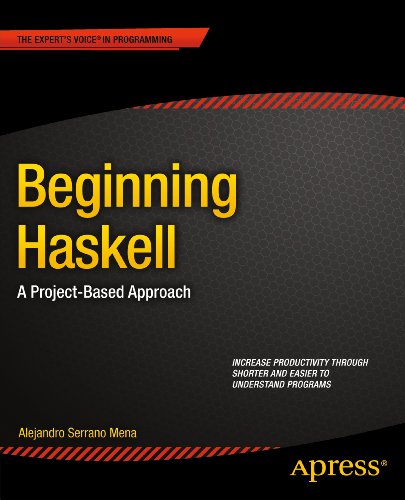
Beginning Haskell: A Project-Based Approach
Alejandro Serrano Men
4.6
'Beginning Haskell' provides a broad-based introduction to the Haskell language, its libraries and environment, and to the functional programming paradigm that is fast growing in importance in the software industry.
Cover unavailable
42
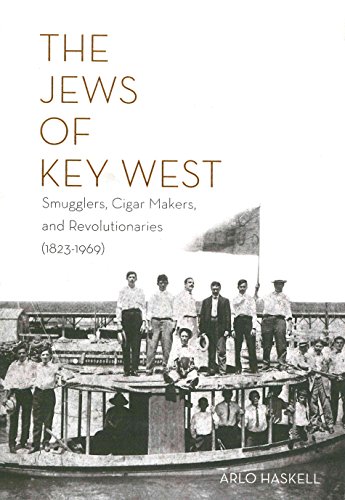
The Jews of Key West: Smugglers, Cigar Makers, and Revolutionaries (1823-1969)
Arlo Haskell
4.6
Literary Nonfiction. Jewish Studies. History. 2017 Florida Book Award, Phillip and Dana Zimmerman Gold Medal for Florida Nonfiction. The dramatic story of South Florida's oldest Jewish community and a major addition to the history of this unique island city.
Long before Miami was on the map, Key West had Florida's largest economy and an influential Jewish community. Jews who settled here as peddlers in the nineteenth century joined a bilingual and progressive city that became the launching pad for the revolution that toppled the Spanish Empire in Cuba. As dozens of local Jews collaborated with Jos� Mart�'s rebels, they built relationships that supported thriving Jewish communities in Key West and Havana at the turn of the twentieth century. During the 1920s, when anti-immigration hysteria swept the United States, Key West's Jews resisted the immigration quotas and established "the southernmost terminal of the Jewish underground," smuggling Jewish aliens in small boats across the Florida Straits to safety in Key West. But these and other Jewish exploits were kept secret as Ku Klux Klan leaders infiltrated local law enforcement and government. Many Jews left Key West during the 1930s and their stories were ignored or forgotten by the mythmakers that reinvented Key West as a tourist mecca.
Arlo Haskell's THE JEWS OF KEY WEST is an entertaining and authoritative account of Key West's Jewish community from 1823-1969. Illustrated with over 100 images, it brings to life a history that had long been forgotten.
…
Cover unavailable
43
Developing Web Applications with Haskell and Yesod
Michael Snoyman
4.6
This fast-moving guide introduces web application development with Haskell and Yesod, a potent language/framework combination that supports high-performing applications that are modular, type-safe, and concise. You’ll work with several samples to explore the way Yesod handles widgets, forms, persistence, and RESTful content. You also get an introduction to various Haskell tools to supplement your basic knowledge of the language.
By the time you finish this book, you’ll create a production-quality web application with Yesod’s ready-to-use scaffolding. You’ll also examine several real-world examples, including a blog, a wiki, a JSON web service, and a Sphinx search server.
Build a simple application to learn Yesod’s foundation datatype and Web Application Interface (WAI) Use Shakespearean template languages for HTML, CSS, and Javascript output Produce cleaner, more modular code by learning how Yesod monads interact Implement the yesod-form declarative API to build forms on top of widgets Learn how Yesod and Haskell store session data and handle persistence Use techniques to serve an HTML page and a machine-friendly JSON page from the same URL Create reusable components for several applications with Yesod subsites
…
Cover unavailable
44
Mum's the Word (Ellie Haskell Mystery, #3)
Dorothy Cannell
4.6
Several pounds heavier--and gaining--blissful mother-to-be Ellie Haskell knows her days as a thin woman are numbered. Time to let out her clothes, put up her feet, and prepare to enjoy the next nine months as pampered wife. But the first pangs of morning sickness have barely passed when Ellie's handsome husband, Ben, is invited to compete for membership in the world's most exclusive secret society of chefs, and suddenly Ellie finds herself whisked off to America--to Mud Creek, Illinois--and to a gothic mansion straight out of a horror movie.
…
Cover unavailable
45
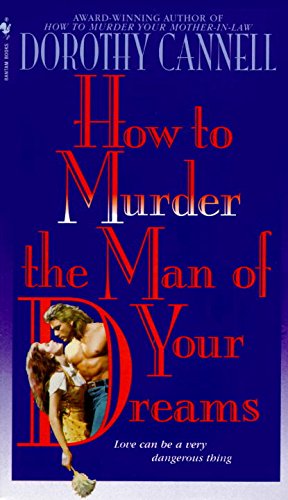
How to Murder the Man of Your Dreams (Ellie Haskell Mystery, #6)
Dorothy Cannell
4.6
Life has been hectic in the Haskell household, but a lull in household affairs should allow Ellie time enough to slim down, pick up the threads of her interior design career, and kick the romance reading habit that keeps here from her marital boudoir. But murder rears its ugly head when the body of the Chitterdon Fells librarian found sprawled among the library stacks. The only positive side of the untimely demise is the arrival of male romance cover model, Karisma, come to town to strut his tawny mane and sun-bronzed muscles for a fund-raiser in the late lamented librarian's name. But when hunky Karisma's entourage is poisoned, and the spouse of a Library League newlywed dies mysteriously, fantasy life careens toward a collision course with reality. Ellie must find a clever killer before she meets a sinister and decidedly unromantic fate! Fizzing with deadly wit and outrageous secrets, How To Murder The Man Of Your Dreams is a mystery to swoon for.
…
Cover unavailable
46
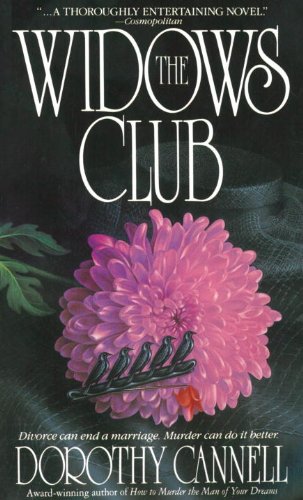
The Widow's Club (Ellie Haskell Mystery, #2)
Dorothy Cannell
4.6
Ellie Haskell, nee Simons, newly wed and thin in charming Chitterton Fells, helps Misses Hyacinth and Primrose Tramwell of Flowers Detection Agency investigate the high number of dead unfaithful husbands. To uncover the mastermind in the social Widows Club, Ellie poses as an unhappy and betrayed wife.
Cover unavailable
47
Charles Demuth
Barbara Haskell
4.6
In this definitive study, Barbara Haskell, curator at the Whitney Museum of American Art, chronicles the life and accomplishments of the masterful colorist and pivotal figure in the avant-garde circles that introduced modern art and literature to America. 170 illustrations.
Cover unavailable
48
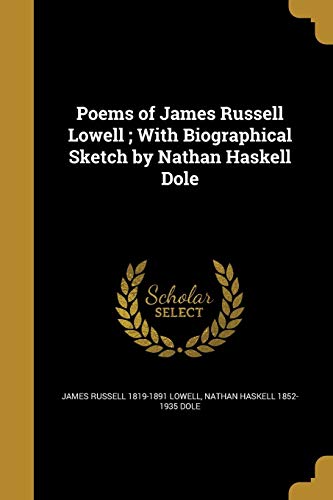
Poems of James Russell Lowell With biographical sketch by Nathan Haskell Dole
James Russell Lowell
4.6
This book was converted from its physical edition to the digital format by a community of volunteers. You may find it for free on the web. Purchase of the Kindle edition includes wireless delivery.
Cover unavailable
49
From Reverence to Rape: The Treatment of Women in the Movies
Molly Haskell
4.6
For this edition of her classic study of the feminine role in film, Molly Haskell has written a new chapter addressing recent developments in the appearance and perception of women in the movies.
"An incisive, exceedingly thoughtful look at the distorted lens through which Hollywood has historically viewed women. It is a valuable contribution not just of film criticism but to a society in which the vital role of women is just beginning to emerge."—Christian Science Monitor
"Haskell is interested in women—how they are used in movies, how they use movies, and how the parts they play function as projections and verifications of our myths about women's lot and woman's psyche and even, lately, women's lib."—Jane Kramer, Village Voice
"In examining the goddesses worshipped by an entire nation, Molly Haskell reveals a good deal about our national character and our most cherished sexual myths. . . . Concerned with the deeply ingrained belief of women's inferiority, she analyzes movies as a social product as well as a social arbiter, and she effectively demonstrates how women are encouraged to impose limitations on themselves by fashioning those selves after flickering shadows in a darkened auditorium—sexual creatures who possess neither ability nor ambition beyond their bodies. . . . Both as an examination of film and as sociology, From Reverence to Rape is excellent."—Harriet Kriegel, The Nation


 1
1 Recommended by Santiago Basulto.