We've ranked the best github books using expert recommendations, sales data, and millions of reader ratings. At Shortform, we know books. Our book guides are the best in the world. Learn why.
Cover unavailable
1
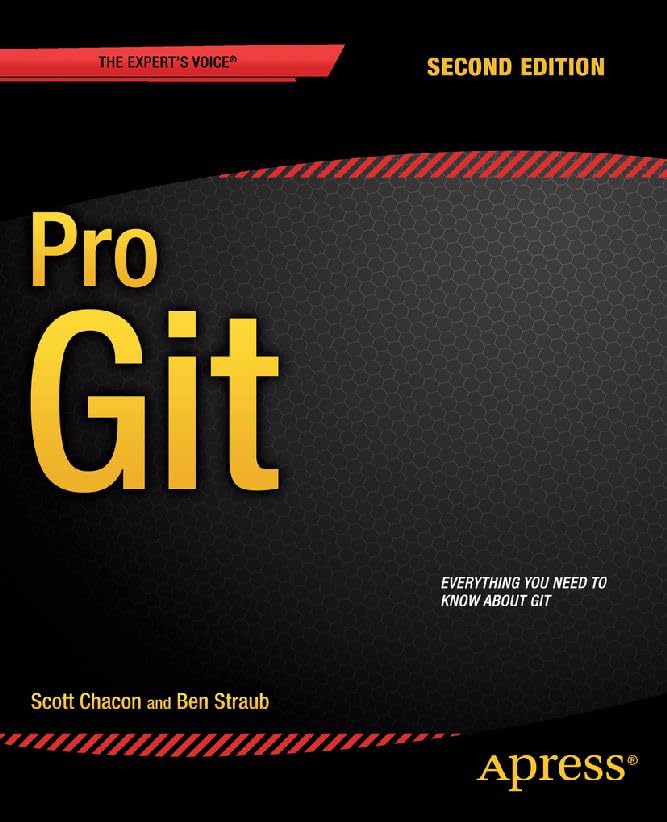
Pro Git
Scott Chacon
5.0
Git is the version control system developed by Linus Torvalds for Linux kernel development. It took the open source world by storm since its inception in 2005, and is used by small development shops and giants like Google, Red Hat, and IBM, and of course many open source projects.
A book by Git experts to turn you into a Git expert. Introduces the world of distributed version control Shows how to build a Git development workflow.
…
Cover unavailable
2
Version Control with Git
Jon Loeliger
4.9
Version Control with Git takes you step-by-step through ways to track, merge, and manage software projects, using this highly flexible, open source version control system.
Git permits virtually an infinite variety of methods for development and collaboration. Created by Linus Torvalds to manage development of the Linux kernel, it's become the principal tool for distributed version control. But Git's flexibility also means that some users don't understand how to use it to their best advantage. Version Control with Git offers tutorials on the most effective ways to use it, as well as friendly yet rigorous advice to help you navigate Git's many functions.
With this book, you will:
Learn how to use Git in several real-world development environments Gain insight into Git's common-use cases, initial tasks, and basic functions Understand how to use Git for both centralized and distributed version control Use Git to manage patches, diffs, merges, and conflicts Acquire advanced techniques such as rebasing, hooks, and ways to handle submodules (subprojects) Learn how to use Git with Subversion Git has earned the respect of developers around the world. Find out how you can benefit from this amazing tool with Version Control with Git.
…
Cover unavailable
3
Git Pocket Guide
Richard E. Silverman
4.8
This pocket guide is the perfect on-the-job companion to Git, the distributed version control system. It provides a compact, readable introduction to Git for new users, as well as a reference to common commands and procedures for those of you with Git experience.
Written for Git version 1.8.2, this handy task-oriented guide is organized around the basic version control functions you need, such as making commits, fixing mistakes, merging, and searching history.
Examine the state of your project at earlier points in time Learn the basics of creating and making changes to a repository Create branches so many people can work on a project simultaneously Merge branches and reconcile the changes among them Clone an existing repository and share changes with push/pull commands Examine and change your repository’s commit history Access remote repositories, using different network protocols Get recipes for accomplishing a variety of common tasks
…
Cover unavailable
4
Professional Git
Brent Laster
4.8
Leverage the power of Git to smooth out the development cycleProfessional Git takes a professional approach to learning this massively popular software development tool, and provides an up-to-date guide for new users. More than just a development manual, this book helps you get into the Git mindset--extensive discussion of corollaries to traditional systems as well as considerations unique to Git help you draw upon existing skills while looking out--and planning for--the differences. Connected labs and exercises are interspersed at key points to reinforce important concepts and deepen your understanding, and a focus on the practical goes beyond technical tutorials to help you integrate the Git model into your real-world workflow.
Git greatly simplifies the software development cycle, enabling users to create, use, and switch between versions as easily as you switch between files. This book shows you how to harness that power and flexibility to streamline your development cycle.
Understand the basic Git model and overall workflow Learn the Git versions of common source management concepts and commands Track changes, work with branches, and take advantage of Git's full functionality Avoid trip-ups and missteps common to new users Git works with the most popular software development tools and is used by almost all of the major technology companies. More than 40 percent of software developers use it as their primary source control tool, and that number continues to grow; the ability to work effectively with Git is rapidly approaching must-have status, and Professional Git is the comprehensive guide you need to get up to speed quickly.
…
Cover unavailable
5
Ry's Git Tutorial
Ryan Hodso
4.8
Git is a free version control system known for its speed, reliability, and non-linear development model. Its popularity among open-source developers makes Git a necessary tool for professional programmers, but it can also do wonders for your personal coding workflow. You’ll be able to experiment with new ideas, radically refactor existing code, and efficiently share changes with other developers—all without the slightest worry towards breaking your project.
This comprehensive guide will walk you through the entire Git library, writing code and executing commands every step of the way. You'll create commits, revert snapshots, navigate branches, communicate with remote repositories, and experience core Git concepts first-hand.
…
Cover unavailable
6
Learn Git in a Month of Lunches
Rick Umali
4.8
Summary
Learn Git in a Month of Lunches introduces the discipline of source code control using Git. Whether you're a newbie or a busy pro moving your source control to Git, you'll appreciate how this book concentrates on the components of Git you'll use every day. In easy-to-follow lessons designed to take an hour or less, you'll dig into Git's distributed collaboration model, along with core concepts like committing, branching, and merging.
Purchase of the print book includes a free eBook in PDF, Kindle, and ePub formats from Manning Publications.
About the Book
Git is the source code control system preferred by modern development teams. Its decentralized architecture and lightning-fast branching let you concentrate on your code instead of tedious version control tasks. At first, Git may seem like a sprawling beast. Fortunately, to get started you just need to master a few essential techniques. Read on!
Learn Git in a Month of Lunches introduces the discipline of source code control using Git. Helpful for both newbies who have never used source control and busy pros, this book concentrates on the components of Git you'll use every day. In easy-to-follow lessons that take an hour or less, you'll dig into Git's distributed collaboration model, along with core concepts like committing, branching, and merging. This book is a road map to the commands and processes you need to be instantly productive.
What's Inside Start from square one—no experience requiredThe most frequently used Git commandsMental models that show how Git worksLearn when and how to branch code About the Reader
No previous experience with Git or other source control systems is required.
About the Author
Rick Umali uses Git daily as a developer and is a skilled consultant, trainer, and speaker.
Table of Contents
Before you begin An overview of Git and version control Getting oriented with Git Making and using a Git repository Using Git with a GUI Tracking and updating files in Git Committing parts of changes The time machine that is Git Taking a fork in the road Merging branches Cloning Collaborating with remotes Pushing your changes Keeping in sync Software archaeology Understanding git rebase Workflows and branching conventions Working with GitHub Third-party tools and Git Sharpening your Git
…
Cover unavailable
7
Our Bucket List Adventures: A Journal for Couples
Ashley Kusi
4.8
Our Bucket List Adventures: A Journal for Couples
Our Bucket List Adventures is the perfect bucket list journal for couples. With this couples journal, you'll be able to:
1. Create 50 unique bucket list goals you want to accomplish together. More specifically, there is an activity section for couples to brainstorm before choosing their bucket list items together.
2. Journal your bucket list adventure memories together.
3. Have a place to put your favorite photo that captures your bucket list goal experience, or scrapbook memorabilia.
Also, there are 5 engaging questions for couples to use as conversation starters after journaling their bucket list experience to reflect on the time shared.
What's more, this bucket list book for couples includes:
-- 115 Bucket list ideas for couples.
-- A Bucket List Finder page to record the bucket list goals you have accomplished as you journal, for easy reference and better organization.
-- 50 Bucket List Journaling pages to write your bucket list experiences.
Lastly, this bucket list journal makes a great engagement, relationship anniversary, bridal shower, Christmas, birthdays, holidays, or wedding gift for your friends and family.
Now:
Get your copy of this unique bucket list journal for couples today.
…
Cover unavailable
8
Git in Practice: Includes 66 Techniques
Mike McQuaid
4.8
No matter how good a team is, it will flounder if it can't keep the code organized, which can be especially tough when members of the team are spread across multiple locations and time zones. Git is a version control system designed to facilitate work among distributed teams. Git's decentralized architecture, in which each developer maintains a copy of the repository, means that branching and committing are lightning fast. Git manages complex code merges, task switching, and project branching with minimal ceremony, allowing the focus to be on the code instead of tedious administrative tasks.
"Git in Practice" is a collection of tested techniques that will optimize the way teams manage their development projects. It begins with a brief refresher of the core version control concepts needed when using Git and moves on to the high-value features readers may not have explored yet. Then, it digs into cookbook-style techniques like history visualization and advanced branching--each presented in a problem-solution-discussion format. Finally, the book shows readers how to use Git to its full potential through configuration, team workflows, submodules, and using GitHub pull requests effectively.
Purchase of the print book includes a free eBook in PDF, Kindle, and ePub formats from Manning Publications.
…
Cover unavailable
9
Git Version Control Cookbook: Leverage version control to transform your development workflow and boost productivity, 2nd Edition
Kenneth Geisshirt, Emanuele Zattin, et al.
4.7
This practical guide contains a wide variety of recipes, taking you through all the topics you need to know about to fully utilize the most advanced features of the Git system. If you are a software developer or a build and release engineer who uses Git in your daily work and want to take your Git knowledge to the next level, then this book is for you. To understand and follow the recipes included in this book, basic knowledge of Git command-line code is mandatory.
…
Cover unavailable
10
Git for Humans (A Book Apart #17)
David Demaree
4.7
"Git’s model of version control makes it indispensable for collaborating on digital projects of all stripes. Get situated with Git as David Demaree guides you through the command-line workflow, the nuances of repositories and branches, the elements of a solid commit message, and more. Pick up common version-tracking tasks, along with advice on trickier scenarios. You’ll learn how to put Git to work for you—and work better with your team." - Mandy Brown
…
Recommended by Jason Santa Maria.
Cover unavailable
11
Pragmatic Version Control Using Git
Travis Swicegood
4.7
There's a change in the air. High-profile projects such as the Linux Kernel, Mozilla, Gnome, and Ruby on Rails are now using Distributed Version Control Systems (DVCS) instead of the old stand-bys of CVS or Subversion.
Git is a modern, fast, DVCS. But understanding how it fits into your development can be a daunting task without an introduction to the new concepts. Whether you're just starting out as a professional programmer or are an old hand, this book will get you started using Git in this new distributed world.
Whether you're making the switch from a traditional centralized version control system or are a new programmer just getting started, this book prepares you to start using Git in your everyday programming.
Pragmatic Version Control Using Git starts with an overview of version control systems, and shows how being distributed enables you to work more efficiently in our increasingly mobile society. It then progresses through the basics necessary to get started using Git.
You'll get a thorough overview of how to take advantage of Git. By the time you finish this book you'll have a firm grounding in how to use Git, both by yourself and as part of a team.
Learn how to use how to use Git to protect all the pieces of your project Work collaboratively in a distributed environment Learn how to use Git's cheap branches to streamline your development Install and administer a Git server to share your repository
…
Cover unavailable
12
Flask Web Development: Developing Web Applications with Python
Miguel Grinberg
4.7
Take full creative control of your web applications with Flask, the Python-based microframework. With the second edition of this hands-on book, you'll learn Flask from the ground up by developing a complete, real-world application created by author Miguel Grinberg. This refreshed edition accounts for important technology changes that have occurred in the past three years.
Explore the framework's core functionality, and learn how to extend applications with advanced web techniques such as database migrations and an application programming interface. The first part of each chapter provides you with reference and background for the topic in question, while the second part guides you through a hands-on implementation.
If you have Python experience, you're ready to take advantage of the creative freedom Flask provides. Three sections include:
A thorough introduction to Flask: explore web application development basics with Flask and an application structure appropriate for medium and large applications
Building Flasky: learn how to build an open source blogging application step-by-step by reusing templates, paginating item lists, and working with rich text
Going the last mile: dive into unit testing strategies, performance analysis techniques, and deployment options for your Flask application
…
Cover unavailable
13
Gray Hat Hacking: The Ethical Hacker's Handbook
Allen Harper, Daniel Regalado, et al.
4.7
Up-to-date strategies for thwarting the latest, most insidious network attacks
This fully updated, industry-standard security resource shows how to fortify computer networks by learning and effectively applying ethical hacking techniques. Based on critical topics that the authors teach at major security conferences and colleges, the book features actionable planning and analysis methods as well as practical steps for identifying and combating both targeted and opportunistic attacks.
Gray Hat Hacking: The Ethical Hacker's Handbook, Fifth Edition, clearly explains the enemy's devious weapons, skills, and tactics and offers field-tested remedies, case studies, and interesting labs. You will get complete coverage of penetration testing, vulnerability discovery, malware analysis, reverse engineering, and Internet of Things security. State-of-the-art mobile exploits, ransomware, and legal issues are thoroughly explained.
- Fully revised content--features 13 brand-new chapters - Includes current techniques to analyze and block ransomware - Written by a team of computer security experts
…
Cover unavailable
14
The Self-Taught Programmer: The Definitive Guide to Programming Professionally
Cory Althoff
4.7
I am a self-taught programmer. After a year of self-study, I learned to program well enough to land a job as a software engineer II at eBay. Once I got there, I realized I was severely under-prepared. I was overwhelmed by the amount of things I needed to know but hadn't learned yet. My journey learning to program, and my experience at my first job as a software engineer were the inspiration for this book.
This book is not just about learning to program; although you will learn to code. If you want to program professionally, it is not enough to learn to code; that is why, in addition to helping you learn to program, I also cover the rest of the things you need to know to program professionally that classes and books don't teach you. "The Self-taught Programmer" is a roadmap, a guide to take you from writing your first Python program, to passing your first technical interview. I divided the book into five sections:
1. Start to program in Python 3 and build your first program.
2. Learn Object-oriented programming and create a powerful Python program to get you hooked.
3. Learn to use tools like Git, Bash, and regular expressions. Then use your new coding skills to build a web scraper.
4. Study Computer Science fundamentals like data structures and algorithms.
5. Finish with best coding practices, tips for working with a team, and advice on landing a programming job.
You CAN learn to program professionally. The path is there. Will you take it?
…
Cover unavailable
15
Deep Learning with TensorFlow 2 and Keras: Regression, ConvNets, GANs, RNNs, NLP, and more with TensorFlow 2 and the Keras API, 2nd Edition
Antonio Gulli, Amita Kapoor, et al.
4.7
Cover unavailable
16
Pragmatic Guide to Git
Travis Swicegood
4.7
Need to learn how to wrap your head around Git, but don't need a lot of hand holding? Grab this book if you're new to Git, not to the world of programming. Git tasks displayed on two-page spreads provide all the context you need, without the extra fluff.
Get up to speed on Git right now with Pragmatic Guide to Git. Task-oriented two-page spreads get you up and running with minimal fuss. Each left-hand page dives into the underlying implementation for each task. The right-hand page contains commands that focus on the task at hand, and cross references to other tasks that are related. You'll find what you need fast.
Git is rapidly becoming the de-facto standard for the open source community. Its excellent merging capabilities, coupled with its speed and relative ease of use, make it an indispensable tool for any developer. New Git users will learn the basic tasks needed to work with Git every day, including working with remote repositories, dealing with branches and tags, exploring the history, and fixing problems when things go wrong. If you're already familiar with Git, this book will be your go-to reference for Git commands and best practices.
You won't find a more practical approach to learning Git than Pragmatic Guide to Git.
…
Cover unavailable
17
Data Analysis Using Regression and Multilevel/Hierarchical Models
Andrew Gelman, Jennifer Hill
4.7
Data Analysis Using Regression and Multilevel/Hierarchical Models is a comprehensive manual for the applied researcher who wants to perform data analysis using linear and nonlinear regression and multilevel models. The book introduces a wide variety of models, whilst at the same time instructing the reader in how to fit these models using available software packages. The book illustrates the concepts by working through scores of real data examples that have arisen from the authors' own applied research, with programming codes provided for each one. Topics covered include causal inference, including regression, poststratification, matching, regression discontinuity, and instrumental variables, as well as multilevel logistic regression and missing-data imputation. Practical tips regarding building, fitting, and understanding are provided throughout. Author resource page: http: //www.stat.columbia.edu/ gelman/arm/
…
Cover unavailable
18
Practical SQL: A Beginner's Guide to Storytelling with Data
Anthony DeBarros
4.7
Practical SQL is an approachable and fast-paced guide to SQL (Structured Query Language), the standard programming language for defining, organizing, and exploring data in relational databases. The book focuses on using SQL to find the story your data tells, with the popular open-source database PostgreSQL and the pgAdmin interface as its primary tools.
You'll first cover the fundamentals of databases and the SQL language, then build skills by analyzing data from the U.S. Census and other federal and state government agencies. With exercises and real-world examples in each chapter, this book will teach even those who have never programmed before all the tools necessary to build powerful databases and access information quickly and efficiently.
You'll learn how to: •Create databases and related tables using your own data •Define the right data types for your information •Aggregate, sort, and filter data to find patterns •Use basic math and advanced statistical functions •Identify errors in data and clean them up •Import and export data using delimited text files •Write queries for geographic information systems (GIS) •Create advanced queries and automate tasks
Learning SQL doesn't have to be dry and complicated. Practical SQL delivers clear examples with an easy-to-follow approach to teach you the tools you need to build and manage your own databases.
This book uses PostgreSQL, but the SQL syntax is applicable to many database applications, including Microsoft SQL Server and MySQL.
…
Cover unavailable
19
Practical Statistics for Data Scientists: 50 Essential Concepts
Peter Bruce and Andrew Bruce
4.7
Statistical methods are a key part of of data science, yet very few data scientists have any formal statistics training. Courses and books on basic statistics rarely cover the topic from a data science perspective. This practical guide explains how to apply various statistical methods to data science, tells you how to avoid their misuse, and gives you advice on what's important and what's not.
Many data science resources incorporate statistical methods but lack a deeper statistical perspective. If you're familiar with the R programming language, and have some exposure to statistics, this quick reference bridges the gap in an accessible, readable format.
With this book, you'll learn:
Why exploratory data analysis is a key preliminary step in data science How random sampling can reduce bias and yield a higher quality dataset, even with big data How the principles of experimental design yield definitive answers to questions How to use regression to estimate outcomes and detect anomalies Key classification techniques for predicting which categories a record belongs to Statistical machine learning methods that "learn" from data Unsupervised learning methods for extracting meaning from unlabeled data
…
Cover unavailable
20
Deep Learning Cookbook: Practical Recipes to Get Started Quickly
Douwe Osinga
4.7
Deep learning doesn't have to be intimidating. Until recently, this machine-learning method required years of study, but with frameworks such as Keras and Tensorflow, software engineers without a background in machine learning can quickly enter the field. With the recipes in this cookbook, you'll learn how to solve deep-learning problems for classifying and generating text, images, and music.
Each chapter consists of several recipes needed to complete a single project, such as training a music recommending system. Author Douwe Osinga also provides a chapter with half a dozen techniques to help you if you're stuck. Examples are written in Python with code available on GitHub as a set of Python notebooks.
You'll learn how to:
Create applications that will serve real users Use word embeddings to calculate text similarity Build a movie recommender system based on Wikipedia links Learn how AIs see the world by visualizing their internal state Build a model to suggest emojis for pieces of text Reuse pretrained networks to build an inverse image search service Compare how GANs, autoencoders and LSTMs generate icons Detect music styles and index song collections
…
Cover unavailable
21
Git from the bottom up
Gerard Baker
4.7
Cover unavailable
22
Get Programming with Node.js
Jonathan Wexler
4.7
Get Programming with Node.js teaches you to write server-side code in JavaScript using Node.js. In 34 fast-paced, fun, and practical lessons, you'll discover how to extend your existing JavaScript skills to write back-end code for your web applications. After setting up the perfect developer environment, you'll get straight into developing your first app using Express.js, a lightweight MVC-style web framework. You'll learn all-important security and authentication features, as well as database tasks. When your basic app is completed, you'll add extra functionality like chat before deploying the finished product. Thanks to the easy-to-digest examples and exercises, you'll be coding with Node.js like a pro in no time!
…
Cover unavailable
23
Jump Start Git: Take Control of Your Code and Assets
Shaumik Daityari
4.7
Get a Jump Start on version control with Git today!
Most engineers we meet prefer Git over other distributed version control systems.
These systems let you store different versions of project files and directories, so you can roll back to an earlier one if something goes wrong. And since they're distributed, they smooth the path for dev team collaboration.
But what is it about Git that makes it mission-critical on so many web projects?
Spend just one weekend with this hands-on tutorial, and you'll know the answer.
Understand Git's core philosophy. Get started with Git: install it, learn the basic commands, and set up your first project. Work with Git as part of a collaborative team. Use Git's debugging tools for maximum debug efficiency. Take control with Git's advanced features: reflog, rebase, stash, and more. Use Git with cloud-based Git repository host services like Github and Bitbucket. See how Git's used effectively on large open-source projects. Git was created by Linus Torvalds, who invented Linux, so it comes with the best credentials. What are you waiting for? Get a jump start on Git today.
…
Cover unavailable
24
Mining the Social Web: Analyzing Data from Facebook, Twitter, LinkedIn, and Other Social Media Sites
Matthew A. Russell
4.7
Want to tap the tremendous amount of valuable social data in Facebook, Twitter, LinkedIn, and Google+? This refreshed edition helps you discover who’s making connections with social media, what they’re talking about, and where they’re located. You’ll learn how to combine social web data, analysis techniques, and visualization to find what you’ve been looking for in the social haystack—as well as useful information you didn’t know existed.
Each standalone chapter introduces techniques for mining data in different areas of the social Web, including blogs and email. All you need to get started is a programming background and a willingness to learn basic Python tools.
Get a straightforward synopsis of the social web landscape Use adaptable scripts on GitHub to harvest data from social network APIs such as Twitter, Facebook, LinkedIn, and Google+ Learn how to employ easy-to-use Python tools to slice and dice the data you collect Explore social connections in microformats with the XHTML Friends Network Apply advanced mining techniques such as TF-IDF, cosine similarity, collocation analysis, document summarization, and clique detection Build interactive visualizations with web technologies based upon HTML5 and JavaScript toolkits "A rich, compact, useful, practical introduction to a galaxy of tools, techniques, and theories for exploring structured and unstructured data." --Alex Martelli, Senior Staff Engineer, Google
…
Cover unavailable
25
Beginning Git and Github: A Comprehensive Guide to Version Control, Project Management, and Teamwork for the New Developer
Mariot Tsitoara
4.6
Learn the fundamentals of version control through step-by-step tutorials that will teach you the ins-and-outs of Git. This book is your complete guide to how Git and GitHub work in a professional team environment.
Divided into three parts - Version Control, Project Management and Teamwork - this book reveals what waits for you in the real world and how to resolve the problems you may run into. Once past the basics of Git, you'll see how to manage a software project, and finally how to utilize Git and GithHub to work effectively as a team.
You'll examine how to plan, follow and execute a project with GitHub, and then apply those concepts to real-world situations. Workaround the pitfalls that most programmers fall into when driving a project with Git by using proven tactics to avoid them. You will also be taught the easiest and quickest ways to resolve merge conflicts.
A lot of modern books on Git don't go into depth about non-technical topics. Beginning Git and GitHub will help you cover all the bases right at the start of your career.
What You'll Learn
Review basic and advanced concepts of Git Apply Project Management skills using GitHub Solve conflicts or, ideally, avoid them altogether Use advanced concepts for a more boosted workflow
Who This book Is For
New developers, developers that have never worked in a team environment before, developers with basic knowledge of Git or GitHub, or anyone who works with text documents.
…
Cover unavailable
26
Git for Teams: A User-Centered Approach to Creating Efficient Workflows in Git
Emma Jane Hogbin Westby
4.6
You can do more with Git than just build software. This practical guide delivers a unique people-first approach to version control that also explains how using Git as a focal point can help your team work better together. You'll learn how to plan and pursue a Git workflow that not only ensures that you accomplish project goals, but also fits the immediate needs and future growth of your team.
The first part of the book on structuring workflow is useful for project managers, technical team leads, and CTOs. The second part provides hands-on exercises to help developers gain a better understanding of Git commands.
Explore the dynamics of team building Walk through the process of creating and deploying software with Git Structure workflow to influence the way your team collaborates Learn a useful process for conducting code reviews Set up a shared repository and identify specific team members as contributors, consumers, or maintainers Know the why behind the Git commands your teammates use Use branching strategies to separate different approaches to your project Examine popular collaboration platforms: GitHub, Bitbucket, and GitLab
…
Cover unavailable
27
Pandas for Everyone: Python Data Analysis
Daniel Y. Chen
4.6
The Hands-On, Example-Rich Introduction to Pandas Data Analysis in Python Today, analysts must manage data characterized by extraordinary variety, velocity, and volume. Using the open source Pandas library, you can use Python to rapidly automate and perform virtually any data analysis task, no matter how large or complex. Pandas can help you ensure the veracity of your data, visualize it for effective decision-making, and reliably reproduce analyses across multiple datasets. Pandas for Everyone brings together practical knowledge and insight for solving real problems with Pandas, even if you're new to Python data analysis. Daniel Y. Chen introduces key concepts through simple but practical examples, incrementally building on them to solve more difficult, real-world problems. Chen gives you a jumpstart on using Pandas with a realistic dataset and covers combining datasets, handling missing data, and structuring datasets for easier analysis and visualization. He demonstrates powerful data cleaning techniques, from basic string manipulation to applying functions simultaneously across dataframes. Once your data is ready, Chen guides you through fitting models for prediction, clustering, inference, and exploration. He provides tips on performance and scalability, and introduces you to the wider Python data analysis ecosystem. Work with DataFrames and Series, and import or export data Create plots with matplotlib, seaborn, and pandas Combine datasets and handle missing data Reshape, tidy, and clean datasets so they're easier to work with Convert data types and manipulate text strings Apply functions to scale data manipulations Aggregate, transform, and filter large datasets with groupby Leverage Pandas' advanced date and time capabilities Fit linear models using statsmodels and scikit-learn libraries Use generalized linear modeling to fit models with different response variables Compare multiple models to select the "best" Regularize to overcome overfitting and improve performance Use clustering in unsupervised machine learning
…
Cover unavailable
28
GitLab Quick Start Guide: Migrate to GitLab for all your repository management solutions
Adam O'Grady
4.6
Cover unavailable
29
Reproducible Research with R and Rstudio
Christopher Gandrud
4.6
Bringing together computational research tools in one accessible source, Reproducible Research with R and RStudio guides you in creating dynamic and highly reproducible research. Suitable for researchers in any quantitative empirical discipline, it presents practical tools for data collection, data analysis, and the presentation of results.
With straightforward examples, the book takes you through a reproducible research workflow, showing you how to use:
R for dynamic data gathering and automated results presentation knitr for combining statistical analysis and results into one document LaTeX for creating PDF articles and slide shows, and Markdown and HTML for presenting results on the web Cloud storage and versioning services that can store data, code, and presentation files; save previous versions of the files; and make the information widely available Unix-like shell programs for compiling large projects and converting documents from one markup language to another RStudio to tightly integrate reproducible research tools in one place
Whether you re an advanced user or just getting started with tools such as R and LaTeX, this book saves you time searching for information and helps you successfully carry out computational research. It provides a practical reproducible research workflow that you can use to gather and analyze data as well as dynamically present results in print and on the web. Supplementary files used for the examples and a reproducible research project are available on the author s website.
…
Cover unavailable
30
Hands-On Machine Learning for Algorithmic Trading: Design and implement investment strategies based on smart algorithms that learn from data using Python
Stefan Jansen
4.6
Cover unavailable
31
Introducing Go: Build Reliable, Scalable Programs
Caleb Doxsey
4.6
Perfect for beginners familiar with programming basics, this hands-on guide provides an easy introduction to Go, the general-purpose programming language from Google. Author Caleb Doxsey covers the language’s core features with step-by-step instructions and exercises in each chapter to help you practice what you learn.
Go is a general-purpose programming language with a clean syntax and advanced features, including concurrency. This book provides the one-on-one support you need to get started with the language, with short, easily digestible chapters that build on one another. By the time you finish this book, not only will you be able to write real Go programs, you'll be ready to tackle advanced techniques.
* Jump into Go basics, including data types, variables, and control structures * Learn complex types, such as slices, functions, structs, and interfaces * Explore Go’s core library and learn how to create your own package * Write tests for your code by using the language’s go test program * Learn how to run programs concurrently with goroutines and channels * Get suggestions to help you master the craft of programming
…
Cover unavailable
32
Getting MEAN with Mongo, Express, Angular, and Node
Simon Holmes and Clive Herber
4.6
Summary
Getting MEAN, Second Edition teaches you how to develop full-stack web applications using the MEAN stack. This edition was completely revised and updated to cover MongoDB 4, Express 4, Angular 7, Node 11, and the latest mainstream release of JavaScript ES2015.
Purchase of the print book includes a free eBook in PDF, Kindle, and ePub formats from Manning Publications.
About the Technology
Juggling languages mid-application can radically slow down a full-stack web project. The MEAN stack—MongoDB, Express, Angular, and Node—uses JavaScript end to end, maximizing developer productivity and minimizing context switching. And you'll love the results! MEAN apps are fast, powerful, and beautiful.
About the Book
Getting MEAN, Second Edition teaches you how to develop full-stack web applications using the MEAN stack. Practical from the very beginning, the book helps you create a static site in Express and Node. Expanding on that solid foundation, you'll integrate a MongoDB database, build an API, and add an authentication system. Along the way, you'll get countless pro tips for building dynamic and responsive data-driven web applications!
What's inside
MongoDB 4, Express 4, Angular 7, and Node.js 11 MEAN stack architecture Mobile-ready web apps Best practices for efficiency and reusability
About the Reader
Readers should be comfortable with standard web application designs and ES2015-style JavaScript.
About the Author
Simon Holmes and Clive Harber are full-stack developers with decades of experience in JavaScript and other leading-edge web technologies.
Table of Contents
PART 1 - SETTING THE BASELINE Introducing full-stack development Designing a MEAN stack architecture PART 2 - BUILDING A NODE WEB APPLICATION Creating and setting up a MEAN project Building a static site with Node and Express Building a data model with MongoDB and Mongoose Writing a REST API: Exposing the MongoDB database to the application Consuming a REST API: Using an API from inside Express PART 3 - ADDING A DYNAMIC FRONT END WITH ANGULAR Creating an Angular application with TypeScript Building a single-page application with Angular: Foundations Building a single-page application with Angular: The next level PART 4 - MANAGING AUTHENTICATION AND USER SESSIONS Authenticating users, managing sessions, and securing APIs Using an authentication API in Angular applications
…
Cover unavailable
33
Mastering GitLab 12: Implement DevOps culture and repository management solutions
Joost Evertse
4.6
Cover unavailable
34
Machine Learning for OpenCV: Intelligent image processing with Python
Michael Beyele
4.6
Cover unavailable
35
Go Cookbook: Build modular, readable, and testable applications in Go
Aaron Torres
4.6
Bridge the gap between basic understanding of Go and use of its advanced features About This Book - Discover a number of recipes and approaches to develop modern back-end applications - Put to use the best practices to combine the recipes for sophisticated parallel tools - This book is based on Go 1.8, which is the latest version Who This Book Is For This book is for web developers, programmers, and enterprise developers. Basic knowledge of the Go language is assumed. Experience with back-end application development is not necessary, but may help understand the motivation behind some of the recipes. What You Will Learn - Test your application using advanced testing methodologies - Develop an awareness of application structures, interface design, and tooling - Create strategies for third-party packages, dependencies, and vendoring - Get to know tricks on treating data such as collections - Handle errors and cleanly pass them along to calling functions - Wrap dependencies in interfaces for ease of portability and testing - Explore reactive programming design patterns in Go In Detail Go (a.k.a. Golang) is a statically-typed programming language first developed at Google. It is derived from C with additional features such as garbage collection, type safety, dynamic-typing capabilities, additional built-in types, and a large standard library. This book takes off where basic tutorials on the language leave off. You can immediately put into practice some of the more advanced concepts and libraries offered by the language while avoiding some of the common mistakes for new Go developers. The book covers basic type and error handling. It explores applications that interact with users, such as websites, command-line tools, or via the file system. It demonstrates how to handle advanced topics such as parallelism, distributed systems, and performance tuning. Lastly, it finishes with reactive and serverless programming in Go. Style and approach This guide is a handy reference for developers to quickly look up Go development patterns. It is a companion to other resources and a reference that will be useful long after reading it through the first time. Each recipe includes working, simple, and tested code that can be used as a reference or foundation for your own applications.
…
Cover unavailable
36
Reproducible Research with R and R Studio
Christopher Gandrud
4.6
All the Tools for Gathering and Analyzing Data and Presenting Results
Reproducible Research with R and RStudio, Second Edition brings together the skills and tools needed for doing and presenting computational research. Using straightforward examples, the book takes you through an entire reproducible research workflow. This practical workflow enables you to gather and analyze data as well as dynamically present results in print and on the web.
New to the Second Edition
The rmarkdown package that allows you to create reproducible research documents in PDF, HTML, and Microsoft Word formats using the simple and intuitive Markdown syntax Improvements to RStudio's interface and capabilities, such as its new tools for handling R Markdown documents Expanded knitr R code chunk capabilities The kable function in the knitr package and the texreg package for dynamically creating tables to present your data and statistical results An improved discussion of file organization, enabling you to take full advantage of relative file paths so that your documents are more easily reproducible across computers and systems The dplyr, magrittr, and tidyr packages for fast data manipulation Numerous modifications to R syntax in user-created packages Changes to GitHub's and Dropbox's interfaces
Create Dynamic and Highly Reproducible Research
This updated book provides all the tools to combine your research with the presentation of your findings. It saves you time searching for information so that you can spend more time actually addressing your research questions. Supplementary files used for the examples and a reproducible research project are available on the author's website.
…
Cover unavailable
37
Introducing GitHub: A Non-Technical Guide
Peter Bell and Brent Beer
4.6
If you’re new to GitHub, this concise book shows you just what you need to get started and no more. It’s perfect for project and product managers, stakeholders, and other team members who want to collaborate on a development project—whether it’s to review and comment on work in progress or to contribute specific changes. It’s also great for developers just learning GitHub.
GitHub has rapidly become the default platform for software development, but it’s also ideal for other text-based documents, from contracts to screenplays. This hands-on book shows you how to use GitHub’s web interface to view projects and collaborate effectively with your team.
Learn how and why people use GitHub to collaborate View the status of a project—recent changes, outstanding work, and historic changes Create and edit files through GitHub without learning Git Suggest changes to projects you don’t have permission to edit directly Use tools like issues, pull requests, and branches to specify and collaborate on changes Create a new GitHub repository to control who has access to your project
…
Cover unavailable
38
Git: Version Control for Everyone
Ravishankar Somasundaram
4.6
The book follows a Blended Learning Approach (Learning through multiple modes: Readers learn theory to understand the concept and reinforce it by practically doing it). The new concepts are introduced using examples of common day to day activities for quick realization spread across topics. For the computer literate who want to leverage the advantage of maintaining multiple versions of files/folders to go back and forth in time with respect to the files content. For developers, administrators, analysts, architects and any others who want to perform a simultaneous, collaborative or work in parallel on the same set of files.
Errata for the book may be found at this URL: https://www.packtpub.com/books/conten...
…
Cover unavailable
39
Github for Dummies
Sarah Guthals and Phil Haack
4.6
Code collaboratively with GitHub
Once you've learned the basics of coding the next step is to start sharing your expertise, learning from other coding pros, or working as a collaborative member of development teams. GitHub is the go-to community for facilitating coding collaboration, and GitHub For Dummies is the next step on your journey as a developer.
Written by a GitHub engineer, this book is packed with insight on how GitHub works and how you can use it to become a more effective, efficient, and valuable member of any collaborative programming team.
Store and share your work online with GitHub Collaborate with others on your team or across the international coding community Embrace open-source values and processes Establish yourself as a valuable member of the GitHub community From setting up GitHub on your desktop and launching your first project to cloning repositories, finding useful apps on the marketplace, and improving workflow, GitHub For Dummies covers the essentials the novice programmer needs to enhance collaboration and teamwork with this industry-standard tool.
…
Cover unavailable
40
Game Physics Cookbook
Gabor Szauer
4.6
Discover over 100 easy-to-follow recipes to help you implement efficient game physics and collision detection in your games About This Book - Get a comprehensive coverage of techniques to create high performance collision detection in games - Learn the core mathematics concepts and physics involved in depicting collision detection for your games - Get a hands-on experience of building a rigid body physics engine Who This Book Is For This book is for beginner to intermediate game developers. You don't need to have a formal education in games-you can be a hobbyist or indie developer who started making games with Unity 3D. What You Will Learn - Implement fundamental maths so you can develop solid game physics - Use matrices to encode linear transformations - Know how to check geometric primitives for collisions - Build a Physics engine that can create realistic rigid body behavior - Understand advanced techniques, including the Separating Axis Theorem - Create physically accurate collision reactions - Explore spatial partitioning as an acceleration structure for collisions - Resolve rigid body collisions between primitive shapes In Detail Physics is really important for game programmers who want to add realism and functionality to their games. Collision detection in particular is a problem that affects all game developers, regardless of the platform, engine, or toolkit they use. This book will teach you the concepts and formulas behind collision detection. You will also be taught how to build a simple physics engine, where Rigid Body physics is the main focus, and learn about intersection algorithms for primitive shapes. You'll begin by building a strong foundation in mathematics that will be used throughout the book. We'll guide you through implementing 2D and 3D primitives and show you how to perform effective collision tests for them. We then pivot to one of the harder areas of game development-collision detection and resolution. Further on, you will learn what a Physics engine is, how to set up a game window, and how to implement rendering. We'll explore advanced physics topics such as constraint solving. You'll also find out how to implement a rudimentary physics engine, which you can use to build an Angry Birds type of game or a more advanced game. By the end of the book, you will have implemented all primitive and some advanced collision tests, and you will be able to read on geometry and linear Algebra formulas to take forward to your own games! Style and approach Gain the necessary skills needed to build a Physics engine for your games through practical recipes, in an easy-to-read manner. Every topic explained in the book has clear, easy to understand code accompanying it.
…
Cover unavailable
41
GitHub Essentials: Unleash the power of collaborative development workflows using GitHub, 2nd Edition
Achilleas Pipinellis
4.6
Cover unavailable
42
Github Essentials
Achilleas Pipinellis
4.6
Cover unavailable
43
Github
Chris Dawson and Ben Straub
4.6
You use GitHub all day long as a developer. Now learn how to use GitHub as a power user. Learn the ins and outs of the GitHub API using many of the most popular programming languages. Supercharge your development with command line shortcuts. Each chapter digs deep into an important technology from the GitHub ecosystem with examples to accelerate your usage of those features and programmatically automate your developer tools. Along the way, align yourself with the famed GitHub culture to streamline your developer workflow.
…
Cover unavailable
44
Git Recipes: A Problem-Solution Approach
Wlodzimierz Gajd
4.6
Cover unavailable
45
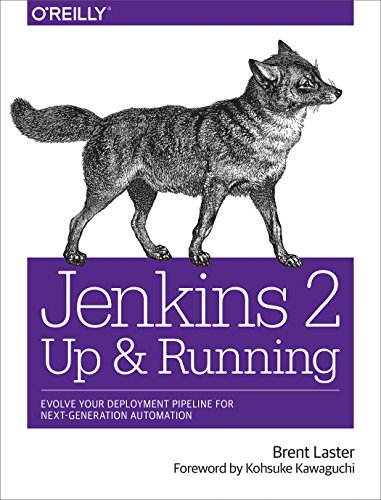
Jenkins 2: Up and Running: Evolve Your Deployment Pipeline for Next Generation Automation
Brent Laster
4.6
Design, implement, and execute continuous delivery pipelines with a level of flexibility, control, and ease of maintenance that was not possible with Jenkins before. With this practical book, build administrators, developers, testers, and other professionals will learn how the features in Jenkins 2 let you define pipelines as code, leverage integration with other key technologies, and create automated, reliable pipelines to simplify and accelerate your DevOps environments.
Author Brent Laster shows you how Jenkins 2 is significantly different from the more traditional, web-only versions of this popular open source automation platform. If you're familiar with Jenkins and want to take advantage of the new technologies to transform your legacy pipelines or build new modern, automated continuous delivery environments, this is your book.
Create continuous delivery pipelines as code with the Jenkins domain-specific language Get practical guidance on how to migrate existing jobs and pipelines Harness best practices and new methods for controlling access and security Explore the structure, implementation, and use of shared pipeline libraries Learn the differences between declarative syntax and scripted syntax Leverage new and existing project types in Jenkins Understand and use the new Blue Ocean graphical interface Take advantage of the capabilities of the underlying OS in your pipeline Integrate analysis tools, artifact management, and containers
…
Cover unavailable
46
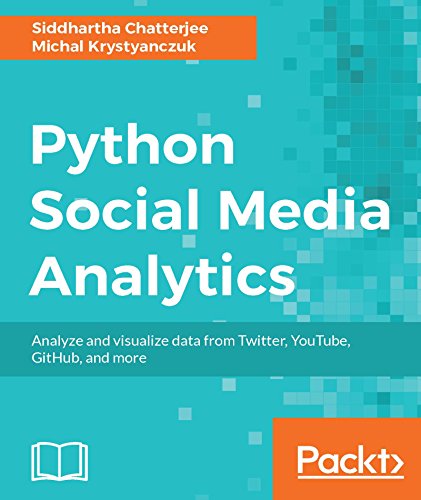
Python Social Media Analytics: Analyze and visualize data from Twitter, YouTube, GitHub, and more


 1
1