We've ranked the best england history books using expert recommendations, sales data, and millions of reader ratings. At Shortform, we know books. Our book guides are the best in the world. Learn why.
Cover unavailable
1
The Plantagenets: The Warrior Kings and Queens Who Made England
Dan Jones
5.0
The first Plantagenet king inherited a blood-soaked kingdom from the Normans and transformed it into an empire stretched at its peak from Scotland to Jerusalem. In this epic history, Dan Jones vividly resurrects this fierce and seductive royal dynasty and its mythic world.
We meet the captivating Eleanor of Aquitaine, twice queen and the most famous woman in Christendom; her son, Richard the Lionheart, who fought Saladin in the Third Crusade; and King John, a tyrant who was forced to sign Magna Carta, which formed the basis of our own Bill of Rights.
This is the era of chivalry, of Robin Hood and the Knights Templar, the Black Death, the founding of Parliament, the Black Prince, and the Hundred Year’s War. It will appeal as much to readers of Tudor history as to fans of 'Game of Thrones.
…
Cover unavailable
2
The Six Wives of Henry VIII
Alison Weir
5.0
Weir has tirelessly made her way through the entire labyrinth of Tudor history to tell the collective story of the six wives of Henry VIII--a vivid, full-blooded portrait of six very different women--in a work of sound and brilliant scholarship. Illustrations.
Cover unavailable
3
The Time Traveller's Guide to Medieval England: A Handbook for Visitors to the Fourteenth Century
Ian Mortimer
4.8
Imagine you could get into a time machine and travel back to the 14th century. This text sets out to explain what life was like in the most immediate way, through taking the reader to the Middle Ages, and showing everything from the horrors of leprosy and war to the ridiculous excesses of roasted larks and haute couture.
Cover unavailable
4
Wolf Hall
Hilary Mantel
4.8
Tudor England. Henry VIII is on the throne, but has no heir. Cardinal Wolsey is charged with securing his divorce. Into this atmosphere of distrust comes Thomas Cromwell - a man as ruthlessly ambitious in his wider politics as he is for himself.
His reforming agenda is carried out in the grip of a self-interested parliament and a king who fluctuates between romantic passions and murderous rages.
Recommended by Neera Tanden, Thomas Penn, and Vanora Bennett.
Hilary Mantel possesses an extraordinary historical imagination and her recreation of the world of the 1530s through the eyes of Thomas Cromwell is, I think, utterly convincing. [source]
Vanora Bennett
The Tudor monarchy has a big moment with England leaving the Church of Rome for love – that’s the moment every film and television writer is interested in. She turns it upside down. [source]
Cover unavailable
5
The Life of Elizabeth I
Alison Weir
4.7
NEW YORK TIMES BESTSELLER
Perhaps the most influential sovereign England has ever known, Queen Elizabeth I remained an extremely private person throughout her reign, keeping her own counsel and sharing secrets with no one--not even her closest, most trusted advisers. Now, in this brilliantly researched, fascinating new book, acclaimed biographer Alison Weir shares provocative new interpretations and fresh insights on this enigmatic figure.
Against a lavish backdrop of pageantry and passion, intrigue and war, Weir dispels the myths surrounding Elizabeth I and examines the contradictions of her character. Elizabeth I loved the Earl of Leicester, but did she conspire to murder his wife? She called herself the Virgin Queen, but how chaste was she through dozens of liaisons? She never married—was her choice to remain single tied to the chilling fate of her mother, Anne Boleyn? An enthralling epic that is also an amazingly intimate portrait, The Life of Elizabeth I is a mesmerizing, stunning reading experience.
…
Cover unavailable
6
The Lady in the Tower: The Fall of Anne Boleyn
Alison Weir
4.7
The imprisonment and execution of Queen Anne Boleyn, Henry VIII's second wife, in May 1536 was unprecedented in English history. It was sensational in its day, and has exerted endless fascination over the minds of historians, novelists, dramatists, poets, artists and film-makers ever since.
Anne was imprisoned in the Tower of London on 2 May 1536, and tried and found guilty of high treason on 15 May. Her supposed crimes included adultery with five men, one her own brother, and plotting the King's death.
Mystery surrounds the circumstances leading up to her arrest. Was it Henry VIII who, estranged from Anne, instructed Master Secretary Thomas Cromwell to fabricate evidence to get rid of her so that he could marry Jane Seymour? Or did Cromwell, for reasons of his own, construct a case against Anne and her faction, and then present compelling evidence before the King? Or was Anne, in fact, guilty as charged?
Never before has there been a book devoted entirely to Anne Boleyn's fall. Alison Weir has reassessed the evidence, demolished many romantic myths and popular misconceptions, and rewritten the story of Anne's fall, creating a richly researched and impressively detailed portrait of the dramatic last days of one of the most influential and important figures in English history.
…
Cover unavailable
7
Foundation: The History of England from Its Earliest Beginnings to the Tudors
Peter Ackroyd
4.7
Peter Ackroyd, whose work has always been underpinned by a profound interest in and understanding of England’s history, now tells the epic story of England itself.
In Foundation, the chronicler of London and of its river, the Thames, takes us from the primeval forests of England’s prehistory to the death, in 1509, of the first Tudor king, Henry VII. He guides us from the building of Stonehenge to the founding of the two great glories of medieval England: common law and the cathedrals. He shows us glimpses of the country’s most distant past—and Neolithic stirrup found in a grave, a Roman fort, a Saxon tomb, a medieval manor house—and describes in rich prose the successive waves of invaders who made England English, despite being themselves Roman, Viking, Saxon, or Norman French.
With his extraordinary skill for evoking time and place and his acute eye for the telling detail, Ackroyd recounts the story of warring kings, of civil strife, and foreign wars. But he also gives us a vivid sense of how England’s early people lived: the homes they built, the clothes the wore, the food they ate, even the jokes they told. All are brought vividly to life through the narrative mastery of one of Britain’s finest writers.
…
Cover unavailable
8
The Other Boleyn Girl (The Plantagenet and Tudor Novels, #9)
Philippa Gregory
4.7
This is an alternate cover edition of ISBN 9780743227445
Two sisters competing for the greatest prize: The love of a king
When Mary Boleyn comes to court as an innocent girl of fourteen, she catches the eye of Henry VIII. Dazzled, Mary falls in love with both her golden prince and her growing role as unofficial queen. However, she soon realises just how much she is a pawn in her family's ambitious plots as the king's interest begins to wane and she is forced to step aside for her best friend and rival: her sister, Anne. Then Mary knows that she must defy her family and her king and take fate into her own hands.
A rich and compelling novel of love, sex, ambition, and intrigue, The Other Boleyn Girl introduces a woman of extraordinary determination and desire who lived at the heart of the most exciting and glamourous court in Europe and survived by following her heart.
…
Cover unavailable
9
Eleanor of Aquitaine: A Life (World Leaders Past & Present)
Alison Weir
4.6
In this beautifully written biography, Alison Weir paints a vibrant portrait of a truly exceptional woman and provides new insights into her intimate world.
Renowned in her time for being the most beautiful woman in Europe, the wife of two kings and mother of three, Eleanor of Aquitaine was one of the great heroines of the Middle Ages. At a time when women were regarded as little more than chattel, Eleanor managed to defy convention as she exercised power in the political sphere and crucial influence over her husbands and sons.
Eleanor of Aquitaine lived a long life of many contrasts, of splendor and desolation, power and peril, and in this stunning narrative, Weir captures the woman--and the queen--in all her glory. With astonishing historic detail, mesmerizing pageantry, and irresistible accounts of royal scandal and intrigue, she recreates not only a remarkable personality but a magnificent past era.
…
Recommended by Nancy Goldstone.
Nancy Goldstone
This is one of Alison Weir’s best books. I think she has managed to teach history to more people than Oxford University, because her books are so well written and easy to follow. She is especially good at taking time to explain the world that she writes about, so the reader gets a real feel for what it was like to live in the middle ages. Her books emphasise the colour and pageantry of that era – what everyone wore, what their jewels were like. I love that kind of book. [source]
Cover unavailable
10
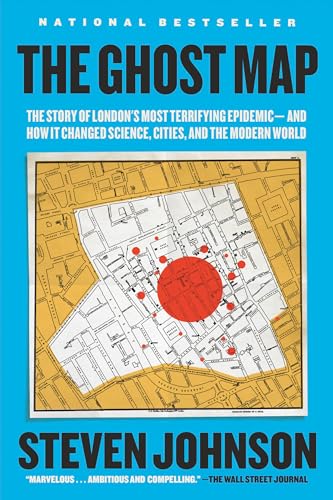
The Ghost Map: The Story of London's Most Terrifying Epidemic—and How It Changed Science, Cities, and the Modern World
Steven Johnson
4.6
From Steven Johnson, the dynamic thinker routinely compared to James Gleick, Dava Sobel, and Malcolm Gladwell, The Ghost Map is a riveting page-turner about a real-life historical hero, Dr. John Snow. It's the summer of 1854, and London is just emerging as one of the first modern cities in the world. But lacking the infrastructure—garbage removal, clean water, sewers—necessary to support its rapidly expanding population, the city has become the perfect breeding ground for a terrifying disease no one knows how to cure. As the cholera outbreak takes hold, a physician and a local curate are spurred to action—and ultimately solve the most pressing medical riddle of their time. In a triumph of multidisciplinary thinking, Johnson illuminates the intertwined histories and inter-connectedness of the spread of disease, contagion theory, the rise of cities, and the nature of scientific inquiry, offering both a riveting history and a powerful explanation of how it has shaped the world we live in.
…
Recommended by Alison Alvarez, Seth Mnookin, and Stephen Evans.
Alison Alvarez
I read the Ghost Map, a book about 1854 London Cholera outbreak. The outbreak was stopped because of a map created by Dr. John Snow. You can see hints of this map in some of our customer discovery tools because it was such an effective way of pinpointing a solution to a seemingly insurmountable problem. [source]
Seth Mnookin
The Ghost Map is a book that I oftentimes give to people to show them how cool and exciting and accessible and gripping stories about scientific discoveries can be. [source]
Stephen Evans
Johnson looks at London during a specific moment in time, August 1854, and focuses on a particular incident, an outbreak of cholera in Soho, in Central London. [source]
Cover unavailable
11
The White Queen (The Plantagenet and Tudor Novels, #2; The Cousins War #1)
Philippa Gregory
4.6
Brother turns on brother. The throne of England is at stake. The deadly Wars of the Roses have begun. . . ."They ruled England before the Tudors, and now internationally bestselling author Philippa Gregory brings the Plantagenets to life through the dramatic and intimate stories of the secret players: the indomitable women."Elizabeth Woodville, a woman of extraordinary beauty and ambition, secretly marries the newly crowned boy king. While she rises to the demands of her exalted position and fights for the success of her family, her two sons become the central figures in a famous unsolved mystery that has confounded historians for centuries: the lost princes in the Tower of London. Philippa Gregory brings the artistry and intellect of a master writer and storyteller to a new era in history and begins what is sure to be another bestselling classic series.
…
Cover unavailable
12
The Children of Henry VIII
Alison Weir
4.6
At his death in 1547, King Henry VIII left four heirs to the English throne: his only son, the nine-year-old Prince Edward; the Lady Mary, the adult daughter of his first wife, Catherine of Aragon; the Lady Elizabeth, the daughter of his second wife, Anne Boleyn, and his young great-niece, the Lady Jane Grey. These are the players in a royal drama that ultimate led to Elizabeth's ascension to the throne--one of the most spectacularly successful reigns in English history.
…
Cover unavailable
13
The Wars of the Roses
Alison Weir
4.6
Lancaster and York. For much of the fifteenth century, these two families were locked in battle for control of the English throne. Kings were murdered and deposed. Armies marched on London. Old noble names were ruined while rising dynasties seized power and lands. The war between the royal houses of Lancaster and York, the most complex in English history, profoundly altered the course of the monarchy. Alison Weir, one of the foremost authorities on British history, brings brilliantly to life both the war itself and the larger-tha-life figures who fought it on the great stage of England. The Wars of the Roses is history at its very best—swift and compelling, rich in character, pageantry, and drama, and vivid in its re-creation of an astonishing period of history.
Look for special features inside. Join the Circle for author chats and more. RandomHouseReadersCircle.com
…
Cover unavailable
14
The Wars of the Roses: The Fall of the Plantagenets and the Rise of the Tudors
Dan Jones
4.6
The author of the New York Times bestseller The Plantagenets chronicles the next chapter in British history—the historical backdrop for Game of Thrones
From the author of Magna Carta: The Birth of Liberty
The crown of England changed hands five times over the course of the fifteenth century, as two branches of the Plantagenet dynasty fought to the death for the right to rule. In this riveting follow-up to The Plantagenets, celebrated historian Dan Jones describes how the longest-reigning British royal family tore itself apart until it was finally replaced by the Tudors.
Some of the greatest heroes and villains of history were thrown together in these turbulent times, from Joan of Arc to Henry V, whose victory at Agincourt marked the high point of the medieval monarchy, and Richard III, who murdered his own nephews in a desperate bid to secure his stolen crown. This was a period when headstrong queens and consorts seized power and bent men to their will. With vivid descriptions of the battles of Towton and Bosworth, where the last Plantagenet king was slain, this dramatic narrative history revels in bedlam and intrigue. It also offers a long-overdue corrective to Tudor propaganda, dismantling their self-serving account of what they called the Wars of the Roses.
…
Cover unavailable
15
Henry VIII: The King and His Court
Alison Weir
4.6
Henry VIII, renowned for his command of power and celebrated for his intellect, presided over one of the most magnificent–and dangerous–courts in Renaissance Europe. Never before has a detailed, personal biography of this charismatic monarch been set against the cultural, social, and political background of his glittering court. Now Alison Weir, author of the finest royal chronicles of our time, brings to vibrant life the turbulent, complex figure of the King. Packed with colorful description, meticulous in historical detail, rich in pageantry, intrigue, passion, and luxury, Weir brilliantly renders King Henry VIII, his court, and the fascinating men and women who vied for its pleasures and rewards. The result is an absolutely spellbinding read.
…
Cover unavailable
16
The Wives of Henry VIII
Antonia Fraser
4.6
In a sweeping narrative, Fraser traces the cultural, familial and political roots of each of Henry's queens, pushes aside the stereotypes that have long defined them, and illuminates the complex character of each. The result is a superb work of history through which these six women become as memorable for their own achievements--and mistakes--as they have always been for their fateful link to Henry VIII. Illustrations.
…
Cover unavailable
17
A Great and Terrible King: Edward I and the Forging of Britain
Marc Morris
4.6
Edward I is familiar to millions as "Longshanks," conqueror of Scotland and nemesis of Sir William Wallace (in "Braveheart"). Yet this story forms only the final chapter of the king's action-packed life. Earlier, Edward had defeated and killed the famous Simon de Montfort in battle; travelled to the Holy Land; conquered Wales, extinguishing forever its native rulers and constructing a magnificent chain of castles. He raised the greatest armies of the Middle Ages and summoned the largest parliaments; notoriously, he expelled all the Jews from his kingdom.The longest-lived of England's medieval kings, he fathered fifteen children with his first wife, Eleanor of Castile, and, after her death, he erected the Eleanor Crosses—the grandest funeral monuments ever fashioned for an English monarch.
In this book, Marc Morris examines afresh the forces that drove Edward throughout his relentless career: his character, his Christian faith, and his sense of England's destiny—a sense shaped in particular by the tales of the legendary King Arthur. He also explores the competing reasons that led Edward's opponents (including Robert Bruce) to resist him.
The result is a sweeping story, immaculately researched yet compellingly told, and a vivid picture of medieval Britain at the moment when its future was decided.
…
Cover unavailable
18
The Lady of the Rivers (The Plantagenet and Tudor Novels, #1; Cousins War #3)
Philippa Gregory
4.5
Jacquetta, daughter of the Count of Luxembourg and kinswoman to half the royalty of Europe, was married to the great Englishman John, Duke of Bedford, uncle to Henry VI. Widowed at the age of 19, she took the extraordinary risk of marrying a gentleman of her household for love, and then carved out a new life for herself.
Cover unavailable
19
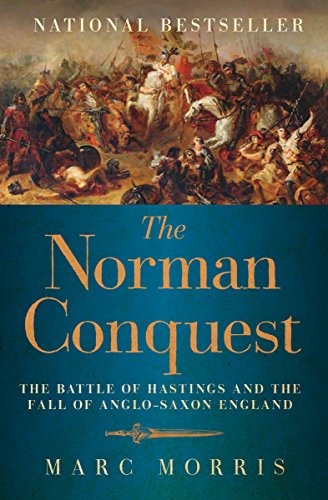
The Norman Conquest: The Battle of Hastings and the Fall of Anglo-Saxon England
Marc Morris
4.5
An upstart French duke who sets out to conquer the most powerful and unified kingdom in Christendom. An invasion force on a scale not seen since the days of the Romans. One of the bloodiest and most decisive battles ever fought.
This new history explains why the Norman Conquest was the most significant cultural and military episode in English history. Assessing the original evidence at every turn, Marc Morris goes beyond the familiar outline to explain why England was at once so powerful and yet so vulnerable to William the Conqueror s attack; why the Normans, in some respects less sophisticated, possessed the military cutting edge; how William s hopes of a united Anglo-Norman realm unraveled, dashed by English rebellions, Viking invasions, and the insatiable demands of his fellow conquerors."
…
Cover unavailable
20
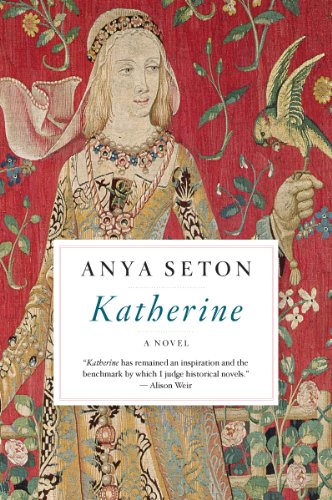
Katherine
Anya Seton, Philippa Gregory
4.5
This classic romance novel tells the true story of the love affair that changed history—that of Katherine Swynford and John of Gaunt, Duke of Lancaster, the ancestors of most of the British royal family. Set in the vibrant 14th century of Chaucer and the Black Death, the story features knights fighting in battle, serfs struggling in poverty, and the magnificent Plantagenets—Edward III, the Black Prince, and Richard II—who ruled despotically over a court rotten with intrigue. Within this era of danger and romance, John of Gaunt, the king’s son, falls passionately in love with the already married Katherine. Their well-documented affair and love persist through decades of war, adultery, murder, loneliness, and redemption. This epic novel of conflict, cruelty, and untamable love has become a classic since its first publication in 1954.
This is one of my all-time favourite historical novels; it’s absolutely inspirational. Every sentence is a joy. It was written in 1954 and is, of course, of its time – bodice rippers came later. But it’s written with such integrity, and I see it as a benchmark for historical novels. Anya Seton was an American author and she spent four years in Britain researching this novel. Given the sources available to her at the time, it’s brilliant. It has inspired so many people. In 2003 the BBC did a poll, ‘The Big Read’, of all-time favourite books, and Katherine came in the top 100. It’s never been out of print. [source]
Cover unavailable
21
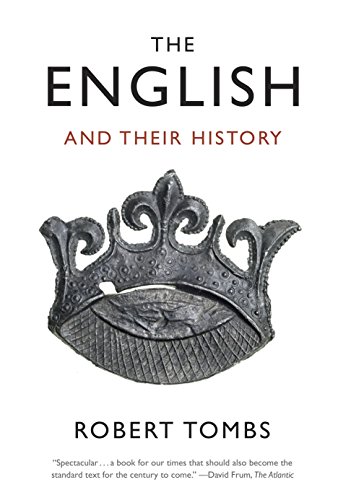
The English and their History
Robert Tombs
4.5
In The English and their History, the first full-length account to appear in one volume for many decades, Robert Tombs gives us the history of the English people, and of how the stories they have told about themselves have shaped them, from the prehistoric 'dreamtime' through to the present day.
If a nation is a group of people with a sense of kinship, a political identity and representative institutions, then the English have a claim to be the oldest nation in the world. They first came into existence as an idea, before they had a common ruler and before the country they lived in even had a name. They have lasted as a recognizable entity ever since, and their defining national institutions can be traced back to the earliest years of their history.
The English have come a long way from those precarious days of invasion and conquest, with many spectacular changes of fortune. Their political, economic and cultural contacts have left traces for good and ill across the world. This book describes their history and its meanings from their beginnings in the monasteries of Northumbria and the wetlands of Wessex to the cosmopolitan energy of today's England. Robert Tombs draws out important threads running through the story, including participatory government, language, law, religion, the land and the sea, and ever-changing relations with other peoples. Not the least of these connections are the ways the English have understood their own history, have argued about it, forgotten it, and yet been shaped by it. These diverse and sometimes conflicting understandings are an inherent part of their identity.
Rather to their surprise, as ties within the United Kingdom loosen, the English are suddenly beginning a new period in their long history. Especially at times of change, history can help us to think about the sort of people we are and wish to be. This book, the first single-volume work on this scale for more than half a century, and which incorporates a wealth of recent scholarship, presents a challenging modern account of this immense and continuing story, bringing out the strength and resilience of English government, the deep patterns of division, and yet also the persistent capacity to come together in the face of danger.
…
Cover unavailable
22
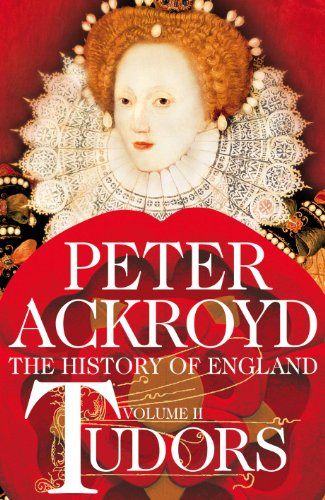
Tudors: The History of England from Henry VIII to Elizabeth I
Peter Ackroyd
4.4
Rich in detail and atmosphere and told in vivid prose, Tudors recounts the transformation of England from a settled Catholic country to a Protestant superpower. It is the story of Henry VIII's cataclysmic break with Rome, and his relentless pursuit of both the perfect wife and the perfect heir; of how the brief reign of the teenage king, Edward VI, gave way to the violent reimposition of Catholicism and the stench of bonfires under 'Bloody Mary'. It tells, too, of the long reign of Elizabeth I, which, though marked by civil strife, plots against the queen and even an invasion force, finally brought stability. Above all, however, it is the story of the English Reformation and the making of the Anglican Church. At the beginning of the sixteenth century, England was still largely feudal and looked to Rome for direction; at its end, it was a country where good governance was the duty of the state, not the church, and where men and women began to look to themselves for answers rather than to those who ruled them.
…
Cover unavailable
23
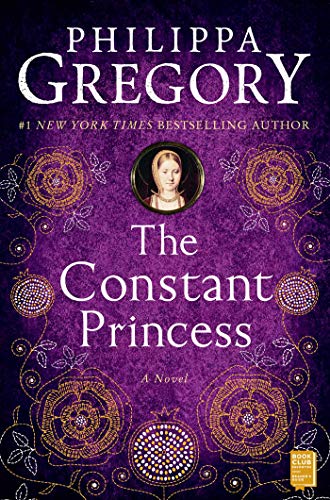
The Constant Princess (The Plantagenet and Tudor Novels, #6)
Philippa Gregory
4.4
Splendid and sumptuous historical novel from the internationally bestselling author, Philippa Gregory, telling of the early life of Katherine of Aragon.
We think of Katherine of Aragon as the barren wife of a notorious king; but behind this legacy lies a fascinating story.
Katherine of Aragon is born Catalina, the Spanish Infanta, to parents who are both rulers and warriors. Aged four, she is betrothed to Arthur, Prince of Wales, and is raised to be Queen of England. She is never in doubt that it is her destiny to rule that far-off, wet, cold land.
Her faith is tested when her prospective father-in-law greets her arrival in her new country with a great insult; Arthur seems little better than a boy; the food is strange and the customs coarse. Slowly she adapts to the first Tudor court, and life as Arthur’s wife grows ever more bearable.
But when the studious young man dies, she is left to make her own future: how can she now be queen, and found a dynasty? Only by marrying Arthur’s young brother, the sunny but spoilt Henry. His father and grandmother are against it; her powerful parents prove little use. Yet Katherine is her mother’s daughter and her fighting spirit is strong.
She will do anything to achieve her aim; even if it means telling the greatest lie, and holding to it.
…
Cover unavailable
24
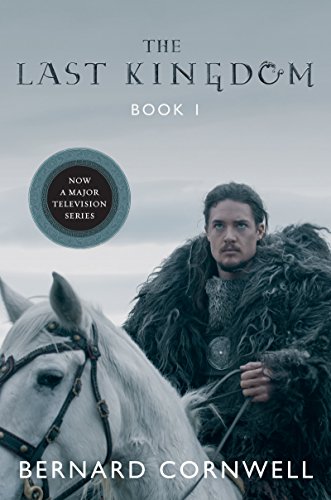
The Last Kingdom (The Saxon Stories, #1)
Bernard Cornwell
4.4
This is the story of the making of England in the 9th and 10th centuries, the years in which King Alfred the Great, his son and grandson defeated the Danish Vikings who had invaded and occupied three of England’s four kingdoms.
The story is seen through the eyes of Uhtred, a dispossessed nobleman, who is captured as a child by the Danes and then raised by them so that, by the time the Northmen begin their assault on Wessex (Alfred’s kingdom and the last territory in English hands) Uhtred almost thinks of himself as a Dane. He certainly has no love for Alfred, whom he considers a pious weakling and no match for Viking savagery, yet when Alfred unexpectedly defeats the Danes and the Danes themselves turn on Uhtred, he is finally forced to choose sides. By now he is a young man, in love, trained to fight and ready to take his place in the dreaded shield wall. Above all, though, he wishes to recover his father’s land, the enchanting fort of Bebbanburg by the wild northern sea.
This thrilling adventure—based on existing records of Bernard Cornwell’s ancestors—depicts a time when law and order were ripped violently apart by a pagan assault on Christian England, an assault that came very close to destroying England.
…
Cover unavailable
25
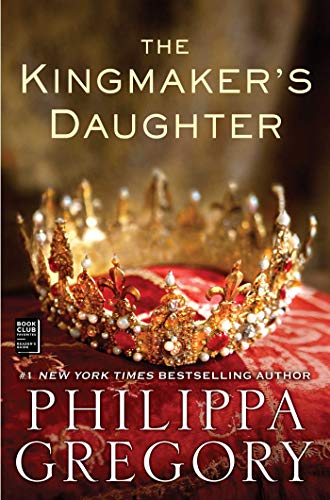
The Kingmaker's Daughter (The Cousins' War #4)
Philippa Gregory
4.4
In this New York Times bestseller that inspired the critically acclaimed Starz miniseries The White Queen, Philippa Gregory tells the tale of Anne Neville, a beautiful young woman who must navigate the treachery of the English court as her father, known as the Kingmaker, uses her and her sister as pawns in his political game.
The Kingmaker’s Daughter—Philippa Gregory’s first sister story since The Other Boleyn Girl—is the gripping tale of the daughters of the man known as the Kingmaker, Richard Neville, Earl of Warwick: the most powerful magnate in fifteenth-century England. Without a son and heir, he uses his daughters, Anne and Isabel, as pawns in his political games, and they grow up to be influential players in their own right.
At the court of Edward IV and his beautiful queen, Elizabeth Woodville, Anne grows from a delightful child to become ever more fearful and desperate when her father makes war on his former friends. Married at age fourteen, she is soon left widowed and fatherless, her mother in sanctuary and her sister married to the enemy. Anne manages her own escape by marrying Richard, Duke of Gloucester, but her choice will set her on a collision course with the overwhelming power of the royal family.
…
Cover unavailable
26
She-Wolves: The Women Who Ruled England Before Elizabeth
Helen Castor
4.4
When Edward VI - Henry VIII’s longed-for son - died in 1553, extraordinarily, there was no one left to claim the title King of England. For the first time, all the contenders for the crown were female.
In 1553, England was about to experience the ‘monstrous regiment’ - the unnatural rule - of a woman. But female rule in England also had a past. Four hundred years before Edward’s death, Matilda, daughter of Henry I and granddaughter of William the Conquerer, came tantalisingly close to securing her hold on the power of the crown. And between the 12th and the 15th centuries three more exceptional women - Eleanor of Aquitaine, Isabella of France, and Margaret of Anjou - discovered, as queens consort and dowager, how much was possible if the presumptions of male rule were not confronted so explicitly.
The stories of these women - told here in all their vivid humanity - illustrate the paradox which the female heirs to the Tudor throne had no choice but to negotiate. Man was the head of woman; and the king was the head of all. How, then, could a woman be king, how could royal power lie in female hands?
…
Cover unavailable
27
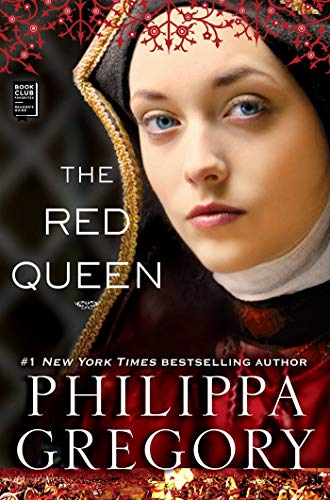
The Red Queen (The Plantagenet and Tudor Novels, #3; Cousins War #2)
Philippa Gregory
4.4
The second book in Philippa's stunning new trilogy, The Cousins' War, brings to life the story of Margaret Beaufort, a shadowy and mysterious character in the first book of the series - The White Queen - but who now takes centre stage in the bitter struggle of The War of the Roses.
The Red Queen tells the story of the child-bride of Edmund Tudor, who, although widowed in her early teens, uses her determination of character and wily plotting to infiltrate the house of York under the guise of loyal friend and servant, undermine the support for Richard III and ultimately ensure that her only son, Henry Tudor, triumphs as King of England.
Through collaboration with the dowager Queen Elizabeth Woodville, Margaret agrees to a betrothal between Henry and Elizabeth's daughter, thereby uniting the families and resolving the Cousins War once and for all by founding of the Tudor dynasty.
…
Cover unavailable
28
Bring Up the Bodies
Hilary Mantel
4.4
Alternate Cover Edition ISBN 0805090037 (ISBN13: 9780805090031)
The sequel to Hilary Mantel's international bestseller and Man Booker Prize winner Wolf Hall explores one of the most mystifying and frightening episodes in English history: the downfall of Anne Boleyn. ... Though he battled for years to marry her, Henry VIII has become disenchanted with the audacious Anne Boleyn. She has failed to give him a son, and her sharp intelligence and strong will have alienated his old friends and the noble families of England.
When the discarded Katherine, Henry's first wife, dies in exile from the court, Anne stands starkly exposed, the focus of gossip and malice, setting in motion a dramatic trial of the queen and her suitors for adultery and treason.
At a word from Henry, Thomas Cromwell is ready to bring her down. Over a few terrifying weeks, Anne is ensnared in a web of conspiracy, while the demure Jane Seymour stands waiting her turn for the poisoned wedding ring. But Anne and her powerful family will not yield without a ferocious struggle. To defeat the Boleyns, Cromwell must ally himself with his enemies. What price will he pay for Annie's head? (front flap)
…
Cover unavailable
29
The White Princess (The Plantagenet and Tudor Novels, #5; Cousins War #5)
Philippa Gregory, Bianca Amato, et al
4.4
Caught between loyalties, the mother of the Tudors must choose between the red rose and the white.
When Henry Tudor picks up the crown of England from the mud of Bosworth field, he knows he must marry the princess of the enemy house—Elizabeth of York—to unify a country divided by war for nearly two decades.
But his bride is still in love with his slain enemy, Richard III—and her mother and half of England dream of a missing heir, sent into the unknown by the White Queen. While the new monarchy can win power, it cannot win hearts in an England that plots for the triumphant return of the House of York.
Henry’s greatest fear is that somewhere a prince is waiting to invade and reclaim the throne. When a young man who would be king leads his army and invades England, Elizabeth has to choose between the new husband she is coming to love and the boy who claims to be her beloved lost brother: the rose of York come home at last.
…
Cover unavailable
30
Katherine Swynford: The Story of John of Gaunt and His Scandalous Duchess
Alison Weir
4.4
In her remarkable new book, Alison Weir recounts one of the greatest love stories of medieval England. It is the extraordinary tale of an exceptional woman, Katherine Swynford, who became first the mistress and later the wife of John of Gaunt, Duke of Lancaster.
Katherine Swynford’s charismatic lover was one of the most powerful princes of the 14th century, the effective ruler of England behind the throne of his father Edward III in his declining years, and during the minority of his nephew, Richard II. Katherine herself was enigmatic and intriguing, renowned for her beauty, and regarded by some as dangerous. Her existence was played out against the backdrop of court life at the height of the age of chivalry and she knew most of the great figures of the time — including her brother-in-law, Geoffrey Chaucer. She lived through much of the Hundred Years War, the Black Death, and the Peasants’ Revolt. She knew loss, adversity, and heartbreak, and she survived them all triumphantly. Although Katherine’s story provides unique insights into the life of a medieval woman, she was far from typical in that age. She was an important person in her own right, a woman who had remarkable opportunities, made her own choices, flouted convention, and took control of her own destiny — even of her own public image.
Weir brilliantly retrieves Katherine Swynford from the footnotes of history and gives her life and breath again. Perhaps the most dynastically important woman within the English monarchy, she was the mother of the Beauforts and through them the ancestress of the Yorkist kings, the Tudors, the Stuarts, and every other sovereign since — a legacy that has shaped the history of Britain.
…
Cover unavailable
31
The Boleyn Inheritance (The Plantagenet and Tudor Novels, #10)
Philippa Gregory
4.3
Three Women Who Share One Fate: The Boleyn Inheritance
Anne of Cleves She runs from her tiny country, her hateful mother, and her abusive brother to a throne whose last three occupants are dead. King Henry VIII, her new husband, instantly dislikes her. Without friends, family, or even an understanding of the language being spoken around her, she must literally save her neck in a court ruled by a deadly game of politics and the terror of an unpredictable and vengeful king. Her Boleyn Inheritance: accusations and false witnesses.
Katherine Howard She catches the king's eye within moments of arriving at court, setting in motion the dreadful machine of politics, intrigue, and treason that she does not understand. She only knows that she is beautiful, that men desire her, that she is young and in love -- but not with the diseased old man who made her queen, beds her night after night, and killed her cousin Anne. Her Boleyn Inheritance: the threat of the axe.
Jane Rochford She is the Boleyn girl whose testimony sent her husband and sister-in-law to their deaths. She is the trusted friend of two threatened queens, the perfectly loyal spy for her uncle, the Duke of Norfolk, and a canny survivor in the murderous court of a most dangerous king. Throughout Europe, her name is a byword for malice, jealousy, and twisted lust. Her Boleyn Inheritance: a fortune and a title, in exchange for her soul.
The Boleyn Inheritance is a novel drawn tight as a lute string about a court ruled by the gallows and three women whose positions brought them wealth, admiration, and power as well as deceit, betrayal, and terror. Once again, Philippa Gregory has brought a vanished world to life - the whisper of a silk skirt on a stone stair, the yellow glow of candlelight illuminating a hastily written note, the murmurs of the crowd gathering on Tower Green below the newly built scaffold. In The Boleyn Inheritance Gregory is at her intelligent and page-turning best.
…
Cover unavailable
32
The Sunne in Splendour
Sharon Kay Penman
4.3
A glorious novel of the controversial Richard III - a monarch betrayed in life by his allies and betrayed in death by history.
In this beautifully rendered modern classic, Sharon Kay Penman redeems Richard III - vilified as the bitter, twisted, scheming hunchback who murdered his nephews, the princes in the Tower - from his maligned place in history with a dazzling combination of research and storytelling.
Born into the treacherous courts of fifteenth-century England, in the midst of what history has called The War of the Roses, Richard was raised in the shadow of his charismatic brother, King Edward IV. Loyal to his friends and passionately in love with the one woman who was denied him, Richard emerges as a gifted man far more sinned against than sinning.
This magnificent retelling of his life is filled with all of the sights and sounds of battle, the customs and lore of the fifteenth century, the rigors of court politics, and the passions and prejudices of royalty.
…
Cover unavailable
33
Innocent Traitor
Alison Weir
4.3
BONUS: This edition contains an excerpt from Alison Weir's Mary Boleyn.
I am now a condemned traitor . . . I am to die when I have hardly begun to live.
Historical expertise marries page-turning fiction in Alison Weir’s enthralling debut novel, breathing new life into one of the most significant and tumultuous periods of the English monarchy. It is the story of Lady Jane Grey–“the Nine Days’ Queen” –a fifteen-year-old girl who unwittingly finds herself at the center of the religious and civil unrest that nearly toppled the fabled House of Tudor during the sixteenth century.
The child of a scheming father and a ruthless mother, for whom she is merely a pawn in a dynastic game with the highest stakes, Jane Grey was born during the harrowingly turbulent period between Anne Boleyn’s beheading and the demise of Jane’s infamous great-uncle, King Henry VIII. With the premature passing of Jane’ s adolescent cousin, and Henry’s successor, King Edward VI, comes a struggle for supremacy fueled by political machinations and lethal religious fervor.
Unabashedly honest and exceptionally intelligent, Jane possesses a sound strength of character beyond her years that equips her to weather the vicious storm. And though she has no ambitions to rule, preferring to immerse herself in books and religious studies, she is forced to accept the crown, and by so doing sets off a firestorm of intrigue, betrayal, and tragedy.
Alison Weir uses her unmatched skills as a historian to enliven the many dynamic characters of this majestic drama. Along with Lady Jane Grey, Weir vividly renders her devious parents; her much-loved nanny; the benevolent Queen Katherine Parr; Jane’s ambitious cousins; the Catholic “Bloody” Mary, who will stop at nothing to seize the throne; and the Protestant and future queen Elizabeth. Readers venture inside royal drawing rooms and bedchambers to witness the power-grabbing that swirls around Lady Jane Grey from the day of her birth to her unbearably poignant death. Innocent Traitor paints a complete and compelling portrait of this captivating young woman, a faithful servant of God whose short reign and brief life would make her a legend.
…
Cover unavailable
34
1066: The Year of the Conquest
David Howarth
4.3
Alternate cover for ISBN 10: 0140058508 / ISBN 13: 9780140058505
Everyone knows 1066 as the date of the Norman invasion and conquest of England. But how many of us can place that event in the context of the entire dramatic year in which it took place? From the death of Edward the Confessor in early January to the Christmas coronation of Duke William of Normandy, there is an almost uncanny symmetry, as well as a relentlessly exciting surge, of events leading to and from Hastings.
…
Cover unavailable
35
Rebellion: The History of England from James I to the Glorious Revolution
Peter Ackroyd
4.3
Peter Ackroyd has been praised as one of the greatest living chroniclers of Britain and its people. In Rebellion, he continues his dazzling account of the history of England, beginning with the progress south of the Scottish king, James VI, who on the death of Elizabeth I became the first Stuart king of England, and ending with the deposition and flight into exile of his grandson, James II.
The Stuart monarchy brought together the two nations of England and Scotland into one realm, albeit a realm still marked by political divisions that echo to this day. More importantly, perhaps, the Stuart era was marked by the cruel depredations of civil war, and the killing of a king. Shrewd and opinionated, James I was eloquent on matters as diverse as theology, witchcraft, and the abuses of tobacco, but his attitude to the English parliament sowed the seeds of the division that would split the country during the reign of his hapless heir, Charles I. Ackroyd offers a brilliant, warts-and-all portrayal of Charles's nemesis, Oliver Cromwell, Parliament's great military leader and England's only dictator, who began his career as a political liberator but ended it as much of a despot as "that man of blood," the king he executed.
England's turbulent seventeenth century is vividly laid out before us, but so too is the cultural and social life of the period, notable for its extraordinarily rich literature, including Shakespeare's late masterpieces, Jacobean tragedy, the poetry of John Donne and Milton and Thomas Hobbes's great philosophical treatise, Leviathan. In addition to its account of England's royalty, Rebellion also gives us a very real sense of the lives of ordinary English men and women, lived out against a backdrop of constant disruption and uncertainty.
…
Cover unavailable
36
The Tudors: The Complete Story of England's Most Notorious Dynasty
G.J. Meyer
4.3
For the first time in decades, here, in a single volume, is a fresh look at the fabled Tudor dynasty, comprising some of the most enigmatic figures ever to rule a country. Acclaimed historian G. J. Meyer reveals the flesh-and-bone reality in all its wild excess.
In 1485, young Henry Tudor, whose claim to the throne was so weak as to be almost laughable, crossed the English Channel from France at the head of a ragtag little army and took the crown from the family that had ruled England for almost four hundred years. Half a century later his son, Henry VIII, desperate to rid himself of his first wife in order to marry a second, launched a reign of terror aimed at taking powers no previous monarch had even dreamed of possessing. In the process he plunged his kingdom into generations of division and disorder, creating a legacy of blood and betrayal that would blight the lives of his children and the destiny of his country.
The boy king Edward VI, a fervent believer in reforming the English church, died before bringing to fruition his dream of a second English Reformation. Mary I, the disgraced daughter of Catherine of Aragon, tried and failed to reestablish the Catholic Church and produce an heir. And finally came Elizabeth I, who devoted her life to creating an image of herself as Gloriana the Virgin Queen but, behind that mask, sacrificed all chance of personal happiness in order to survive.
The Tudors weaves together all the sinners and saints, the tragedies and triumphs, the high dreams and dark crimes, that reveal the Tudor era to be, in its enthralling, notorious truth, as momentous and as fascinating as the fictions audiences have come to love.
…
Cover unavailable
37
The Pillars of the Earth (Kingsbridge, #1)
Ken Follett
4.3
Ken Follett is known worldwide as the master of split-second suspense, but his most beloved and bestselling book tells the magnificent tale of a twelfth-century monk driven to do the seemingly impossible: build the greatest Gothic cathedral the world has ever known.
Everything readers expect from Follett is here: intrigue, fast-paced action, and passionate romance. But what makes The Pillars of the Earth extraordinary is the time the twelfth century; the place feudal England; and the subject the building of a glorious cathedral. Follett has re-created the crude, flamboyant England of the Middle Ages in every detail. The vast forests, the walled towns, the castles, and the monasteries become a familiar landscape.
Against this richly imagined and intricately interwoven backdrop, filled with the ravages of war and the rhythms of daily life, the master storyteller draws the reader irresistibly into the intertwined lives of his characters into their dreams, their labors, and their loves: Tom, the master builder; Aliena, the ravishingly beautiful noblewoman; Philip, the prior of Kingsbridge; Jack, the artist in stone; and Ellen, the woman of the forest who casts a terrifying curse. From humble stonemason to imperious monarch, each character is brought vividly to life.
The building of the cathedral, with the almost eerie artistry of the unschooled stonemasons, is the center of the drama. Around the site of the construction, Follett weaves a story of betrayal, revenge, and love, which begins with the public hanging of an innocent man and ends with the humiliation of a king.
For the Movie tie-in edition with the same ISBN go to this Alternate Cover Edition
Nobody who reads it—nobody who reads it—looks at a church or a cathedral the same. I made me think about my own life differently, reading that book, the experience of reading that book. What a treasure. [source]
Theresa Evanoff
One of my favourite non-business book is “Pillars of the Earth”, by Ken Follett. I have read this many times over the years, and still enjoy eit ach time. I love how the characters are all very complex, strategic, and how the story weaves together on so many levels. [source]
Cover unavailable
38
The Autobiography of Henry VIII: With Notes by His Fool, Will Somers
Margaret George
4.3
This is the story of England's most famous, and notorious, king.
Henry was a charismatic, ardent - and brash - young lover who married six times; a scholar with a deep love of poetry and music; an energetic hunter who loved the outdoors; a monarch whose lack of a male heir haunted him incessantly; and a ruthless leader who would stop at nothing to achieve his desires. His monumental decision to split from Rome and the Catholic Church was one that would forever shape the religious and political landscape of Britain.
Combining magnificent storytelling with an extraordinary grasp of the pleasures and perils of power, Margaret George delivers a vivid portrait of Henry VIII and Tudor England and the powerhouse of players on its stage: Thomas Cromwell, Cardinal Wolsey, Thomas More and Anne Boleyn. It is also a narrative told from an original perspective: Margaret George writes from the King's point of view, injecting irreverent comments from Will Somers - Henry's jester and confidant.
…
Cover unavailable
39
Elizabeth I: The Exhibition Catalogue
David Starkey
4.3
This lavishly illustrated book ties in with a major international exhibition opening at the National Maritime Museum in Greenwich on 1 May 2003. Timed to commemorate the 400th anniversary since the death of Queen Elizabeth I in 1603, and sponsored by Morgan Stanley, the exhibition brings together a wealth of paintings, manuscripts, fine art objects and personal effects which illuminate Elizabeth's fascinating history. Elizabeth was born at Greenwich and spent her first months at Greenwich Palace, on the site of what is now a World Heritage Site, Maritime Greenwich. The book, containing contributions from a number of well-known experts on Tudor history, will focus on Elizabeth's Court as well as her relationship with the City of London and its increasingly influential mercantile class. It will also reflect the importance of Elizabeth's maritime adventurers, and their role in creating wealth for the crown, burgeoning maritime enterprise and the beginnings of an overseas empire.
…
Recommended by Helen Hackett.
Helen Hackett
I chose this one because it is a catalogue of an excellent exhibition at the National Maritime Museum in 2003. That was one of a whole lot of events and publications for the 400-year anniversary of Elizabeth’s death in 1603. This volume is particularly interesting because it is a really rich, full, broad catalogue where they tried to present some unusual things that people haven’t seen before, because, of course, Elizabeth I is so familiar to us. [source]
Cover unavailable
40
The King's Curse (The Plantagenet and Tudor Novels, #7; Cousins War #6)
Philippa Gregory
4.3
The final novel in the Cousins’ War series, the basis for the critically acclaimed Starz miniseries, The White Queen, by #1 New York Times bestselling author and “the queen of royal fiction” (USA TODAY) Philippa Gregory tells the fascinating story of Margaret Pole, cousin to the “White Princess,” Elizabeth of York, and lady-in-waiting to Katherine of Aragon.
Regarded as yet another threat to the volatile King Henry VII’s claim to the throne, Margaret Pole, cousin to Elizabeth of York (known as the White Princess) and daughter of George, Duke of Clarence, is married off to a steady and kind Lancaster supporter—Sir Richard Pole. For his loyalty, Sir Richard is entrusted with the governorship of Wales, but Margaret’s contented daily life is changed forever with the arrival of Arthur, the young Prince of Wales, and his beautiful bride, Katherine of Aragon. Margaret soon becomes a trusted advisor and friend to the honeymooning couple, hiding her own royal connections in service to the Tudors.
After the sudden death of Prince Arthur, Katherine leaves for London a widow, and fulfills her deathbed promise to her husband by marrying his brother, Henry VIII. Margaret’s world is turned upside down by the surprising summons to court, where she becomes the chief lady-in-waiting to Queen Katherine. But this charmed life of the wealthiest and “holiest” woman in England lasts only until the rise of Anne Boleyn, and the dramatic deterioration of the Tudor court. Margaret has to choose whether her allegiance is to the increasingly tyrannical king, or to her beloved queen; to the religion she loves or the theology which serves the new masters. Caught between the old world and the new, Margaret Pole has to find her own way as she carries the knowledge of an old curse on all the Tudors.
…
Cover unavailable
41
The Life and Death of Anne Boleyn
Eric Ives
4.3
This definitive full biography of Anne Boleyn, based on the latest scholarly research, focusses on Anne’s life and legacy and establishes Anne as a figure of considerable importance and influence in her own right.
Cover unavailable
42
Six Wives: The Queens of Henry VIII
David Starkey
4.3
No one in history had a more eventful career in matrimony than Henry VIII. His marriages were daring and tumultuous, and made instant legends of six very different women. In this remarkable study, David Starkey argues that the king was not a depraved philanderer but someone seeking happiness -- and a son. Knowingly or not, he elevated a group of women to extraordinary heights and changed the way a nation was governed.
Six Wives is a masterful work of history that intimately examines the rituals of diplomacy, marriage, pregnancy, and religion that were part of daily life for women at the Tudor Court. Weaving new facts and fresh interpretations into a spellbinding account of the emotional drama surrounding Henry's six marriages, David Starkey reveals the central role that the queens played in determining policy. With an equally keen eye for romantic and political intrigue, he brilliantly recaptures the story of Henry's wives and the England they ruled.
…
Cover unavailable
43
The Queen's Fool (The Plantagenet and Tudor Novels, #12)
Philippa Gregory
4.3
A young woman caught in the rivalry between Queen Mary and her half sister, Elizabeth, must find her true destiny amid treason, poisonous rivalries, loss of faith, and unrequited love.
It is winter, 1553. Pursued by the Inquisition, Hannah Green, a fourteen-year-old Jewish girl, is forced to flee Spain with her father. But Hannah is no ordinary refugee. Her gift of "Sight," the ability to foresee the future, is priceless in the troubled times of the Tudor court. Hannah is adopted by the glamorous Robert Dudley, the charismatic son of King Edward's protector, who brings her to court as a "holy fool" for Queen Mary and, ultimately, Queen Elizabeth. Hired as a fool but working as a spy; promised in wedlock but in love with her master; endangered by the laws against heresy, treason, and witchcraft, Hannah must choose between the safe life of a commoner and the dangerous intrigues of the royal family that are inextricably bound up in her own yearnings and desires.
Teeming with vibrant period detail and peopled by characters seamlessly woven into the sweeping tapestry of history, The Queen's Fool is another rich and emotionally resonant gem from this wonderful storyteller.
…
Cover unavailable
44
Elizabeth of York: A Tudor Queen and Her World
Alison Weir
4.3
Many are familiar with the story of the much-married King Henry VIII of England and the celebrated reign of his daughter, Elizabeth I. But it is often forgotten that the life of the first Tudor queen, Elizabeth of York, Henry’s mother and Elizabeth’s grandmother, spanned one of England’s most dramatic and perilous periods. Now New York Times bestselling author and acclaimed historian Alison Weir presents the first modern biography of this extraordinary woman, whose very existence united the realm and ensured the survival of the Plantagenet bloodline.
Her birth was greeted with as much pomp and ceremony as that of a male heir. The first child of King Edward IV, Elizabeth enjoyed all the glittering trappings of royalty. But after the death of her father; the disappearance and probable murder of her brothers—the Princes in the Tower; and the usurpation of the throne by her calculating uncle Richard III, Elizabeth found her world turned upside-down: She and her siblings were declared bastards.
As Richard’s wife, Anne Neville, was dying, there were murmurs that the king sought to marry his niece Elizabeth, knowing that most people believed her to be England’s rightful queen. Weir addresses Elizabeth’s possible role in this and her covert support for Henry Tudor, the exiled pretender who defeated Richard at the Battle of Bosworth and was crowned Henry VII, first sovereign of the House of Tudor. Elizabeth’s subsequent marriage to Henry united the houses of York and Lancaster and signaled the end of the Wars of the Roses. For centuries historians have asserted that, as queen, she was kept under Henry’s firm grasp, but Weir shows that Elizabeth proved to be a model consort—pious and generous—who enjoyed the confidence of her husband, exerted a tangible and beneficial influence, and was revered by her son, the future King Henry VIII.
Drawing from a rich trove of historical records, Weir gives a long overdue and much-deserved look at this unforgettable princess whose line descends to today’s British monarch—a woman who overcame tragedy and danger to become one of England’s most beloved consorts.
…
Cover unavailable
45
The Time Traveler's Guide to Elizabethan England
Ian Mortimer
4.2
The author of The Time Traveler’s Guide to Medieval England takes you through the world of Shakespeare and Queen Elizabeth I
From the author of The Time Traveler’s Guide to Medieval England, this popular history explores daily life in Queen Elizabeth’s England, taking us inside the homes and minds of ordinary citizens as well as luminaries of the period, including Shakespeare, Christopher Marlowe, Sir Walter Raleigh, and Sir Francis Drake.
Organized as a travel guide for the time-hopping tourist, Mortimer relates in delightful (and occasionally disturbing) detail everything from the sounds and smells of sixteenth-century England to the complex and contradictory Elizabethan attitudes toward violence, class, sex, and religion.
Original enough to interest those with previous knowledge of Elizabethan England and accessible enough to entertain those without, The Time Traveler’s Guide is a book for Elizabethan enthusiasts and history buffs alike.
…
Cover unavailable
46
Year of Wonders
Geraldine Brooks
4.2
When an infected bolt of cloth carries plague from London to an isolated village, a housemaid named Anna Frith emerges as an unlikely heroine and healer. Through Anna's eyes we follow the story of the fateful year of 1666, as she and her fellow villagers confront the spread of disease and superstition. As death reaches into every household and villagers turn from prayers to murderous witch-hunting, Anna must find the strength to confront the disintegration of her community and the lure of illicit love. As she struggles to survive and grow, a year of catastrophe becomes instead annus mirabilis, a "year of wonders."
Inspired by the true story of Eyam, a village in the rugged hill country of England, Year of Wonders is a richly detailed evocation of a singular moment in history.
A remarkable story about the Great Plague of London and holds the reader’s attention as if a terrible crime has been committed and wondering what the outcome can be. [source]
Cover unavailable
47
Mary Queen of Scots
Antonia Fraser
4.2
Author of Marie Antoinette
She was the quintessential queen: statuesque, regal, dazzlingly beautiful. Her royal birth gave her claim to the thrones of two nations; her marriage to the young French dauphin promised to place a third glorious crown on her noble head.
Instead, Mary Stuart became the victim of her own impulsive heart, scandalizing her world with a foolish passion that would lead to abduction, rape and even murder. Betrayed by those she most trusted, she would be lured into a deadly game of power, only to lose to her envious and unforgiving cousin, Elizabeth I.
Here is her story, a queen who lost a throne for love, a monarch pampered and adored even as she was led to her beheading, the unforgettable woman who became a legend for all time.
…
Cover unavailable
48
Mary Boleyn: The Mistress of Kings
Alison Weir
4.2
Mary Boleyn (c.1500-1543) was no less fascinating than her ill-fated queen consort sister Anne. In fact, her own claims to fame are numerous: She was not only an influential member of King Henry VIII's court circle; she was one of his mistresses and perhaps the mother of two of his children. In addition, the apparently prolific Mary was rumored to have been also a mistress of the King's rival, Francis I of France. Alison Weir's Mary Boleyn substantially redeems her subject's reputation by disputing her scandalous portrayal in Philippa Gregory's novel The Other Boleyn Girl. Our most detailed view yet of a power behind the throne. With titles like Elizabeth and The Lady in the Tower, Weir has carved out a niche as one of the foremost biographers of British royalty.
…
Cover unavailable
49
The Lady Elizabeth
Alison Weir
4.2
Following the tremendous success of her first novel, Innocent Traitor, which recounted the riveting tale of the doomed Lady Jane Grey, acclaimed historian and New York Times bestselling author Alison Weir turns her masterly storytelling skills to the early life of young Elizabeth Tudor, who would grow up to become England's most intriguing and powerful queen. Even at age two, Elizabeth is keenly aware that people in the court of her father, King Henry VIII, have stopped referring to her as "Lady Princess" and now call her "the Lady Elizabeth." Before she is three, she learns of the tragic fate that has befallen her mother, the enigmatic and seductive Anne Boleyn, and that she herself has been declared illegitimate, an injustice that will haunt her.
…
Cover unavailable
50
The Princes in the Tower
Alison Weir
4.2
Despite five centuries of investigation by historians, the sinister deaths of the boy king Edward V and his younger brother Richard, Duke of York, remain two of the most fascinating murder mysteries in English history. Did Richard III really kill “the Princes in the Tower,” as is commonly believed, or was the murderer someone else entirely?
Carefully examining every shred of contemporary evidence as well as dozens of modern accounts, Alison Weir reconstructs the entire chain of events leading to the double murder. We are witnesses to the rivalry, ambition, intrigue, and struggle for power that culminated in the imprisonment of the princes and the hushed-up murders that secured Richard’s claim to the throne as Richard III.
A masterpiece of historical research and a riveting story of conspiracy and deception, The Princes in the Tower at last provides a solution to this age-old puzzle.
Look for special features inside. Join the Circle for author chats and more. RandomHouseReadersCircle.com
…
Cover unavailable
51
Outlander (Outlander, #1)
Diana Gabaldon
4.2
Claire Randall is leading a double life. She has a husband in one century, and a lover in another...
In 1945, Claire Randall, a former combat nurse, is back from the war and reunited with her husband on a second honeymoon when she innocently touches a boulder in one of the ancient stone circles that dot the British Isles. Suddenly she is a Sassenach an 'outlander' in a Scotland torn by war and raiding border clans in the year of our Lord...1743.
Hurled back in time by forces she cannot understand, Claire's destiny in soon inextricably intertwined with Clan MacKenzie and the forbidden Castle Leoch. She is catapulted without warning into the intrigues of lairds and spies that may threaten her life ...and shatter her heart. For here, James Fraser, a gallant young Scots warrior, shows her a passion so fierce and a love so absolute that Claire becomes a woman torn between fidelity and desire...and between two vastly different men in two irreconcilable lives.
…
Recommended by Priscilla Pilon.
Priscilla Pilon
I just voted for Outlander (Series) #VOTEOutlander! https://t.co/MM628DhkE9 Because @Writer_DG is a flipping genius. I dare you to read the first book and not fall in love with the series. Be forewarned, you’ll lose sleep because you...can’t...stop...reading! [source]
Cover unavailable
52
The Pale Horseman (The Saxon Stories, #2)
Bernard Cornwell
4.2
The second installment of Bernard Cornwell’s New York Times bestselling series chronicling the epic saga of the making of England, “like Game of Thrones, but real” (The Observer, London)—the basis for The Last Kingdom, the hit television series.
This is the exciting—yet little known—story of the making of England in the 9th and 10th centuries, the years in which King Alfred the Great, his son and grandson defeated the Danish Vikings who had invaded and occupied three of England’s four kingdoms.
At the end of The Last Kingdom, The Danes had been defeated at Cynuit, but the triumph of the English is not fated to last long. The Danish Vikings quickly invade and occupy three of England’s four kingdoms—and all that remains of the once proud country is a small piece of marshland, where Alfred and his family live with a few soldiers and retainers, including Uhtred, the dispossessed English nobleman who was raised by the Danes. Uhtred has always been a Dane at heart, and has always believed that given the chance, he would fight for the men who raised him and taught him the Viking ways. But when Iseult, a powerful sorceress, enters Uhtred’s life, he is forced to consider feelings he’s never confronted before—and Uhtred discovers, in his moment of greatest peril, a new-found loyalty and love for his native country and ruler.
…
Cover unavailable
53
The Birth of Britain (A History of the English Speaking Peoples, #1)
Winston Churchill, Andrew Roberts
4.2
"This history will endure; not only because Sir Winston has written it, but also because of its own inherent virtues - its narrative power, its fine judgment of war and politics, of soldiers and statesmen, and even more because it reflects a tradition of what Englishmen in the hey-day of their empire thought and felt about their country's past." The Daily Telegraph
Spanning four volumes and many centuries of history, from Caesar's invasion of Britain to the start of World War I, A History of the English-Speaking Peoples stands as one of Winston S. Churchill's most magnificent literary works. Begun during Churchill's 'wilderness years' when he was out of government, first published in 1956 after his leadership through the darkest days of World War II had cemented his place in history and completed when Churchill was in his 80s, it remains to this day a compelling and vivid history.
The first volume - The Birth of Britain - tells the story of the formation of the British state, from the arrival of Julius Caesar and the Roman Empire through the invasions of the Vikings and the Normans, the signing of the Magna Carta and establishment of the mother of parliaments to the War of the Roses.
…
Cover unavailable
54
How the Scots Invented the Modern World: The True Story of How Western Europe's Poorest Nation Created Our World & Everything in It
Arthur Herman
4.2
Who formed the first literate society? Who invented our modern ideas of democracy and free market capitalism? The Scots. As historian and author Arthur Herman reveals, in the eighteenth and nineteenth centuries Scotland made crucial contributions to science, philosophy, literature, education, medicine, commerce, and politics—contributions that have formed and nurtured the modern West ever since. This book is not just about Scotland: it is an exciting account of the origins of the modern world. No one who takes this incredible historical trek will ever view the Scots—or the modern West—in the same way again.
A lot of really important stuff like: the first modern nation, the first literate society, the ideas for (modern) democracy and free markets, all originated with the Scots. [source]
Raluca Radu
In terms of business, some of the must-read books I would mention are Hooked by Nir Eyal, Web Analytics: An Hour A Day by Avinash Kaushik, Call To Action and Always Be Testing by Bryan Eisenberg, Epic Content Marketing by Joe Pulizzi, How To Build Websites That Sell by Peep Laja, Content Chemistry by Andy Crestodina. [source]
Cover unavailable
55
Queen Isabella: Treachery, Adultery, and Murder in Medieval England
Alison Weir
4.2
In this vibrant biography, acclaimed author Alison Weir reexamines the life of Isabella of England, one of history’s most notorious and charismatic queens. Isabella arrived in London in 1308, the spirited twelve-year-old daughter of King Philip IV of France. Her marriage to the heir to England’s throne was designed to heal old political wounds between the two countries, and in the years that followed she became an important figure, a determined and clever woman whose influence would come to last centuries. Many myths and legends have been woven around Isabella’s story, but in this first full biography in more than 150 years, Alison Weir gives a groundbreaking new perspective.
…
Cover unavailable
56
A Distant Mirror: The Calamitous 14th Century
Barbara W. Tuchman
4.2
The 14th century gives us back two contradictory images: a glittering time of crusades and castles, cathedrals and chivalry, and a dark time of ferocity and spiritual agony, a world plunged into a chaos of war, fear and the Plague. Barbara Tuchman anatomizes the century, revealing both the great rhythms of history and the grain and texture of domestic life as it was lived.
Cover unavailable
57
The Perfect King: The Life of Edward III, Father of the English Nation
Ian Mortimer
4.2
He ordered his uncle to be beheaded; he usurped his father's throne; he taxed his people more than any other previous king, and he started a war which lasted for more than a hundred years. Yet for centuries Edward III (1327-77) was celebrated as the most brilliant of all English monarchs. In this first full study of his character and life, Ian Mortimer shows how under Edward the feudal kingdom of England became a highly organised nation, capable of raising large revenues and deploying a new type of projectile-based warfare, culminating in the crushing victory over the French at Crecy. Yet under his rule England also experienced its longest period of domestic peace in the middle ages, giving rise to a massive increase of the nation's wealth through the wool trade, with huge consequences for society, art and architecture. It is to Edward that England owes its system of parliamentary representation, its local justice system, its national flag and the recognition of English as the language of the nation. Nineteenth century historians saw in Edward the opportunity to decry a warmonger, and painted him as a self-seeking, rapacious, tax-gathering conqueror. Yet as this book shows, beneath the strong warrior king was a compassionate, conscientious and often merciful man - resolute yet devoted to his wife, friends and family. He emerges as a strikingly modern figure, to whom many will be able to relate - the father of both the English people and the English nation.
…
Cover unavailable
58
Winter King: Henry VII and the Dawn of Tudor England
Thomas Penn
4.2
It was 1501. England had been ravaged for decades by conspiracy, violence, murders, coups and countercoups. Through luck, guile and ruthlessness, Henry VII, the first of the Tudor kings, had clambered to the top of the heap--a fugitive with a flimsy claim to England's throne. For many he remained a usurper, a false king.
But Henry had a crucial asset: his queen and their children, the living embodiment of his hoped-for dynasty. Queen Elizabeth was a member of the House of York. Henry himself was from the House of Lancaster, so between them they united the warring parties that had fought the bloody century-long War of the Roses. Now their older son, Arthur, was about to marry a Spanish princess. On a cold November day sixteen-year-old Catherine of Aragon arrived in London for a wedding that would mark a triumphal moment in Henry's reign.
In this remarkable book, Thomas Penn re-creates the story of the tragic, magnetic Henry VII--a controlling, paranoid, avaricious monarch who was entering the most perilous years of his long reign.
Rich with drama and insight, Winter King is an astonishing story of pageantry, treachery, intrigue and incident--and the fraught, dangerous birth of Tudor England.
…
Cover unavailable
59
Blood Sisters: The Women Behind The Wars Of The Roses
Sarah Gristwoo
4.2
From best-selling historian, Sarah Gristwood comes the true story behind Philippa Gregory’s recent novels – the women who gave birth to the Tudor dynasty. It is a fiery history of Queens, the perils of power and of how the Wars of the Roses were ended – not by knights in battle, but the sinewy political skills of women.
The events of the Wars of the Roses are usually described in terms of the men involved; Richard, Duke of York, Henry VI, Edward IV and Henry VII. The reality though, argues Sarah Gristwood, was quite different. These years were also packed with women's drama and – in the tales of conflicted maternity and monstrous births – alive with female energy.
In this completely original book, acclaimed author Sarah Gristwood sheds light on a neglected dimension of English history: the impact of Tudor women on the Wars of the Roses. She examines Cecily Neville, the wife of Richard Duke of York, who was deprived of being queen when her husband died at the Battle of Wakefield; Elizabeth Woodville, a widow with several children who married Edward IV in secret and was crowned queen consort; Margaret Beaufort, mother of Henry VII, whose ambitions centred on her son and whose persuasions are likely to have lead her husband Lord Stanley, previously allied with the Yorkists, to play his part in Henry's victory.
Until now, the lives of these women have remained little known to the general public. Sarah Gristwood tells their stories in detail for the first time. Captivating and original, this is historical writing of the most important kind.
…
Cover unavailable
60
The Five: The Untold Lives of the Women Killed by Jack the Ripper
Hallie Rubenhold
4.2
Winner of the Baillie Gifford Prize for Non-Fiction
Five devastating human stories and a dark and moving portrait of Victorian London—the untold lives of the women killed by Jack the Ripper.
Polly, Annie, Elizabeth, Catherine and Mary-Jane are famous for the same thing, though they never met. They came from Fleet Street, Knightsbridge, Wolverhampton, Sweden, and Wales. They wrote ballads, ran coffee houses, lived on country estates, they breathed ink-dust from printing presses and escaped people-traffickers.
What they had in common was the year of their murders: 1888. The person responsible was never identified, but the character created by the press to fill that gap has become far more famous than any of these five women.
For more than a century, newspapers have been keen to tell us that "the Ripper" preyed on prostitutes. Not only is this untrue, as historian Hallie Rubenhold has discovered, it has prevented the real stories of these fascinating women from being told. Now, in this devastating narrative of five lives, Rubenhold finally sets the record straight, revealing a world not just of Dickens and Queen Victoria, but of poverty, homelessness and rampant misogyny. They died because they were in the wrong place at the wrong time—but their greatest misfortune was to be born a woman.
…
Recommended by Isabelle Khurshudyan and Sarah Churchwell.
Isabelle Khurshudyan
.@HallieRubenhold is awesome and you should check this book out! https://t.co/RL8L1xF8xZ [source]
Sarah Churchwell
Massive congratulations to @HallieRubenhold for being longlisted for the @BGPrize for her brilliant book The Five!! So well deserved and a complete thrill for #twitterstorians! 🎉🎊📚💃 [source]
Cover unavailable
61
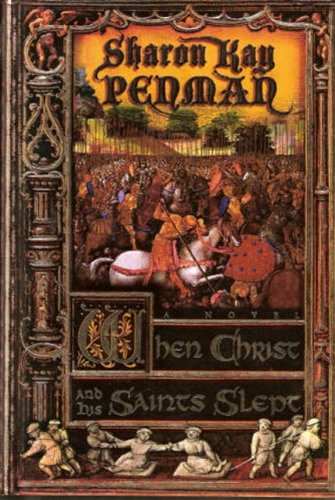
When Christ and His Saints Slept (Henry II and Eleanor of Aquitaine, #1)
Sharon Kay Penman
4.2
A.D. 1135. As church bells tolled for the death of England's King Henry I, his barons faced the unwelcome prospect of being ruled by a woman: Henry's beautiful daughter Maude, Countess of Anjou. But before Maude could claim her throne, her cousin Stephen seized it. In their long and bitter struggle, all of England bled and burned.
Sharon Kay Penman's magnificent fifth novel summons to life a spectacular medieval tragedy whose unfolding breaks the heart even as it prepares the way for splendors to come—the glorious age of Eleanor of Aquitaine and the Plantagenets that would soon illumine the world.
…
Cover unavailable
62
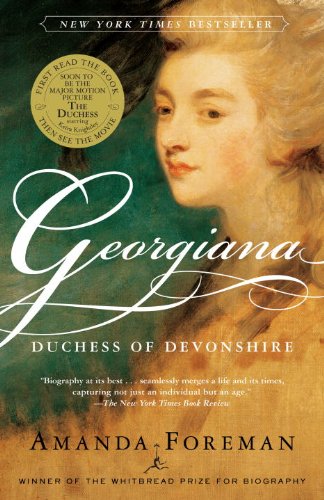
Georgiana: Duchess of Devonshire
Amanda Foreman
4.2
The winner of Britain's prestigious Whitbread Prize and a bestseller there for months, this wonderfully readable biography offers a rich, rollicking picture of late-eighteenth-century British aristocracy and the intimate story of a woman who for a time was its undisputed leader.
Lady Georgiana Spencer was the great-great-great-great-aunt of Diana, Princess of Wales, and was nearly as famous in her day. In 1774, at the age of seventeen, Georgiana achieved immediate celebrity by marrying one of England's richest and most influential aristocrats, the Duke of Devonshire. Launched into a world of wealth and power, she quickly became the queen of fashionable society, adored by the Prince of Wales, a dear friend of Marie-Antoinette, and leader of the most important salon of her time. Not content with the role of society hostess, she used her connections to enter politics, eventually becoming more influential than most of the men who held office.
Her good works and social exploits made her loved by the multitudes, but Georgiana's public success, like Diana's, concealed a personal life that was fraught with suffering. The Duke of Devonshire was unimpressed by his wife's legendary charms, preferring instead those of her closest friend, a woman with whom Georgiana herself was rumored to be on intimate terms. For over twenty years, the three lived together in a jealous and uneasy ménage à trois, during which time both women bore the Duke's children—as well as those of other men.
Foreman's descriptions of Georgiana's uncontrollable gambling, all-night drinking, drug taking, and love affairs with the leading politicians of the day give us fascinating insight into the lives of the British aristocracy in the era of the madness of King George III, the American and French revolutions, and the defeat of Napoleon.
A gifted young historian whom critics are already likening to Antonia Fraser, Amanda Foreman draws on a wealth of fresh research and writes colorfully and penetratingly about the fascinating Georgiana, whose struggle against her own weaknesses, whose great beauty and flamboyance, and whose determination to play a part in the affairs of the world make her a vibrant, astonishingly contemporary figure.
…
Cover unavailable
63
London
Edward Rutherfurd
4.1
Here is Edward Rutherfurd's classic novel of London, a glorious pageant spanning 2,000 years. He brings this vibrant city's long and noble history alive through the ever-shifting fortunes, fates, and intrigues of half-a-dozen families, from the age of Julius Caesar to the 20th century. Generation after generation, these families embody the passion, struggle, wealth, and verve of the greatest city in the world.
…
Cover unavailable
64
We Two: Victoria and Albert: Rulers, Partners, Rivals
Gillian Gill
4.1
It was the most influential marriage of the nineteenth century–and one of history’s most enduring love stories. Traditional biographies tell us that Queen Victoria inherited the throne as a naïve teenager, when the British Empire was at the height of its power, and seemed doomed to find failure as a monarch and misery as a woman until she married her German cousin Albert and accepted him as her lord and master. Now renowned chronicler Gillian Gill turns this familiar story on its head, revealing a strong, feisty queen and a brilliant, fragile prince working together to build a family based on support, trust, and fidelity, qualities neither had seen much of as children. The love affair that emerges is far more captivating, complex, and relevant than that depicted in any previous account.
The epic relationship began poorly. The cousins first met as teenagers for a few brief, awkward, chaperoned weeks in 1836. At seventeen, charming rather than beautiful, Victoria already “showed signs of wanting her own way.” Albert, the boy who had been groomed for her since birth, was chubby, self-absorbed, and showed no interest in girls, let alone this princess. So when they met again in 1839 as queen and presumed prince-consort-to-be, neither had particularly high hopes. But the queen was delighted to discover a grown man, refined, accomplished, and whiskered. “Albert is beautiful!” Victoria wrote, and she proposed just three days later.
As Gill reveals, Victoria and Albert entered their marriage longing for intimate companionship, yet each was determined to be the ruler. This dynamic would continue through the years–each spouse, headstrong and impassioned, eager to lead the marriage on his or her own terms. For two decades, Victoria and Albert engaged in a very public contest for dominance. Against all odds, the marriage succeeded, but it was always a work in progress. And in the end, it was Albert’s early death that set the Queen free to create the myth of her marriage as a peaceful idyll and her husband as Galahad, pure and perfect.
As Gill shows, the marriage of Victoria and Albert was great not because it was perfect but because it was passionate and complicated. Wonderfully nuanced, surprising, often acerbic–and informed by revealing excerpts from the pair’s journals and letters–We Two is a revolutionary portrait of a queen and her prince, a fascinating modern perspective on a couple who have become a legend.
…
Cover unavailable
65
The Virgin's Lover (The Plantagenet and Tudor Novels, #13)
Philippa Gregory
4.1
From the author of The Other Boleyn Girl and The Queen's Fool comes a stunning portrait of the first perilous years of Elizabeth I's reign.
As a new queen, Elizabeth faces two great dangers: the French invasion of Scotland, which threatens to put Mary Queen of Scots on her throne, and her passion for the convicted traitor Robert Dudley.
But Dudley is already married, and his devoted wife Amy will never give him up, least of all to an upstart Protestant Princess. She refuses to set her beloved husband free to marry the queen; but she cannot prevent him from becoming the favorite and the focus of the feverishly plotting, pleasure seeking court.
Others too oppose the marriage, but for very different reasons. William Cecil, the queen's wisest counselor, knows she must marry for policy; her uncle hates Dudley and swears he will be murder him first. Behind the triangle of lovers, the factions take up their places: the Protestants, the priests, the assassins, the diplomats and the moneymakers. The very coin of England is shaved and clipped to nothing as Elizabeth uncertainly leads her bankrupt country into a war that no-one thinks can be won.
Then someone acts in secret, and for Elizabeth, Dudley and the emerging kingdom, nothing will be as planned.
Blending historical fact with contemporary rumor, Philippa Gregory has created a dark and tense novel of Tudor times, which casts Elizabeth I in a light no one has suggested before. Passionate, fearful, emotionally needy, this is a queen who will stop at nothing.
…
Cover unavailable
66
The Burning Land (The Saxon Stories, #5)
Bernard Cornwell
4.1
The enemy is massing on the borders, a united force for once.
The king, a man of many victories, is in failing health, and his heir is an untested youth.
Uthred, the king's champion, leads his country's forces to war, but his victory is soured by personal tragedy and by the envy of the king's court. So he breaks with the king and takes off for the land of his birth, determined to resist all calls for his return. That is, until one unexpected request...
This is the making of England brought magnificently to life by the master of historical fiction.
…
Cover unavailable
67
The Greatest Knight: The Remarkable Life of William Marshal, The Power Behind Five English Thrones
Thomas Asbridge
4.1
Cover unavailable
68
Katherine of Aragón: The True Queen (Six Tudor Queens, #1)
Alison Weir
4.1
Bestselling author and acclaimed historian Alison Weir takes on what no fiction writer has done before: creating a dramatic six-book series in which each novel covers one of King Henry VIII's wives. In this captivating opening volume, Weir brings to life the tumultuous tale of Katherine of Aragón. Henry's first, devoted, and "true" queen.
A princess of Spain, Catalina is only sixteen years old when she sets foot on the shores of England. The youngest daughter of the powerful monarchs Ferdinand and Isabella, Catalina is a coveted prize for a royal marriage - and Arthur, Prince of Wales, and heir to the English throne, has won her hand. But tragedy strikes and Catalina, now Princess Katherine, is betrothed to the future Henry VIII. She must wait for his coming-of-age, an ordeal that tests her resolve, casts doubt on her trusted confidantes, and turns her into a virtual prisoner.
Katherine's patience is rewarded when she becomes Queen of England. The affection between Katherine and Henry is genuine, but forces beyond her control threaten to rend her marriage, and indeed the nation, apart. Henry has fallen under the spell of Katherine's maid of honor, Anne Boleyn. Now Katherine must be prepared to fight, to the end if God wills it, for her faith, her legitimacy, and her heart.
…
Cover unavailable
69
The Taming of the Queen (The Plantagenet and Tudor Novels, #11)
Philippa Gregory
4.1
Why would a woman marry a serial killer?
Because she cannot refuse...
Kateryn Parr, a thirty-year-old widow in a secret affair with a new lover, has no choice when a man old enough to be her father who has buried four wives – King Henry VIII – commands her to marry him.
Kateryn has no doubt about the danger she faces: the previous queen lasted sixteen months, the one before barely half a year. But Henry adores his new bride and Kateryn's trust in him grows as she unites the royal family, creates a radical study circle at the heart of the court, and rules the kingdom as regent.
But is this enough to keep her safe? A leader of religious reform and a published author, Kateryn stands out as an independent woman with a mind of her own. But she cannot save the Protestants, under threat for their faith, and Henry's dangerous gaze turns on her.The traditional churchmen and rivals for power accuse her of heresy - the punishment is death by fire and the king's name is on the warrant...
From an author who has described all of Henry's queens comes a deeply intimate portrayal of the last: a woman who longed for passion, power and education at the court of a medieval killer.
…
Cover unavailable
70
Elizabeth's Women: Friends, Rivals, and Foes Who Shaped the Virgin Queen
Tracy Borman
4.1
A source of endless fascination and speculation, the subject of countless biographies, novels, and films, Elizabeth I is now considered from a thrilling new angle by the brilliant young historian Tracy Borman.
So often viewed in her relationships with men, the Virgin Queen is portrayed here as the product of women: the mother she lost so tragically, the female subjects who worshiped her, and the peers and intimates who loved, raised, challenged, and sometimes opposed her.
In vivid detail, Borman presents Elizabeth’s bewitching mother, Anne Boleyn, eager to nurture her new child, only to see her taken away and her own life destroyed by damning allegations--which taught Elizabeth never to mix politics and love. Kat Astley, the governess who attended and taught Elizabeth for almost thirty years, invited disaster by encouraging her charge into a dangerous liaison after Henry VIII’s death. Mary Tudor (“Bloody Mary”) envied her younger sister’s popularity and threatened to destroy her altogether. And animosity drove Elizabeth and her cousin Mary Queen of Scots into an intense thirty-year rivalry that could end only in death.
Elizabeth’s Women contains more than an indelible cast of characters. It is an unprecedented account of how the public posture of femininity figured into the English court, the meaning of costume and display, the power of fecundity and flirtation, and how Elizabeth herself, long viewed as the embodiment of feminism, shared popular views of female inferiority and scorned and schemed against her underlings’ marriages and pregnancies.
Brilliantly researched and elegantly written, Elizabeth’s Women is a unique take on history’s most captivating queen and the dazzling court that surrounded her.
…
Cover unavailable
71
The Sisters Who Would Be Queen
Leanda De Lisle
4.1
#NEW YORK TIMES BESTSELLER: Inspiration for Philippa Gregory's 2017 novel The Last Tudor and for Elizabeth Fremantle's 2014 novel Sisters of Treason
Leanda de Lisle brings the story of nine days’ queen, Lady Jane Grey and her forgotten sisters, the rivals of Elizabeth I, to vivid life in her fascinating biography’ Philippa Gregory
Lady Jane Grey is an iconic figure in English history. Misremembered as the ‘Nine Days Queen’, she has been mythologized as a child-woman destroyed on the altar of political expediency. Behind the legend, however, was an opinionated and often rebellious adolescent who died a passionate leader, not merely a victim. Growing up in Jane’s shadow, her sisters Katherine and Mary would have to tread carefully to survive.
The dramatic lives of the younger Grey sisters remain little known, but under English law they were the heirs – and rivals – to the Tudor monarchs Mary and Elizabeth I. The beautiful Katherine ignored Jane’s dying request that she remain faithful to her beliefs, changing her religion to retain Queen Mary’s favour only to then risk life and freedom in a secret marriage that threatened Queen Elizabeth’s throne.
While Elizabeth’s closest adviser fought to save Katherine, her younger sister Mary remained at court as the queen’s Maid of Honour. Too plain to be considered significant, it seemed that Lady Mary Grey, at least, would escape the burden of her royal blood. But then she too fell in love, and incurred the queen’s fury.
Exploding the many myths of Lady Jane’s life and casting fresh light onto Elizabeth’s reign, acclaimed historian Leanda de Lisle brings the tumultuous world of the Grey sisters to life, at a time when a royal marriage could gain you a kingdom or cost you everything.
…
Cover unavailable
72
Hero of the Empire: The Boer War, a Daring Escape, and the Making of Winston Churchill
Candice Millard
4.1
From New York Times bestselling author of Destiny of the Republic and The River of Doubt, a thrilling narrative of Winston Churchill's extraordinary and little-known exploits during the Boer War At age twenty-four, Winston Churchill was utterly convinced it was his destiny to become prime minister of England one day, despite the fact he had just lost his first election campaign for Parliament. He believed that to achieve his goal he must do something spectacular on the battlefield. Despite deliberately putting himself in extreme danger as a British Army officer in colonial wars in India and Sudan, and as a journalist covering a Cuban uprising against the Spanish, glory and fame had eluded him.
Churchill arrived in South Africa in 1899, valet and crates of vintage wine in tow, there to cover the brutal colonial war the British were fighting with Boer rebels. But just two weeks after his arrival, the soldiers he was accompanying on an armored train were ambushed, and Churchill was taken prisoner. Remarkably, he pulled off a daring escape--but then had to traverse hundreds of miles of enemy territory, alone, with nothing but a crumpled wad of cash, four slabs of chocolate, and his wits to guide him.
The story of his escape is incredible enough, but then Churchill enlisted, returned to South Africa, fought in several battles, and ultimately liberated the men with whom he had been imprisoned.
Churchill would later remark that this period, "could I have seen my future, was to lay the foundations of my later life." Millard spins an epic story of bravery, savagery, and chance encounters with a cast of historical characters--including Rudyard Kipling, Lord Kitchener, and Mohandas Gandhi--with whom he would later share the world stage. But Hero of the Empire is more than an adventure story, for the lessons Churchill took from the Boer War would profoundly affect 20th century history.
From the Hardcover edition.
…
Cover unavailable
73
Catherine of Aragon: The Spanish Queen of Henry VIII
Giles Tremlett
4.1
The youngest child of the legendary monarchs Ferdinand and Isabella of Spain, Catherine of Aragon (1485-1536) was born to marry for dynastic gain. Endowed with English royal blood on her mother's side, she was betrothed in infancy to Arthur, Prince of Wales, eldest son of Henry VII of England, an alliance that greatly benefited both sides. Yet Arthur died weeks after their marriage in 1501, and Catherine found herself remarried to his younger brother, soon to become Henry VIII. The history of England-and indeed of Europe-was forever altered by their union.
Drawing on his deep knowledge of both Spain and England, Giles Tremlett has produced the first full biography in more than four decades of the tenacious woman whose marriage to Henry VIII lasted twice as long (twenty-four years) as his five other marriages combined. Her refusal to divorce him put her at the center of one of history's greatest power struggles, one that has resonated down through the centuries- Henry's break away from the Catholic Church as, bereft of a son, he attempted to annul his marriage to Catherine and wed Anne Boleyn. Catherine's daughter, Mary, would controversially inherit Henry's throne; briefly and bloodily, she returned England to the Catholicism of her mother's native Spain, foreshadowing the Spanish Armada some three decades later.
From Catherine's peripatetic childhood at the glittering court of Ferdinand and Isabella to the battlefield at Flodden, where she, in Henry's absence abroad, led the English forces to victory against Scotland to her determination to remain queen and her last years in almost monastic isolation, Giles Tremlett vividly re-creates the life of a giant figure in the sixteenth century. Catherine of Aragon will take its place among the best of Tudor biography.
…
Cover unavailable
74
World Without End (Kingsbridge, #2)
Ken Follett
4.1
World Without End takes place in the same town of Kingsbridge, two centuries after the townspeople finished building the exquisite Gothic cathedral that was at the heart of The Pillars of the Earth. The cathedral and the priory are again at the center of a web of love and hate, greed and pride, ambition and revenge, but this sequel stands on its own. This time the men and women of an extraordinary cast of characters find themselves at a crossroads of new ideas—about medicine, commerce, architecture, and justice. In a world where proponents of the old ways fiercely battle those with progressive minds, the intrigue and tension quickly reach a boiling point against the devastating backdrop of the greatest natural disaster ever to strike the human race—the Black Death.
…
Cover unavailable
75
Great Tales from English History (omnibus)
Robert Lacey
4.1
A feast for history lovers--the whole colorful parade of English history brilliantly captured in a single volume.
From ancient times to the present day, the story of England has been laced with drama, intrigue, courage, and passion. In GREAT TALES FROM ENGLISH HISTORY, Robert Lacey recounts the remarkable episodes that shaped a nation as only a great storyteller can: by combining impeccable accuracy with the timeless drama that has made these tales live for centuries.
This new paperback edition is encyclopedic in scope, gathering together all of Robert Lacey's great tales previously published in three separate hardcover volumes.
The book comprises 154 delectable stories, each brimming with insight, humor, and fascinating detail. Bite-sized history at its best, GREAT TALES FROM ENGLISH HISTORY belongs on every Anglophile's bookshelf.
"An informative, trustworthy distillation, less a debunking than an entertaining, wryly lucid reconstruction of the facts. . . . The tales weave a narrative as finely thatched as an English cottage." -Tennessean
"Eminently readable, highly enjoyable. . . GREAT TALES should appeal to the reader who appreciates individuals and their personalities more than mere mass movements." -St. Louis Post-Dispatch
"Beautifully written, full of things you didn't know, and well worth a read if you want a new view on stories you thought you'd already understood." -Living History
…
Cover unavailable
76
Agincourt: Henry V and the Battle that Made England
Juliet Barker
4.1
From a master historian comes an astonishing chronicle of life in medieval Europe and the battle that altered the course of an empire.
Although almost six centuries old, the Battle of Agincourt still captivates the imaginations of men and women on both sides of the Atlantic.
It has been immortalized in high culture (Shakespeare's Henry V) and low (the New York Post prints Henry's battle cry on its editorial page each Memorial Day). It is the classic underdog story in the history of warfare, and generations have wondered how the English -- outnumbered by the French six to one -- could have succeeded so bravely and brilliantly.
Drawing upon a wide range of sources, eminent scholar Juliet Barker casts aside the legend and shows us that the truth behind Agincourt is just as exciting, just as fascinating, and far more significant. She paints a gripping narrative of the October 1415 clash between outnumbered English archers and heavily armored French knights. But she also takes us beyond the battlefield into palaces and common cottages to bring into vivid focus an entire medieval world in flux. Populated with chivalrous heroes, dastardly spies, and a ferocious and bold king, Agincourt is as earthshaking as its subject -- and confirms Juliet Barker's status as both a historian and a storyteller of the first rank.
…
Cover unavailable
77
Sarum: The Novel of England
Edward Rutherfurd
4.1
A masterpiece of breathtaking scope—a brilliantly conceived epic novel that traces the entire turbulent course of English history.
This rich tapestry weaves a compelling saga of five families—the Wilsons, the Masons, the family of Porteus, the Shockleys, and the Godfreys—who reflect the changing character of Britain.
As their fates and fortunes intertwine over the course of the centuries, their greater destinies offer a fascinating glimpse into the future.
An absorbing historical chronicle, Sarum is a keen tale of struggle and adventure, a profound human drama, and a magnificent work of sheer storytelling.
…
Cover unavailable
78
Ecclesiastical History of the English People
Bede, D. H. Farmer, Ronald Latham, Leo Sherley-Price
4.1
Starting with the invasion of Julius Caesar in the fifth century, Bede recorded the history of the English up to his own day in 731 A.D. A scholarly monk working in the north-east of England, Bede wrote the five books of his history in Latin. The Ecclesiastical History is his most famous work, and this edition provides the authoritative Colgrave translation, as well as a new translation of the Greater Chronicle, never before published in English. His Letter to Egbert gives his final reflections on the English Church just before his death. This is the only edition to include all three texts, and they are illuminated further by a detailed introduction and explanatory notes.
About the Series: For over 100 years Oxford World's Classics has made available the broadest spectrum of literature from around the globe. Each affordable volume reflects Oxford's commitment to scholarship, providing the most accurate text plus a wealth of other valuable features, including expert introductions by leading authorities, voluminous notes to clarify the text, up-to-date bibliographies for further study, and much more.
Bede is writing about 130 years after the English had first experienced Christianity. [source]
Cover unavailable
79
The Mirror & the Light (Thomas Cromwell Trilogy #3)
Hilary Mantel
4.1
“If you cannot speak truth at a beheading, when can you speak it?”
England, May 1536. Anne Boleyn is dead, decapitated in the space of a heartbeat by a hired French executioner. As her remains are bundled into oblivion, Thomas Cromwell breakfasts with the victors. The blacksmith’s son from Putney emerges from the spring’s bloodbath to continue his climb to power and wealth, while his formidable master, Henry VIII, settles to short-lived happiness with his third queen before Jane dies giving birth to the male heir he most craves.
Cromwell is a man with only his wits to rely on; he has no great family to back him, no private army. Despite rebellion at home, traitors plotting abroad and the threat of invasion testing Henry’s regime to the breaking point, Cromwell’s robust imagination sees a new country in the mirror of the future. But can a nation, or a person, shed the past like a skin? Do the dead continually unbury themselves? What will you do, the Spanish ambassador asks Cromwell, when the king turns on you, as sooner or later he turns on everyone close to him?
With The Mirror & the Light, Hilary Mantel brings to a triumphant close the trilogy she began with Wolf Hall and Bring Up the Bodies. She traces the final years of Thomas Cromwell, the boy from nowhere who climbs to the heights of power, offering a defining portrait of predator and prey, of a ferocious contest between present and past, between royal will and a common man’s vision: of a modern nation making itself through conflict, passion, and courage.
…
Recommended by Cal Flyn.
Cal Flyn
Mantel has twice triumphed at the Booker with the first two instalments of her Thomas Cromwell trilogy, Wolf Hall and Bring Up the Bodies. The third book, The Mirror and the Light, will chart Cromwell’s inevitable demise and its publication in March is inarguably the literary event of the year. [source]
Cover unavailable
80
The Splendid and the Vile: A Saga of Churchill, Family, and Defiance During the Blitz
Erik Larson
4.1
The #1 New York Times bestselling author of Dead Wake and The Devil in the White City delivers a startlingly fresh portrait of Winston Churchill and London during the Blitz
On Winston Churchill's first day as prime minister, Hitler invaded Holland and Belgium. Poland and Czechoslovakia had already fallen, and the Dunkirk evacuation was just two weeks away. For the next twelve months, Hitler would wage a relentless bombing campaign, killing 45,000 Britons (30,000 of them Londoners) and destroying two million homes. It was up to Churchill to hold the country together and persuade President Franklin Roosevelt that Britain was a worthy ally--that she was willing to fight to the end.
In The Splendid and the Vile, Erik Larson shows, in cinematic detail, how Churchill taught the British people "the art of being fearless." It is a story of political brinksmanship but also an intimate domestic drama, set against the backdrop of Churchill's prime-ministerial country house, Chequers, and his wartime residence, Ditchley, where Churchill and his entourage go when the moon is brightest and the bombing threat is highest. Drawing on a wealth of untapped sources, including recently declassified files, intelligence reports, and personal diaries only now available, Larson provides a new lens on London's darkest year through the day-to-day experience of Churchill and his family: his wife, Clementine; their daughters, Sarah, Diana, and the youngest, Mary, who chafes against her parents' wartime protectiveness; their son, Randolph, and his beautiful, unhappy wife, Pamela; her illicit lover, a dashing American emissary; and the cadre of close advisors who comprised Churchill's "Secret Circle," including his dangerously observant private secretary, John Colville; newspaper baron Lord Beaverbrook; and the Rasputin-like Federick Lindemann.
The Splendid and the Vile takes readers out of today's political dysfunction and back to a time of true leadership, when--in the face of unrelenting horror--Churchill's eloquence, strategic brilliance, and perseverance bound a country, and a family, together.
…
Cover unavailable
81
Elizabeth and Mary: Cousins, Rivals, Queens
Jane Dunn
4.0
The political and religious conflicts between Queen Elizabeth I and the doomed Mary, Queen of Scots, have for centuries captured our imagination and inspired memorable dramas played out on stage, screen, and in opera. But few books have brought to life more vividly the exquisite texture of two women's rivalry, spurred on by the ambitions and machinations of the forceful men who surrounded them. The drama has terrific resonance even now as women continue to struggle in their bid for executive power.
Against the backdrop of sixteenth-century England, Scotland, and France, Dunn paints portraits of a pair of protagonists whose formidable strengths were placed in relentless opposition. Protestant Elizabeth, the bastard daughter of Anne Boleyn, whose legitimacy had to be vouchsafed by legal means, glowed with executive ability and a visionary energy as bright as her red hair. Mary, the Catholic successor whom England's rivals wished to see on the throne, was charming, feminine, and deeply persuasive. That two such women, queens in their own right, should have been contemporaries and neighbours sets in motion a joint biography of rare spark and page-turning power.
…
Cover unavailable
82
Victoria
Daisy Goodwin
4.0
“They think I am still a little girl who is not capable of being a Queen.”
Lord Melbourne turned to look at Victoria. “They are mistaken. I have not known you long, but I observe in you a natural dignity that cannot be learnt. To me, ma’am, you are every inch a Queen.”
In 1837, less than a month after her eighteenth birthday, Alexandrina Victoria – sheltered, small in stature, and female – became Queen of Great Britain and Ireland. Many thought it was preposterous: Alexandrina — Drina to her family — had always been tightly controlled by her mother and her household, and was surely too unprepossessing to hold the throne. Yet from the moment William IV died, the young Queen startled everyone: abandoning her hated first name in favor of Victoria; insisting, for the first time in her life, on sleeping in a room apart from her mother; resolute about meeting with her ministers alone.
One of those ministers, Lord Melbourne, became Victoria’s private secretary. Perhaps he might have become more than that, except everyone argued she was destined to marry her cousin, Prince Albert of Saxe-Coburg and Gotha. But Victoria had met Albert as a child and found him stiff and critical: surely the last man she would want for a husband….
Drawing on Victoria’s diaries as well as her own brilliant gifts for history and drama, Daisy Goodwin, author of the bestselling novels The American Heiress and The Fortune Hunter as well as creator and writer of the new PBS/Masterpiece drama Victoria, brings the young queen even more richly to life in this magnificent novel.
…
Cover unavailable
83
Revolution (The History of England, #4)
Peter Ackroyd
4.0
The fourth volume of Peter Ackroyd's enthralling History of England begins in 1688 with a revolution and ends in 1815 with a famous victory.
In it, Ackroyd takes readers from William of Orange's accession following the Glorious Revolution to the Regency, when the flamboyant Prince of Wales ruled in the stead of his mad father, George III, and England was - again - at war with France, a war that would end with the defeat of Napoleon at Waterloo.
Late Stuart and Georgian England marked the creation of the great pillars of the English state. The Bank of England was founded, as was the stock exchange, the Church of England was fully established as the guardian of the spiritual life of the nation and parliament became the sovereign body of the nation with responsibilities and duties far beyond those of the monarch. It was a revolutionary era in English letters, too, a time in which newspapers first flourished and the English novel was born. It was an era in which coffee houses and playhouses boomed, gin flowed freely and in which shops, as we know them today, began to proliferate in our towns and villages. But it was also a time of extraordinary and unprecedented technological innovation, which saw England utterly and irrevocably transformed from a country of blue skies and farmland to one of soot and steel and coal.
…
Cover unavailable
84
Richard the Third
Paul Murray Kendall
4.0
Paul Murray Kendall's masterful account of the life of England's King Richard III has remained the standard biography of this controversial figure.
Cover unavailable
85
Here Be Dragons (Welsh Princes, #1)
Sharon Kay Penman
4.0
Thirteenth-century Wales is a divided country, ever at the mercy of England's ruthless, power-hungry King John. Then Llewelyn, Prince of North Wales, secures an uneasy truce with England by marrying the English king's beloved, illegitimate daughter, Joanna. Reluctant to wed her father's bitter enemy, Joanna slowly grows to love her charismatic and courageous husband who dreams of uniting Wales. But as John's attentions turn again and again to subduing Wales--and Llewelyn--Joanna must decide to which of these powerful men she owes her loyalty and love.
A sweeping novel of power and passion, loyalty and lives, this is the book that began the trilogy that includes FALLS THE SHADOW and THE RECKONING.
…
Cover unavailable
86
Captive Queen: A Novel of Eleanor of Aquitaine
Alison Weir
4.0
Nearing her thirtieth birthday, Eleanor of Aquitaine has spent the past dozen frustrating years as wife to the pious King Louis VII of France. But when Henry of Anjou, the young and dynamic future king of England, arrives at the French court, he and the seductive Eleanor experience a mutual passion powerful enough to ignite the world. Indeed, after the annulment of Eleanor’s marriage to Louis and her remarriage to Henry, the union of this royal couple creates a vast empire that stretches from the Scottish border to the Pyrenees—and marks the beginning of the celebrated Plantagenet dynasty. But Henry and Eleanor’s marriage, charged with physical heat, begins a fiery downward spiral marred by power struggles and bitter betrayals. Amid the rivalries and infidelities, the couple’s rebellious sons grow impatient for power, and the scene is set for a vicious and tragic conflict that will threaten to engulf them all.
…
Cover unavailable
87
The Greatest Traitor: The Life of Sir Roger Mortimer, Ruler of England 1327-1330
IAN MORTIMER
4.0
A vivid and dramatic popular history of this feudal lord, rebel leader and dictator of England. King Edward II was murdered by the lover of his estranged Queen Isabella, Sir Roger Mortimer. This biography of 14th century England's evil genius offers a new and controversial theory regarding the fate of Edward II.
Cover unavailable
88
Mary Queen of Scots and the Murder of Lord Darnley
Alison Weir
4.0
On the night of 10 February 1567 an explosion devastated the Edinburgh residence of Henry Stewart, Lord Darnley, second husband of Mary, Queen of Scots. The noise was heard as far away as Holyrood Palace, where Queen Mary was attending a wedding masque. Those arriving at the scene of devastation found, in the garden, the naked corpses of Darnley and his valet. Neither had died in the explosion, but both bodies bore marks of strangulation.
It was clear that they had been murdered and the house destroyed in an attempt to obliterate the evidence. Darnley was not a popular king-consort, but he was regarded by many as having a valid claim to the English throne. For this reason Elizabeth I had opposed his family's longstanding wish to marry him to Mary Stuart, who herself claimed to be the rightful queen of England.
Alison Weir's investigation of Darnley's murder is set against one of the most dramatic periods in British history. Her conclusions shed a brilliant new light on the actions and motives of the conspirators and, in particular, the extent of Mary's own involvement.
…
Cover unavailable
89
Time and Chance (Henry II & Eleanor of Aquitaine, #2)
Sharon Kay Penman
4.0
In When Christ and His Saints Slept, acclaimed historical novelist Sharon Kay Penman portrayed all the deceit, danger, and drama of Henry II's ascension to the throne. Now, in Time and Chance, she continues the ever-more-captivating tale.
It was medieval England's immortal marriage--Eleanor of Aquitaine and Henry II, bound by passion and ambition, certain to leave a legacy of greatness. But while lust would divide them, it was friendship--and ultimately faith--that brought bloodshed into their midst. It began with Thomas Becket, Henry's closest confidant, and his elevation to be Archbishop of Canterbury. It ended with a perceived betrayal that made a royal murder seem inevitable. Along the way were enough scheming, seductions, and scandals to topple any kingdom but their own. . . .
Only Sharon Kay Penman can re-create this truly tumultuous time--and capture the couple who loved power as much as each other . . . and a man who loved God most of all.
…
Cover unavailable
90
Waterloo: The True Story of Four Days, Three Armies and Three Battles
Bernard Cornwell
4.0
‘Some battles change nothing. Waterloo changed almost everything.’
Bestselling author Bernard Cornwell is celebrated for his ability to bring history to life. Here, in his first work of non-fiction, he has written the true story of the epic battle of Waterloo – a momentous turning point in European history – a tale of one campaign, four days and three armies.
He focuses on what it was like to be fighting in that long battle, whether officer or private, whether British, Prussian or French; he makes you feel you are present at the scene. The combination of his vivid, gripping style and detailed historical research make this, his first non-fiction book, the number one book for the upcoming 200th anniversary of the Battle of Waterloo.
It is a magnificent story. There was heroism on both sides, tragedy too and much misery. Bernard Cornwell brings those combatants back to life, using their memories to recreate what it must have been like to fight in one of the most ghastly battles of history. It was given extra piquancy because all of Europe reckoned that the two greatest soldiers of the age were Napoleon and Wellington, yet the two had never faced each other in battle. Both were acutely aware of that, and aware that history would judge them by the result. In the end it was a victory for Wellington, but when he saw the casualty lists he wept openly. ‘I pray to God,’ he said, ‘I have fought my last battle.’ He had, and it is a story for the ages.
…
Cover unavailable
91
Dead Wake: The Last Crossing of the Lusitania
Erik Larson
4.0
From the #1 New York Times bestselling author and master of narrative nonfiction comes the enthralling story of the sinking of the Lusitania
On May 1, 1915, a luxury ocean liner as richly appointed as an English country house sailed out of New York, bound for Liverpool, carrying a record number of children and infants. The passengers were anxious. Germany had declared the seas around Britain to be a war zone, and for months, its U-boats had brought terror to the North Atlantic. But the Lusitania was one of the era's great transatlantic "Greyhounds" and her captain, William Thomas Turner, placed tremendous faith in the gentlemanly strictures of warfare that for a century had kept civilian ships safe from attack. He knew, moreover, that his ship - the fastest then in service - could outrun any threat.
Germany, however, was determined to change the rules of the game, and Walther Schwieger, the captain of Unterseeboot-20, was happy to oblige. Meanwhile, an ultra-secret British intelligence unit tracked Schwieger's U-boat, but told no one. As U-20 and the Lusitania made their way toward Liverpool, an array of forces both grand and achingly small - hubris, a chance fog, a closely guarded secret, and more--all converged to produce one of the great disasters of history.
It is a story that many of us think we know but don't, and Erik Larson tells it thrillingly, switching between hunter and hunted while painting a larger portrait of America at the height of the Progressive Era. Full of glamour, mystery, and real-life suspense, Dead Wake brings to life a cast of evocative characters, from famed Boston bookseller Charles Lauriat to pioneering female architect Theodate Pope Riddle to President Wilson, a man lost to grief, dreading the widening war but also captivated by the prospect of new love. Gripping and important, Dead Wake captures the sheer drama and emotional power of a disaster that helped place America on the road to war.
…
Recommended by Bethanye McKinney Blount.
Bethanye McKinney Blount
There's so much in this one about leadership, failures and how winners write history. [source]
Cover unavailable
92
The Professor and the Madman: A Tale of Murder, Insanity and the Making of the Oxford English Dictionary
Simon Winchester
4.0
The Professor and the Madman, masterfully researched and eloquently written, is an extraordinary tale of madness, genius, and the incredible obsessions of two remarkable men that led to the making of the Oxford English Dictionary -- and literary history. The compilation of the OED, begun in 1857, was one of the most ambitious projects ever undertaken. As definitions were collected, the overseeing committee, led by Professor James Murray, discovered that one man, Dr. W. C. Minor, had submitted more than ten thousand. When the committee insisted on honoring him, a shocking truth came to light: Dr. Minor, an American Civil War veteran, was also an inmate at an asylum for the criminally insane.
…
Recommended by Peter Gilliver.
Peter Gilliver
W.C. Minor was a member of the public, but he just happened to be a murderer who was banged up in Broadmoor. [source]
Cover unavailable
93
Devil's Brood (Henry II & Eleanor of Aquitaine, #3)
Sharon Kay Penman
4.0
The long-awaited and highly anticipated final volume in Penman's trilogy of Henry II and Eleanor of Aquitaine- a tumultuous conclusion to this timeless story of love, power, ambition, and betrayal.
Where the second novel in the trilogy, Time And Chance, dealt with the extraordinary politics of the twelfth century, climaxing with the murder of Thomas Becket and Henry's confrontation with the Church and self-imposed exile to Ireland, Devil's Brood centers on the implosion of a family. And because it is a royal family whose domains span the English Channel and whose alliances encompass the Christian world, that collapse will have dire consequences. This is a story of betrayal as Henry's three eldest sons and his wife enter into a rebellion against him, aligning themselves with his bitterest enemy, King Louis of France. But it is also the story of a great king whose brilliance forged an empire but whose personal blind spots led him into the most serious mistake of his life.
Sharon Kay Penman has created a novel of tremendous power, as two strong-willed, passionate people clash, a family divides, and a marriage ends in all but name. Curiously, it is a novel without villains- only flawed human beings caught up in misperceptions and bad judgment calls. Most devastating to Henry was not his sons' rebellion but his wife's betrayal in joining them. How could it happen that two people whose love for each other was all consuming end up as bitter adversaries? That is the heart of Penman's tale in Devil's Brood.
…
Cover unavailable
94
The New World (A History of the English Speaking Peoples, #2)
Winston Churchill
4.0
Sir Winston Churchill's classic History of the English-Speaking Peoples; with an introduction by Andrew Roberts, author of Eminent Churchillians
Cover unavailable
95
Thunderstruck
Erik Larson
4.0
A true story of love, murder, and the end of the world's "great hush."
In Thunderstruck, Erik Larson tells the interwoven stories of two men--Hawley Crippen, a very unlikely murderer, and Guglielmo Marconi, the obsessive creator of a seemingly supernatural means of communication--whose lives intersect during one of the greatest criminal chases of all time.
Set in Edwardian London and on the stormy coasts of Cornwall, Cape Cod, and Nova Scotia, Thunderstruck evokes the dynamism of those years when great shipping companies competed to build the biggest, fastest ocean liners; scientific advances dazzled the public with visions of a world transformed; and the rich outdid one another with ostentatious displays of wealth. Against this background, Marconi races against incredible odds and relentless skepticism to perfect his invention: the wireless, a prime catalyst for the emergence of the world we know today. Meanwhile, Crippen, "the kindest of men," nearly commits the perfect murder.
With his unparalleled narrative skills, Erik Larson guides us through a relentlessly suspenseful chase over the waters of the North Atlantic. Along the way, he tells of a sad and tragic love affair that was described on the front pages of newspapers around the world, a chief inspector who found himself strangely sympathetic to the killer and his lover, and a driven and compelling inventor who transformed the way we communicate.
…
Recommended by Timothy J. Jorgensen.
Timothy J. Jorgensen
I chose this book because radio waves are a type of radiation. [source]
Cover unavailable
96
Lords of the North (The Saxon Stories, #3)
Bernard Cornwell
4.0
The third instalment in Bernard Cornwell's King Alfred series, following on from the outstanding previous novels The Last Kingdom and The Pale Horseman, both of which were top ten bestsellers. The year is 878 and Wessex is free from the Vikings. Uhtred, the dispossessed son of a Northumbrian lord, helped Alfred win that victory, but now he is disgusted by Alfred's lack of generosity and repelled by the king's insistent piety. He flees Wessex, going back north to seek revenge for the killing of his foster father and to rescue his stepsister, captured in the same raid. He needs to find his old enemy, Kjartan, a renegade Danish lord who lurks in the formidable stronghold of Dunholm. Uhtred arrives in the north to discover rebellion, chaos and fear. His only ally is Hild, a West Saxon nun fleeing her calling, and his best hope is his sword, with which he has made a formidable reputation as a warrior. He will need the assistance of other warriors if he is to attack Dunholm and he finds Guthred, a slave who believes he is a king. He takes him across the Pennines to where a desperate alliance of fanatical Christians and beleaguered Danes form a new army to confront the terrible Viking lords who rule Northumbria. 'The Lords of the North' is a powerful story of betrayal, romance and struggle, set in an England of turmoil, upheaval and glory. Uhtred, a Northumbrian raised as a Viking, a man without lands, a warrior without a country, has become a splendid heroic figure.
…
Cover unavailable
97
Three Sisters, Three Queens (The Plantagenet and Tudor Novels, #8)
Philippa Gregory
4.0
As sisters they share an everlasting bond; As queens they can break each other’s hearts.
“There is only one bond that I trust: between a woman and her sisters. We never take our eyes off each other. In love and in rivalry, we always think of each other.”
When Katherine of Aragón is brought to the Tudor court as a young bride, the oldest princess, Margaret, takes her measure. With one look, each knows the other for a rival, an ally, a pawn, destined—with Margaret’s younger sister Mary—to a sisterhood unique in all the world. The three sisters will become the queens of England, Scotland, and France.
United by family loyalties and affections, the three queens find themselves set against each other. Katherine commands an army against Margaret and kills her husband James IV of Scotland. But Margaret’s boy becomes heir to the Tudor throne when Katherine loses her son. Mary steals the widowed Margaret’s proposed husband, but when Mary is widowed it is her secret marriage for love that is the envy of the others. As they experience betrayals, dangers, loss, and passion, the three sisters find that the only constant in their perilous lives is their special bond, more powerful than any man, even a king.
…
Cover unavailable
98
Queens of the Conquest: England's Medieval Queens Book One
Alison Weir
4.0
In the first volume of an exciting new series, bestselling author Alison Weir brings the dramatic reigns of England's medieval queens to life.
The lives of England's medieval queens were packed with incident--love, intrigue, betrayal, adultery, and warfare--but their stories have been largely obscured by centuries of myth and omission. Now esteemed biographer Alison Weir provides a fresh perspective and restores these women to their rightful place in history.
Spanning the years from the Norman conquest in 1066 to the dawn of a new era in 1154, when Henry II succeeded to the throne and Eleanor of Aquitaine, the first Plantagenet queen, was crowned, this epic book brings to vivid life five women, including: Matilda of Flanders, wife of William the Conqueror, the first Norman king; Matilda of Scotland, revered as "the common mother of all England"; and Empress Maud, England's first female ruler, whose son King Henry II would go on to found the Plantagenet dynasty. More than those who came before or after them, these Norman consorts were recognized as equal sharers in sovereignty. Without the support of their wives, the Norman kings could not have ruled their disparate dominions as effectively.
Drawing from the most reliable contemporary sources, Weir skillfully strips away centuries of romantic lore to share a balanced and authentic take on the importance of these female monarchs. What emerges is a seamless royal saga, an all-encompassing portrait of English medieval queenship, and a sweeping panorama of British history.
Praise for Queens of the Conquest
"Best-selling author [Alison] Weir pens another readable, well-researched English history, the first in a proposed four-volume series on England's medieval queens. . . . Weir's research skills and storytelling ability combine beautifully to tell a fascinating story supported by excellent historical research. Fans of her fiction and nonfiction will enjoy this latest work."--Library Journal (starred review)
"Another sound feminist resurrection by a seasoned historian . . . Though Norman queens were largely unknowable, leave it to this prolific historical biographer to bring them to life. . . . As usual, Weir is meticulous in her research."--Kirkus Reviews
…
Cover unavailable
99
Killing England: The Brutal Struggle for American Independence
Bill O'Reilly
4.0
Told through the eyes of George Washington, Benjamin Franklin, Thomas Jefferson, and Great Britain’s King George III, Killing England chronicles the path to independence in gripping detail, taking the reader from the battlefields of America to the royal courts of Europe. What started as protest and unrest in the colonies soon escalated to a world war with devastating casualties. O’Reilly and Dugard recreate the war’s landmark battles, including Bunker Hill, Long Island, Saratoga, and Yorktown, revealing the savagery of hand-to-hand combat and the often brutal conditions under which these brave American soldiers lived and fought. Also here is the reckless treachery of Benedict Arnold and the daring guerilla tactics of the “Swamp Fox” Frances Marion.
…
Cover unavailable
100
The Creation of Anne Boleyn: A New Look at England's Most Notorious Queen
Susan Bordo
4.0
A groundbreaking retelling and reclaiming of Anne Boleyn's life and legacy puts old questions to rest and raises some surprising new ones.
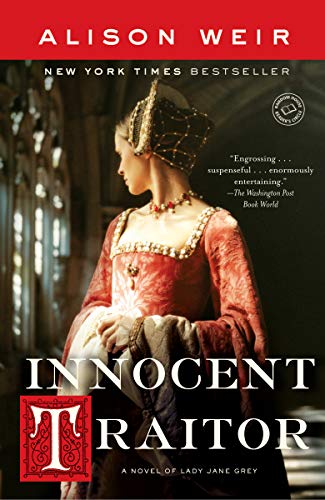
Part biography, part cultural history, The Creation of Anne Boleyn is a fascinating reconstruction of Anne's life and an illuminating look at her afterlife in the popular imagination. Why is Anne so compelling? Why has she inspired such extreme reactions? What did she really look like? Was she the flaxen-haired martyr of Romantic paintings or the raven-haired seductress of twenty-first century portrayals? (Answer: neither.) And perhaps the most provocative questions concern Anne's death more than her life. How could Henry order the execution of a once beloved wife? Drawing on scholarship and critical analysis, Susan Bordo probes the complexities of one of history's most infamous relationships.
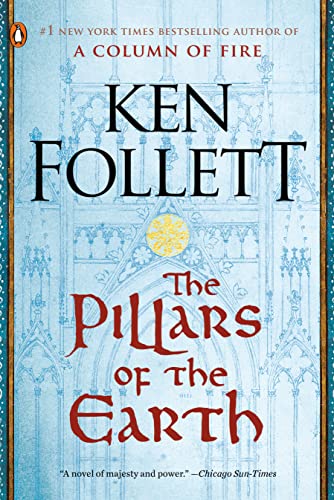
Bordo also shows how generations of polemicists, biographers, novelists, and filmmakers imagined and reimagined Anne: whore, martyr, cautionary tale, proto-"mean girl," feminist icon, and everything in between. In this lively book, Bordo steps off the well-trodden paths of Tudoriana to expertly tease out the human being behind the competing mythologies.