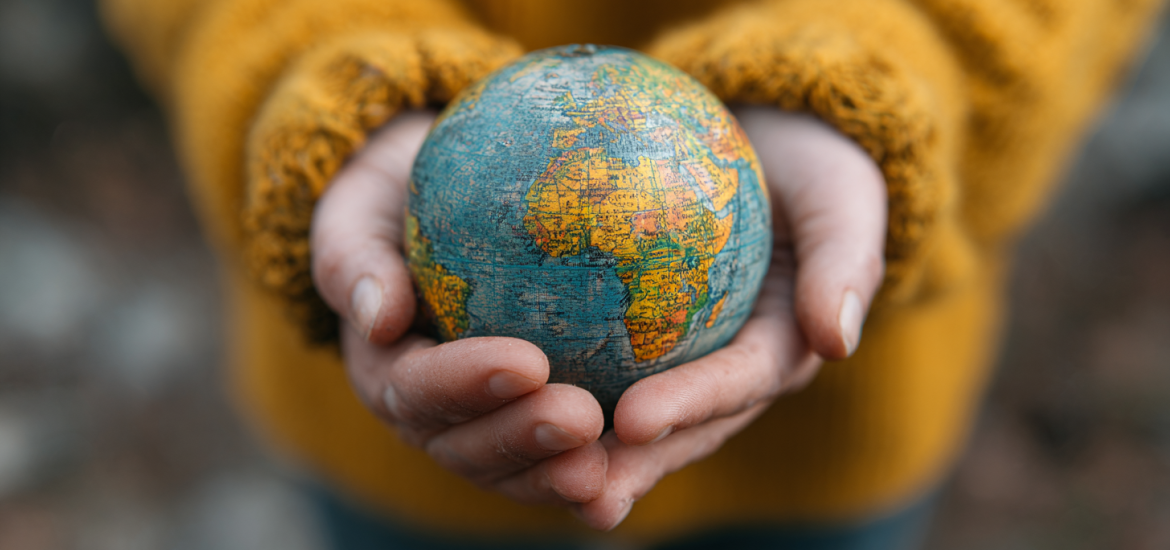
While global problems like climate change, inequality, and injustice can feel overwhelming, you have more power to create a positive impact than you might realize. Your daily choices—from how you use energy to how you treat others—contribute to larger societal outcomes.
Making the world a better place doesn’t require sacrificing your own well-being or waiting for a crisis to motivate you. Whether you’re participating in joint decisions that shape communities, giving back regularly to causes you care about, reducing your carbon footprint, or simply sharing what you’ve learned with others, small, consistent actions create ripples of change. This article explores practical strategies for contributing to a better world while maintaining your own growth and happiness.
Table of Contents
- 1. Be Kind, Not Nice
- 2. Create a Community of Friends
- 3. Understand and Make Joint Decisions
- 4. Give Back Regularly
- 5. Share What You’ve Learned
- 6. Reduce Carbon Emissions
- 7. See Humans as Fundamentally Good
- 8. Install a Version of Communitarianism
- 9. Donate Clothes and Books
- 10. Legalize Psychedelics to “Depattern” Society
- Discover More About Making the World a Better Place
1. Be Kind, Not Nice
In Professional Troublemaker, Luvvie Ajayi Jones argues that being “nice” all the time amounts to unhealthy people-pleasing. She advocates for being kind, rather than nice to make the world a better place. This means being thoughtful and caring toward others, but not letting them take advantage of you.
In particular, Jones doesn’t believe in the common admonition to “take the high road.” She says that it doesn’t do any good to be polite in the face of injustice or wrongdoing. If someone is hurting you (or other people), they don’t care about you; taking the high road isn’t going to change their mind. Being civil won’t stop harmful behavior. Instead, argues Jones, we need to fight injustice, even if it means offending people or being loud and obnoxious. Fighting for people who have fewer advantages than you is a form of kindness.
2. Create a Community of Friends
Humans are social creatures, says Jones, but we sometimes avoid forming close bonds out of fear of being betrayed. We don’t want other people to have control over us. Jones says that it’s impossible to avoid rejection—everyone experiences it—but it’s worth taking the risk to find true friends.
She explains that when others have control over us because of our love for them, we can become better people. For example, we’re likely to accomplish more or hold ourselves to higher standards if we see our friends excelling. Real friends will also hold you accountable when you make mistakes, and will prevent you from looking like a fool.
Jones offers the following advice for forming and maintaining a community of friends:
1. Set realistic expectations. Jones notes that no one friend or type of friend can fulfill all your friendship needs—and expecting them to is more likely to result in the breakdown of the friendship. She says there are various types of friends: childhood or longtime friends, work/professional friends, mentors, friends you have fun with, and best friends. While some people may fit into multiple categories, it helps to recognize that some people only fit into one category in our lives and we can’t expect more of them.
2. Know how to handle conflict. When conflict inevitably arises, Jones advises always making the effort to communicate and try to work it out. She says that feeling challenged or uncomfortable is no reason to leave a friendship, but if someone consistently makes you feel bad, you might want to consider cutting ties.
3. Show up and be vulnerable. Jones says friendship is about action more than words. We need to be there for those we love, especially when they’re going through a hard time. This includes being vulnerable and sharing ourselves. It also includes celebrating our friends’ successes.
4. Make a Nigerian friend. While Jones’s advice that everyone make a Nigerian friend is somewhat tongue-in-cheek, it highlights aspects of Nigerian culture that would be desirable in any friendship. For example, Jones explains that Nigerians are fiercely loyal and passionate, and will go out of their way to celebrate you and make you feel good about yourself.
3. Understand and Make Joint Decisions
There are countless problems and tragedies constantly occurring across the globe—from climate change to genocides to chronic hunger. Joint decisions, made collectively by the world’s population, determine whether we succumb to or overcome these problems.
According to Tony Robbins’s book, Awaken the Giant Within, it’s up to every person to make individual choices that contribute to joint decisions and solutions—including you. You know that you have the power to make individual decisions that impact your life: Now, participate in joint decisions to impact communities, societies, nations, and the world. If you don’t take an active role, you’ll merely follow the indifferent current of the masses, and you’ll be forced to deal with the consequences that follow.
When thinking about how to make the world better, be sure to:
1) Focus on the long-term effects of joint decisions. Carefully consider whether a decision will actually benefit the community in the long run. Many national and global issues are the result of decisions that were appealing in the short term, but harmful in the long term.
2) Make decisions that address the root cause of an issue. It’s easy to get fooled into fixing symptoms when you’re focused on what’s not working—but, just as we talked about when altering your behavior, the changes you make won’t stick unless you address these symptoms’ causes. For example, some regions are facing frequent droughts and relentless wildfires, issues which local and global communities are trying to respond to. But, those problems are merely symptoms of climate change, which is the real problem that needs to be addressed to enact any lasting change.
3) Remember that everything is the product of countless daily decisions. The issues we face are the results of millions of small decisions that people make every day, and solving these problems will also depend on a critical mass of tiny, daily decisions. For example, climate change has accelerated and now threatens the health of the planet because humans have spent centuries overfishing, using harmful agricultural practices, and polluting water sources. A large segment of the population will have to change their daily habits—from their transportation choices to the food they eat—in order to substantially tackle this problem.
4. Give Back Regularly
As well as participating in joint decisions, Robbins says to make sure to give back to the community regularly. Brainstorm causes that you care about—whether that’s prison reform or environmental conservation—and commit to dedicate time to that cause each month. Even a couple of hours a month can make a huge difference to the cause. You’ll also notice that giving to the cause will improve your life: You’ll feel the sense of joy and fulfillment that comes from selfless contribution to others, and your identity will shift to reflect that this is now a fundamental part of who you are.
While supporting your chosen cause, apply the same strategies you’ve used for your self-improvement to push governments and businesses to improve their practices regarding that cause:
- Create leverage for the company or government officials by wielding your buying or voting power. If you withhold your dollars or your vote, they’ll feel the pain and will be motivated to change.
- When they improve their policies, reinforce their positive effort by supporting them with your business or your vote.
As you make giving back and supporting a cause a regular part of your life, don’t neglect your own needs. Your ability to give back depends on your well-being, and you shouldn’t sacrifice yourself to make a positive impact for others. Additionally, when you understand that giving back doesn’t have to come at the expense of your self-care, you’ll give back more because you’ll eliminate any pain associated with dedicating your time to contribution.
Unfortunately, many people never realize their full potential to give back and support a cause until they face a difficult challenge that forces them to rise to the occasion. Don’t wait until you’re backed into a corner—rise now. Stop believing that chronic problems such as hunger and homelessness are permanent and inevitable. Instead, put yourself into a more resourceful mindset and find solutions.
5. Share What You’ve Learned
Robbins recommends making a difference to others by being a living example of what you’ve learned in life. The happiness, success, and fulfillment that you feel will emanate and become contagious to those around you. Furthermore, share the knowledge you’ve gained from this book with others so that they can achieve the same results in their lives.
It’s especially important to share these insights and skills with your children. Teach them to anticipate the consequences of their actions—on themselves, their family, their community, and the world. When they learn to think through these consequences, they’ll make more responsible decisions. Above all, lead by example. Show your children the power of living out your values by asking empowering questions. You’ll be training the next generation of empowered difference-makers.
6. Reduce Carbon Emissions
Every aspect of our way of life—from the food we eat to our energy production to manufacturing—relies heavily on fossil fuels. But burning fossil fuels releases carbon dioxide and other greenhouse gasses that cause climate change. In How the World Really Works, Vaclav Smil says that the primary causes of climate change are:
- Fossil fuel combustion, deforestation, and cement production, which release carbon dioxide
- Cattle, natural gas production, landfills, and rice fields, which release methane, and
- Fertilizers, which release nitrous oxide
Carbon dioxide is responsible for about 75% of global warming, methane for 15%, and nitrous oxide for about 10%. Smil argues that we need to reduce energy use in all areas—transportation, buildings, agriculture, and industry—to cut down on carbon emissions and learn how to make the world a better place. Two primary ways to do so are by generating electricity from renewable sources and by using nuclear energy.
- Generating electricity without relying on fossil fuels is the fastest way to cut down on carbon emissions because solar and wind-powered electricity is now cheaper than other forms. Countries like Germany now generate 40% of their electricity from renewable sources.
- Smil says that burning fossil fuels causes far more deaths from air pollution than nuclear reactors cause. He explains that even when fatalities from Chernobyl and Fukushima are included, nuclear electricity generation is far safer than generating electricity from fossil fuels.
Other Ways to Cut Down on Carbon Emissions From Energy Use
Smil points to a variety of other ways to reduce carbon emissions. For example, he says homes should be required to be well-insulated to keep in heat and reduce carbon emissions. And people shouldn’t drive SUVs—any emissions gains resulting from electric cars have been erased many times over by SUVs.
Additionally, Blowout by Rachel Maddow discusses some possibilities for curbing the negative effects of the energy industry. Namely, by bringing an end to tax breaks for oil and gas companies, requiring more transparency on their dealings with foreign governments, and enforcing stricter government regulation of where, when, and how these companies can drill.
She argues that requiring energy companies to pay higher taxes would mean that their profits would enrich the citizens of the state where drilling takes place, not just the energy executives. More transparency, as enforced by laws that would require companies to report exactly how much money (and for what goods or services) is changing hands, could bring an end to corruption. If ExxonMobil had to report on its dealings with Equatorial Guinea or Russia this extensively, bribes and money laundering would become impossible. Finally, strict government regulation of drilling activity could prevent accidents and environmental disasters.
Some of these changes were made in Oklahoma from 2016-2018, and the positive effects were immediately obvious. Raising taxes meant that the demands of striking teachers for better pay and conditions could be met, and the local government could pay off some of its debts, all without significantly hurting the profitability of the energy industry. Local oil and gas companies have continued to thrive without endangering the lives, property, and environmental resources of Oklahomans.
7. See Humans as Fundamentally Good
Humankind by Rutger Bregman states that having a more positive outlook on humanity can create positive change in our society. Bregman argues that whichever view of humanity we choose—Hobbes or Rousseau, evil or good—creates a feedback loop. In other words, we get what we expect from people. Research suggests that expectations have a significant impact on behavior. For example, if a parent consistently tells their child that the child is unathletic, then the child will start to believe it. She might avoid playing sports with other children. If she does play, she’ll see every failure as proof that she’s unathletic, instead of as an opportunity to improve. She, therefore, enters a negative feedback loop.
According to Bregman, the same is true of how we see humans. If we expect people to be selfish, they’ll act selfishly. However, the opposite holds as well: If we see humans as fundamentally decent creatures, we’ll treat each other with respect, trust, and dignity, which will encourage others to be kinder and more compassionate in turn. By changing our mindsets, we can create a positive feedback loop that leads to a friendlier and more peaceful world.
Bregman maintains that, while it may sound idealistic, evidence from prisons, corporations, and politics shows that these positive feedback loops help people understand how to make the world a better place. Let’s take a look at the possibilities of a positive mindset.
The Criminal Justice System
According to Bregman, one of the places where our society creates negative feedback loops is prisons. He maintains that seeing prisoners from a Hobbesian perspective—as inherently evil criminals who require strong punishment—actually leads to more crime.
For example, in the United States, prisons are often punishment-based. Prisoners live in overcrowded cells with little to no time for exercise, and they receive punishments like solitary confinement when they break the rules. These strict rules make it harder for ex-convicts to adapt to life outside of prison, which isn’t as structured or punishment-based. Bregman suggests that this contributes to high reoffending rates in the United States.
However, Bregman argues that we can create positive feedback loops in the criminal justice system. In Norway, for example, prisons are reform-centered. Guards rarely carry weapons, and they treat prisoners with respect. In one prison, inmates live in a type of commune, plowing the land and growing their own food. Norway’s recidivism rate—the percentage of prisoners who end up in prison a second time—is significantly lower than that of the United States.
Corporations
According to Bregman, we can also create positive feedback loops in corporations. He suggests that when managers see and treat their workers as lazy and untrustworthy, workers are less intrinsically motivated and creative. For example, bonuses and pay-per-hour systems, which seek to hold “lazy” workers accountable, can make workers so focused on working a certain number of hours or getting paid more money that they no longer care about doing the job well. Instead, Bregman suggests that businesses should minimize bureaucracy and trust their employees to find creative solutions.
Government
Bregman also extends his positive feedback loop theory to civic engagement. Studies show that when city governments give their citizens more power to negotiate and make political decisions, there’s more participation and interest in politics, less polarization, and less corruption. Inequality decreases because citizens of all social classes and groups have a seat at the table.
8. Install a Version of Communitarianism
Michael Sandel has his own conception of justice that he thinks can make the world a better place. In his book Justice, he advocates a version of communitarianism (a philosophy arguing that the goal of the state is to create and preserve a community of citizens) that promotes public engagement, kinship among citizens, and the sense that they’re part of a larger project.
Sandel argues that his version of communitarianism combines the best parts of the philosophies he discusses while avoiding the morally concerning portions:
Utilitarianism: Sandel’s view shares the utilitarian concern for the overall public good by focusing on serving the community as a whole. Unlike utilitarianism, however, Sandel’s philosophy sees individuals as inherently valuable community members regardless of pleasures or pains.
Libertarianism: Similar to libertarians, Sandel appreciates the benefits of the free market as a tool for organizing and creating wealth. He also believes that the state should, to a degree, respect personal freedoms. However, Sandel doesn’t argue for complete deregulation of these areas—instead, he argues that the state should manage and regulate personal conduct and the market to make sure they serve the community as a whole.
Liberalism: Much like liberal philosophers, Sandel argues for a baseline level of decency, respect, and personal rights for all human beings. However, he disagrees with the liberal view that those baseline moral obligations derive only from reason. He argues that people also have moral obligations to their loved ones and communities. Sandel also disagrees with the liberal view that governments should avoid questions of morality—he says people must debate these questions to determine their community’s goals and differences.
Aristotle’s political theory: Sandel agrees that the state should help people live fulfilling and virtuous lives. However, unlike Aristotle, he’s against forcing people into certain roles and distributing social goods based on merit and moral “desert.” Instead, Sandel believes that the state should instill values of kinship, solidarity, and civic participation so everyone can freely debate over the best, most moral way to live and distribute social goods.
9. Donate Clothes and Books
We all have stuff that we hold onto but we can’t get rid of, either for sentimental reasons or because we think we might need it later. The truth of the matter is, there are people out there who could use these items. So it’s time to start donating to make the world a better place.
Two categories of items you should consider donating are clothes and books. The Life-Changing Magic of Tidying Up by Marie Kondo breaks down how to discard any items to give to other people. When organizing clothes, the golden rule to think about is what people need. Practical tennis shoes are a must, along with coats and heavy clothing for the winter. Formal attire is also practical for people who can’t afford clothes for job interviews.
Books are also great to donate for educational purposes. Schools that have limited funding often reuse textbooks and other books for years, even when they’re battered and torn apart. If you’re a student holding onto old textbooks, consider donating them to schools or universities.
Because public libraries are free to use, donate old novels or even cookbooks to them. Anybody can check your old books out and enjoy them.
10. Legalize Psychedelics to “Depattern” Society
How to Change Your Mind by Michael Pollan explains that psychedelics have important social and cultural implications for human society—in the past, present, and future. Psychedelics may have contributed to our cognitive and spiritual evolution and have the potential to make the world a better place.
During Pollan’s research, he found that many experts involved in studying psychedelics have eventually shifted their emphasis from the treatment of individuals to the potential for the treatment of society as a whole. He explains that this is because the benefits of psychedelics may contribute to greater empathy, a deeper sense of connection with others, and a reconnection to nature. On this last point, many argue this could be a key to solving the growing environmental crisis.
Ethnobotanist Giorgio Samorini says that psychedelic experiences disrupt our deeply ingrained patterns of thought and allow us to develop new creative ways of thinking. He calls this “depatterning” and says when societies are in rapid states of change or high-challenge situations, this ability to think in novel ways is crucial for adaptation and survival. So he concludes that psychedelics can be a tool for survival that humans turn to during specific time periods, such as when they’re facing challenges that need out-of-the-box thinking.
Discover More About Making the World a Better Place
If you want to learn more about how to make the world a better place, you can check out the full Shortform guides to the books mentioned in this article:
