Should you praise and reward children—or does this approach backfire? Parenting experts are divided on this question, with some advocating for strategic positive reinforcement and others warning that any form of reward can damage children’s intrinsic motivation and self-esteem.
Thomas W. Phelan, author of 1-2-3 Magic, makes the case for rewards when used thoughtfully. On the opposite side, educator Alfie Kohn argues in Unconditional Parenting that all rewards—including praise and affection—condition children to seek external validation rather than developing their own internal compass. This guide explores both perspectives to help you navigate one of parenting’s most contentious debates.
Table of Contents
The Case for Rewards
In 1-2-3 Magic, clinical psychologist Thomas W. Phelan offers advice for using positive reinforcement for children to bolster them and avoid conflict. He discusses how to use appropriate praise, watch your tone, and embrace natural consequences.
#1: Use Appropriate Praise
Phelan encourages you to aim for a ratio of three positive comments for every negative comment you make to your children. Kids often get more negative feedback than positive from their parents simply because parents leave well enough alone when kids are behaving well, but speak up when kids start to misbehave. While well-intentioned, the result is that kids often end up hearing more about what they do wrong than what they do right.
To deliver your positive comments, you might poke your head in the door when your child is playing nicely and commend her on her concentration, congratulate your son for sharing with his little sister, and so on. Phelan notes that unexpected, public praise is especially beneficial and meaningful for kids.
When you do need to give your child constructive criticism, Phelan suggests using the positive-negative-positive pattern. This means that you sandwich the criticism part of your feedback with two positive comments. For instance, if your child just finished their morning routine, but their bed-making is sloppy, you might say something like: “Wow! Great job starting your morning jobs all on your own! It looks like you rushed a little when you were making your bed, so maybe you should go back and take your time getting everything lined up. I really liked how you also brushed your tongue when you did your teeth!”
Praising Your Child With Words
In How to Talk So Kids Will Listen & Listen So Kids Will Talk, educators Adele Faber and Elaine Mazlish explain how to praise your child in order to most effectively communicate with them, claiming that giving empowering praise is a great place to start. They emphasize the importance of praise for several reasons. First, praising your child is something proactive that parents can do at any time. It ensures you’re communicating not just about problems that need to be addressed, but also about what you’re proud of. Finally, it’s a powerful way to encourage positive behavior.
To deliver effective praise, though, Faber and Mazlish say you must first understand what not to do when delivering praise. As they learned from the child psychologist Haim Ginott, praise is like emotional medicine and should be administered carefully and intentionally. When your children ask you if their scribbled drawing is “good,” you may reply, “Yes! It’s great!” But this kind of praise doesn’t sound authentic to kids, because it’s too vague and doesn’t show that you’re paying attention and appreciating what they’ve done, according to the authors.
Now, here’s what Faber and Mazlish recommend instead.
Use Descriptive Praise
The authors recommend descriptive praise, which means specifically and enthusiastically describing what you see in their drawing, such as the shapes and colors. Your children will appreciate that you’re paying attention. Descriptive praise also makes children aware of their strengths and builds their self-esteem. They can then praise themselves.
For example, if you compliment a child specifically for how neatly they made their bed or how imaginatively they completed a writing assignment, they might chime in, “Yeah! See how I folded down the top of the blanket? I was being really careful,” or “I really thought about what would happen if hippos went into space!” When they understand what was praiseworthy about their actions, they’ll be better able to repeat those actions in the future.
(Shortform note: Vague praise, which Faber and Mazlish caution against, like “It looks great!” or “Good job!” is called evaluative praise, meaning it focuses on the parents’ judgment of the child. Even when that judgment is positive, the child knows that the parent is only praising them because they feel obligated to, not because they’ve appreciated the specifics of the child’s accomplishments. Studies have shown that descriptive praise is far more effective in helping children establish a growth mindset, or the confidence that they can learn and improve.)
#2: Watch Your Tone
Phelan notes that if your tone sounds like you’re ready for a fight with a child, you’re likely to get one, so it’s best to keep any requests non-confrontational. For example, if it’s almost bedtime, you might be frustrated to see your 10-year-old still playing in her room, rather than starting her bedtime routine. In this case, you could calmly say, “It’s just about bedtime, you’d better get started on your bedtime routine,” as opposed to, “Don’t you know what time it is! Why do I always have to remind you to get ready for bed!”
#3: Embrace Natural Consequences
In some instances, it’s best to simply let the natural consequences of your child not performing their routine serve as a tool to get them back on track. When you can rely on natural consequences to encourage your child to follow their routine, you don’t have to get involved, thereby avoiding tension in your relationship. Also, kids are more likely to learn from their mistakes after seeing that the consequence was a direct result of their behavior rather than a parent-manufactured punishment.
For example, if your child is responsible for packing their own backpack, and they forget their homework, let the resulting lower grade or reprimand from their teacher be the natural consequence. It teaches them that organization matters far more effectively than a parental lecture ever could. Or say your five-year-old throws a lengthy tantrum at dinner. A natural consequence might be that by the time he’s done, all the dessert has been eaten up by the rest of the family. This may encourage your child to stop dinnertime tantrums, as they might lead to missed dessert.
It’s important to distinguish natural consequences from logical consequences, or consequences imposed by you, which seem logical and fair to you (taking away a toy your child is destroying could be a logical consequence). While logical consequences may indeed be entirely fair, it’s still a punishment delivered by you as opposed to by, broadly speaking, the outside world (for example, a natural consequence would be to let your child destroy the toy and have to deal with no longer having that toy). When you set logical consequences, you risk conflict with your child, so it might be worth asking yourself if there’s a natural consequence you might lean on before imposing a logical consequence.
The Case Against Rewards
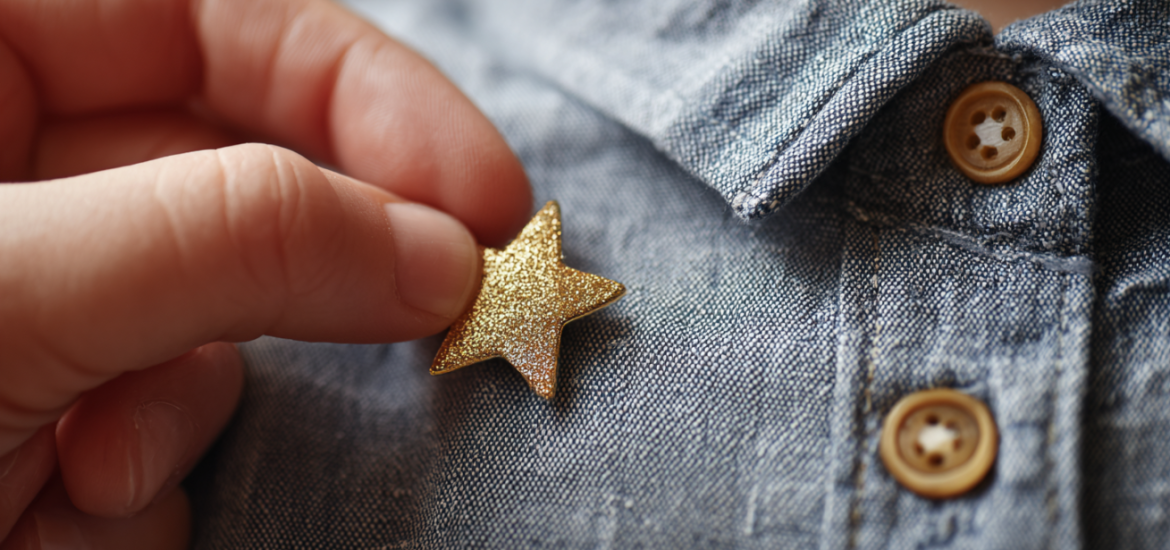
In contrast to the advice above, in Unconditional Parenting, Alfie Kohn argues that rewarding children amounts to “conditional parenting.” He defines different types of rewards that parents traditionally offer to children. His definition of rewards is extremely broad: He groups intangible rewards, such as hugs and praise, with more conventional ones, such as food and gold stars.
What Counts as a Reward?
According to Kohn, a reward is anything a child receives in return for “good” behavior. Rewards include:
- Gifts, food, and money
- Good grades
- Gold stars
- Affection
- Praise
(Shortform note: Kohn singles out one type of praise, “good job!”, as particularly noxious, as it frames whatever a child is doing as a “job” to be judged negatively or positively. While it’s probably a good idea to stop reflexively bombarding kids with “good job!” for every tiny achievement, parenting writer Emily Oster argues that outlawing “good job” might be going too far—she points out that without “good job,” parents are left with few alternatives. She also suggests that writers like Kohn are jumping to conclusions based on limited and unconvincing data.)
Why You Should Stop Rewarding Children
According to Kohn, we shouldn’t use rewards with children because:
1. They don’t build intrinsic motivation. Rewards tie behavior to external incentives, rather than allowing children to discover their own internal motivation. This means that when the reward disappears, the behavior will also disappear. In fact, Kohn points out that rewards even seem to decrease intrinsic motivation. For example, one study found that rewarding very young children for helping made them less likely to help later when no reward was available. Praise has the same negative effect.
2. They create pressure to succeed. Research shows that academic pressure can cause intense stress, which in turn leads to substance abuse, depression, and anxiety. Kohn argues that pressure to succeed is especially damaging in competitive situations, when one person’s success comes at the expense of someone else’s. In these situations, children are more likely to take shortcuts (for example, cheating on a test).
3. They can become addictive. This especially applies to praise. Kohn argues that if you praise children too much, they start needing to hear it constantly to feel good about themselves. This dynamic doesn’t allow them to develop the robust, stable self-esteem that they’ll need to be happy later on.
| Rewards: What Does the Research Say? Kohn cites quite a bit of research, mostly springing from a wave of academic interest in rewards and punishments in the 1970s, to support his case that rewards are always either unhelpful or damaging. However, the actual picture may be more complex—even if we only look at papers published during that period. While children do seem to lose interest in activities after they get a promised reward for doing them, “high-value” rewards (in this case, rewards that the children had nominated beforehand that they wanted to receive) seem to make children more likely to keep doing boring tasks after they’re allowed to stop. More recently, researchers found that rewards plus either peer modeling or repeated exposure help kids to not only eat more fruits and vegetables but also to like them more. For example, rewarding 4- to 6-year-old kids with a sticker every time they tasted a new vegetable made them like the new vegetables more. The issue of praise may also be more complicated than Kohn suggests. One study, for example, found that while material rewards made 3-year-olds less likely to share, praise didn’t. It may be that consistent positive feedback is more effective for younger children or children in the early stages of developing a skill. |
Learn More About Rewarding Children
If you want to learn more about the complex psychology behind rewarding children, you can check out the full guides to the books mentioned in this article.
