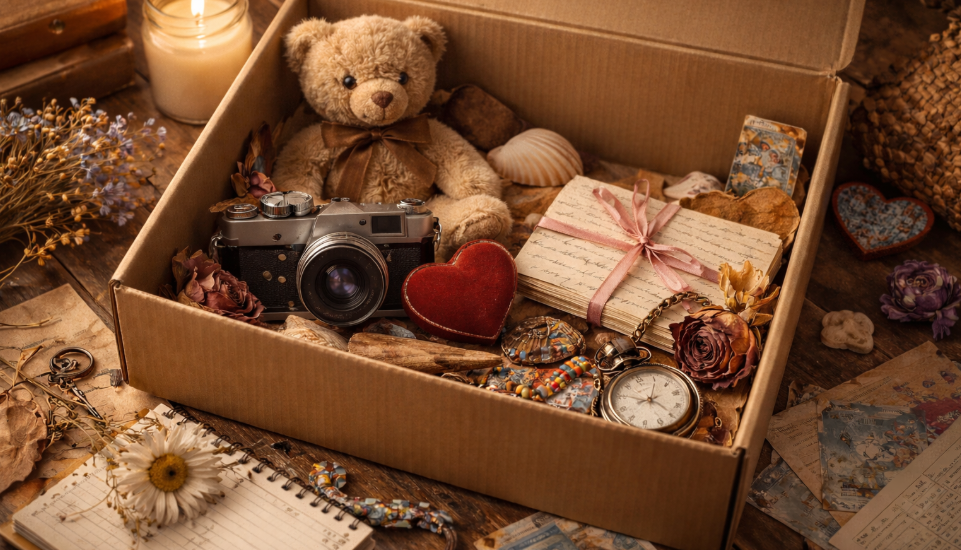
What’s the hardest part of decluttering? It’s not the physical act of sorting—it’s confronting the emotional attachments that keep you holding onto things you don’t need. Whether it’s a gift from a loved one, a letter from years ago, or a trinket tied to a cherished memory, these items demand more than just a decision to keep or toss.
Both Fumio Sasaki in Goodbye, Things and Marie Kondo in The Life-Changing Magic of Tidying Up offer strategies for working through these emotional barriers. Through self-reflection, reframing how you think about gifts, and finding ways to preserve memories without the physical clutter, you can learn to let go of possessions while honoring what they once meant to you.
Table of Contents
Overcoming Emotional Attachments
In Goodbye, Things, Fumio Sasaki explains that as you begin discarding items, you’ll have to confront your emotional attachments to those items. Sasaki offers three tips for overcoming emotional attachments to possessions:
1) Reflect on Your Emotional Attachments
Sasaki recommends taking each item you consider discarding as an opportunity for self-reflection. Ask yourself, “Why am I holding onto this? Why is it hard to get rid of?” Recall that you’re often attached to a memory or an image of yourself rather than attached to the actual thing. By reflecting on these attachments, you’ll not only learn more about yourself, but you’ll recognize when you’re holding onto something for purely emotional reasons.
(Shortform note: In The Life Changing Magic of Tidying Up, Marie Kondo extends Sasaki’s advice with tips on how to let go of something when you encounter emotional resistance. She encourages you to start by recognizing the role that this object played in your life—even objects you don’t use have given you a lesson about what you don’t need or like. If you can focus on your gratitude and see that the object’s role has been fulfilled, then you can thank the object for its part in your life and let it go on to fulfill another role.)
2) Let Go of Gifts
Sasaki notes that some of the hardest possessions to get rid of are gifts that you’ve received from others. He explains that you may feel guilty about failing to appreciate a gift from someone. However, you can overcome this by reflecting on the gifts you’ve given other people. If you knew that someone didn’t have a use for your gift and was holding onto it purely out of guilt, wouldn’t you rather that they discard the item than continue letting it clutter their home? By applying this logic to your own possessions, you’ll find it easier to let go of gifts you’re no longer using.
(Shortform note: In The Life Changing Magic of Tidying Up, Marie Kondo builds on Sasaki’s rationale for discarding gifts. She explains that the purpose of a gift is for the giver to express their affection to the recipient. Therefore, once a gift has been given, it has already served its purpose, and you no longer need to hold onto it.)
3) Take Photos of Your Possessions
Finally, if you’re having trouble getting rid of a sentimental object because of the memories attached to it, Sasaki recommends taking a picture of the object before throwing it out. This way, you can revisit your memory any time you want to, without letting the object clutter your home.
(Shortform note: Sasaki’s method of taking photos could leave you with a vast photo archive of images you never look at. In a parallel to physical decluttering, some minimalists advocate for digital decluttering, a practice of applying minimalist principles to your personal computer or digital workspace. They argue that a messy computer full of disorganized files can cause stress and lower your concentration just like a messy house full of possessions. Therefore, they recommend going through your files and deleting ones that you no longer use.)
Common Obstacles to Letting Go
These are some common kinds of keepsakes, and how to approach them:
- Letters
- A letter fulfills its purpose the second it is received. Think about the letters you’ve written in your life: do you remember what was said? Probably not. Keep only the ones that actually spark joy, and that you might read over in the future. Discard the rest.
- Photos
- A good rule of thumb regarding photos is to cherish who you are now.
- Leave photos for last when you do this category. Looking at old photos will pull us in all sorts of directions—remembering past versions of ourselves, dredging up old loves and old burns—and it’ll make it harder for you to discern what sparks joy for you right now in the present.
- We keep photos to remind us of specific times or events. But we probably only need a handful of photos per time or event, not entire albums dedicated to one thing.
- You might think your photo albums are safe, but they aren’t. How do you sort photos? The same way we’ve sorted everything else: one by one…
Dive Deeper Into Letting Go
If you’re trying to declutter your home and want more advice on how to tackle the more sentimental items, you can read the full guides to Goodbye, Things and The Life Changing Magic of Tidying Up.
