
With so many book apps competing for your attention as a reader—and so many different ways to read, track, organize, and remember books—finding the right tool for your habits can feel like work in itself.
That’s what I’m here to help you with. In order to narrow down the absolute best apps for readers, I’ve evaluated each app across four dimensions: content quality, usability, engagement, and value. Whether you’re a casual reader looking for a free library app, an audiobook enthusiast, a lover of the classics, or someone who takes serious notes, there’s something here that will improve the quality of your reading experience.
1. Goodreads
Best for: Social readers who want easy book tracking, a huge catalog of user reviews, and connection with a reading community
Goodreads is about the community more than any other app on this list. With over 150 million registered users, it’s the largest social network for readers in the world. For all its quirks and dated interface, nothing else comes close when it comes to finding fellow book lovers, exploring reviews, and tracking your reading life.
- Content Quality: Goodreads doesn’t serve books directly, but its database is enormous. It covers virtually every book ever published. Reviews are user-generated and range from insightful to hilarious, but sheer volume means you’ll almost always find opinions before picking up something new.
- Usability: Functional, but dated. The interface feels like it hasn’t had a significant redesign in years, and the mobile app can feel cluttered. That said, core tasks—adding books, writing reviews, and setting reading goals—are all straightforward. If you’re like me and always lose your bookmark, Goodreads is a fantastic way to keep track of where you left off in your book.
- Engagement: Very high, if you invest in the social side. The app makes it easy to stay engaged with annual reading challenges, book clubs, author Q&As, and a constant feed of what your friends are reading. The Year in Books recap is also a perennial fan favorite.
- Value: Completely free. The tradeoff is that Goodreads is owned by Amazon, and the recommendation engine has long been criticized as being more about promotion than personalization.
2. Kindle
Best for: Everyday readers who want access to a huge ebook store and a reliable, customizable reading experience
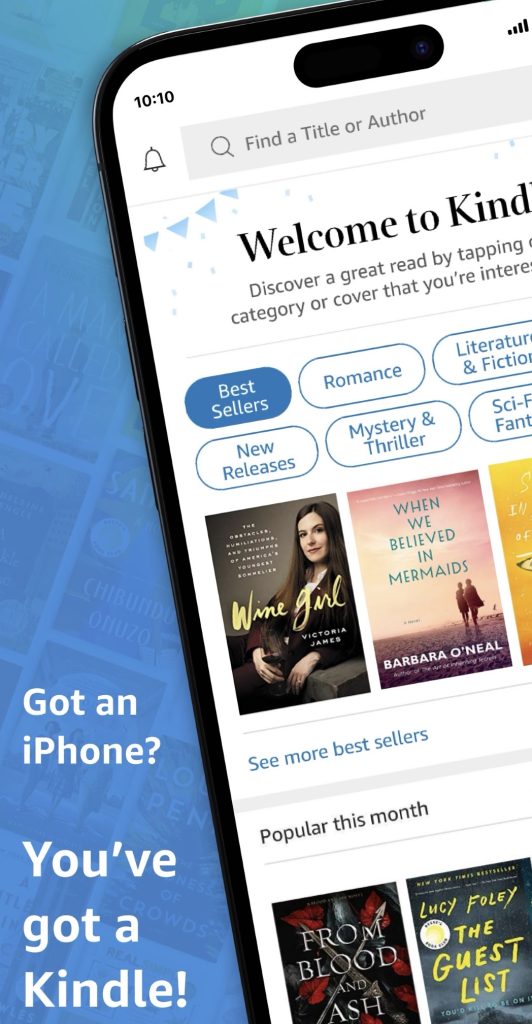
Amazon’s Kindle app has become the default ebook reader for millions of people. With seamless access to the world’s largest digital bookstore, a refined reading experience, and tight integration with Audible’s Whispersync, it checks almost every box for everyday readers.
- Content Quality: Excellent. The Kindle Store offers millions of titles across every genre, from self-published indie authors to major publishers’ latest releases. Kindle Unlimited adds another layer, giving you unlimited access to titles for a flat monthly fee.
- Usability: Polished and familiar. Font customization, background color options, adjustable margins, and an integrated dictionary make it easy to tailor the reading experience. The X-Ray feature lets you explore character details and key terms without leaving the page.
- Engagement: Good. The app includes reading streaks, built-in vocabulary flashcards, and highlights that sync to Goodreads. Kindle Notebook (formerly Kindle Kboards) also keeps your notes and highlights organized.
- Value: The app is free, and individual books are competitively priced. Kindle Unlimited is a great deal for $11.99 per month if you read widely; otherwise, you pay full price per title.
3. Apple Books
Best for: Apple users who want a seamless, built-in reading experience without needing to install anything new
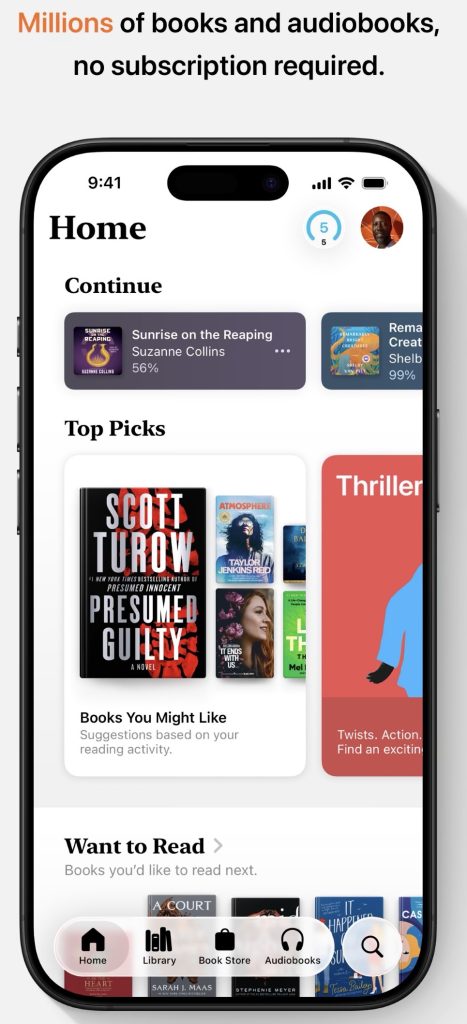
If you’re in the Apple ecosystem, you’re already set up because the Books app comes pre-installed on every iPhone and iPad. Apple has quietly built one of the more polished reading apps available, and the tight integration with iOS means it works exactly the way you’d expect.
- Content Quality: Apple Books has a solid storefront with millions of titles, strong audiobook support, and a growing selection of PDF and EPUB imports. The library isn’t quite as vast as Amazon’s, but it covers nearly everything most readers want.
- Usability: Excellent on Apple devices, with seamless iCloud sync across your iPhone, iPad, and Mac. The reading interface is clean and distraction-free, and a Reading Goals feature encourages you to create a daily habit. You can also take handwritten notes with the Scribble feature on an iPad.
- Engagement: The Reading Goals feature is a standout—it tracks your daily reading minutes and lets you set weekly targets, which turns even a few minutes of reading into a satisfying habit.
- Value: Free to use with competitively-priced books. There’s no subscription model, so you pay only for what you want to read.
4. Google Play Books
Best for: Android users and cross-platform readers who want flexibility without being locked into one ecosystem
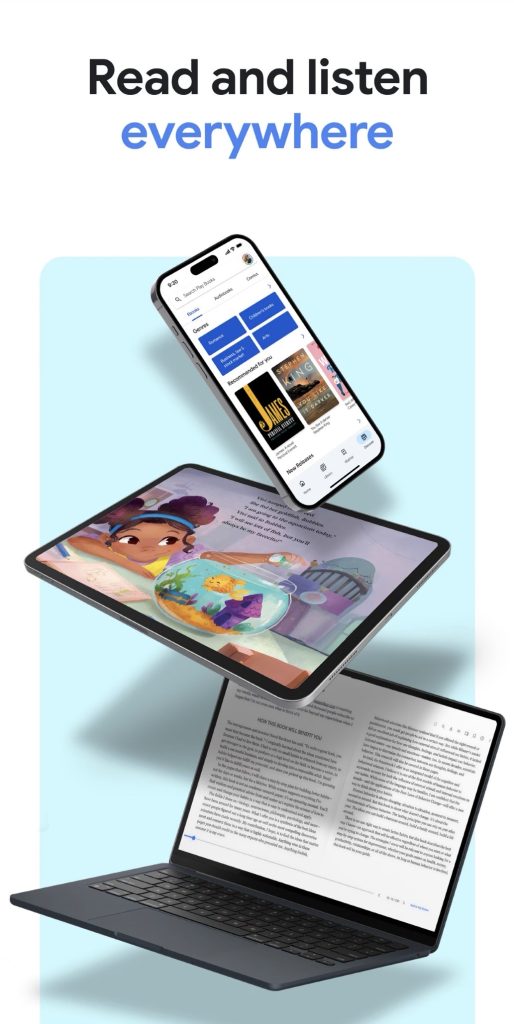
Google Play Books is the obvious choice for Android users, but it earns its place on this list even beyond that. It’s a genuinely versatile reading tool for its cross-platform flexibility, clean interface, and unique features such as Read Aloud and the ability to upload your own ebooks and PDFs.
- Content Quality: Solid. Google Play Books offers millions of titles, competitive pricing, and a growing audiobook catalog. The ability to upload your own PDFs and EPUBs directly to your library is a particularly useful feature for researchers, students, and heavy readers.
- Usability: Smooth and clean, with a reading experience that feels thoughtfully designed. The Read Aloud feature uses Google’s text-to-speech to narrate any ebook with natural-sounding voices, which is a handy option when you want to listen but don’t want to pay for an audiobook.
- Engagement: Moderate. There’s no community or social layer, but the app does offer basic reading stats and syncs progress across all your devices with Google account integration.
- Value: Free to use. Pricing on individual titles is comparable to other major platforms. The app allows you to read books purchased on any device: phone, tablet, Chromebook, or browser.
5. Libby
Best for: Readers who want free access to a huge library of ebooks and audiobooks
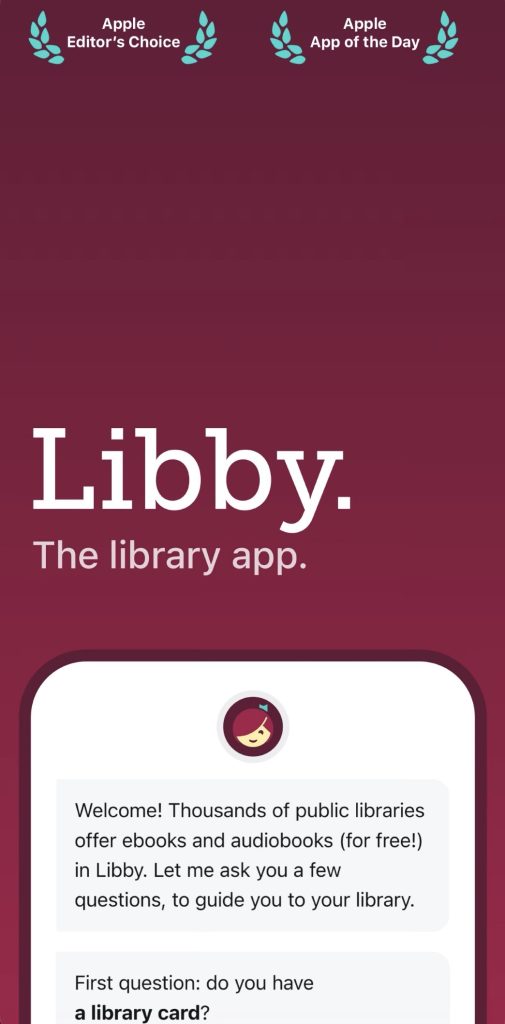
Some years ago, I wanted to listen to the entire A Song of Ice and Fire book series on audiobook, but I didn’t want to pay for it. Lo and behold, I found Libby, and it’s now one of my most regularly used apps. Built by OverDrive, the app gives you instant access to your local library’s entire digital collection for completely free. This includes ebooks, audiobooks, and magazines! It’s the digital equivalent of having a world-class library in your pocket at all times, and all you need is a library card.
- Content Quality: The content is entirely dependent on your library’s collection, but most major public libraries offer thousands of titles, including bestsellers and award-winners. The selection varies by location, though you can link multiple library cards to expand your options.
- Usability: Polished. The interface is clean and welcoming, the ebook reader is fully customizable, and the audio player supports multiple speeds. Titles sync across all your devices, and you can even send ebooks directly to your Kindle.
- Engagement: Moderate. Libby is focused on the reading experience itself rather than the social features and gamification. It tracks your borrowing history, and you can build a to-be-read list, but the social dimension is minimal.
- Value: Unbeatable—it’s completely free! The only real cost is the occasional wait time for popular titles. But that’s nothing when you’re supporting your local library just through an app.
6. Audible
Best for: Commuters, fitness enthusiasts, and any reader who prefers listening over reading
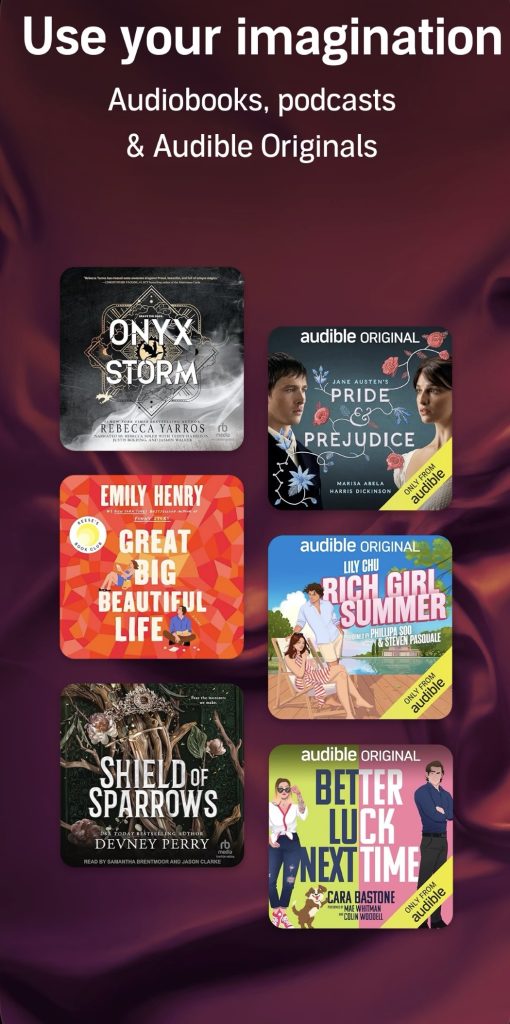
Audible is the gold standard of audiobook apps. With the largest audiobook library in the world and high production quality, it’s the go-to platform for commuters, multitaskers, and anyone who wants to read without ever sitting down.
- Content Quality: Outstanding. Audible’s library spans hundreds of thousands of titles across every genre. Many audiobooks feature full casts, original music, and Hollywood-caliber narration. The app also has Audible Originals, which is exclusive content you can’t find anywhere else.
- Usability: Smooth and reliable. The app supports variable playback speeds, sleep timers, chapter navigation, and offline listening. The Whispersync feature lets you seamlessly switch between reading the Kindle version and listening to the audio version of the same book.
- Engagement: High for audiobook lovers. The app has daily deals, a robust review system, and a credits model for selected membership plans.
- Value: The Standard membership runs $8.99 per month after a 30-day free trial. The Premium Plus membership is $14.95 per month after the free trial and has exclusive deals and discounts. If you listen to one book a month, the math works out—but the cost stacks up quickly for heavier listeners.
7. Shortform
Best for: Professionals, students, and lifelong learners who want to get more out of nonfiction
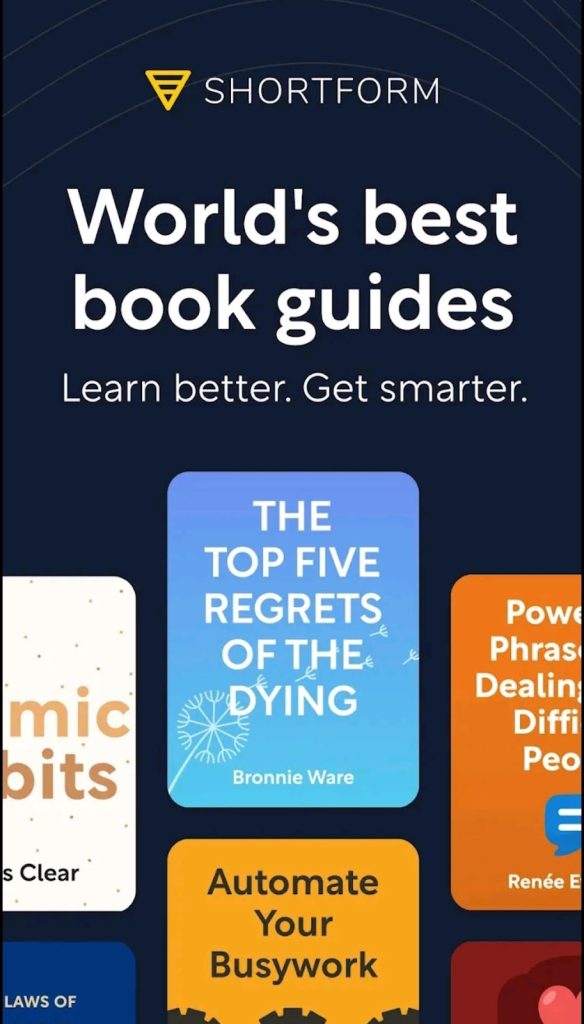
Of course, I have to recommend the Shortform app as someone who uses the app nearly every day. If you’re serious about learning from books, Shortform is in a class of its own. Where most reading apps stop at delivering text, Shortform delivers understanding. Its in-depth guides not only summarize books, but they also reorganize ideas for clarity, add expert analysis, connect concepts across multiple books, and provide interactive exercises to apply what you’ve learned.
- Content Quality: Exceptional. Shortform’s guides are written by professionals and go far beyond surface-level takeaways, making it one of the best apps for readers of nonfiction. You’ll find critical commentary and analysis you don’t get anywhere else, all written with zero fluff.
- Usability: Clean and intuitive on both desktop and mobile devices, the Shortform app includes offline support, adjustable reading speed, audio narration, and PDF downloads. The bonus browser extension lets you summarize any webpage or YouTube video with a single click.
- Engagement: High. In my personal experience, the interactive exercises in each guide encourage me to apply the ideas directly to my life, and they’ll do the same for you. A built-in community lets you share thoughts with other readers enjoying the same material.
- Value: A single all-inclusive subscription covers everything—no tiers and no upsells. Considering the depth of content (over 10,000 books and 1,000 articles), it’s a strong value for anyone who reads to learn and grow.
👉 Want to try Shortform for free? Sign up for a five-day free trial.
8. The StoryGraph
Best for: Analytical readers who want more control over their tracking and an Amazon-free alternative to Goodreads
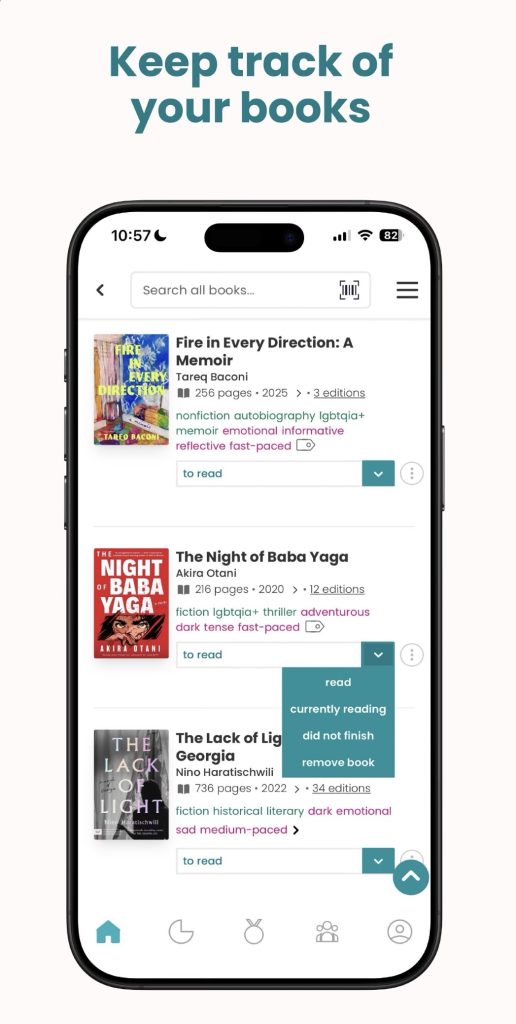
The StoryGraph launched in 2019 as a Goodreads alternative, and it’s been steadily winning readers over ever since. Founded by Nadia Odunayo, it’s an independent, Black woman-owned platform that prioritizes reader preferences, detailed statistics, and a cleaner design.
- Content Quality: The StoryGraph doesn’t deliver books itself, but it has a growing database with user and author-submitted content warnings, mood and pace tags, and nuanced metadata. The book catalog is slightly smaller than Goodreads, but it’s quickly expanding.
- Usability: Modern and clean. Since this reader app is better than Goodreads on this metric, you might choose to import your entire Goodreads history to The StoryGraph, which takes just minutes. You can rate books with quarter stars, mark books as DNF (did not finish), log your reading pace, and organize your shelves.
- Engagement: Great for readers who love stats. The graphs and charts show your reading patterns by genre, mood, pace, and more. Custom reading challenges and buddy reads encourage you to read more, though the social layer is a little underdeveloped.
- Value: A free tier covers most features. A Plus subscription unlocks advanced tracking, weekly and monthly goals, and more detailed charts.
9. Serial Reader
Best for: Readers who want to tackle the classics and build a daily reading habit in small doses
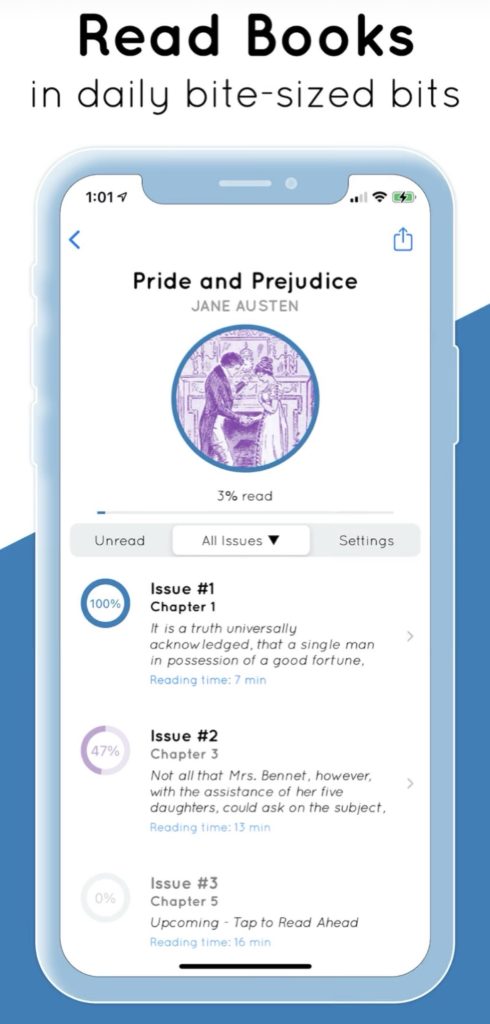
Serial Reader has one simple premise: What if you treated classic books like a TV series, receiving a new episode every day? The app takes over 900 public domain classics and breaks them into daily installments you can finish in 20 minutes or less. This makes it easier to finally read the books you’ve always told yourself you’d get around to someday.
- Content Quality: Deep and timeless. The library is sourced entirely from public domain texts, so we’re talking Charles Dickens, Jane Austen, Leo Tolstoy, and hundreds more at no cost. The selection is limited to classics, but it’s a rich and well-curated one.
- Usability: Minimal and focused. You can adjust fonts and themes, set the time you want your daily installment delivered, and sync progress to Goodreads. A premium one-time purchase unlocks multi-device sync, highlighting, notes, and the ability to read ahead.
- Engagement: Surprisingly high. The serialized format triggers the same anticipation that keeps people watching TV shows—you genuinely look forward to tomorrow’s installment.
- Value: The free version is excellent. The one-time premium unlock is fairly priced and adds meaningful features. There are no subscriptions.
10. Readwise
Best for: Serious readers who want to actually apply what they read to their life
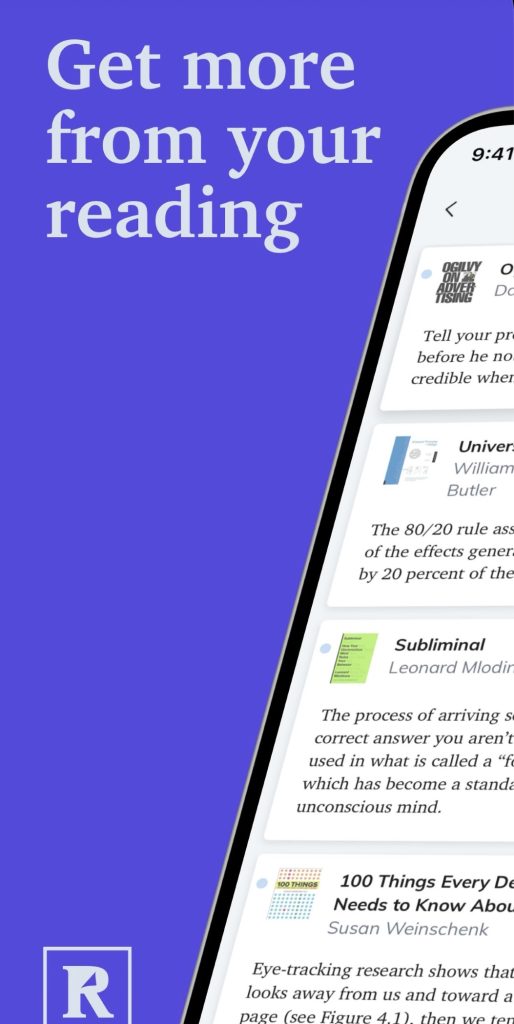
Readwise solves a problem that a lot of avid readers have: They finish a book, highlight passages, and then never look at those passages again. Readwise fixes this by pulling your highlights from Kindle, Apple Books, Libby, and dozens of other platforms into one place and then resurfaces them daily using spaced repetition. It also includes Readwise Reader—the best read-it-later app for articles, newsletters, PDFs, and more.
- Content Quality: Readwise organizes and resurfaces the content you read in other apps. The quality depends on what you read, but the app supports an impressive range of sources, from Kindle and YouTube transcripts to X threads.
- Usability: Clean and well-designed. The Daily Review feature takes just a few minutes each morning and gives you highlights from across your reading history. It also has offline support and a distraction-free interface.
- Engagement: Exceptionally high for serious readers. The Daily Review creates a habit loop, and the AI-powered chat feature lets you ask questions across your entire highlight library.
- Value: It’s priced at around $5.59 per month (Lite) or $9.99 per month (full plan) billed annually, with a 30-day free trial. For readers who take notes regularly, it pays for itself.
How to Choose the Right Reading App for You
You might not need all 10 of these apps, but it’s good to know they’re available in case your reading experience is missing something. In the end, the best reading app is the one you actually use. Here’s a quick cheat sheet to help you choose the right one for you:
| Feature | App |
| Join a social community of readers | Goodreads |
| Kindle or Amazon readers | Kindle |
| Apple users | Apple Books |
| Android users | Google Play Books |
| Read for free | Libby |
| Audiobooks | Audible |
| Nonfiction book library | Shortform |
| Track your reading | The StoryGraph |
| Build a daily habit with the classics | Serial Reader |
| Remember what you read | Readwise |
The good news? Most of these apps are free to try. Give them a go, and see what sticks. Your reading life will thank you.
Of course, I personally hope you try out Shortform and get endlessly hooked. If you sign up for Shortform, you gain access to a five-day free trial. Happy reading!
