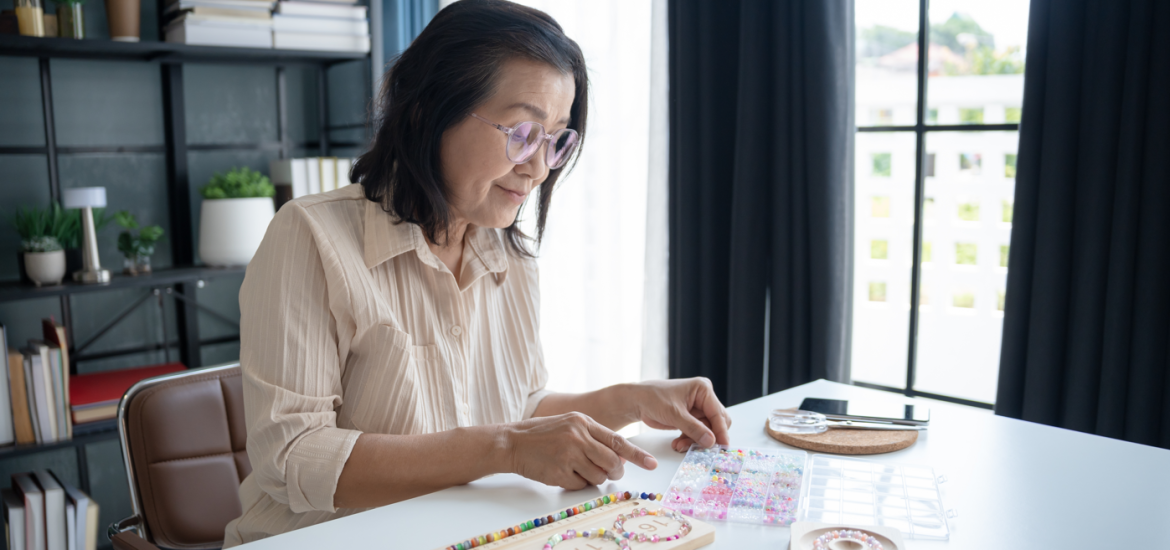
Image credit: Lee Charlie/shutterstock.com
Nervous to begin your creative journey? According to Austin Kleon in Steal Like an Artist, waiting until you feel “ready” is a trap—you discover who you are as an artist by making art, not before. The solution is simple: Start creating now, even as a beginner, and let the process teach you.
Kleon offers practical strategies for getting started, choosing projects that excite you rather than sticking to what you already know, and mixing physical materials with digital tools to keep your ideas flowing. He also explains why embracing limitations actually fuels creativity.
Table of Contents
Start Creating
Once you’ve studied your creative influences in depth, it’s time to start creating. If that sounds scary, you’re in good company: According to Austin Kleon in Steal Like an Artist, many artists feel like they can’t make truly great art until they understand exactly who they are as a person and an artist. However, he says the opposite is true: The process of making art is how you’ll come to understand yourself. The only way to become an artist is to make art, even if you’re not an expert. Therefore, you should jump right in instead of waiting until you feel ready.
(Shortform note: In The War of Art, Steven Pressfield argues that making art even if you don’t feel ready has an additional benefit: It separates professional artists from amateurs. He doesn’t mean “professional” in the sense that you get paid for your art—rather, being a professional artist is a mindset. It’s a badge you earn for being committed to your creative process and continuing to work hard at it even when the process is difficult or draining. This logic echoes Kleon’s assertion that the only way to become a real artist is to keep making art.)
Jumping right into creating has another benefit: According to Kleon, it’ll help you avoid becoming trapped by “impostor syndrome,” which is a persistent feeling that you’re not talented enough to succeed. Instead of listening to these feelings, commit to doing creative work regardless of how you feel about your talents.
(Shortform note: Kleon leaves out a crucial component of the definition of impostor syndrome: According to the American Psychological Association, it’s a feeling of inferiority that plagues “high achievers,” or people who have outward markers of success in their field. Therefore, if you’re a professional artist and doubting your abilities, you may be experiencing impostor syndrome—but if you’re trying your hand at creative work for the first time, you may simply be experiencing the anxiety that comes with trying something new.)
We’ll cover Kleon’s practical advice for how to start creating, including copying, deciding what to make, combining digital and analog tools, and embracing your limitations.
Start by Copying Other Artists
Kleon believes that the best way to get started as an artist is to copy the work of your creative heroes. Making copies helps you understand how the original creator made their piece. For example, if you’re learning to paint, you might try recreating one of Bob Ross’s iconic landscape paintings. As you follow along, you’ll notice how he layers colors to build depth in the mountains or uses a fan brush to form soft, textured trees. By copying his techniques, you start to understand why he makes certain strokes or color choices. Then, when you create your own original painting, you’ll have a much better sense of how to use those same techniques in your own style.
Keep in mind that, when you copy, your work will inevitably fall short of the original (after all, no novice painter could perfectly reproduce Bob Ross on the first try). However, according to Kleon, this isn’t a failure—it’s the source of your strength. The ways that your copies differ from the original are what make you unique as an artist. Lean into those differences to discover and develop your own creative voice. (This step is also crucial because, if you never add anything unique to your copies, your work will just be an imitation of the original instead of something new and transformative.)
| Copying Works—Just Don’t Compare Your Art to Others’ Research supports Kleon’s conclusion that studying another artist’s work enhances both creativity and artistic skill. In one study, students who spent time copying a professional artist’s drawing later produced work that art judges rated as more creative and expressive than the work of students who didn’t start by copying. Of course, as Kleon suggests, imitating and learning from comparison is the starting point, but you won’t develop an authentic voice or expression unless you build on the ways you don’t compare to other artists. However, comparing yourself to other artists can sometimes be demoralizing if you focus on how your skills measure up to theirs. In The Gifts of Imperfection, Brené Brown recognizes this danger and advises using the creative process to celebrate your originality instead of comparing yourself unfavorably. Brown highlights the fact that creative expression is unique to every individual, so it’s pointless to compare your work to others’. Instead, focus on the fact that no one else could make what you’ve made because no one else sees the world exactly as you do—your creative expression is literally incomparable. |
Decide What to Make
Once you have a sense of your own creative voice, you’ll need to decide what you want to create. Kleon recommends thinking about the kind of art that speaks to you and trying to make it, even if it’s not what you’re used to. This contradicts the standard advice to “write (or draw or paint or build) what you know,” which Kleon believes is a recipe for boring art.
(Shortform note: Stephen King, author of more than 60 novels and 200 short stories, agrees with Kleon’s advice not to take “write what you know” too literally. In On Writing, King advises writing about the basic truths you’ve learned from your individual experiences, not necessarily about the experiences themselves. For example, if you’ve experienced feeling nervous about moving to a new city, you could write about an astronaut being nervous to go to space—the situation is different, but the underlying emotional truth is the same.)
Combine Digital and Analog Tools
Once you’ve decided what to make, how should you go about making it? If you typically do all your work digitally, Kleon advises getting away from the computer for a while and incorporating an analog component. This will boost your creativity because working with physical materials gives you the freedom to explore possibilities and make mistakes. In contrast, working on a computer makes it too easy to censor your ideas before you can fully explore them. Therefore, Kleon argues that you should only use a computer when you get to the editing stage of a creative project.
(Shortform note: If you typically work solely on a computer, incorporating analog materials might seem like an unnecessary hassle—for example, if you’re a writer, you may balk at writing by hand because you’ll just have to retype it all later. However, studies show that writing by hand makes you more creative because the physical act of writing by hand engages larger regions of your brain than typing on a keyboard does. That’s why many accomplished writers (including Neil Gaiman, Stephen King, and J.K. Rowling) draft their stories by hand before ever touching a computer.)
To encourage yourself to use physical materials, Kleon recommends dividing your workspace into two zones: one for your computer and any other electronic equipment, and one for whatever materials you use to create (such as pens and paper, clay, or paints). Use the analog zone to explore and brainstorm, then use the digital zone to edit and expand your ideas.
(Shortform note: Kleon’s own workspace features two separate desks for analog and digital work; however, we can infer that the same idea would work with a single desk if you divide it in half. If you don’t have a designated workspace, you could even recreate the setup by putting together a portable kit of various analog materials; that way, you can easily switch between analog and digital, no matter where you sit down to work that day.)
Embrace Limitations
Kleon offers a final tip for creative work: Use constraints and limitations to your advantage. Having limited resources actually boosts creativity, so embrace the challenge. In fact, if you’re in a creative rut, you can even arbitrarily add a limitation (for example, by challenging yourself to cook a meal using only the ingredients you already have on hand). As an added bonus, this also makes your work more interesting—people will marvel at how you did so much with so little.
(Shortform note: Kleon doesn’t explain why limitations boost creativity, but it may be because constraints force your brain into problem-solving mode to figure out a way around them. In fact, studies show that people come up with more creative solutions when they have fewer options available.)
Learn More
If you want to learn more about how to get started on your creative journey, you can read our full guide to Kleon’s book Steal Like an Artist.
